ARTH - Africa
 Call Kai
 Learn
 Practice Test
 Spaced Repetition
 Match
 Flashcards
 Knowt Play
1/67

There's no tags or description
Looks like no tags are added yet.
68 Terms
Similarities between African Art (spiritual, art forms, rituals)
spiritual - belief in creator god, invisible world of ancestors, spirits, deities
Art forms - humans and animals
Rituals - costumes, masks, ritual dances, body decoration with scarring or paint
Nigerian art types
Porcupine quills, feathers, horns
Komo, kono
Nigerian organizations (mostly men) train to show skill (blacksmiths, farmers)
Masks and sculptures maintained by organization for understanding of plants
Masks, sculptures, animal fragments
Power images - Nigeria
Full-body outfits from cotton+feathers, dance skills

Esie sculptures
Nigeria - soap stone carvings, can be animal or human
Human sculptures were everyday activities

Ikom monoliths
(Nigeria) Produced by Ekoi - stone carving, geometric

Ekpo mask
(Nigeria) Wooden mask by Ekpo, political strength
“ancestor spirit”

Yoruba Doors and Veranda Posts
(Nigeria)
Royal authority, spiritual lineage
Nok art style/types
900 BCE-200 CE
Iron-working, sculpture, terracotta, stone and metal tools

Nok Heads
-Terracotta, originally full body statue
Triangle eyes, pursed lips

Seated Dignitary
(Nok) Power, authority, possibly grave markers, charms (could be origin of Nok heads)
Additive vs Subtractive sculpture
Additive - add material on top and smooth it
Subtractive - take tool and sculpt into the mass itself (example: inside of Nok Heads)
Igbo art and politics
Loose kingdoms, farm yam, lost wax casting, clay, metal
Igbo Richard
Elite burial
Beads on the ruler buried there, human remains, bronze cooking vessels, leopard bronze head
Thought to be Eze Nri - priest-ruler and remove spiritual pollution

Equestrian Fly-whisk handle
-Authority of riding on animal, feathers to shoo bugs, bronze statue found in Richard burial chamber (Igbo)
Ichi
Igbo - marks on face for authority
Igbo Isaiah shrine with goods
Bronze, lost wax casting goods

Roped Vessel
(Igbo) large amount of copies - made with metals, lost-wax casting
Skeuomorph (Igbo)
Object created in different material from original but made to resemble original
Igbo altar, creation story
Supreme leader Chineke/Chukwu and dieties like igwe sky and ala earth formed 8 humans using clay, chalk, sacred rituals to restore moral balance
Igwe (igbo)
sky
Ala (igbo)
Earth
Mbari
(Igbo) Creation of large open sided square shaped mud and thatch shelters filled with clay sculptures
Igbo Jonah
Refuse pit with goods
Ife/Yoruba spiritual/art types
Lineage to supreme god Oduduwa, pavement, wax casting, terracotta, kings, headdresses

Obalufon Mask
(Ife) Obalufon brought to Ife, represents ooni, brought metalwork
Holes to place hair
Ooni/oba
King (Ife, Benin)
Ife
Round walled city with stone and moat
-origin of humankind
-Courtyard with mosaics and pottery

Potsherd Pavement
(Ife) Within shrine, patterned in shrine

Ife spirit heads
Used as a relief of an altar
Ori ode- outer head - visible
Ori inu - inner head, spiritual, invisible

18 Cache of buried metal heads
(Ife) Naturalism - crown means royal, holes for hair placement
Buried at foot of trees (shrines)
Scarification
(ife) marks on dace for political/religious importance

Ife King Sculpture
Beaded necklaces, zinc, disproportionate becasue head is a motif - spirt
Large belly = abundance of wealth and power
Odu (Ife)
full
Benin, connection to Ife
Didn’t want to be ruled by historic dynasty, asked Ife to rule
Copper, iron, ivory
Head center of character

Transformation of Benin art, HEADS
Beaded caps with copper heads
1500 - geometric, ife similarity
1700 - necklace increases, abstract
1800 - Late Period - brass, headress and decorative elements most geometric
When new king came to power, old king would make head, hole at top for ivory tusks

Ivory carvings
(Benin) Tusks carved with images of ruler’s life

Queen Mother head (Iyoba - queen mother)
(image late period)
(Benin) 4 lines above each eye for scarification, veritcal marks filled with medicine

Oba Esigie, Idia
1500- early period
Esigie - king, mother esigie advised military
Iyoba
(Benin) queen mother

Queen Mother Waist Pendant
(Benin) ~1500s, ivory and worn during ceremonies
mudfish - king’s duality of human and god
Mudfish
(Benin) Can live in and out of water - in and out of spirit world

Altar to the hand
(Benin) Woman figures - carrying offerings
Hierarchy scale - who’s the most important based on position and clothing
Ikegobo
(Benin) royal shrinee
Female figure (Benin)
Ivory figure -clothingless shows they were attendants
Benin and Portugese, French
Benin and portugese traded ivory, lost portugese as trading partners and British launched Benin expedition

Benin Plaques
Relief plaque - usually of obas which told story of royal lineage
Mudfish, river leaf (wealth)
Triadic symmetry
Triadic symmetry
(Benin) two of the same people on either side of political figure
Repatriation
Process of restoring art to original creators
Provenance
Record of ownership of a work of art or an antique, used as a guide to authenticity/quality
Fon/Dahomey
Militaristic kingdom - war with Yoruba neighbors, art to praise and reinforce royal authority
Dohomey
Kingdom with controlled entry (6) tree grove
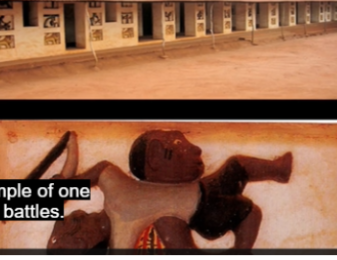
1st Palace - King Agaja
12 palaces built by 12 kings, each place had relief sculptures

Amazon carrying Yoruba clay relief
Mino woman (often referred to as Amazon by colonialists), who is a warrior, carrying captured soldier
Mino/Agojie
(Dahomey) Our mothers - female war militia, muskets
Silver sieve
(Dahomey) Worn over nose in belief that the tribe came from queen who mated wiht leapord
Fa
(Dahomey) Name given to leader by spirits
Divination
to seek wisdom or knowledge from a supernatural source
Applique
(Dahomey) Designs made of small pieces of fabric sewn into base

Bocio
(Dahomey) Sculpted forms that were empowered
Used protective energy of gods to protect spaces - commoners had ugly ones, palace ones were sleeker
Used knotting, tying, locking spirit, pouring blood, human jaw, duck bills
Vodun
protective energy of gods

Bocio in honor of King Glele
(Dahomey) Boost strength by representing king as lion - lion was fa name
Gu
(Dahomey) iron and war diety

Asen to king Glele
Asens are memorial altars to look like iron staffs - specific sculpture on top
Ghana fantasy coffins
Represented something about deceased
Moai of Easter Island (Rapa Nui)
Moai are carved stone figures meant to represent the island's ancestors and hold spiritual value that were carved out of a mother rock
Made of volcanic tuff and chiseling
Ahu moai
Ahu moai are the moai that are standing on secret ceremonial platforms (Ahu), commonly with headpieces
hey have a center of gravity that is back and up, carved eyes, and no angled base.
Moai statue represent what
ancestors associated with gods. They also represent competition between different clans on Rapa Nui, where the largest moai that were placed at ahus represented the strength of the clans