M114 Final
 Call Kai
 Learn
Learn Practice Test
 Spaced Repetition
 Match
Match Flashcards
 Knowt Play
1/105

There's no tags or description
Looks like no tags are added yet.
Name | Mastery | Learn | Test | Matching | Spaced | Call with Kai | Chat |
|---|
No analytics yet
Send a link to your students to track their progress
106 Terms
Explain phototransduction cascade
Photon hits rhodopsin and excites retinal
11-cis retinal isomerizes to all-trans-retinal
Rhodopsin now bleached → all-trans-retinal and opsin separate
Enzyme burns ATP to convert all-trans-retinal back to 11-cis-retinal
Opsin and 11-cis-retinal reassociate
How/where does retinal attach to rhodopsin
retinal is covalently attached to Lys 216 on opsin through Schiff base
How is absorptive wavelength of a specific molecule defined
difference in energy between pi and pi* energy states
Blue shift vs. red shift
blue shift → short wavelength, high energy, occurs in molecules with less conjugation
red shift → long wavelength, low energy, occurs in molecules with more conjugation
Effect of more conjugation on absorptivity and reasoning
more conjugation leads to red shift (absorption at lower energy) because energy difference between pi and pi* decreases → less energy needed to excite photon
What is the extinction coefficient
epsilon: how efficient a substance absorbs light at a specific wavelength
How do we see 3 colors with only one retinal
we have 3 opsins that bind retinal in slightly different conformations, affecting the conjugation of retinal, shifting its absorption wavelength
Types of cones
red (L, long wavelength)
green (M, medium wavelength)
blue (S, short wavelength)
How can bees see UV light
bees have retinal that uses a deprotonated Schiff base, which allows them to absorb shorter wavelengths (higher energy) than humans
Relationship between transmittance and absorbance
A = -log(T)
T = I/I0
Beer’s Law
A = Ecl
Dynamic range of UV/Vis spectrophotometer and why
0.05-2
low absorbance means insignificant difference in comparison of I and I0
high absorbance means a very small amount of light is being transmitted to measure
How does conjugation affect extinction coefficient
more conjugation → higher extinction coefficient, ex. AMP & GMP have higher extinction coefficient @ 260 nm because of 2 rings
What groups are and are not used to quantify protein amount and why
amide not used because their absorbance @ 180-230 nm depends on secondary structure (don’t know amounts)
aromatic side chains used because they absorb strongly @ 280 nm (less overlap with other signals)
Why does DNA contamination affect protein absorbance readings but protein contamination not affect DNA absorbance readings
DNA absorbs strongly @ 260-280 nm → small amounts of DNA affect protein absorbance readings @ 280 nm
Protein absorbs weakly @ 260 nm → small amounts won’t affect strong DNA signal @ 260 nm
What is optical density
measure of light scattering at some wavelength to monitor cell growth
What is Stokes shift
difference between wavelength of absorbance and fluorescence
Fluorescence anisotropy measures
the motion of a fluorophore
How does FRET work
donor fluorophore emits light at a wavelength that can excite acceptor fluorophore
If donor and acceptor within ~10 nm, energy transfer occurs and acceptor emits light (FRET signal)
What does circular dichroism measure and how
measures secondary structure by detecting difference in absorption of circularly polarized light by amide bonds in chiral protein
Alpha helix CD characteristics
pi → pi* is positive
n → pi* is negative (double trough)
pi → pi* (+) is double the intensity of n → pi* (-)
Beta sheet CD characteristics
pi → pi* is positive
n → pi* is negative
pi → pi* (+) is similar intensity of n → pi* (-)
Random coil CD characteristics
pi → pi* is negative
n → pi* is positive
Criteria for metabolic pathway
individual reactions must be specific and pathway in total must be thermodynamically favorable
Purpose of adenine in ATP
acts as a “handle” that enzymes can hold on to to hydrolyze ATP
Why is ATP hydrolysis energetically favorable
Relieves the electrostatic repulsion between the 3 phosphate groups → decreases net negative charge
Pi is more stabilized by resonance than ATP
Increase in entropy
ADP and Pi are better solvated by water
Why is PEP a high energy molecule
High charge density
Hydrolysis products are stable → pyruvate and Pi (pyruvate can tautomerize into its keto form from its enol form)
Why is phosphocreatine useful
it stores high energy phosphate groups and can quickly donate its phosphate to ADP to regenerate ATP
How do cells make phosphocreatine if it’s a high energy molecule
Cells compartmentalize the phosphorylation of creatine in the IMS, where [ATP] and [creatine] are high
Cells remove product (phosphocreatine) as it’s formed to drive the reaction forward
Steps of phosphocreatine formation/use
ATP transported into IMS from matrix, creatine transported into IMS from cytosol
Creatine reacts with ATP via mitochondrial creatine kinase to make phosphocreatine
Product removed into cytosol
Phosphocreatine can now react with ADP via cytoplasmic creatine kinase to regenerate ATP
Isozyme of creatinine kinase in blood can indicate
heart attack
High levels of creatinine in blood can indicate
liver failure
1st order integrated rate law axes and slope
time vs. ln[A]
slope is -k
2nd order integrated rate law axes and slope
time vs. 1/[A]
slope is +k
What is half-life
time required for a reactant’s concentration to be ½ its initial value
How to find half-life
t1/2 = 0.693/k
What is isosbestic point
specific wavelength at which the absorbance of a mixture stays the same because reactant and product have the same molar absorptivity at that exact wavelength
What if no isosbestic point is seen
reaction is not 1st order–there is a third species involved
What is transition state theory
says that the rate of a reaction depends on how difficult it is for molecules to reach TS
Why does the rate constant change when a catalyst is added
because k depends on Ea (Arrhenius equation), and Ea decreases when a catalyst is added
What would happen if catalysts stabilized substrate rather than TS
the ES complex would be lower in energy than free S, making Ea even higher → ultimately slowing the reaction down
What is the 1.4 rule
every 10 fold change in rate (x10) corresponds to a 1.36 kcal/mol change in TS energy at room temp
Besides 1.4 rule, how can I find the change in rate
∆k = e^(∆∆Ea*/RT)
Why are saturating substrate conditions used
at high [S], almost all enzyme is in ES form → then k1 and k-1 are negligible and k2 becomes rate limiting
What is the steady state assumption
change in [ES] over time = 0, k2 ~ kcat
At what conditions does Vmax occur
at high [S] when enzyme is saturated and entirely in ES form
Km is…
the [S] where the velocity of the reaction is 1/2 Vmax and reflects apparent affinity of enzyme for its substrate
Lineweaver-Burk intercepts and slope
x-int is -1/Km
y-int is 1/Vmax
slope is Km/Vmax
What is kcat
turnover number of an enzyme: max number of substrate molecules enzyme can convert into product per unit time when fully saturated
What does large kcat mean
What does small kcat mean
large kcat → enzyme is efficient at converting substrate to product
small kcat → enzyme is not efficient
What does large Km mean
What does small Km mean
large Km → high [S] to reach 1/2Vmax, low affinity for enzyme
small Km → low [S] to reach 1/2Vmax, high affinity for enzyme
Competitive inhibition def, Vmax, kcat, Km
I competes with S for active site
no change in Vmax because high [S] can outcompete I
no change in kcat because I doesn’t affect ES → P + E when S DOES bind (turnover)
increase in Km because higher [S] will be needed to reach 1/2Vmax
Uncompetitive inhibition def, Vmax, kcat, Km
I binds only to ES complex, not free E
decrease in Vmax because some ES is inactivated by I → less ES to form product
decrease in kcat because some of ES is inactive and cannot turnover S to P
decrease in Km because ESI formation pulls E + S → ES reaction to the right, making the E appear to have higher affinity for S
Noncompetitive inhibition def, Vmax, kcat, Km
binds to free E or ES complex at allosteric site
decrease in Vmax because I binding inactivates enzyme → decreases number of active enzymes
decrease in kcat because remaining active E turns over S more slowly
no change in Km because I is not competing with S for active site
What is KD
dissociation constant of ES complex
ES → E + S
KD = [E][S]/[ES]
What is EC50
concentration of a drug needed to produce 50% of its maximal effect
What is HbA1C and how is it formed
HbA1c is glycated hemoglobin
formed when open-chain glucose (aldehyde) reacts with hemoglobin in RBCs to form a Schiff base
What can affect HbA1C formation
Transport of glucose into RBC by insulin-dependent transporter
RBC generation
Glycolysis
RBC elimination
kgly =…
kg x Vmax/(kc + Km)
Oxidoreductase function
transfer electrons/H atoms
Transferase function
group transfer reactions
Hydrolase function
hydrolysis reactions
Lyase function
cleavage of C-C, C-O, C-N, or other bonds by elimination
Isomerase function
transfer of groups within molecules to yield isomeric forms
Ligase function
formation of C-C, C-S, C-O, and C-N bonds by condensation reactions
Amino acids that can be used as general acids or bases (8)
Asp, Arg, Lys, Cys, His, Ser, Tyr, Glu
His 12 and His 119 in general acid/base catalysis
His 12 acts as a proton acceptor → below pH 5.5, His 12 gets protonated and can’t act as a proton acceptor anymore
His 119 acts as a proton donor —> above pH 6.5, His 119 gets deprotonated and can’t act as a proton donor
How do enzymes stabilize a carbanion
Forming enolate
Forming enolate/enol stabilized by H-bonds
Converting carbonyls into Schiff bases
Using metal ions to neutralize and stabilize charges
Metalloenzymes vs. metal-activated enzymes
metalloenzymes tightly bind metals (Fe2+, Fe3+, Cu2+, Zn2+, Mn2+, Co3+)
metal-activated enzymes loosely bind metals (Na+, K+, Mg2+, Ca2+)
What is charge shielding
metals help neutralize charges
How does water ionization work
Imidazole coordinates Zn2+
Zn2+ coordinates water
H-bonding network forms
His is activated through a transfer of Hs through water network
How is PEP formed if it’s a high energy molecule
a thioester intermediate is used → relatively unstable (high energy) intermediate that is used to get to a high energy product
What is kB
Boltzmann constant: used to calculate how much thermal energy is available at a certain temp → (kB)(T)
How does kinetic isotope effect (KIE) work
tells us which atoms are involved in RDS
an atom is replaced with a heavier isotope–if the rate decreases, that bond is involved in RDS because heavier isotopes vibrate more slowly and make the bond harder to break
Difference between primary and secondary KIE
primary KIE occurs when isotopic bond is broken in RDS → largest change in rate
secondary KIE occurs when isotopic bond is near reactive center, only changes hybridization or geometry → smaller change in rate
What is the catalytic triad
Asp-His-Ser in serine proteases that acts as a proton donor system to deprotonate Ser and create a good nucleophile to attack the carbonyl on the substrate
Serine protease mechanism
Substrate binds in specificity pocket → positions substrate’s scissile bond near the catalytic triad
Catalytic triad relay system: Asp stabilizes His, His deprotonates Ser, O- on Ser attacks substrate carbonyl
Backbone H-bonding from NHs in oxyanion hole stabilize negative charge on oxygen in tetrahedral intermediate
How does DIPF work
DIPF covalently and irreversibly inhibits serine proteases
Asp stabilizes His
His deprotonates Ser-OH
Ser-O- attacks electrophilic phosphorus of DIPF
Pentacoordinate intermediate
F leaves as LG
Phospho-serine bond is extremely stable, cannot be hydrolyzed → enzyme is permanently inactive
How does sarin gas work
sarin gas enters bloodstream and acts as a suicide inhibitor, covalently and irreversibly binds to acetylcholineesterase, forming a stable phosphorylated enzyme that cannot be hydrolyzed
Acetylcholine can no longer bind to acetylcholineesterase to be broken down, leading to muscle spasms
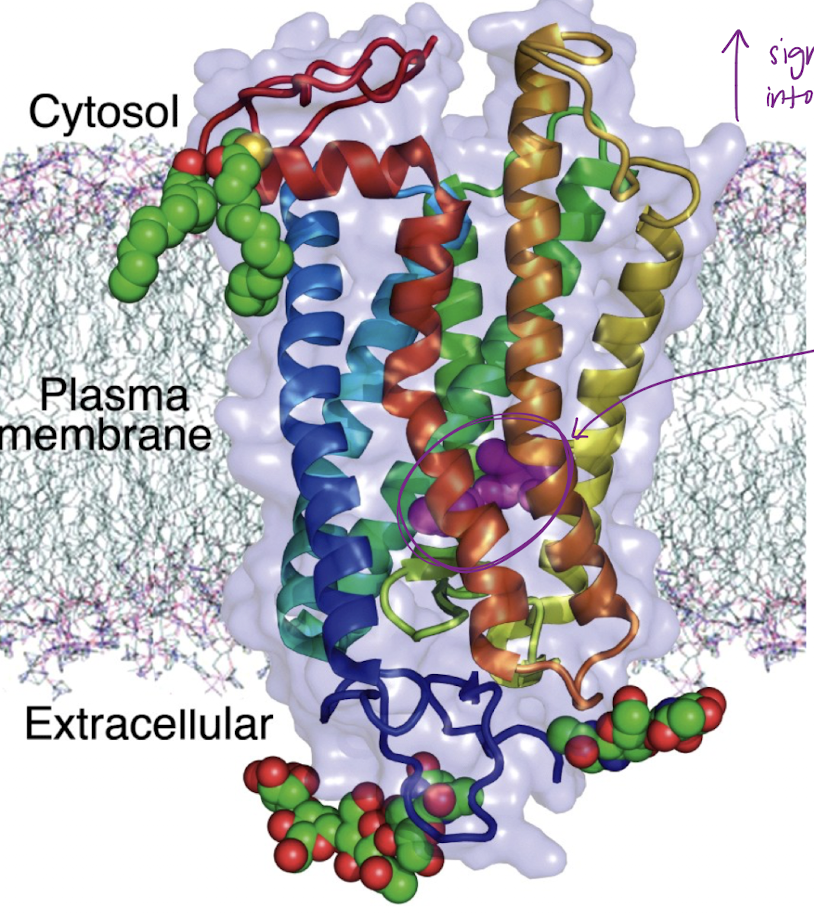
rhodopsin holding retinal
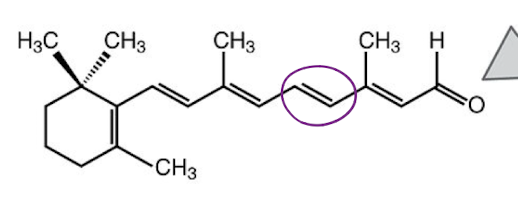
retinal (all-trans)
extinction coefficients of Trp, Tyr, Phe
Trp: 5250 M-1cm-1
Tyr: 1200 M-1cm-1
Phe: 190 M-1cm-1
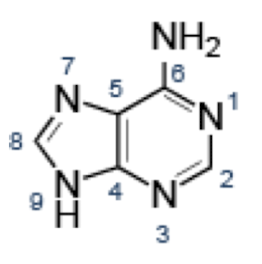
adenine
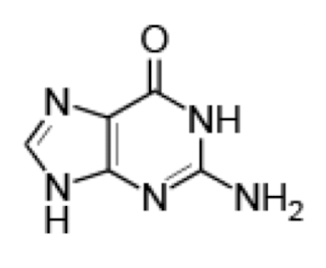
guanine
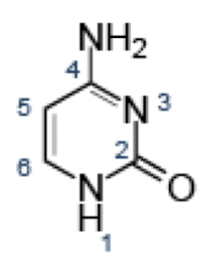
cytosine
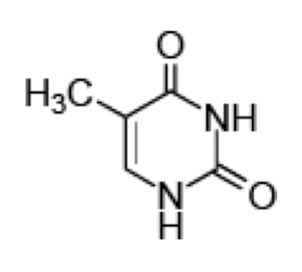
thymine
how does denaturation affect DNA’s UV absorbance
UV absorbance increases when denatured because electronic interactions between neighboring bases are disturbed
how does protein unfolding affect emission
fluorescence intensity decreases when exposed to solvent when unfolded
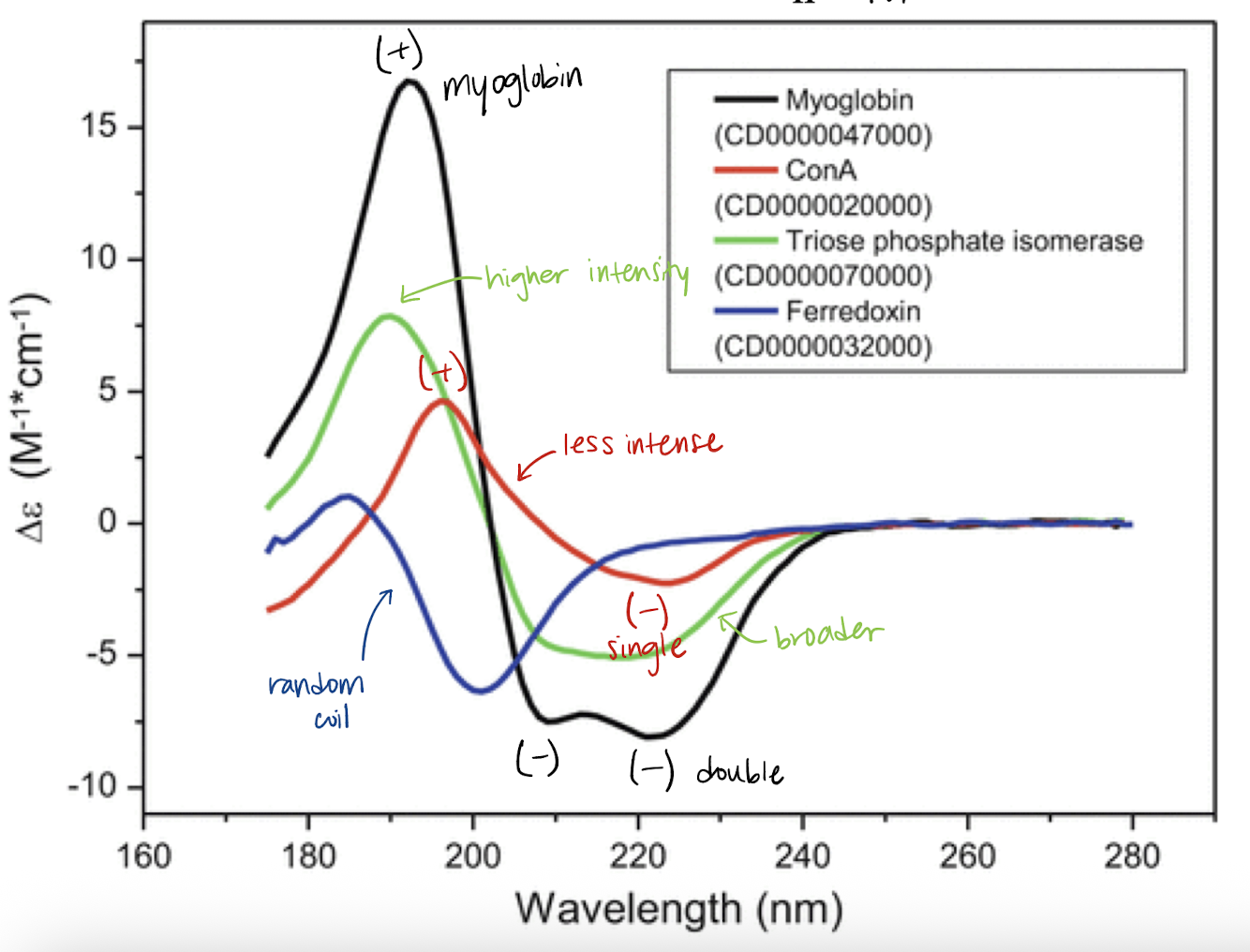
black: mostly alpha
red: mostly beta
green: mixture of alpha and beta
blue: random coil
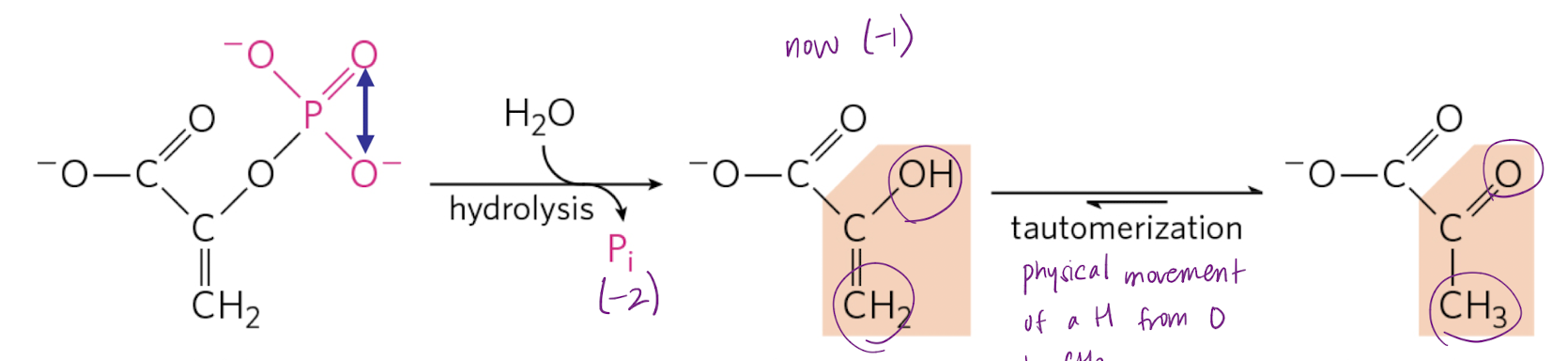
hydrolysis of PEP and keto-enol tautomerization of pyruvate
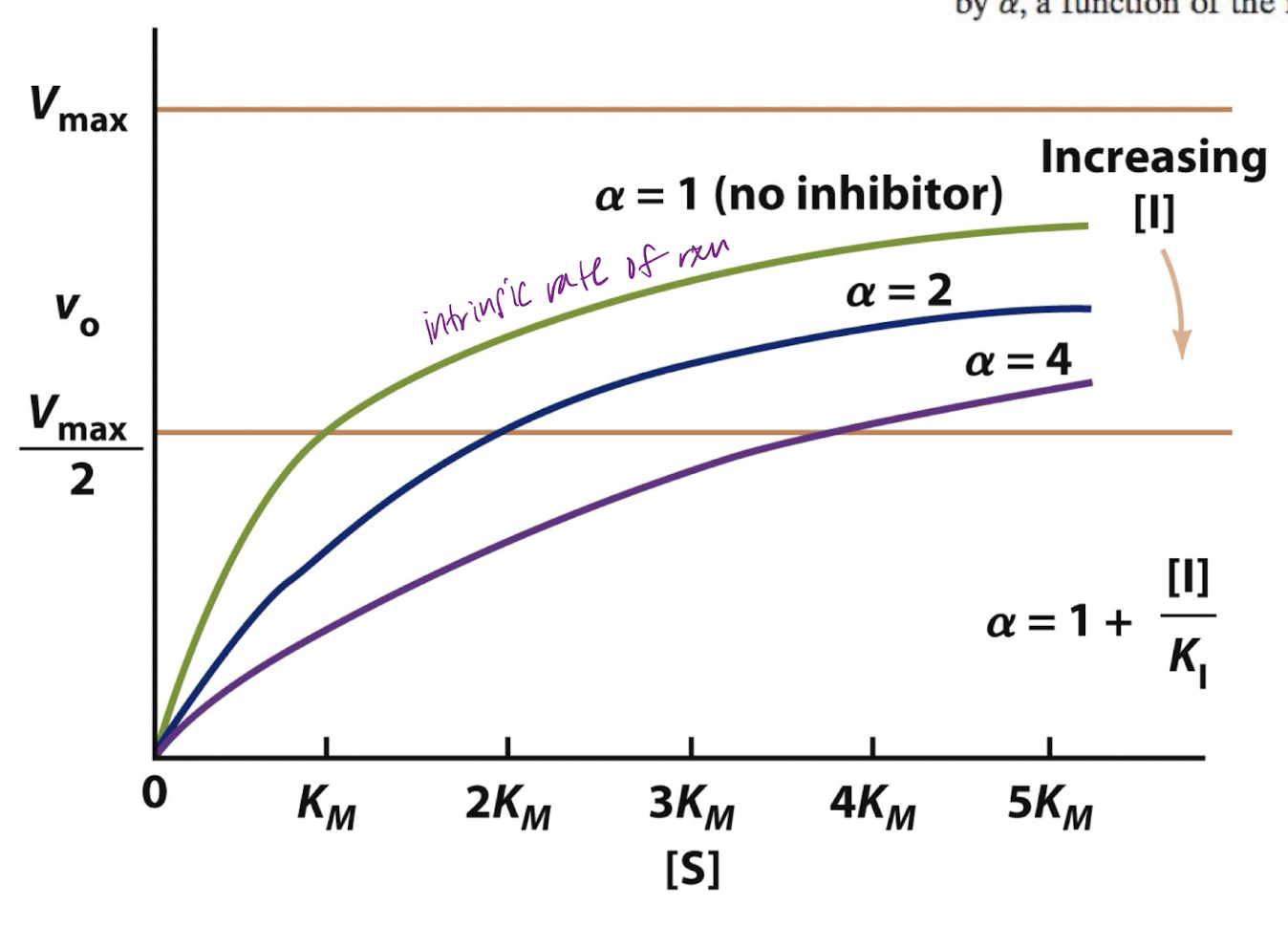
competitive inhibition
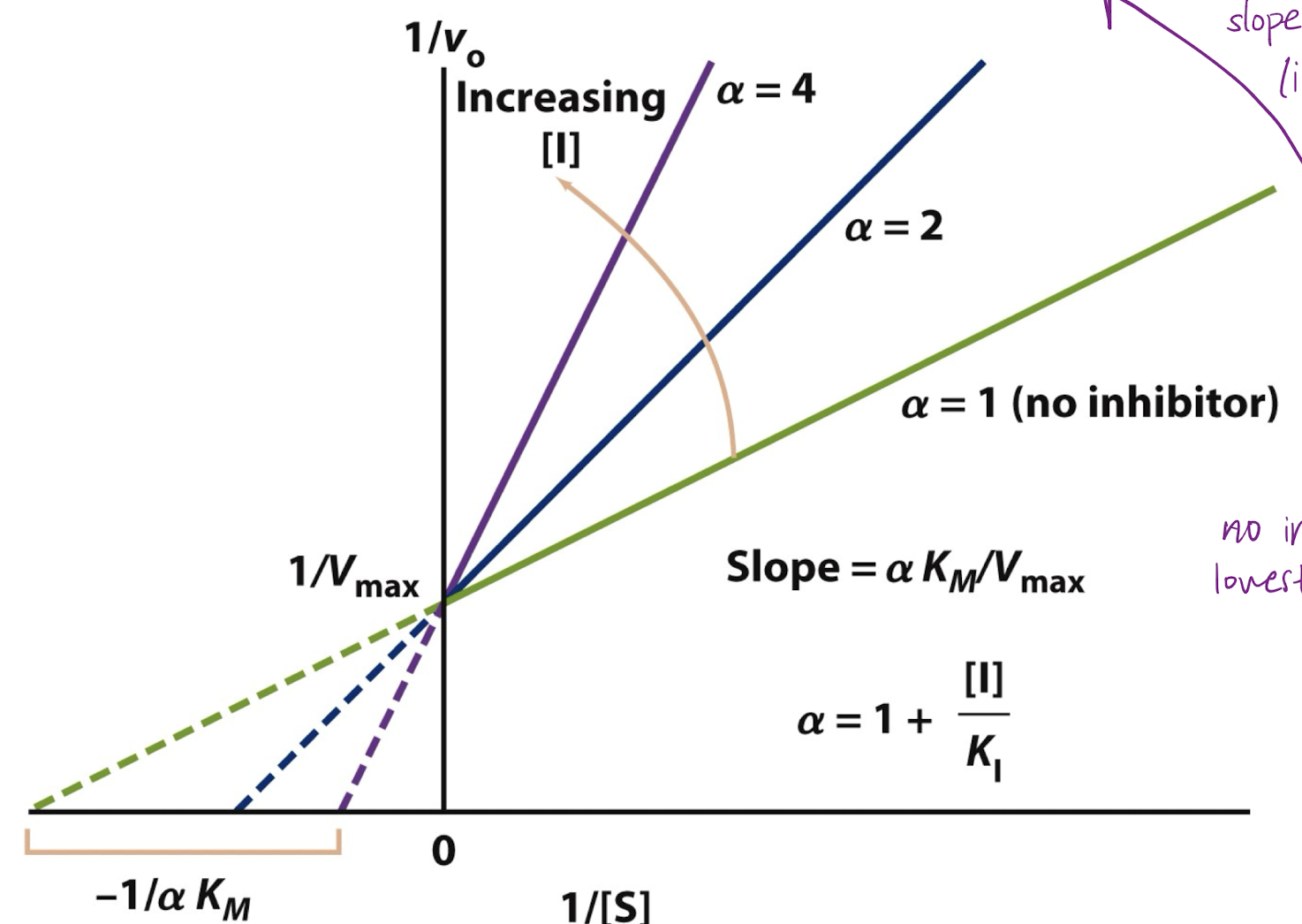
competitive inhibition
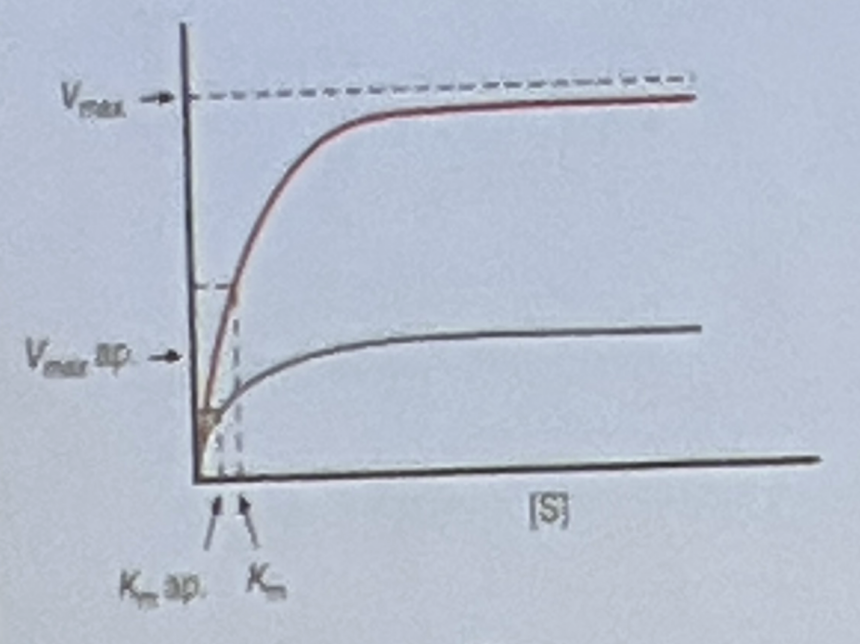
uncompetitive inhibition
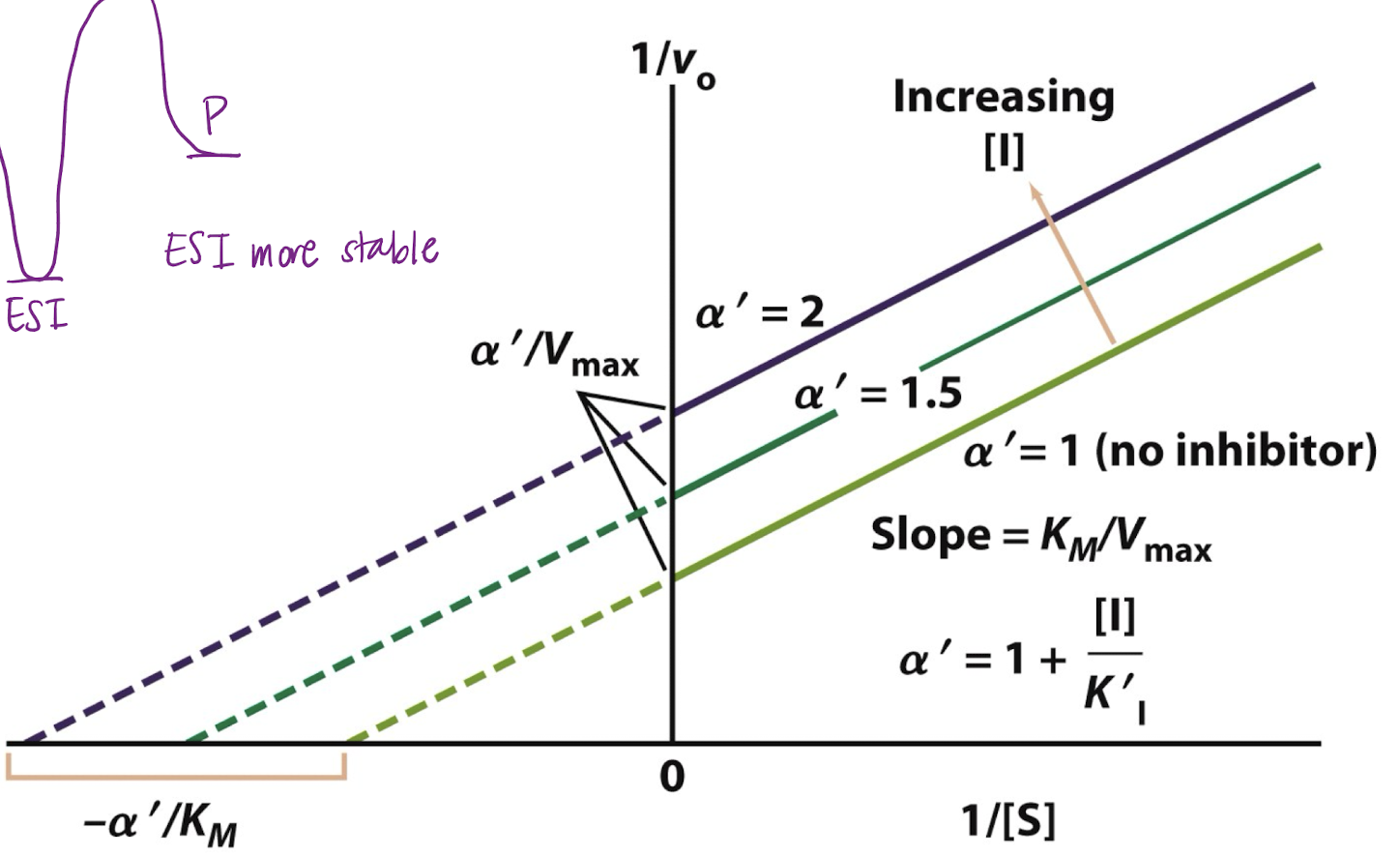
uncompetitive inhibition
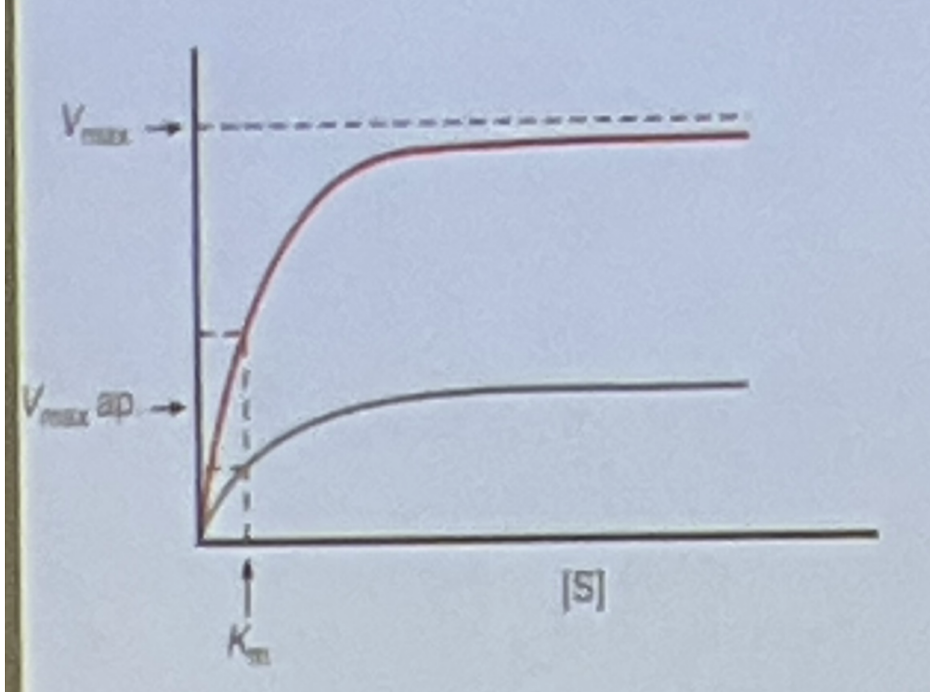
noncompetitive inhibition
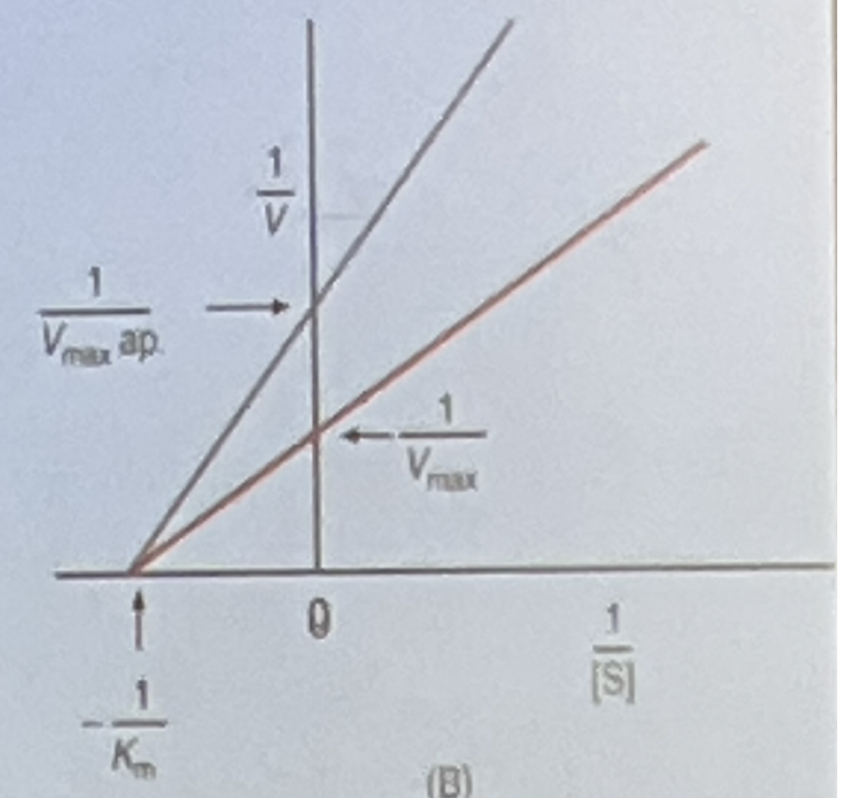
noncompetitive inhibition
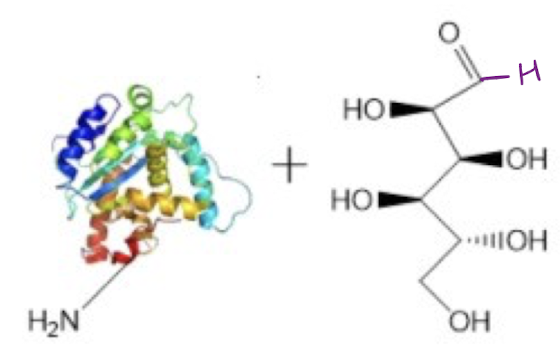
hemoglobin and open-chain glucose
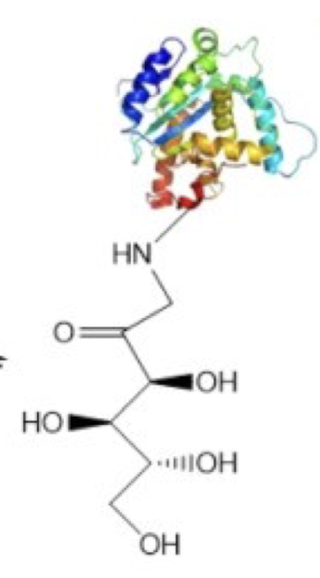
HbA1C
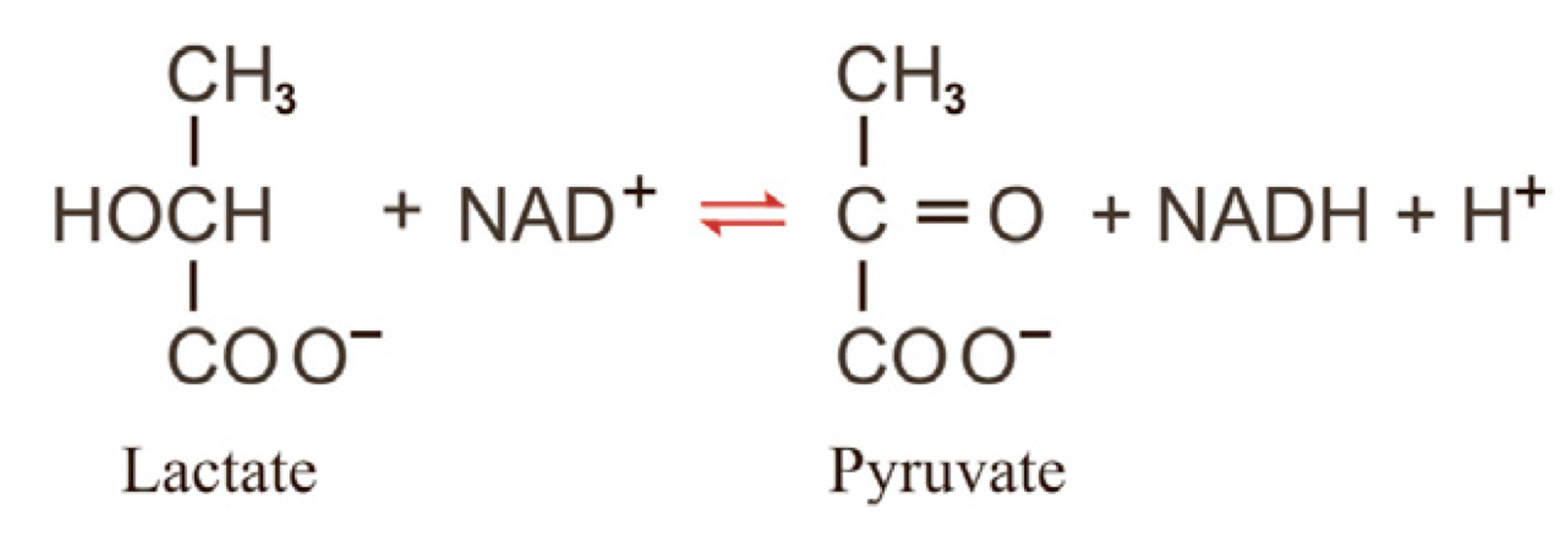
oxidoreductase
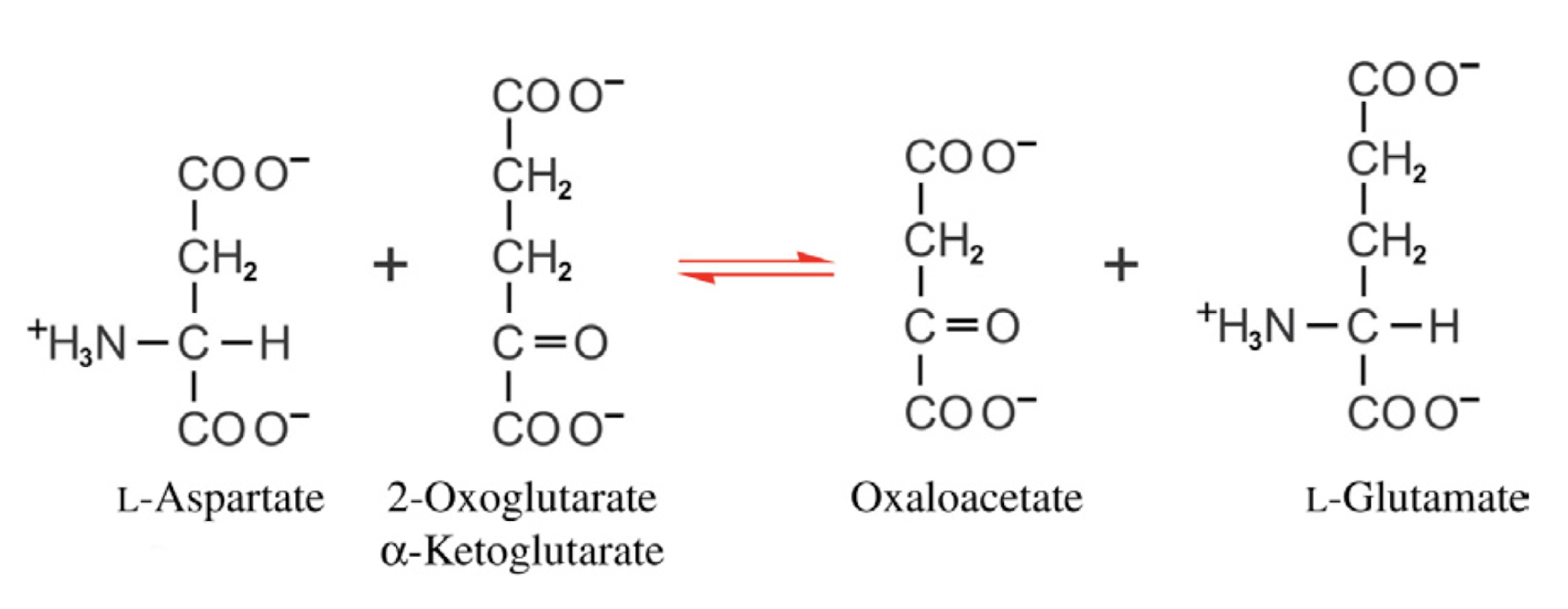
transferase