6th Grade Q2 Vocabulary - Physical Science
 Call Kai
 Learn
Learn Practice Test
 Spaced Repetition
 Match
Match Flashcards
1/70

There's no tags or description
Looks like no tags are added yet.
Name | Mastery | Learn | Test | Matching | Spaced | Call with Kai | Chat |
|---|

71 Terms

chemistry
the scientific study of matter, its properties, and how it changes

pure substance
a material that has a uniform and constant composition, meaning it is made of only one type of atom, molecule, or compound

physical change
A change where something looks different but is still the same thing.

chemical change
when a substance turns into a new substance with different properties

law of conservation of mass
matter can't be created or destroyed, it can only change form

element symbol
one- or two-letter short form, like an abbreviation, for an element
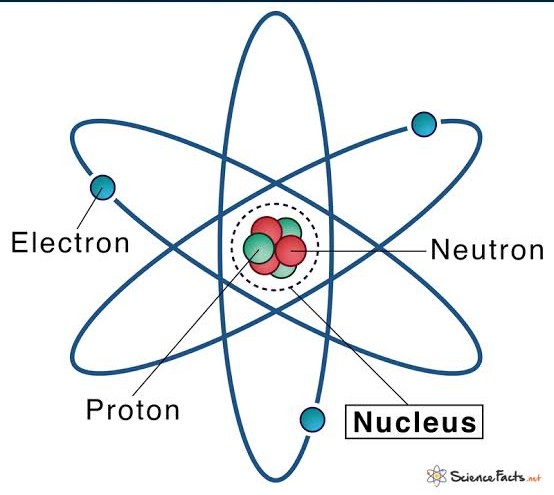
nucleus
the center of an atom; contains protons and neutrons

chemical bond
is like a strong, invisible glue or a special handshake that holds tiny building blocks called atoms together to make everything around us

compound
a substance made when two or more different elements are joined together chemically

fluid
any substance that can flow and change its shape to fill the container it is in

viscosity
a measure of how "thick" a liquid is, or how much it resists flowing

gas
A state of matter that spreads out to fill any space (like air).

pressure
The force of something pushing on something else.

evaporation
Vaporization that happens slowly on the surface of a liquid, like a puddle drying.

condensation
When a gas turns back into a liquid, like water on a cold window.
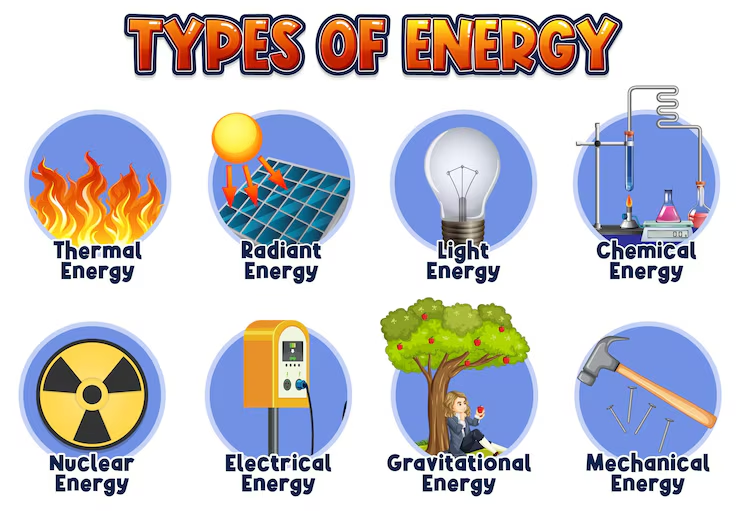
energy
The ability to do work or make things move.

energy transformation
When one form of energy changes into another (like a lamp changing electrical energy to light).
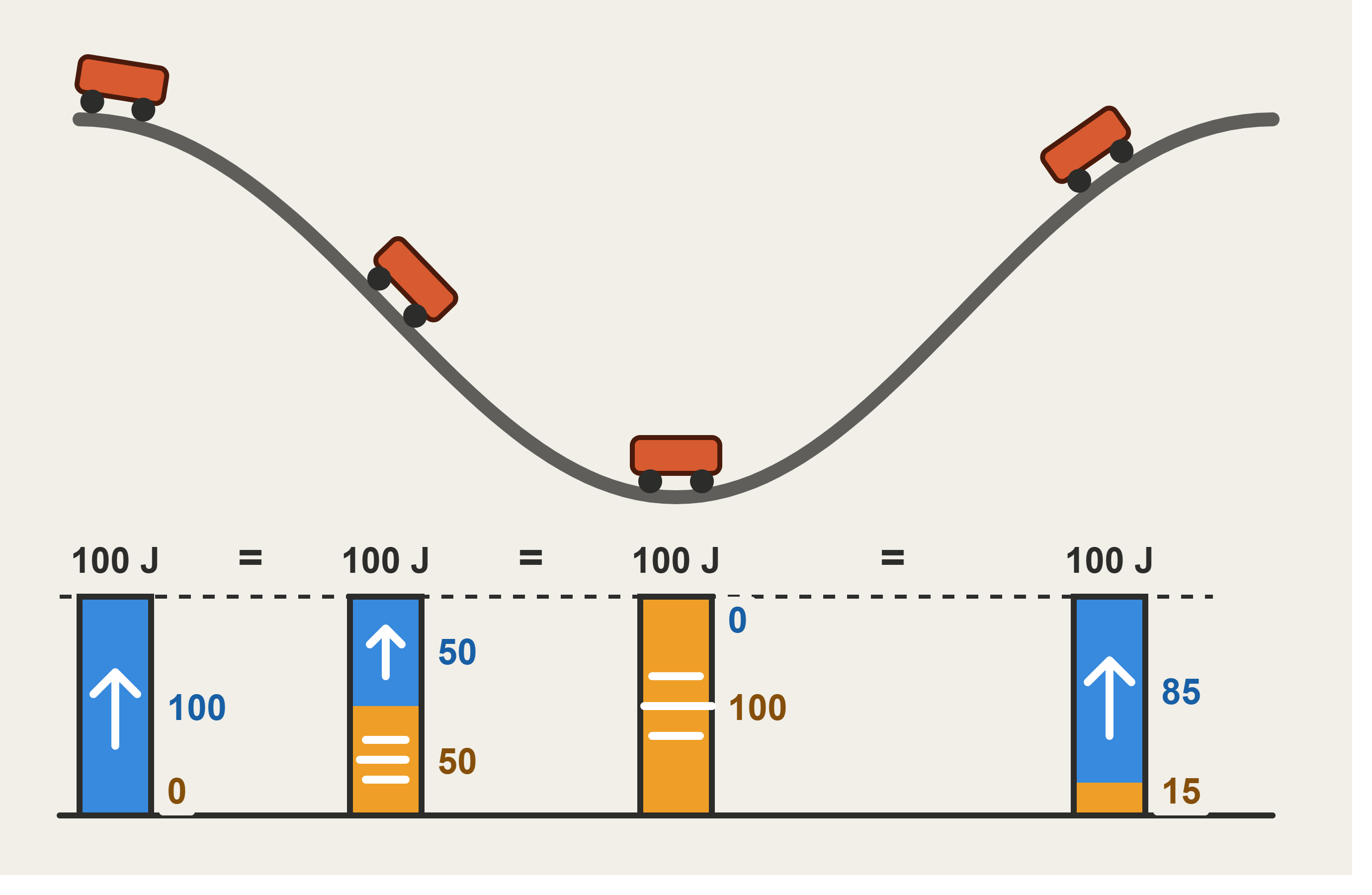
law of conservation of energy
Energy cannot be created or destroyed; it can only move or change form.

Element
a pure substance made of only one kind of atom

Molecule
a group of 2 or more atoms bonded together

Chemical Symbol
a one or two letter representation of an element

Atom
the basic particle from which all elements are made; the smallest particle of an element that has the properties of that element

Subscript
a small-sized number on the bottom right of the symbol. It refers to the number of atoms of the element

Chemical Formula
symbols that show the elements in a compound and the ratio of atoms (how many of each atom there are)

Matter
anything that has mass and volume

The Periodic Table
an arrangement of the elements showing the repeating pattern of their properties

Luster
the appearance of a mineral surface in terms of its light-reflective qualities

Insulator
materials that do not allow heat or electricity to pass through easily

Conductor
materials that do allow heat or electricity to pass through easily

Products
a substance formed as a result of a chemical reaction

Reactants
a substance that enters into a chemical reaction

Energy Transfer
Takes place when energy moves from one place to another. Energy can move from one object to another or energy can change from one form to another.

Temperature
how hot or cold something is; a measure of the average energy of motion of the particles of a substance

Heat
the transfer of thermal energy from one object to another because of a difference in temperature

Thermometer
an instrument used to measure temperature

Convection
the transfer of thermal energy by the movement of a fluid (liquid or gas)

Convection Currents
the movement of a fluid (liquid or gas), caused by differences in temperature, that transfers heat from one part of the fluid to another

Repel
objects which have the same charges push away from each other

Attract
objects which have opposite charges move towards each other

gravitational force
attraction between objects because they have mass (e.g., Earth pulling you down).
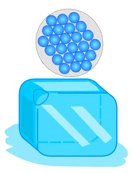
solid
a type of matter that has its own fixed shape and definite volume

liquid
a type of matter that can change its shape, but has a definite volume

melting
When a solid changes to a liquid, like ice turning to water.

freezing
When a liquid changes to a solid, like water turning to ice.

freezing point
The temperature when a liquid turns solid (water freezes at 32∙F/0∙C). The same as the melting point for a material.
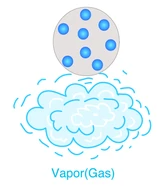
vapor
The gas form of a liquid, like water vapor in the air.

vaporization
When a liquid turns into a gas.

boiling
Vaporization that happens fast throughout a liquid, like water bubbling.

sublimation
When a solid changes directly to a gas (skips the liquid stage), like dry ice.

deposition
When a gas changes directly into a solid, skipping the liquid stage (like frost forming).

distance
How far something travels.
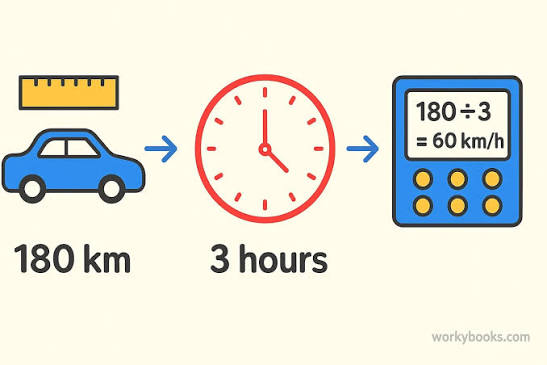
average speed
The total distance divided by the total time it took.

instantaneous speed
The speed at one exact moment.

velocity
Speed in a certain direction (like 5 miles per hour north).

slope
How steep a line is on a graph.

potential energy
Stored energy, ready to be used (like a stretched rubber band).

kinetic energy
Energy of motion (something has this when it is moving).

Neutron
a subatomic particle that has no charge and that is found in the nucleus of an atom

Proton
a subatomic particle that has a positive charge and that is found in the nucleus of an atom

Physical Property
a characteristic of a substance that can be observed or measured without changing the identity of the substance (color, density, boiling point, etc.)

Melting Point
the temperature at which a substance changes from a solid to a liquid; the same as the freezing point

Boiling Point
the temperature at which the substance transitions from a liquid to the gaseous phase; same as the condensation point

Speed
the distance and object travels in a unit of time

Electron
a subatomic particle that has a negative charge and is found orbiting the nucleus of an atom
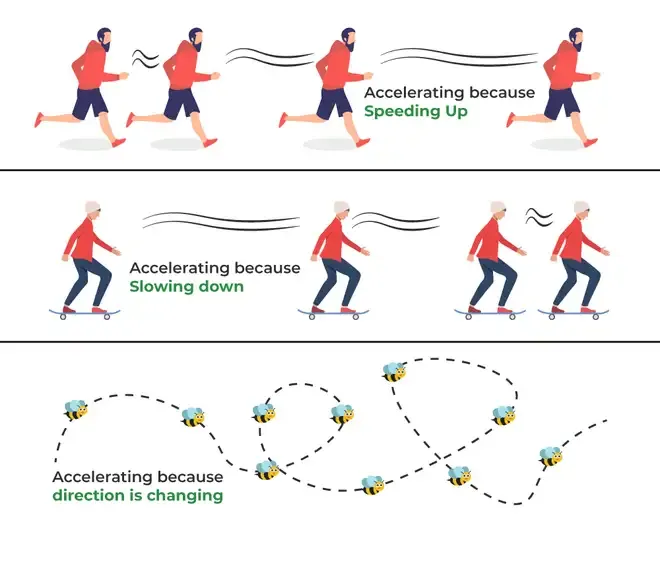
acceleration
the rate at which an object’s velocity (speed + direction) changes.

drag
a force that opposes motion through a fluid (like air or water).

inertia
tendency of an object to stay at rest or keep moving at constant speed in a straight line unless acted on by an unbalanced force.

mass
how much matter is in an object

motion
change of an object’s position relative to a reference point.

reference point
a location used to help describe motion (where you observe from).

weight
the force of gravity on an object (depends on both mass and gravitational field strength).