Carbohydrates
 Call Kai
 Learn
 Practice Test
 Spaced Repetition
 Match
 Flashcards
 Knowt Play
1/21

There's no tags or description
Looks like no tags are added yet.
22 Terms
what elements are carbohydrates made from
carbon hydrogen and oxygen for every carbon atom there are usually two hydrogen atoms and one oxygen atom
what is the general formula for carbohydrates?
(CH2O)n
what are structural isomers?
same chemical formula but different structures
what are monosaccharides
the monomers that make up carbohydrates eg. glucose and ribose
what is glucose and its structure ( be able to draw)
it’s a monosaccharide with 6 carbon atoms, this means it’s a hexose monosaccharide
there are two forms alpha (a) and beta (B) they both have a ring structure
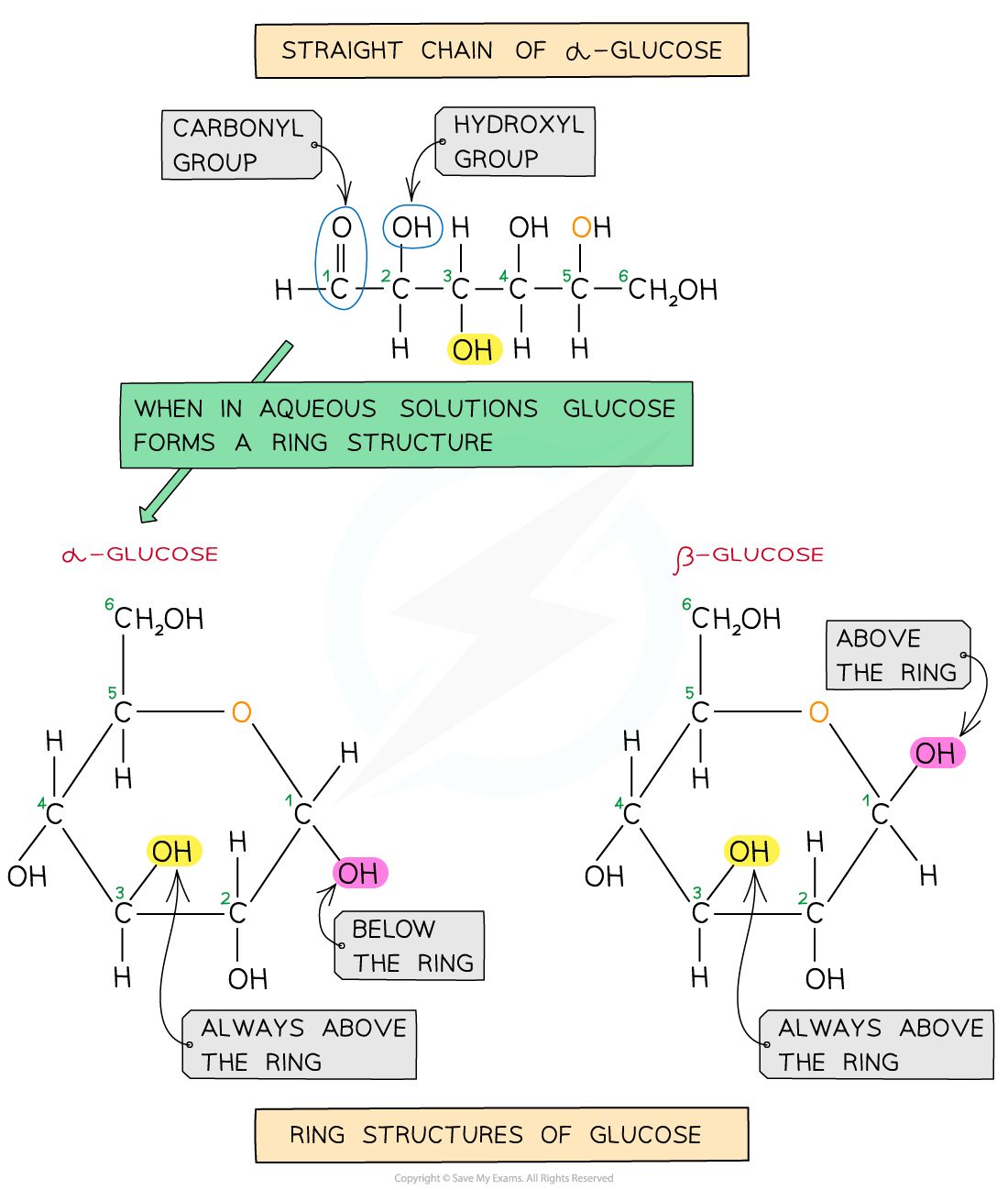
how to remember where the hydroxl group is in the two types of glucose
Alpha
Below
Beta
Above
how is the structure of glucose related to its function
as its function as the main energy source in plants and animals its structure makes it soluble so it can easily be trasnported.
its chemical bonds contain lots of energy
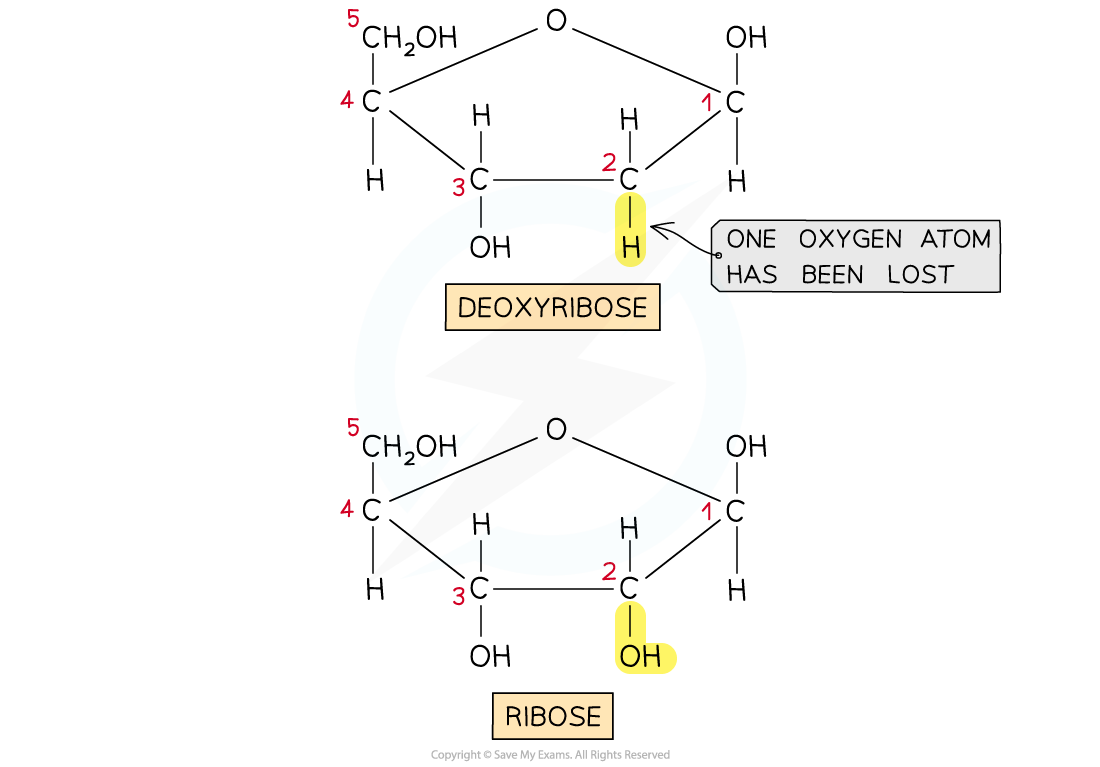
what is ribose and its structure
monosaccharide with five carbon atoms so it’s a pentose monosaccharide.
ribose is the sugar component of RNA nucleotides
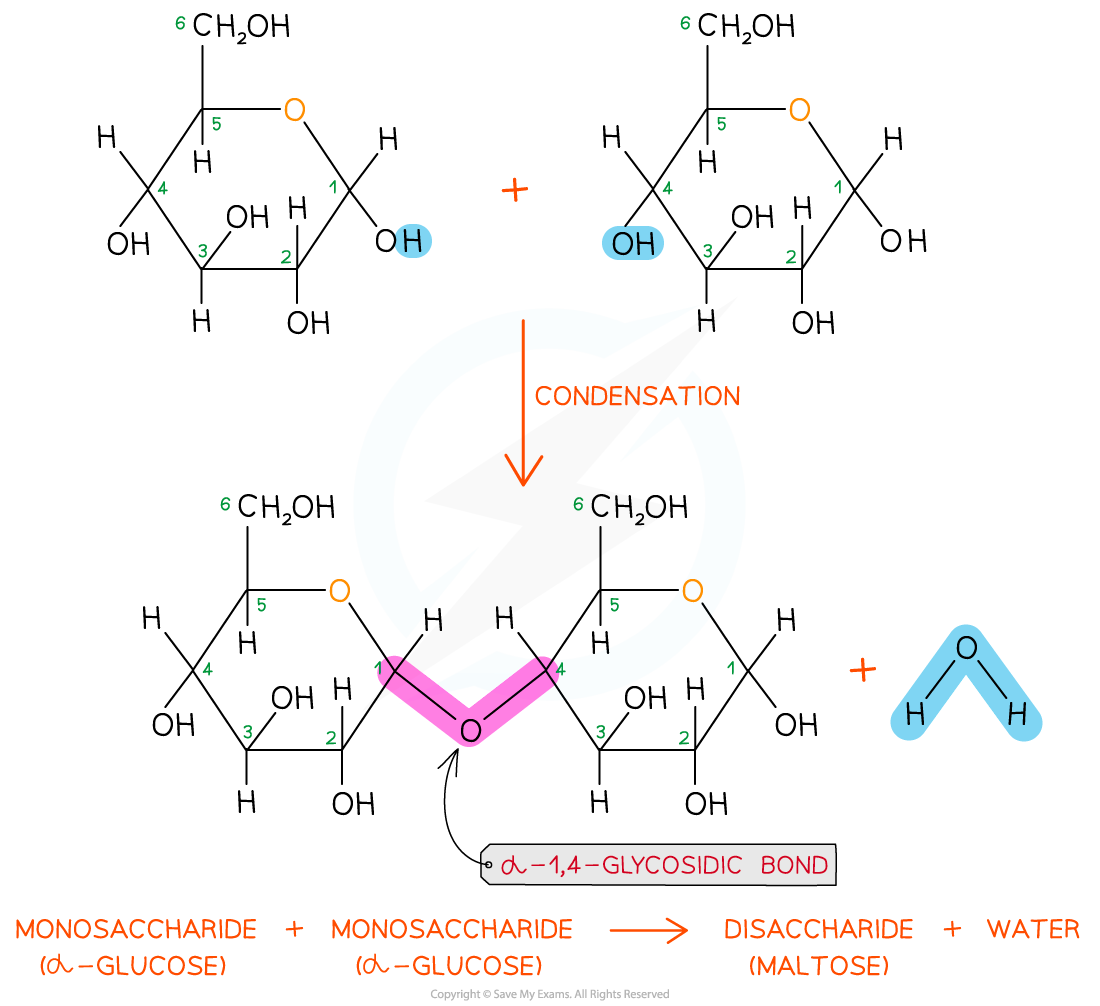
how does a polysaccharide form
monosaccharides are joined together by glycosidic bonds, during synthesis a hydrogen atom on one monosaccharide bonds to a hydroxyl (OH group) on another releasing a molecule of water in a condensation reaction
difference between a polysaccharide and and dissacharide
a disaccharide is formed when two monosaccharides join together whereas a polysaccharide when more than two monosaccharides join together
examples of dissacharides and the monosaccharides they’re made from
sucrose : a glucose and fructose
lactose : galactose and either a glucose or B glucose
maltose : a glucose and a glucose
what is starch
main energy storage material in plants, cells get energy from glucose and plants store excess glucose as starch
starch is insoluble in water so it doesn’t cause water to enter cells by osmosis which would make them swell making it good for storage
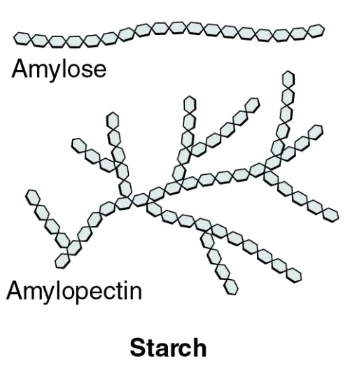
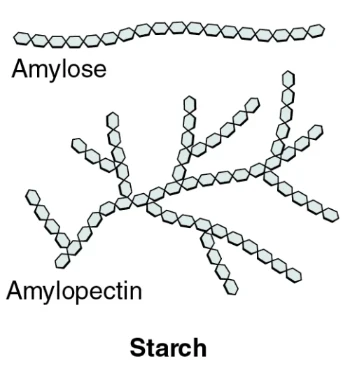
made up of amylose and amylopectin
how does amylose in starch help it to perform its function
long unbranched chain of a glucose, the angles of the glycosidic bonds give it a coiled structure like a cylinder, hydrogen bonds between a glucose molecules help to hold amylose in its helical structure
the helix shape makes it compact and resistant to digestion
—> makes it compact so it’s good for storage
what percentage of starch is amylose and what percentage is amylopectin
20 % amylose
80% amylopectin
how does amylopectin help starch to perform its function
long, branched chain of a glucose, its side branches allow the enzymes to break down the molecule to get at the glycosidic bonds, so the glucose can be released quickly for energy
forms 1-4 glycosidic bonds and also 1-6 glycosidic bonds creating a branched molecule
function of glycogen
Glycogen is the storage polysaccharide of animals and fungi, it is highly branched and not coiled
Liver and muscles cells have a high concentration of glycogen, present as visible granules, as the cellular respiration rate is high in these cells (due to animals being mobile)
what is glycogen and how is its structure related to its function
main energy storage material in animals, animals store excess glucose as glycogen another polysaccharide of a glucose
its structure is similar to amylopectin except it has lots more side branches —> loads more branches means that stored glucose can be released quickly which is important for energy release in animals, it’s also a very compact molecule so good for storage
branches enable more free ends so that condensation or hydrolysis reactions can occur more quickly so the storage or release of glucose ca suit the demands of the cell
has 1-4 glycosidic bonds and then 1-6 glycosidic bonds to form the branches
how is glycogen different to starch and why is this very important for its function
glycogen is less dense and more soluble than starch as it’s not as compact and it’s broken down more rapidly, this indicates the higher metabolic requirements of animals compared with plants
glycogen is also more branched than amylopectin allowing them to store more
State the role of cellulose in plants. (2 marks)
- Cellulose provides structural strength in plants.
- It is located in the cell wall and prevents cells from bursting when they take in excess water.
what is cellulose and how is its structure related to its function
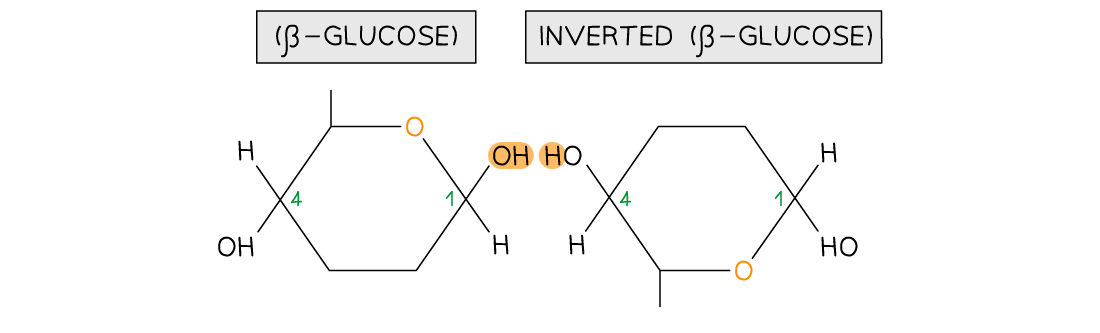
Cellulose is made of β-glucose monomers joined by 1-4 glycosidic bonds, making it unbranched. Consecutive B glucose molecules are inverted/rotated 180’C so that the 1-4 glycosidic bonds can be formed. This is because B glucose is an isomer of a glucose.
- The β-glucose molecules form long, straight chains that lie parallel to each other.
- Many hydrogen bonds form between these chains, creating strong microfibrils. These strong fibres means cellulose provides structural support for cells in plant cell walls
cellulose function
Cellulose is the main structural component of cell walls due to its strength which is a result of the many hydrogen bonds found between the parallel chains of microfibrils
The high tensile strength of cellulose allows it to be stretched without breaking which makes it possible for cell walls to withstand turgor pressure
As few organisms have the enzyme (cellulase) to hydrolyse cellulose it is a source of fibre
diagram of condensation reaction to form maltose
.