Micro Lab Exam 2
 Call Kai
 Learn
 Practice Test
 Spaced Repetition
 Match
 Flashcards
 Knowt Play
1/32

There's no tags or description
Looks like no tags are added yet.
33 Terms

Rose Bengal Agar (RBA)
- Complex; Isolating fungi
- Selective; Rose Bengal dye (inhibits bacteria)
- Non-differential
Tryptic Soy Broth/ Agar (TSB/TSA)
used under the same conditions as NA, but when the specimen is sensitive to fungal proteins. TSA contains soy extract.
Complex, non-selective, non-differential

Nutrient Broth/ Agar (NB/NA
common agar used in lab to culture most non-fastidious organisms/ most organisms for whom nutritional requirements have not been determined.
complex, non-selective, non differential, yeast extract
results: growth of culture

Eosin Methylene Blue Agar (EMB)
selects for gram-negative enteric (intestinal) bacteria, family Enterobacteriaceae. The dyes eosin and methylene blue kill or inhibit Gram-positives.
Differential for lactose fermentation
Metallic green sheen or black= strong lactose fermentation
Pink= moderate
Clear/ no color change= non-lactose fermenter

Mannitol Salt Agar (MSA)
Salt (7.5% NaCl) makes it selective for halophiles
Mannitol + pH indicator makes it differential
Growth = salt tolerance/ yellow = mannitol fermenter

MacConkey Agar (MAC)
-Selective* for *gram-negative bacteria* (crystal violet dye)
Inhibits the growth of gram-positive bacteria and fungi
-*Differential for lactose fermentation
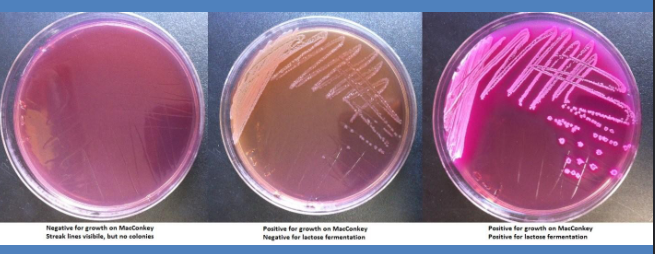
How do lactose-fermenting members of the Enterobacteriaceae appear on MAC?
Lactose fermenters apear red (neutral red turns red in acid)
Non lactose fermenters = clear, white, or color of the medium
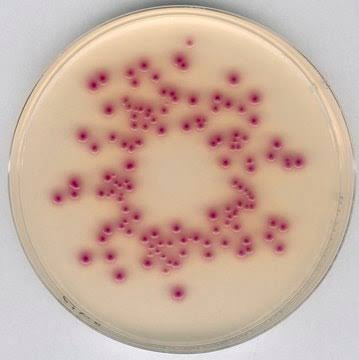
Coliforms
Gram-negative enteric bacteria that ferment lactose

Caesin Digest Agar
Detects casesinase (caesin is makes milk white and opaque)
zone of clearing around growth (where casein has been removed) = caesinae positive
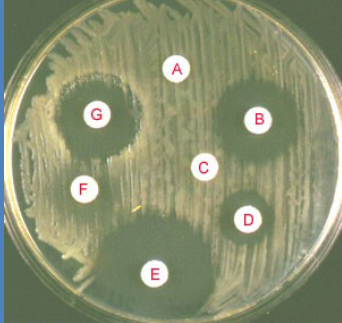
Mueller Hinton Agar
A common agar medium used for antibiotic sensitivity testing: Kirby-Bauer Test
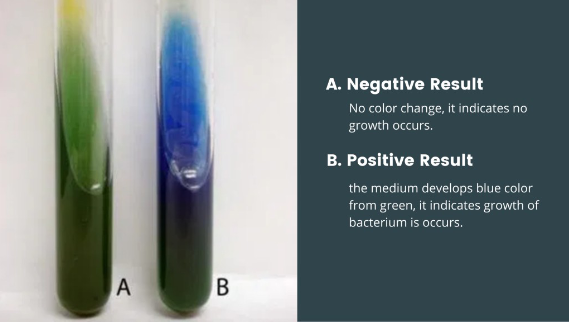
Simmons Citrate Agar
slant / complex(-) medium used to determine whether an organism can utilize citrate as its sole carbon source
-differential for citrase
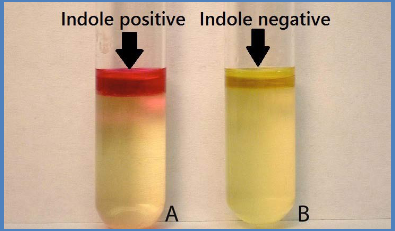
SIM Agar Deep
Sulfur, Inodle, Motility
complex, nonselective, differential for tryptophanase
Add Kovac's indole reagent after incubation
red= indole positive
TSI Agar
slant; complex (-) with three sugars + iron sulfate; non selective
differential for sugar fermentation (acid), gas produdction, and iron metabolism
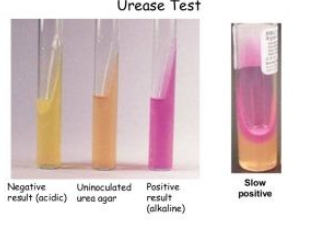
Urea Test
Urea is a waste product made when animal cells metabolize proteins. Tests for urease which breaks down urea into ammonia and carbon dioxide.
Ammonia raise pH into alkaline range turning medium from yellow-orange to hot pink.

Indole Test
Tests organisms ability to breakdown Tryptophan to produce waster product indole by the action of tryptophanase.
Kovac's indole reagent added to top of SIM agar after incubation
Positive = Red, Negative- No color change
What does IMViC stand for?
Indole, Methyl Red, Voges-Proskauer, Citrate
What is the IMViC series used for
differentiate between the many functional groups found in the family Enterobacteriaceae
-tests (4) are independent (16 possible combinations)

Methyl Red (MR) Test
Detects mixed and stable acidic waste.
MRVP broth (complex, non-selective, non-differential, clear)
Postive= methyl red stays red in acid
Negative= clear to slightly yellow

Voges-Proskauer Test
Detects acetoin (made by butylene glyvol pathway along with 2,3-butanediol when organism further converts its acidic waste
Reagent: Barritts's reagents A (alpha napthol) and B (KOH) added after incubation
Positive= formation of red layer

Citrate Test
Determines if the speciment produces citrase and if it can use citrate as its sole carbon source
Blue= positve, Green = negative
What doe SIM stand for
Sulfur, Inodle, Motility
Ingredient SIM Agar deep contains that makes the indole reaction possible
Tryptophan

Catalse Test
Hydrogen peroixde (H2O2) us added to the specimen.
Bubbles seen by eye= strong secreter of catalase
Bubbles seen only under the microscope = weak secreter
No bubbles= non secretor
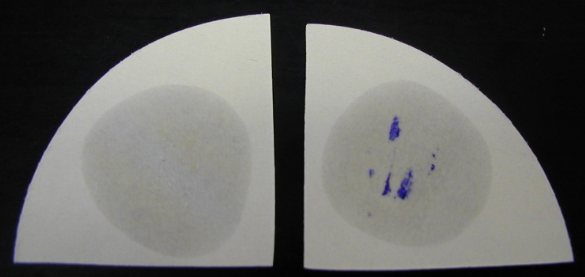
Oxidate test
Detects only the scretion of cytochrome oxidase: enzyme in aerobic respiration combining two-low energy electorns and two hydrogens ions with final electron acceptor, oxygen
Does NOT detect catalase, peroxide breakdown, fermentation or any other enzyme
Procedure: specimen on filter paper, Kovac’s oxidase reagent, read in 60 secs, dark purple to black = postive
Enzyme that converts superoxides to peroxides
Superoxide dismutase (SOD)
Enzyme that deals with peroxides
Catalase

Gelatin Test
Differential for gelatinase
If gelatin borken down, medium turns liquid
After incubation, refigerate at 4 degrees celcius and tild: still liquid- positive

Starch Hydrolysis Test
Detects amylase. Iodine is added after incubatio, it tuned remaining starch purple.
Zone of clearing around growth = postive
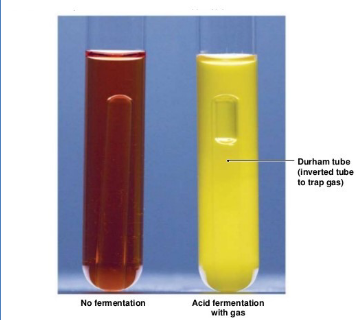
How is gas production showin during fermentation
With a Durham tube: small inverted tube in fermentation broth (phenol red borith) that traps a gas bubble
Triple Sugar Ion (TSI) Agar
contains glucose (small amount), lactose (large), and sucrose (large). Iron sulfate detects metabolism of iron compounds: if broken down sulfur left behind and turns black

TSI Reading: Red slant/ yellow butt (RED= NEUTRAL, YELLOW = ACID)
Glucose fermented first. Small acid is neutralized by the buffer in the oxygen rich slant but not in the oxygen poor butt

TSI Reading: Yellow slant/ red butt (RED= NEUTRAL, YELLOW = ACID)
Lactose and/or sucrose fermented before glucose. Large acid overwhelms the buffer
TSI Reading: Whole tube yellow
all three sugars fermented, no preference in order