Connective Tissues
 Call Kai
 Learn
Learn Practice Test
 Spaced Repetition
 Match
Match Flashcards
 Knowt Play
1/112

There's no tags or description
Looks like no tags are added yet.
Name | Mastery | Learn | Test | Matching | Spaced | Call with Kai | Chat |
|---|
No analytics yet
Send a link to your students to track their progress
113 Terms
What does connective tissue do?
It supports the body's structure and framework and holds cells and tissues together. It's found everywhere in the body.
What do collagen and elastin each provide?
Collagen provides strength and support. Elastin provides flexibility and elasticity.
Besides collagen and elastin, what else counts as connective tissue?
Bone and fat (adipose tissue). The slide also lists cartilage.
What do these disorders have in common?
They're autoimmune connective tissue disorders: the immune system attacks the body's own framework. Several of them are chronic and not curable.
Which disorders are covered in this lecture?
Gout, lupus, scleroderma, rheumatoid arthritis, juvenile idiopathic arthritis, and fibromyalgia.

What is gout, and what causes it?
An inflammatory arthritis caused by a uric acid problem. The kidneys don't excrete uric acid the way they should, so urate crystals deposit in the joints and soft tissue and cause inflammation.
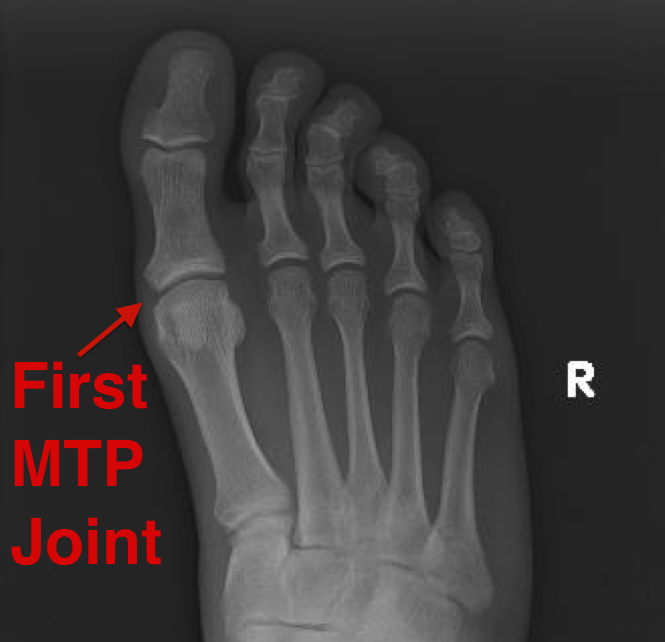
What is the classic location for gout?
The joint of the great toe (the 1st metatarsophalangeal joint).
What are the risk factors for gout?
A diet high in red meat, organ meats and shellfish (Purine-rich diet). Frequent alcohol use, obesity, and renal disease. as well as diuretic use and chemotherapy
What is hyperuricemia, and what lab value goes with it?
A high uric acid level. She said greater than >6.8 is the technical high and the value you're expected to know, and that providers start looking at anything above 6 (the slide says greater than 6 mg/dL). A patient can be asymptomatic for years before flare-ups start.
What does an acute gout attack look like?
A sudden onset, often at night, with very severe joint pain and a red, warmth, swollen joint. The patient can't move around as much (limited mobility). You’re gonna see localized symptoms. The great toe is affected in 90.
What does chronic gout look like?
Chronic gout presents with recurrent attacks of joint pain, and the affected joints may show visible tophi, which are deposits of uric acid crystals. Patients may experience joint inflammation and damage over time and potential kidney damage.
What triggers gout flare-ups?
The same risk factors, such as poor diet choices and drinking.
What diagnostics are used for gout?
Serum uric acid. (>6.8 mg/dL) Aspiration of synovial fluid to look for crystals. Elevated WBCs from the inflammation. X-ray to show tophi buildup or joint damage.
What are the meds for acute gout?
NSAIDs are the first-line treatment. Colchicine is the med used early in attack. Corticosteroids are used if NSAIDs can't be given or the attack is severe.
What must you teach about colchicine?
It can cause GI upset, and the patient must avoid grapefruit, which is a contraindication.
What is the goal of chronic gout treatment, and which meds are used?
The goal is to lower uric acid when it stays high. The meds are: Allopurinol, the most common. It decreases uric acid production (slide). Febuxostat, which also decreases production (slide). Probenecid, which increases uric acid excretion (slide). Pegloticase, reserved for cases that aren't improving.
What is the nursing care for a gout attack?
Pain control using PRICE without the compression: protect, rest, ice, and elevate. Encourage fluids and monitor kidney function.
Why encourage fluids with gout, and when do you need to be careful?
Fluids help the kidneys flush out uric acid. Encourage them unless contraindicated, such as in renal disease, where you can't overload the kidneys.
What should you teach a patient with gout?
Follow a low-purine diet: limit red meat, organ meats, and shellfish. Limit alcohol. Take long-term meds consistently. Stay hydrated. Recognize early flare symptoms so colchicine can be started early.
What is SLE?
Systemic Lupus Erthematosus. A chronic, multisystem autoimmune disease in which the immune system attacks healthy tissue. It goes through remissions and exacerbations.
What is the disease process in lupus?
Autoantibodies form complexes that deposit in tissues, which causes chronic inflammation and tissue damage.
Which systems does lupus commonly affect?
The skin, joints, kidneys (a big one), cardiovascular system, and nervous system. The slide adds the lungs.
What are the risk factors for lupus?
Female sex, a family history (it's genetically linked), hormonal influences, and environmental triggers.
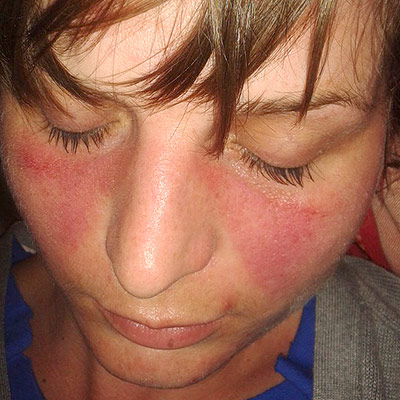
What are the characteristic findings of lupus?
Butterfly (malar) rash across the cheeks and nose. Photosensitivity. Oral ulcers. Alopecia (hair loss). Raynaud's phenomenon.
What is Raynaud's phenomenon?
A vascular response to stress or temperature that turns the fingers red, then white, then blue, in any combination. It can occur with lupus and scleroderma.

What is lupus nephritis, and what are its signs?
Kidney damage caused by lupus inflammation. Signs are protein and blood in the urine and elevated kidney function labs.
What neurologic and hematologic problems can lupus cause?
Neurologic problems include seizures and sensory issues. Hematologic problems include anemia and abnormal blood counts.
What lung and heart problems can lupus cause?
Lupus can cause inflammation of the lungs, leading to pleuritis and it can affect the heart by causing pericarditis.
What are the common general symptoms of lupus?
Fatigue, fever, weight loss, joint pain (arthralgia), arthritis, and muscle pain.
Is there one definitive test for lupus?
No. Diagnosis is based on patient history, a lot of lab work, and symptoms.
Which lab findings support a lupus diagnosis?
A positive ANA (the antibody screen). Anti-dsDNA and anti-Smith antibodies. CBC abnormalities like showing decreased blood counts. Elevated inflammatory markers. A urinalysis to check kidney involvement.
What does each lupus medication class treat?
NSAIDs: mild pain and inflammation. Hydroxychloroquine: the first-line long-term med. Corticosteroids: rapidly control flares. Immunosuppressants: severe organ involvement only. Biologics: block a specific immune pathway in order to decrease flare ups.
Why is combination therapy often needed when starting hydroxychloroquine?
It takes several weeks to months to build up in the system, so other meds cover symptoms until it starts working and reducing flares.
Why are immunosuppressants saved for severe cases?
Lupus is already an autoimmune disorder, so suppressing the immune system is a balancing act. They're used only for severe organ involvement, like damage.
What are the nursing interventions for lupus?
Assess for flares: inflammation, butterfly rash, and Raynaud's. Monitor renal and cardiac function for organ involvement. Manage fatigue and pain. Promote rest periods and cluster care in the hospital. Keep follow-up appointments. Protect the skin. Prevent infection.
What SPF is recommended for lupus patients, and why is it higher than the general recommendation?
SPF 30 or higher, or avoiding excessive sun, compared with SPF 15 for the general public. Lupus patients are more sensitive to the sun.
Which medications and vaccines should lupus patients avoid?
Sun exposure while on photosensitizing drugs such as doxycycline, and no live vaccines, because they're autoimmune and may be on immunosuppressants.
What should lupus patients report for signs of infection?
Fever, rash, edema, blood in the urine, and any localized signs of infection.
Why does a lupus patient who becomes pregnant need extra follow-up?
Some lupus medications can affect the pregnancy.
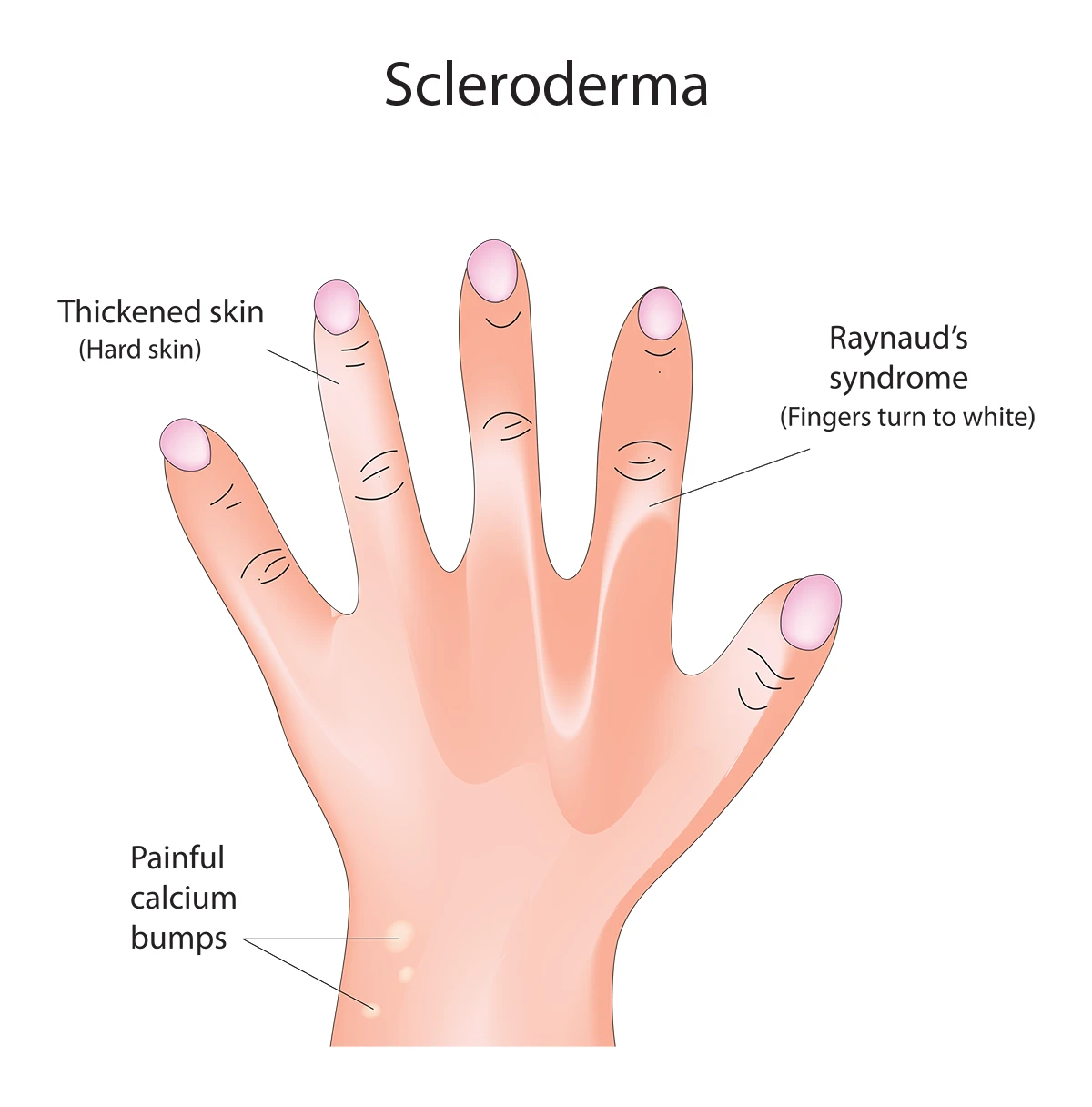
What is scleroderma?
A chronic autoimmune connective tissue disorder that causes excessive collagen production. This leads to fibrosis (like excess scar tissue) and hard, thick skin, and it can also damage internal organs. It can be localized or systemic.
Which areas does scleroderma commonly affect?
The skin, the lining of the blood vessels, the GI tract, lungs, heart, kidneys, and sometimes the eyes.

What are the 3 key features of scleroderma?
Thick, tight skin; Raynaud's; and progressive organ dysfunction.
As the fibrosis proceeds skin, the lining of the blood vessels, the GI tract, lungs, heart, kidneys…
then you can start to have pulmonary or cardiac complications, which may lead to a comorbidity problem.
What does the CREST syndrome (the common manifestations for sclerodoma) acronym stand for?
Calcinosis, Raynaud's, Esophageal dysmotility, Sclerodactyly, Telangiectasia
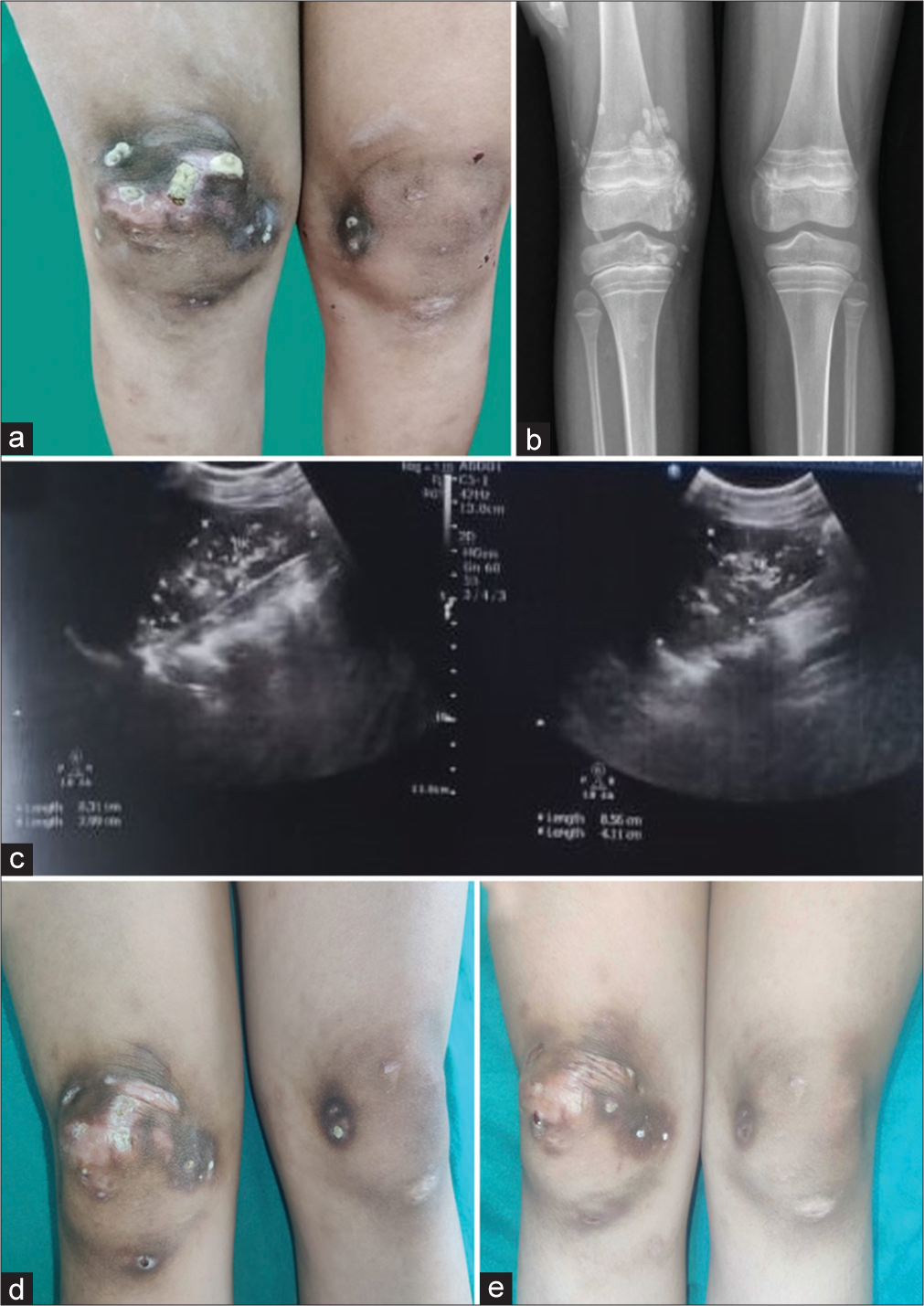
What does the C in CREST stand for?
Calcinosis: calcium deposits in the skin.
What does the E in CREST stand for?
Esophageal dysmotility: a condition causing delayed emptying, which can cause diarrhea, constipation, or obstruction and affecting the movement of the esophagus, leading to swallowing difficulties.
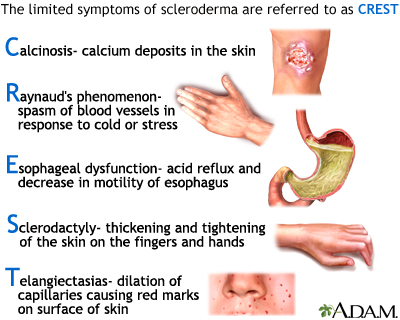
What does the S in CREST stand for?
Sclerodactyly: shiny, thickening and tightness of the skin on the fingers and toes, often leading to restricted movement.

What does T in CREST stand for?
Telangiectasia: small dilated blood vessels visible on the skin surface, often associated with redness and can occur on the face and hands. Spider veins
What is the key concept about how scleroderma progresses?
The more fibrosis there is, the more vascular and organ damage there is, the more systemic problems you’ll start to see. Early on it usually starts with skin symptoms and then moves inward.
What happens when fibrosis reaches the lungs?
Interstitial lung disease (pulmonary fibrosis) and Pulmonary hypertension. Breathing problems can start to occur.
What happens when fibrosis reaches the heart?
Fibrosis in the heart can lead to myocardial fibrosis, overload, dysrhythmias, myocardial infarction (MI), pericardial inflammation, and eventually heart failure.
What happens when fibrosis reaches the kidneys?
Fibrosis in the kidneys can lead to decreased renal function and impaired filtration, contributing to kidney disease and potential renal failure. Malignant hypertension can also occur (Sclerodema renal crisis).
What happens when fibrosis reaches the musculoskeletal?
Fibrosis in the musculoskeletal system can lead to restricted mobility from joint contractures, chronic pain, stiffness, swelling, and sclerodactyly.
What diagnostics are used for scleroderma?
Antibody tests (ANA, anti-centromere, anti-Scl-70), pulmonary function tests, an echocardiogram, and a thorough skin assessment.
What is the goal of scleroderma treatment?
There is no cure, so treatment manages symptoms, protects the organs, maintains function, and preserves quality of life.
What does each scleroderma medication class treat?
Calcium channel blockers: Raynaud's. PPIs (pantoprazole, esomeprazole): reflux and GERD. Immunosuppressants: slow progression, but don't cure. Antihypertensives: prevent renal complications from high blood pressure.
What is the nursing care for scleroderma?
Assess skin integrity, and use mild soaps and moisturizers. Protect the hands from injury. Monitor respiratory status and blood pressure. Evaluate for swallowing problems. Watch labs and vitals, and use a tele monitor for cardiac involvement.
How do you manage Raynaud's?
Keep the hands warm with gloves or a heat pack wrapped in a washcloth (never directly on the skin). Avoid cold, which is a big trigger, and reduce stress.
What are the 3 priority complications of scleroderma?
Pulmonary fibrosis, pulmonary hypertension, and scleroderma renal crisis.
What should you teach a patient with scleroderma?
Protect against cold. Reduce stress. Stop smoking. Use moisturizers. Eat small, frequent meals, since GI fibrosis can make full meals hard to tolerate. Report worsening shortness of breath. Stick with prescribed meds.

What is RA?
Rheumatoid Arthritis. A chronic, systemic autoimmune disease that causes inflammation of the synovial joints. It's usually symmetrical joint involvement and has periods of remission and exacerbation. it causes progressive cartilage and bone destruction.
Who typically gets RA, and what contributes to it?
It's more common in women, usually ages 30–50. The exact cause is unknown, but it's genetically linked, and environmental triggers include smoking, infections, and obesity.

How does RA destroy a joint?
The immune system attacks the synovium, which becomes inflamed and thickens into pannus formation (overgrowth of tissue in the joint). The pannus erodes the cartilage, then the bone erodes and loses density, which leads to permanent deformity.
Which joints does RA affect most?
The hands most of all, starting with the small joints, plus the wrists, feet, knees, and ankles.
What can RA affect outside the joints in severe, long-term disease?
The skin, eyes, blood vessels, heart, lungs, and muscles.
What is the hallmark sign of RA, and how does it differ from osteoarthritis?
Morning stiffness lasting more than 30 minutes. OA stiffness is only temporary.
What are the joint (articular) signs of RA?
Symmetrical pain, swelling, warmth, and stiffness, starting in the small joints of the hands, wrists, and feet. Decreased ROM causes fine motor problems, and deformities appear later.
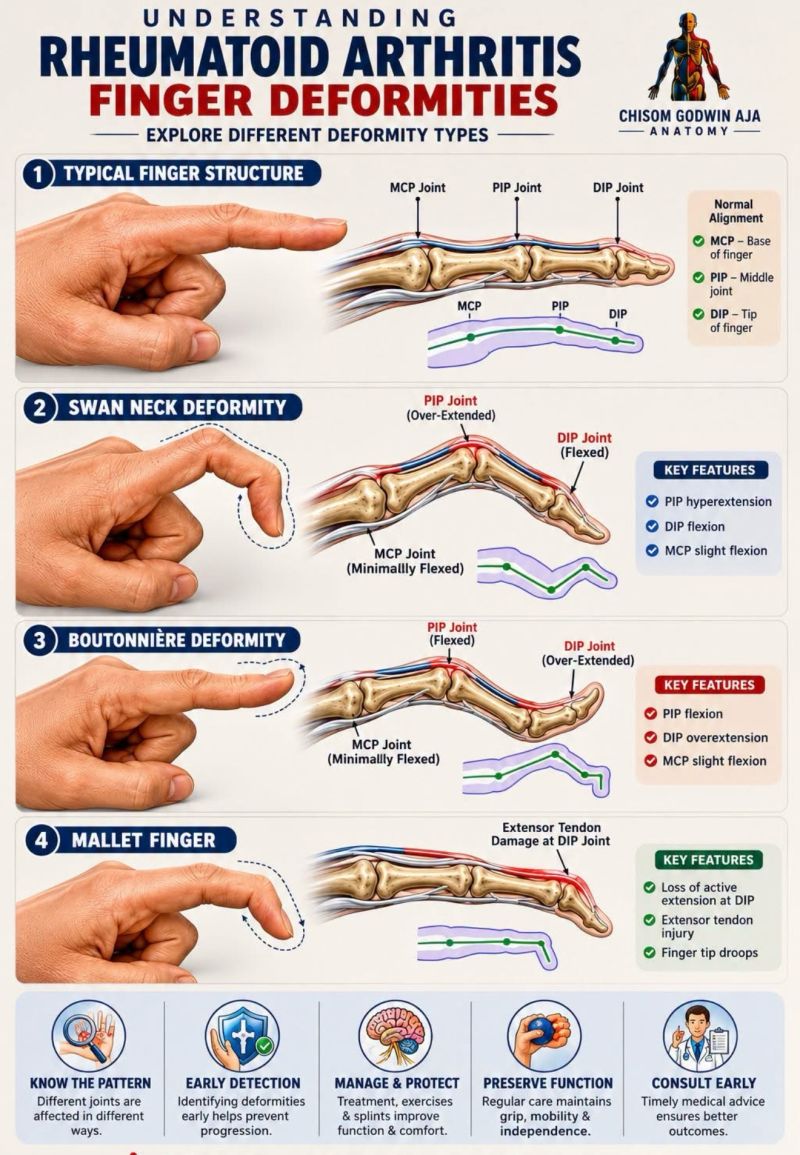
What is a swan neck deformity?
It involves the PIP and DIP joints (the slide describes PIP hyperextension with DIP flexion), so the finger looks like a swan's neck. It decreases grip strength and may not be reversible. She also named boutonniere (a V shape) and mallet finger deformities.

What are rheumatoid nodules (extra-Articular manifestation)?
Non-tender lumps, usually on the elbows and fingers. They can ulcerate, recur, and may need to be removed.
What is Sjögren's syndrome, and how is it managed?
Decreased tears and saliva, causing dry eyes and dry mouth. It can occur with both RA and lupus. It's managed with eye drops and good oral care.
What other findings can occur outside the joints (extra-Articular manifestation) in RA?
Enlarged lymph nodes, fever, malaise, and possible organ involvement.
What are the key clinical findings used to diagnose RA?
Morning stiffness (30min -1hr.) Swelling in 3 or more joints, symmetrical and tender. Usually affects hands, wrists, and knees. Symptoms for 6 weeks or more. (S/s fatigue, malaise, and low grade fever are common)
Is there one definitive test for RA, and how is it diagnosed?
No. A scoring system is used (joints involved, antibodies, inflammatory markers, and duration), and a score of 6 or higher means RA.
What are the lab and imaging findings in RA?
Elevated ESR and CRP, from inflammation. Cloudy synovial fluid with increased WBCs. Positive rheumatoid factor. Positive anti-CCP, which shows up early and is the most specific test for RA X-ray showing joint erosions and decalcification.
What is the Tx goal for RA?
It is mainly going to be symptomatic and supportive care
Do NSAIDs stop RA from progressing?
No. They relieve pain and inflammation early on but don't prevent progression. Corticosteroids are added if NSAIDs aren't enough to cause a drastic decrease.
What are the key rules for corticosteroids?
Never stop them abruptly, because the body can't produce cortisol quickly enough, which can cause a life-threatening adrenal crisis. Don't use them long-term, since they can cause Cushing's syndrome. Monitor labs.
What is Cushing’s syndrome?
A condition caused by excessive cortisol levels, leading to symptoms like weight gain, high blood pressure, and skin changes. It can result from prolonged corticosteroid use or adrenal gland tumors.
What are DMARDs?
Disease-modifying antirheumatic drugs. They change the course of the disease rather than treating the pain: they act like immunosuppressants to slow progression and tissue destruction. They take several weeks to start working.
What is the first-line DMARD, and what are the nursing concerns?
Methotrexate, the gold standard. It takes about 4 weeks to several months to work. Nursing concerns: Infection risk, so no live vaccines. Monitor renal function, liver function, and the CBC. It's teratogenic, so the patient needs birth control. Avoid alcohol.
What is a teratogenic?
A substance or agent that can cause malformation or developmental abnormalities in a fetus or embryo.
What are the key risks of hydroxychloroquine and leflunomide?
Hydroxychloroquine carries a risk of retinal toxicity. Leflunomide is an immunosuppresant that can cause hepatotoxic and teratogenic.
When are biologics and JAK inhibitors used, and what screening is required?
When DMARDs don't work. They target specific immune or inflammatory pathways. Screen for TB before starting them.
What surgeries are done for RA and what are the indications?
Synovectomy (the joint is cleaned out by taking out the fluid), tendon repair, arthroplasty (joint replacement), and arthrodesis (joint fusion). They're for severe cases of pain, progressive deformity, significant loss of function, and failure of medical therapy and they aren't curative.
What supportive care does RA require?
PT and OT for ADLs. Modified ROM exercises to prevent contractures. Joint protection with splints and devices. Weight management. Education and support, with the goal of function, quality of life, and independence.
What are some nursing interventions with RA?
Nursing interventions for RA include assessing pain and mobility, balancing rest and and activity, ecourage ROM exercise, promote joint protection, take meds as prescribed, and monitoring med adverse effects.
What should you teach a patient with RA about activity?
Exercise regularly but balance it with rest. Don't overexert, and avoid prolonged bed rest, which makes joints stiffer. Use assistive devices, protect joints during activity, keep a healthy weight, and report signs of infection.
What helps morning stiffness in RA?
Warmth: a warm shower, washing or soaking the hands in warm water, or a heat pack wrapped in a washcloth.
What is JIA, and which textbook covers it?
Juvenile Idiopathic arthritis. A chronic autoimmune arthritis in children with pain, warmth, swelling, and stiffness that's worse in the morning and after inactivity. It flares and remits like adult RA. It's covered in the Ricci textbook.
Why is rheumatoid factor unreliable in confirming JIA Dx?
Children often have a negative RF.
How might a child show pain from JIA?
Instead of saying they hurt, they may be irritable, guard the affected limb, or play less.
What other findings can occur in JIA?
Growth delays, uneven limb lengths, uveitis (eye inflammation), and systemic fever and rash. It is still symmetrical.
What are the nursing priorities for JIA?
Control pain and inflammation. Keep the child moving with PT/OT and low-impact exercise such as swimming, balanced with rest. Promote normal growth and development: school, activities, and socialization. Keep up routine follow-ups, especially eye exams.
What is fibromyalgia?
A chronic, widespread pain syndrome, not just an inflammatory joint disease but also muscles. The central nervous system amplifies pain signals, so the body's "pain volume knob" is turned all the way up and even a normal touch can hurt.
What are the signs of fibromyalgia?
Muscle aching, stiffness, fatigue, poor sleep, and decreased mobility and function because of pain..
How is fibromyalgia diagnosed?
There is no specific test. Other causes are ruled out, and symptoms are treated.
What medications are used for fibromyalgia?
Antidepressants (duloxetine, amitriptyline), anticonvulsants (gabapentin, pregabalin/Lyrica), and sometimes muscle relaxants. These help with both pain and sleep.
What non-drug treatments help fibromyalgia?
Gentle exercise without overexertion, and cognitive behavioral therapy (CBT), which helps the brain manage the pain.
What is the key nursing priority for fibromyalgia?
Validate the patient's pain, because it's real to them even though the brain is amplifying it. Teach both drug and non-drug options, and focus on quality of life.
A 52 yr old ma comes to the clinic after waking at night with severe pain, redness, warmth, and swelling in his right great toe. He drinks beer daily and takes a diuretic for hypertension. His serum uric acid is 8.2 mg/dL. Which finding would the nurse recognize as a definitive diagnostic for gout?
Needle-shaped urate crystals in synovial fluid