IB Art History Test 1 Ancient World
 Call Kai
 Learn
Learn Practice Test
 Spaced Repetition
 Match
Match Flashcards
 Knowt Play
1/17

There's no tags or description
Looks like no tags are added yet.
Name | Mastery | Learn | Test | Matching | Spaced | Call with Kai | Chat |
|---|
No analytics yet
Send a link to your students to track their progress
18 Terms

Sumerian Votive Statues
stands in for the individual
human figure with generic features
shows that the Sumerians were afraid of the gods, they need to work and be obedient, has hieratic scale (larger=more important)

White Temple and its Ziggurat
for communicating with the gods
temple on top of a man-made hill
only accessible by kings and high priests; shows obedience (fearful of gods)

Audience Hall (Apadana) of Darius and Xerxes
to honor the king and bring tribute
relief sculptures of animals and people, stairs, columns (hypostyle - filled with columns)
decorations show people from conquered areas giving tribute → shows the massive power of the Persian king

Akhenaten, Nefertiti, and 3 Daughters
found in private home & used as a devotional work celebrating the pharaoh and his family
depicts pharaoh and queen seated with their 3 daughters climbing on them; sit beneath depiction of Aten, god of the sun disk → rays stretch down to give family life
Akhenaten originally Amenhotep IV when crowned → quickly changed religion to monotheism, worshipping only Aten; denied godliness and took title of high priest of Aten; Akhenaten = beloved of the Aten; Amarma period = period of Akhamaten’s rule → art becomes more realistic, bodies more elongated, sickly

Last Judgement of Hu-Nefer
book like this placed in tomb and supposed to be used by deceased individual; one page of Book of the Dead that was like a manual for what happens after death
Hu Nefer depicted in multiple scenes that tell the narrative of what will happen to his soul (first brought by Anubis before scale where heart is weighed against a feather, then presented to Osiris, lord of the dead, also shown above aduring the group of gods who sit in judgment of his soul)
first step towards afterlife is judgement → heart=seat of emotions and soul → weighed against feather of Moat (righteousness) → if lighter, continue; if heavier, croc devours; Book of the Dead only available to those who could afford it and were of high enough status; Hu-Nefer was a royal scribe (wealth and power)

Mortuary Temple of Hatshepsut
dedicated to Hatshepsut and her patron god (similar to the Valley Temples on the Giza plateau); place to bring offering and worship the pharaoh
long, ramped walkway leading through three levels built and cut into cliff face; large garden area before ramp; mostly depicted Hatshepsut but had chapels to gods Hathor and Anubis
Pharaoh’s relationship with the divine retold and people would bring offerings to worship her; built next to prior pharaoh’s mortuary temple, further connecting her to power; pharaoh title = male → she’s represented in the same manner as all pharaohs → cultural consistency

Tutankhamun’s Tomb and Sarcophagus
to hold the mummy/body of King Tut → place where spirit can live
death mask and collar on mummy inside coffin ; furniture, decor, games, food, etc
content relates to Egyptian belief that the soul lives on in the after life; after the pharaoh dies their spirit can go between the afterlife and earth (their tomb)

Temple of Amun-Re at Karnak
dedicated to the god Amun and main chapel for his worship; also served as a residence and almost like a large park for visitors
home to statue of Amun-Re; built to represent Egyptian creation myth where mound rises out of the ocean; floor slowly rises through the temple, ceilings decorated like the sky; outer portions of the temple would fill with water during annual Nile flood
not many people could go deep into the temple; each gateway signified new location and higher rank needed to pass; people would bring food, trinkets, and other as offerings; included placer god Amun to reside; has sacred lake; workshops for creating religious objects, residencies for the priests; extensive grounds = park

Athenian Agora
primary civic, commercial, and political hub of Athens, acting as bustling open-air marketplace and center for direct democracy and law courts; also functioned as sacred ceremonial route, hosting major Panathenaic Way procession that honored the city’s patron goddess, Athena
diverse marble structures including the Tholos (round senate dining hall), the Bouleuterion (council house), and long, covered colonnades called stoas used for shops and political debate; excavations also revealed specialized democratic tools, such as pottery shards (ostraka) used to vote out corrupt leaders and complex stone jury-selection machines
evolved alongside Athens’ experimental shift from tyranny to an active, participatory direct democracy for free male citizens; after being completely flattened by invading Persian forces the entire plaza was dynamically rebuilt to symbolize Athenian resilience, power, and cultural supremacy

Anavysos Kouros
grave marker intended to inspire viewer
young male; generic “kouros”; inscription: “stop and grieve at the tomb of the dead Kroisoso slain by wild Ares in front rank of battle” demonstrates; demonstrates religious belief in reference to Greek god of war
meant to be seen from the front (squared shoulders, rigid upright posture); similar too depictions of Egyptian pharaohs (like Menkaure and Queen) and mimics one foot forward to suggest stability and movement; influence suggests trade; idealization suggests common interest in providing perfect examples for general public - in this case to die in battle is glorious
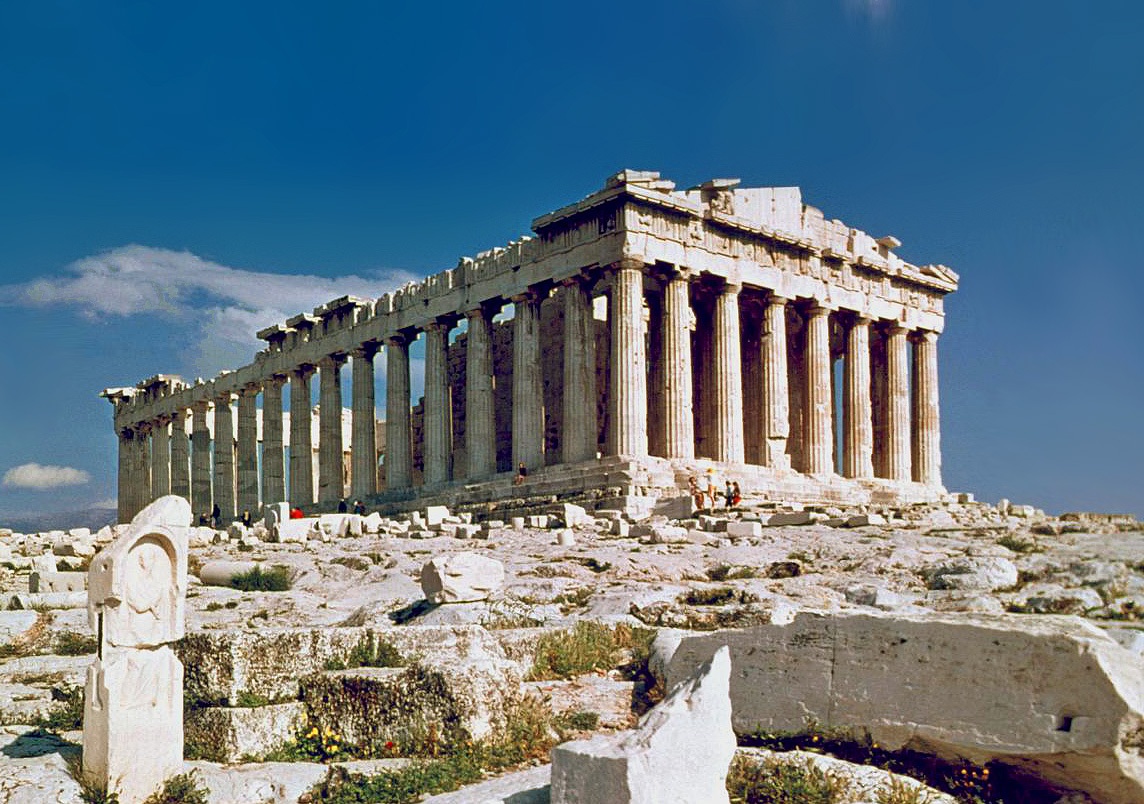
Parthenon
temple for worship of Athena, patron god of the Athens; place of worship and festivals
centerpiece of Acropolis holding giant sculpture of Athena within; epitome of Doric symmetry, balance, and perfection; ionic elements Laso included around interior cella; back of cella held treasury and tribute from Delian League
like Polykleitos canon of proportion, architects aimed to create perfect balance of harmony of proportion in Parthenon; algebraic function x=2y+1 (kleinem) ; irregularities → to counteract optical illusion and to make temple appear visually perfect for worship and celebrating Athena; previous temple destroyed → new = celebration of right at defeating Persians

Doryphoros
Greek function unknown; Roman placed copies in gyms as an ideal to aspire to
would have originally heard a spear in left and shield on right; sculpture of a warrior casually walking with weapons and armor
Polykleitos wanted to create the perfect specimen (perfect proportion, symmetry, balanced); balance created through engaged and relaxed features of his arms and legs to create perfect equilibrium; Romans loved Greek artistic style and mimicked it quite often

Nike of Samothrace
part of a victory monument in celebration of a naval battle
figure of winged victory part of larger movement that celebrated naval victory; Nikes were goddesses of victory and signaled winner in battle, war, or contest
inscription of statue (would include dedication and name of patron) does not survive; many naval battles and warring nations at this time and not known which victory this pertains to; strong diagonals and dramatic representation of Nike flying into the wind with sings swept up and back and her garments pressed against her body from wind → hellenistic (high drama, frozen)

Sarcophagus of the Spouses
tomb that contains cremated human remains
reclined man ad women on its lid and a high sense of intimacy; rests on highly stylized cushion which would’ve occurred at an actual banquet
women were viewed equally - ate and reclined on tomb sending them to the afterlife together; Etruscan beliefs: elite members have more important funeral processions and carvers of sarcophagus; funerary customs reinforced aristocrat standing and identity; Egyptian similar + buried close to pharaoh = high status

Colosseum
originally called Flavian amphitheater; public entertainment hosting violent and bloody games and social events; gave civilians entertainment for when they were on break to eat food and kept them from revolting in fear of being thrown into games
featured Animal Hunts in the morning, public executions at noon, or gladiator contests at other times; also hosted theater for rRoman mythology and history; sometimes would be flooded to feature naval combat
built on top of artificial lake; proper weight distribution required to place rich to prevent structure from sinking (heavier on bottom and weight gets lighter higher you went); utilizes arches throughout; bottom layers were made with heavy arches and arches grow smaller traveling up

Pantheon
temple to all gods'; efficient temple that reveres all Roman deities; patron Emperor Hadrian dedicated to Trajan
cylindrical sculpture capped by large dome; spaces around interior for statues of the gods to be worshipped; occult represents source of light and is symbolic of the sun as it passes over and casts a disk on the wall, marking passage of day from the interior
solved problem of creating roof that held no interior supports; designed dome that was poured in concrete in concrete rings; Colfers helped relieve weight and provide aesthetic motif repeated throughout walls and floor; the vast interior mimics the vast world of earth and sky (bottom=man, top=heavenly domain of the gods)
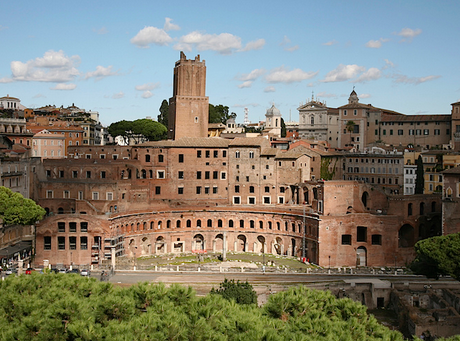
Trajan’s Forum
administrative center, commercial center, political and social center
large forum with Basilica Ulpin, Greek and Latin libraries, Trajan’s Column, statues, a temple, and nearby markets
demonstrates emperor’s power through it’s massive scale, the statues of Trajan, and it also contained images of defeated Dacians showcasing military successes

House of Vettii
Roman townhouse; place of dwelling and stage to perform rituals of daily life and social hierarchy
dorms (residence); single family house, usually owned by wealthy elites and politicians; rooms contained decorations like fresco paintings and practical objects like pools of water, beds
layout focused on atrium - center of owner’s political and social life domestically; place for wealthy to connect and make deals; often contain lavish decor so owners could display wealth and power to clients; could reinforce social positions and advance family’s future