Sexual Reproduction in plants (WIP)
 Call Kai
 Learn
 Practice Test
 Spaced Repetition
 Match
 Flashcards
 Knowt Play
1/49

There's no tags or description
Looks like no tags are added yet.
50 Terms
what is reproduction
-production of new individuals of the same species
-genetic information passed from parent to offspring
general features of sexual reproduction
-more than one parent
formation and fusion and of gametes
-not genetically identical offspring
-meiotic division
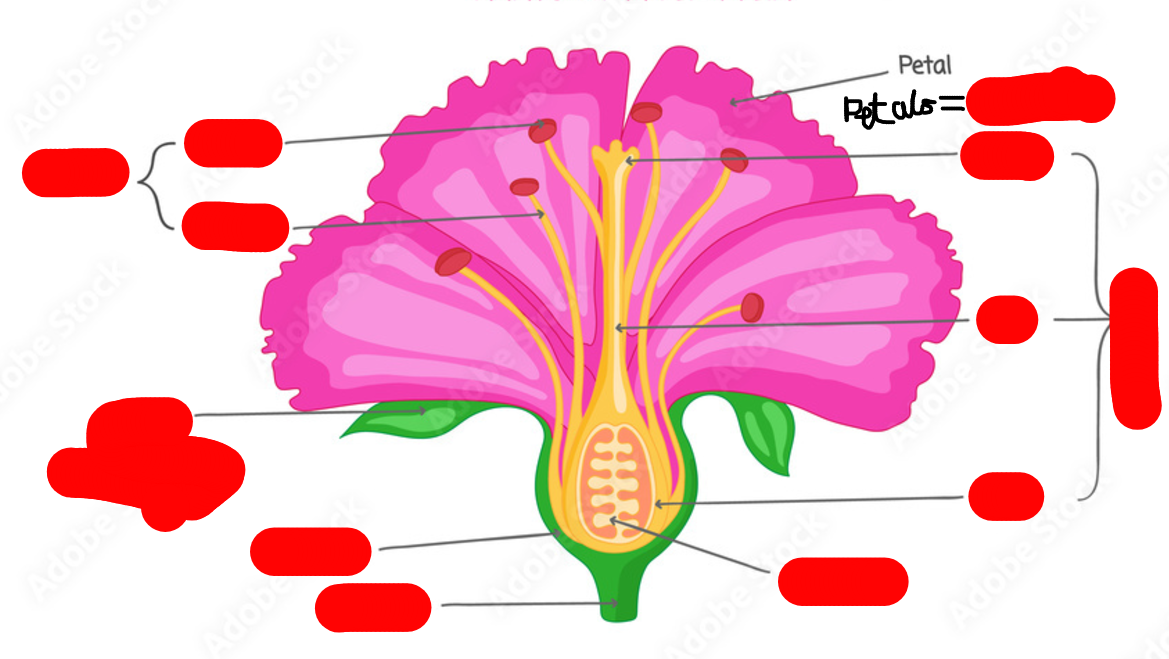
angiosperm structure

How are insect pollinated plants adapted?
bright colours and scents to attract insects to feed on them and exploit their mobility to transfer pollen from flower to flower
How are wind pollinated plants adapted?
different arrangement of sexual organs so there is an increased chance of fertilisation
how does insect pollination happen
the anther produces the pollen. As the insect reaches into the flower for nectar, pollen is brushed over its body, pollen is spiky and sticks to the insect. When the insect gets to the next flwoer pollen is transfered to the sticky stigma.
What is nectar
a sweet viscous secretion from the nectaries, a water solution of sugars fructose, glucose and sucrose.
How does wind pollination happen?
-dull flowers without scent
-petals usually absent leaving anthers and stigmas exposed
-hard bracts to give protection to sexual organs
-anthers hang outside the flower so wind can blow away the smooth, light pollen
-feathery sticky stigmas hang outside for a large surface area for catching pollen grains


cell division in plants
flowering plants are diploid and meiosis takes place in reproductive tissues to produce haploid reproductive structures or spores
-meiosis takes palce in anthers to produce male spores which contrain haploid gametes
-female spores are ovules, made in the ovary. female gametes develop inside the ovule
Formation of Pollen
-there are a large number of Microsporocytes (mother cells) in the 4 pollen sacs which are diploid. These divide by meiosis to provide 4 haploid microspores called a tetrad. An asymmetric division occurs by mitosis resulting in a generative nucleus (gamete) and a pollen tube nucleus.
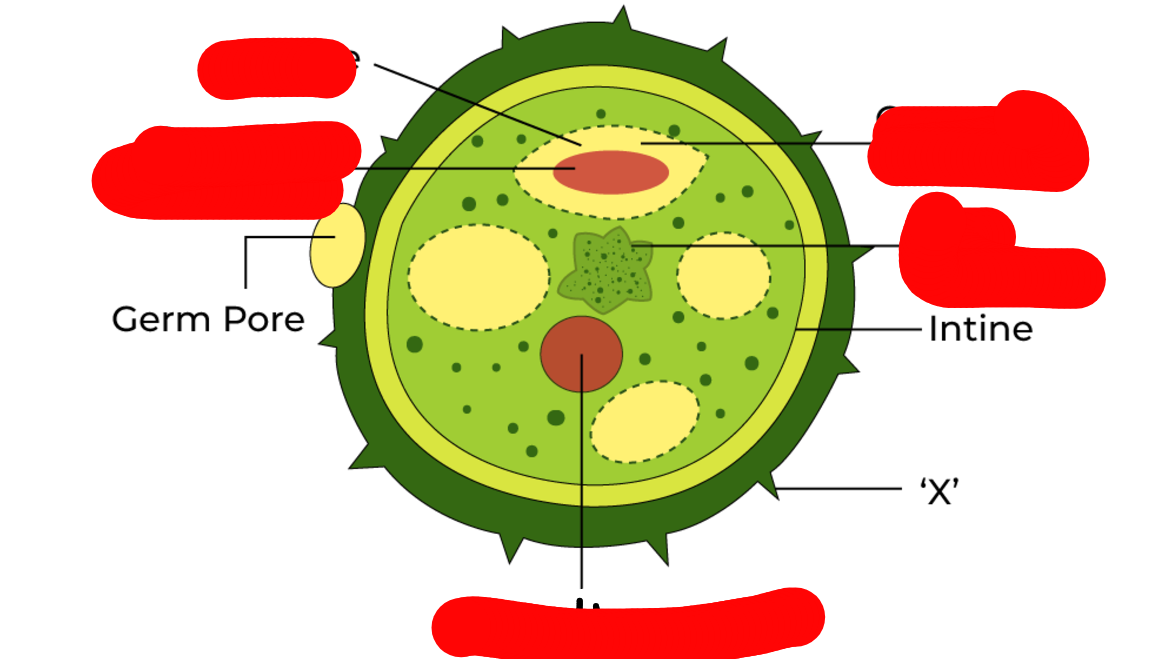


pollen sac

What is the use of the fibrous layer
thickened inner walls which help release pollen grain when anthers split
what is the use of the tapetum
provides nutrients to developing pollen grains and microspore mother cells .
What is dehiscence
when the pollen is ripe, the outer layers of the anthers dry out and tensions are set up in lateral grooves. Dehiscence, or splitting open, occurs and the edges of the pollen sacs curl away
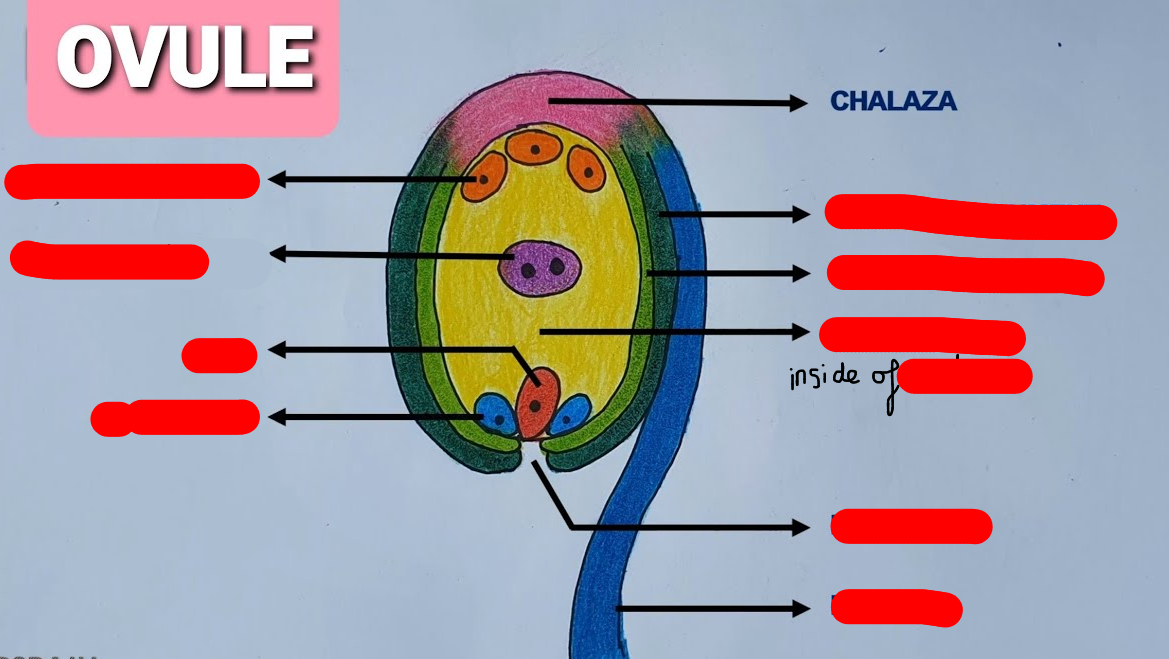
mature ovule
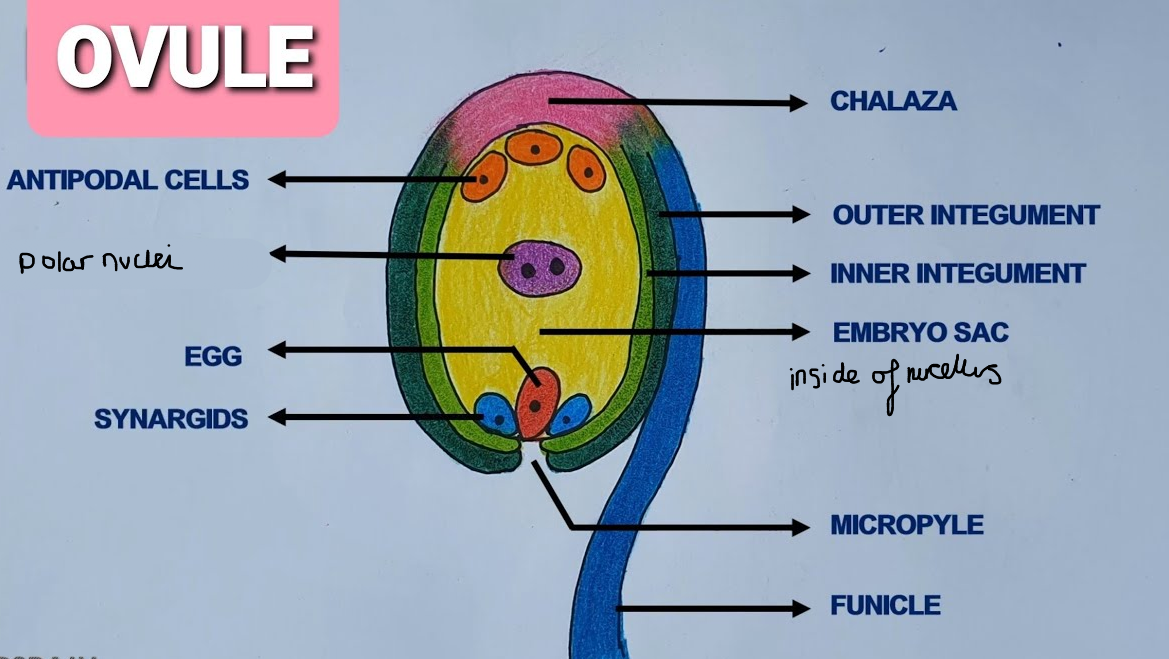
formation of female gamete
a megasporocyte (diploid) in the nucellus undergoes meiosis to form 4 haploid megaspores.
three of the haploid cells degenerate.
the last undergoes mitotic division three times:
a female gamete (egg cell nucleus)
2 synergids (flanking the egg cell at tye micropyle end
2 polar nuclei
3 antipodal cells
2 polar nuclei are considered as one cells
what is pollination
the transfer of pollen from an anther to a stigme
what is fertilisation
the fusion of gametes
cross pollination
pollen is transferred from tge anthers of one flower to the stigma of another on another plant of the same species
self pollination
pollen from the anthers of a flower transferred to the stigma of the same flower or a different flower from the same plant.
advantages of self pollination/ in-breeding
-if there are no plants of the same species nearby
-can preserve "‘good’ genomes suited to a stable environment
disadvantages of self-pollination/ inbreeding
-reduces genetic variation
-
how do self pollinatiing plants bring about variation in gametes
-depend on random assortment and crossing over during meiosis
-mutation
strategies for promoting cross-pollination
-chemical self-incompatibility>protein interactions lead to inhibition of germination
-anthers and stigmans at different levels in flower/ in different position
-anthers adns stimas mature at different times
-seperate male and female flowers
heterotyly
a botanical trait in flowering plants where different plants of the same species produce flowers with different physical lengths of their reproductive organs
heterostyly example
Primrose thrum-eyed flowers have stamens higher then stigma and pin-eyed have stigma higher then stamen
how does pollination and fertilisation occur
pollen grains land on the stigma. If it is compatible it will absorb water and germinate, producing a pollen tube controlled by the pollen nucleus. Pollen tube grows down the style, secreting hydrolase enzymes and digest through the tissue of the style. As it penetrates the embryo sac via the microple the tip opens and 2 male gametes are released into the sac which contain the egg cell nucleus
double fertilisation
when moving down the pollen tube, the male gamete splits. One male gamete fuses with the female gamete and forms a diploid zygote which will form the embryo plant
the second male gamete fuses with the 2 polar nuclei to form a triploid primary endosperm nucleus, this will form the nutritive tissue inside the seed
what is the testa
the ovule develops into a seed, with a resistant coat so the seed can withstand hard conditions called the testa. This occurs through the toughening and thickening process from laying down waterproof substances.
how does the seed develop?
the seed develops from the fertilised ovule and contains embryonic plant and food store until the leaves are produced
what is the plumule?
developing shoot
what is the radicle?
the developing root
endosperm tissue
the triploid endosperm nucleus divides by mitosis to form the endosperm tissue which surrounds the developing embryo. This provides nourishment. In dichotyledons this only happens for a few days but in some species like cereal grains and other monocotyledons the tissue remains as storage tissue
what happens to the ovary
the ovary becomes the fruit and the ovary wall becomes the pericap of the fruit

Label this broad bean diagram

where is the food stored in the broad bean
absorbed into the two cotyledons

label this maize diagram

where is the food stored in maize (monocotyledon)
the food store surrounds the seed leaf
what are monocotyledons
have one seed leaf
what are dicotyledons
have two seed leaves
what are the advantages of a seed staying dormant
-allows for time for dispersal- if too close to parent, they may have to compete for nutrients
-prevents seeds from being germinated at the same time- competition for nutrients
-prevent seed being damages by adverse weather
what are the main methods of dispersion
gravity, animals, force, wind and water
what are the conditons required for a seed to germinate
Temperature- optimum for enzymes
Water- for mobalisation on enzymes and formation of vacuoles
Oxygen- respiration
what is dormancy
A period of suspended growth from the withdrawal of water whilst the seed is still attached to the parent plant with hormones keeping it dormant
what is germination
involves the rapid onset of biochemical activity and growth of the seedling until the plant can carry out photosynthesis and become independant of the food stores
what are the stages of germination
Water is taken up rapidly by the seed (imbibed through the micropyle), causing the cotyledon to swell. This causes the Testa to rupture, allowing entry of more oxygen and the radicle pushes its way through first. the radicle grows downwards and the plumule upwards. Startch and proteins in the cotyledons are hydorlysed and transported to growing points for respiration
What is aleurone layer and what is it for?
layer found between the startchy endosperm and the pericarp. It accumulates large quantaties of lipids and oils whihc are needed for seed developement and has many strong protein granules
what is giberellin and what is it for
released by the embryo in the aleurone layer and causes the secretion of hydrolytic enzymes which convert startch into maltose. They activate the gene that codes for amylase