Perioperative Nursing: Surgical Phases, Patient Care, and Complication Prevention
 Call Kai
 Learn
 Practice Test
 Spaced Repetition
 Match
 Flashcards
 Knowt Play
1/51

There's no tags or description
Looks like no tags are added yet.
52 Terms
What are the purposes of surgery?
Cure/ablative, diagnostic/exploratory, reconstructive, palliative, transplantation, constructive.
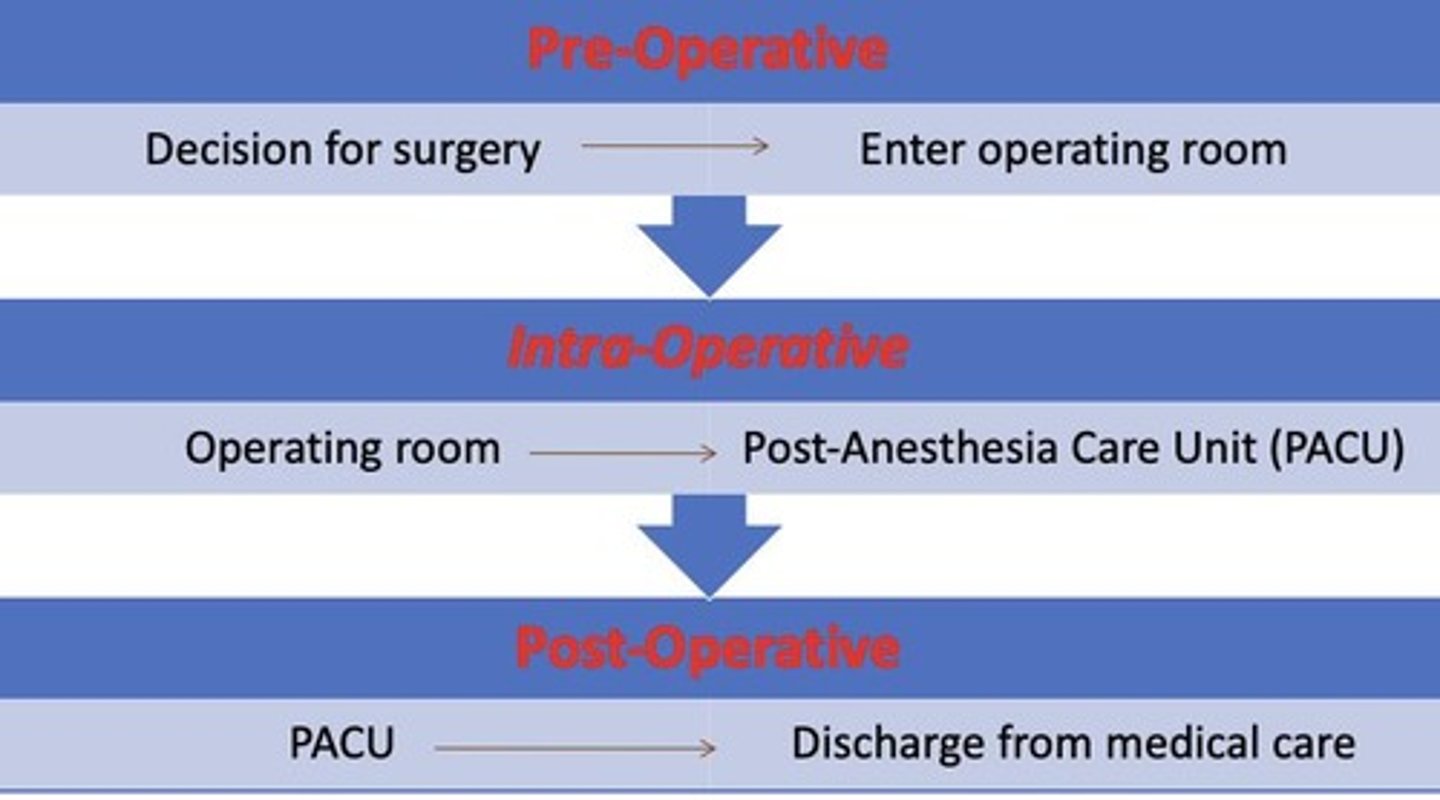
What marks the beginning of the preoperative phase?
The mutual decision between the patient and surgeon that surgery is needed.
When does the intraoperative phase begin?
When the patient is transferred to the operating room (OR) bed.
What is the endpoint of the postoperative phase?
Complete recovery from surgery and the last follow-up with the healthcare provider.
What is monitored during Phase 1 of the postoperative phase?
Airway, ventilation, hemodynamic status, fluid and electrolyte balance, and pain control.
What characterizes Phase 2 of the postoperative phase?
Patient no longer requires acute care measures and is prepared for self-care or caregiver care.
What is the focus of Phase 3 in the postoperative phase?
Ongoing care for patients requiring extended intervention or observation after discharge from phases 1 and 2.
What defines an elective surgical procedure?
Planned and non-acute; delay causes no harm.
What is an urgent surgical procedure?
Requires prompt intervention; life-threatening if delayed 24-48 hours.
What is the definition of an emergent surgical procedure?
Immediate intervention required; life-threatening.
What is the difference between minor and major surgical procedures?
Minor procedures are performed in outpatient settings with low risk; major procedures require hospitalization and have a higher degree of risk.
What are the three conditions for informed consent?
Adequate disclosure, patient understanding and comprehension, and voluntary consent.
What is the nurse's responsibility regarding informed consent?
Ensure consent is signed by the patient and act as a witness to the signature.
What preoperative diagnostic test assesses renal function?
BUN and creatinine tests.
What does a CBC test evaluate?
Overall health, oxygen-carrying capacity, immune status, and clotting potential.
What does a chest X-ray (CXR) assess?
Lung fields and heart size; identifies pulmonary or cardiac conditions.
What is the purpose of electrolytes testing preoperatively?
Detect imbalances that may affect cardiac and neuromuscular function.
What does the Type and Crossmatch test determine?
Blood type and compatibility for potential transfusions.
What is the role of antibiotics in the preoperative setting?
To decrease the risk of infection.
What psychological support can a nurse provide to a patient before surgery?
Explain the risks of not getting surgery and provide positive post-operative expectations.
What are the responsibilities of the nurse in the preoperative holding area?
Assess the patient and ensure final checks are completed.
What is the significance of monitoring vital signs preoperatively?
To ensure the patient is stable and ready for surgery.
What medication is commonly given to calm nerves before surgery?
Benzodiazepines like Ativan.
What does the term 'NPO' stand for?
Nil per os, meaning nothing by mouth.
What is the purpose of using an incentive spirometer postoperatively?
To prevent pneumonia by encouraging deep breathing.
What is the importance of checking blood glucose levels preoperatively?
To assess metabolic stability and reduce the risk of postoperative infection or delayed healing.
What is a key responsibility of the nurse during surgery?
Ensure personal protective equipment is available and in use by staff.
What should be monitored continuously during surgery?
Continuous patient monitoring.
What counts must be performed during surgery?
Instrument count and sponge count.
What is the purpose of antibiotic administration during surgery?
To follow protocol for infection prevention.
What is the significance of breaks for personnel during surgery?
To ensure appropriate hand-off communication and maintain staff alertness.
What is the first step after surgery in the PACU?
Extubation and monitoring the patient's awakening from anesthesia.
What does EBL stand for and what was Mary's EBL?
Estimated Blood Loss; Mary's EBL was 50 mL.
What IV solution was Mary receiving post-operatively?
D5.45 at 100 mL/hr.
What should be monitored in Mary due to her post-operative condition?
Vital signs, dressing condition, and hemovac drain output.
What medication orders were given for Mary post-operatively?
Insulin, PCA Morphine, and Ketorolac.
What is the maximum duration for administering Morphine post-operatively?
7 days max due to risk of GI bleed.
What interventions can prevent respiratory complications post-operatively?
Positioning, breathing treatments, and incentive spirometry.
What are the risks associated with general anesthesia and BKA?
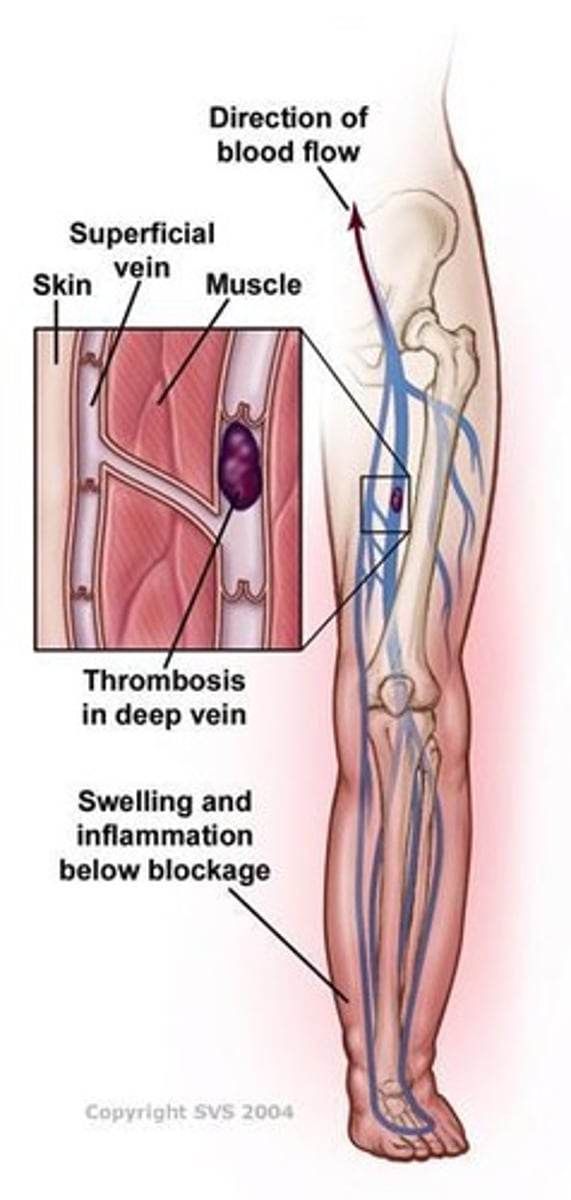
Pneumonia, DVT, and poor wound healing.
What should be done if sanguineous drainage is observed?
Reinforce the dressing and check vital signs.
What is the highest priority for the nurse in the post-operative phase?
Prevention of complications.
What should be included in teaching to reduce respiratory complications?
Use of an incentive spirometer every 4 hours while awake.
Who is responsible for obtaining informed consent for a surgical procedure?
The surgeon.
What is necessary for informed consent to be valid?
Client understanding of the procedure, voluntary consent, and disclosure of treatment.
What medication is given to prevent constipation post-surgery?
Docusate sodium (Colace).
What should be assessed before administering Docusate Sodium?
Bowel sounds and abdominal assessment.
What should the nurse do if a patient experiences nausea after medication?
Avoid administering Morphine and notify the physician.
What GI issues is Mrs. Brihm at risk for while hospitalized?
Ileus and SBO (Small Bowel Obstruction).
What interventions can prevent cardiovascular complications post-operatively?
Use of SCDs, Lovenox, and neurovascular checks.
What is a common post-operative pain management strategy?
Combination of NSAIDs and opioids.
What should be monitored for signs of infection post-operatively?
Fever, tachycardia, drainage, and wound color.
What is the significance of assessing vital signs post-operatively?
To establish a baseline and monitor for complications.