2.2: Biological molecules
 Call Kai
 Learn
 Practice Test
 Spaced Repetition
 Match
 Flashcards
 Knowt Play
1/178

There's no tags or description
Looks like no tags are added yet.
179 Terms
What are the four main biological molecules?
Carbohydrates, Lipids, Proteins and Nucleic acids
What are carbohydrates made out of?
Carbon, hydrogen and oxygen
What are lipids made out of?
carbon, hydrogen and oxygen
What are proteins made out of?
carbon, hydrogen, oxygen, nitrogen and sulfur
What are nucleic acids made out of?
carbon, hydrogen, oxygen, nitrogen and phosphorus
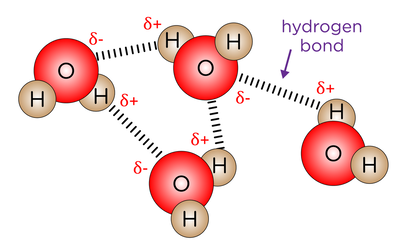
What does a water molecule consist of?
Two hydrogen atoms and one oxygen atom - H2O
What does water being a polar molecule mean?
It has an uneven charge distribution
Why is water a polar molecule?
Oxygen atoms are partially negative whilst the hydrogen atoms are partially positive
What joins water molecules together?
hydrogen bonds
Why is water a good solvent?
Polarity- tiny charges on water molecules mean they are attracted to and surround other molecules that have charges on them
What importance does water being a good solvent have for living organisms?
molecules and ions can move around and react together in water
molecules and ions can be transported around living things whilst dissolved in water
Why does water have cohesive properties?
Hydrogen bonds mean that water molecules ‘stick’ to each other
Why is the cohesion of water important in living organisms?
transpiration streams requires water molecules to stick together in tall columns to move up the xylem towards the leaves
What does water having a high specific heat capacity mean?
It means a lot of heat energy is required to raise the temperature of 1kg of a substance by 1 degree.
Why is water having a high specific heat capacity important in living organisms?
living things need a stable temperature for enzyme-controlled reactions. Aquatic organisms need a stable environment
What does water having a high latent heat of vaporisation mean?
A relatively large amount of energy is needed for water molecules to evaporate.
Why is water having a high latent heat of vaporisation important in living organisms?
water can help cool living things and keep their temperature stable e.g mammals when sweat evaporates
What metabolic importance does water have?
Water is a reactant in many metabolic reactions
Give an example of water’s metabolic importance in living organisms
water can be used to hydrolyse molecules in reactions such as photosynthesis
Why is ice less dense than water?
Due to its crystalline structure. This also insulates the water below it.
What importance does ice being less dense than water have in living organisms?
floating ice on lakes and oceans insulates the water below it, making it less likely to freeze and kill organisms in it
other organisms live on floating ice
Why is water transparent?
The short-lasting hydrogen bonds between molecules form a transparent, colourless, odourless and tasteless liquid
What importance does water’s transparency have in living organisms?
aquatic plants need light for photosynthesis and so clearer water means more light will penetrate
Surface tension in water?
Hydrogen bonds cause water molecules at the surface to be more attracted to water molecules beneath rather than air molecules above
Why is the surface tension of water important in other living organisms?
organisms such as pond skater can ‘walk on water’
Why is water a liquid at room temperature?
The hydrogen bonds between water molecules make it more difficult for them to escape and become a gas
Why is water being a liquid at room temperature important in living organisms?
it provides a stable habitat e.g lakes
its an effective transport medium e.g in blood
reaction medium for chemical reactions
major component of tissues in living organisms
What is a monosaccharide?
the monomers from which larger carbohydrates are made
What is a disaccharide?
the sugar formed by the condensation of two monosaccharides
What is a polysaccharide?
long chains of carbohydrate molecules, composed of several smaller monosaccharides
What is hexose?
a monosaccharide containing six carbon atoms in a molecule
What is pentose?
a monosaccharide containing five carbon atoms in a molecule
What are two examples of pentose molecules?
ribose and deoxyribose
What is the difference between ribose and deoxyribose?
ribose has one H atom and one -OH group attached to carbon 2, whereas deoxyribose has 2 H atoms and no -OH group
What is the general formula for carbohydrates?
CnH2nOn
What is glucose an example of?
a monosaccharide
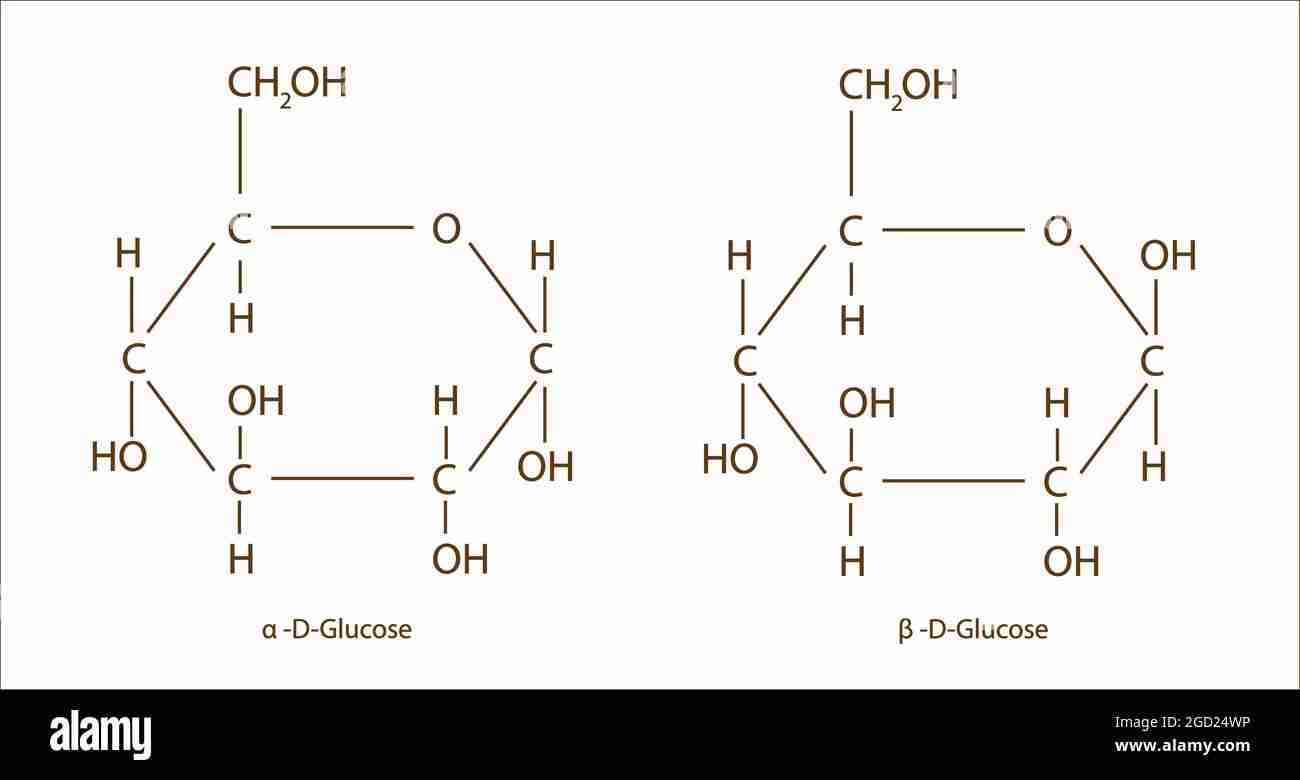
What are the two structural isomers of glucose?
alpha glucose and beta glucose
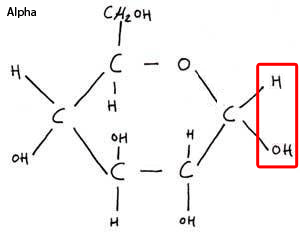
What does alpha glucose look like?
The -OH is bellow the first carbon
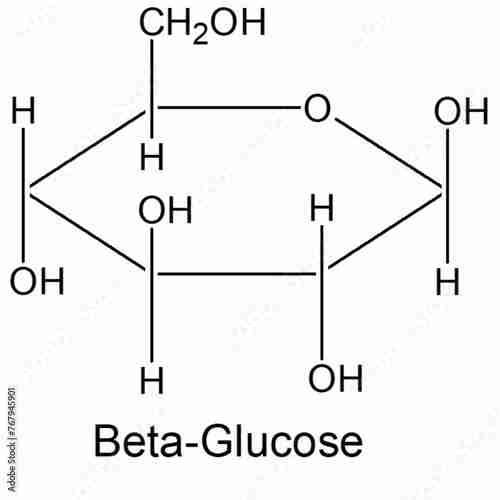
What does beta glucose look like?
The -OH is above the first carbon
What can be used to remember the difference between alpha and beta glucose?
ABBA : alpha below, beta above
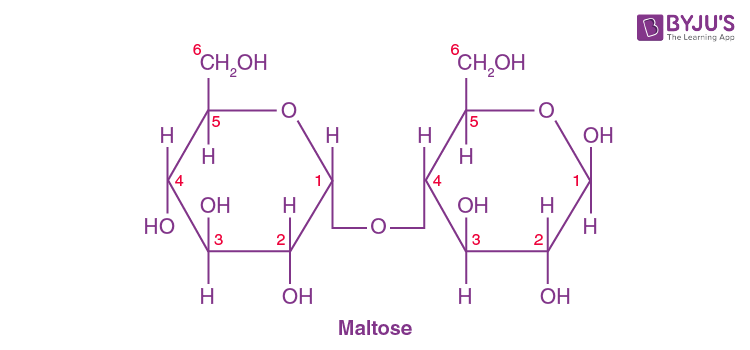
What two monosaccharides make up maltose?
a-glucose and a-glucose
What two monosaccharides make up lactose?
a-glucose and galactose
What two monosaccharides make up sucrose?
a-glucose and fructose
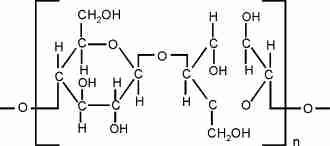
What two monosaccharides make up cellobiose?
b-glucose and b-glucose
What is a condensation reaction?
the formation of polymers from monomers, the by-product is water
What is a hydrolysis reaction?
the break down of polymers into monomers requiring water
What is the difference between a condensation and hydrolysis reaction?
Hydrolysis uses water while condensation releases it
What does the hydrolysis of a disaccharide form?
two monosaccharides
How does maltose form and what does it look like?
It forms by the condensation of two a-glucose molecules and it has a by product of water (+H2O)
How does cellobiose form and what does it look like?
It forms by the condensation of two b-glucose molecules and it has a by product of water (+H20)
What bond forms between two monosaccharides?
a 1-4 glycosidic bond
Why is glucose soluble in water?
because it contains a large number of hydroxyl (-OH) groups (polar) that can form hydrogen bonds with water molecules
Why is glucose being soluble mean it is well suited to its function?
as that means it can be dissolved and transported to cells that need it for energy
Why is glucose being small mean it is suited to its function?
it means they can easily be transported
What is starch?
the energy store in plants
What is starch made up of?
amylose and amylopectin
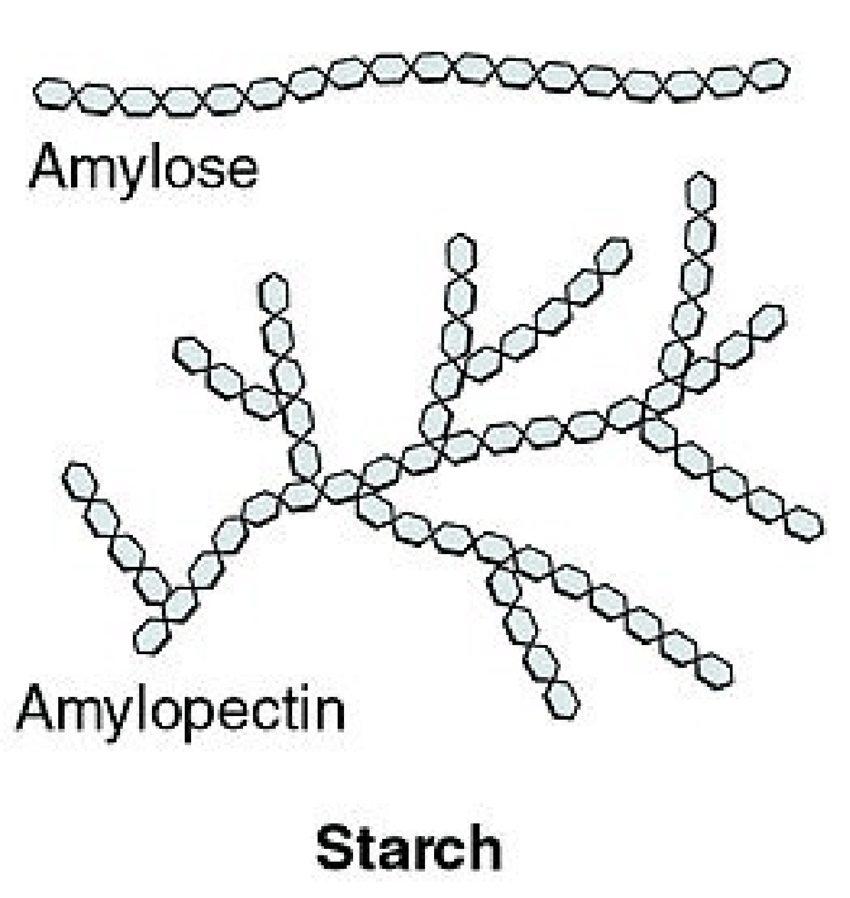
What is amylose?
a polysaccharide made up of a-glucose molecules and it is found in starch
Where is amylose stored?
in starch grains
What are features of amylose?
it is unbranched
molecules are joined by 1-4 glycosidic bonds
it is coiled in a helix shape making it compact meaning it can store a lot of energy in a small space
Soluble - forms hydrogen bonds with water. hydrogen bonds give it a tight structure making it easy to store
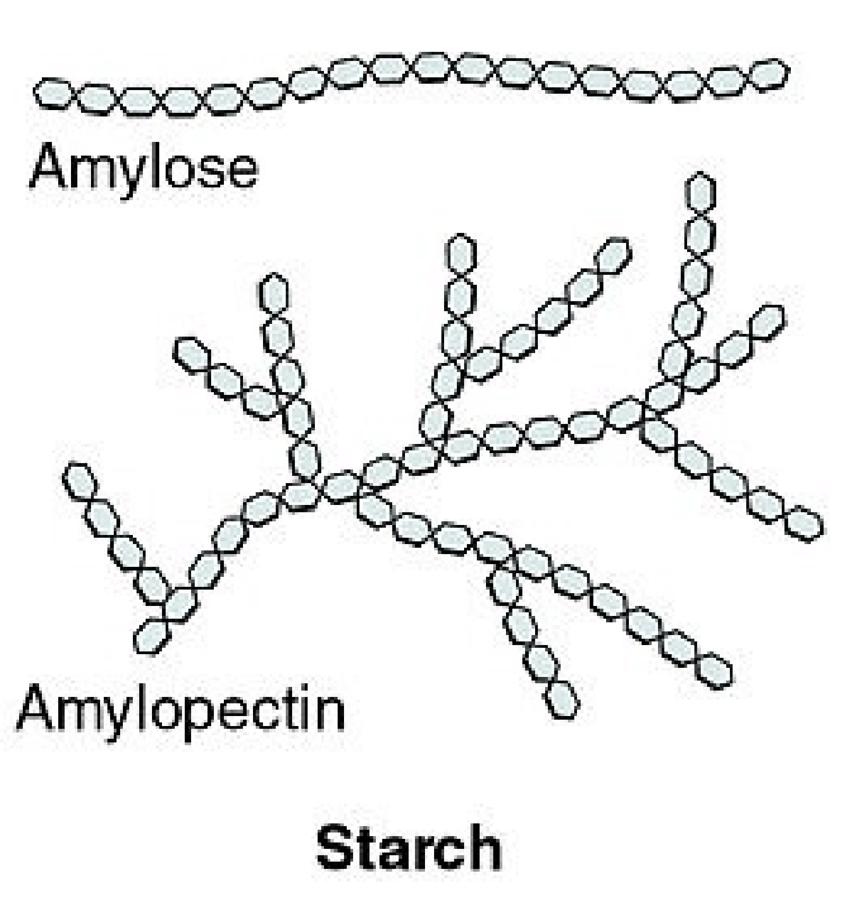
What is amylopectin?
a branched polysaccharide made up of a-glucose found in starch
Where is amylopectin stored?
in starch grains
What are features of amylopectin?
It is branched - it can release energy quicker as lots of glucose can be hydrolysed at once and can store more energy in a smaller space
it has 1-4 glycosidic bonds and 1-6 glycosidic bonds between branches
it is slightly spiralled
it is insoluble - doesn’t affect cell’s water potential
What are the key overall features of starch?
It is insoluble - doesn’t affect the water potential of the cell
it is compact - stores lot of energy in a small space
it is branched - has 1-4 and 1-6 glycosidic bonds
What is glycogen?
the main energy storage molecule in animals formed by a-glucose molecules
Where is glycogen stored?
in animal muscles and the liver
What are features of glycogen?
It is highly branched - glucose can be released quickly when required
It has both 1-4 and 1-6 glycosidic bonds
It is is insoluble - doesn’t affect cell’s water potential
It is metabolically inactive - stable energy store
compact - large amounts can be stored in a small space
What is glycogenolysis?
when glycogen is broken down to release glucose
What is cellulose?
a polysaccharide that makes up the cell wall in plants made up of beta-glucose molecules
What are features of cellulose?
it has 1-4 glycosidic bonds
it is unbranched and not spiralled
a straight chain where every other monosaccharide flips 180 degrees
hydrogen bonds between the chains stop spiralling
What are microfibrils?
strong threads which are made up of long cellulose chains joined together by hydrogen bonds and they provide structural support in plant cells
What are macrofibrils?
what lots of microfibrils join together to form
What are amylopectin, amylose, glycogen and cellulose all examples of?
polysaccharides
Why are polysaccharides less soluble in water than monosaccharides?
because of their size
regions which could form hydrogen bonds with water are hidden away inside the molecule
What are lipids?
lipids are biological molecules which are only soluble in organics solvents such as alcohol (e.g fats and oils)
What are the three most important lipids in living things?
triglycerides, phospholipids and steroids
Why are lipids not classed as polymers?
As they are not made up of the same repeating monomer
What is a triglyceride?
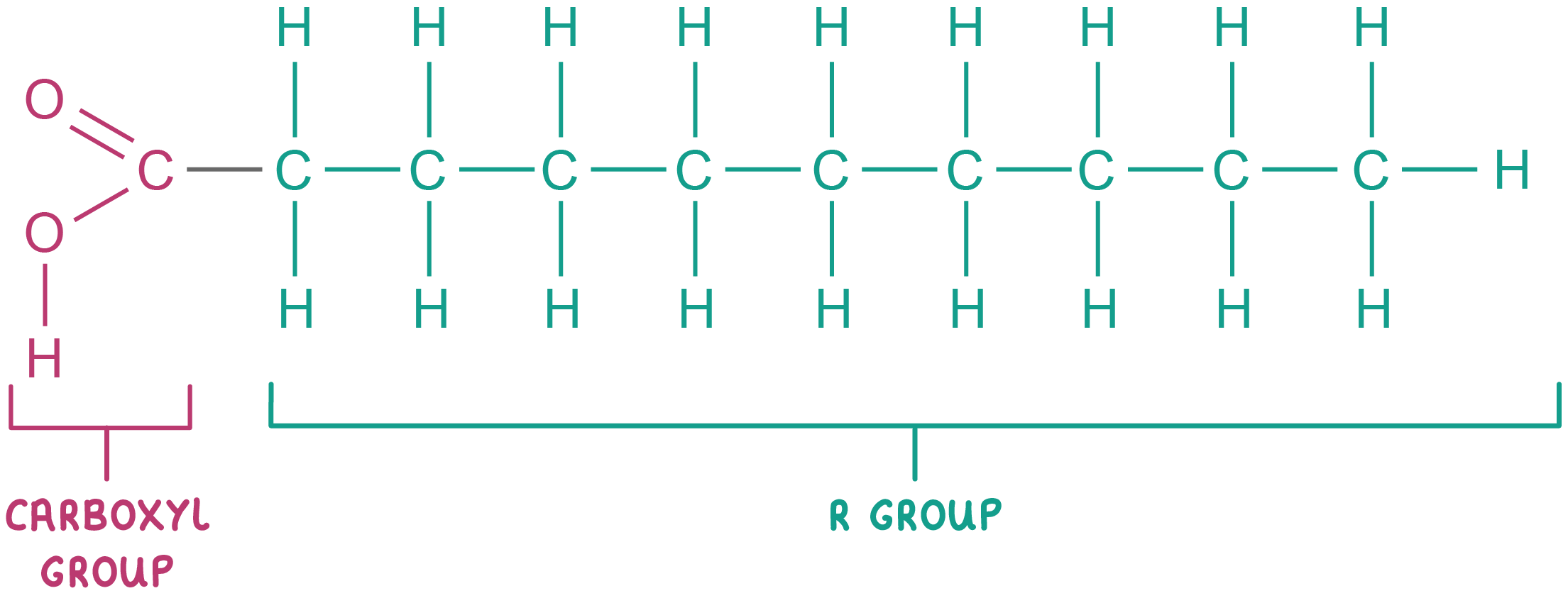
lipids made up of one molecule of glycerol and three fatty acid chains (hydrocarbon ‘tail’ with a carboxyl group at one end -COOH)
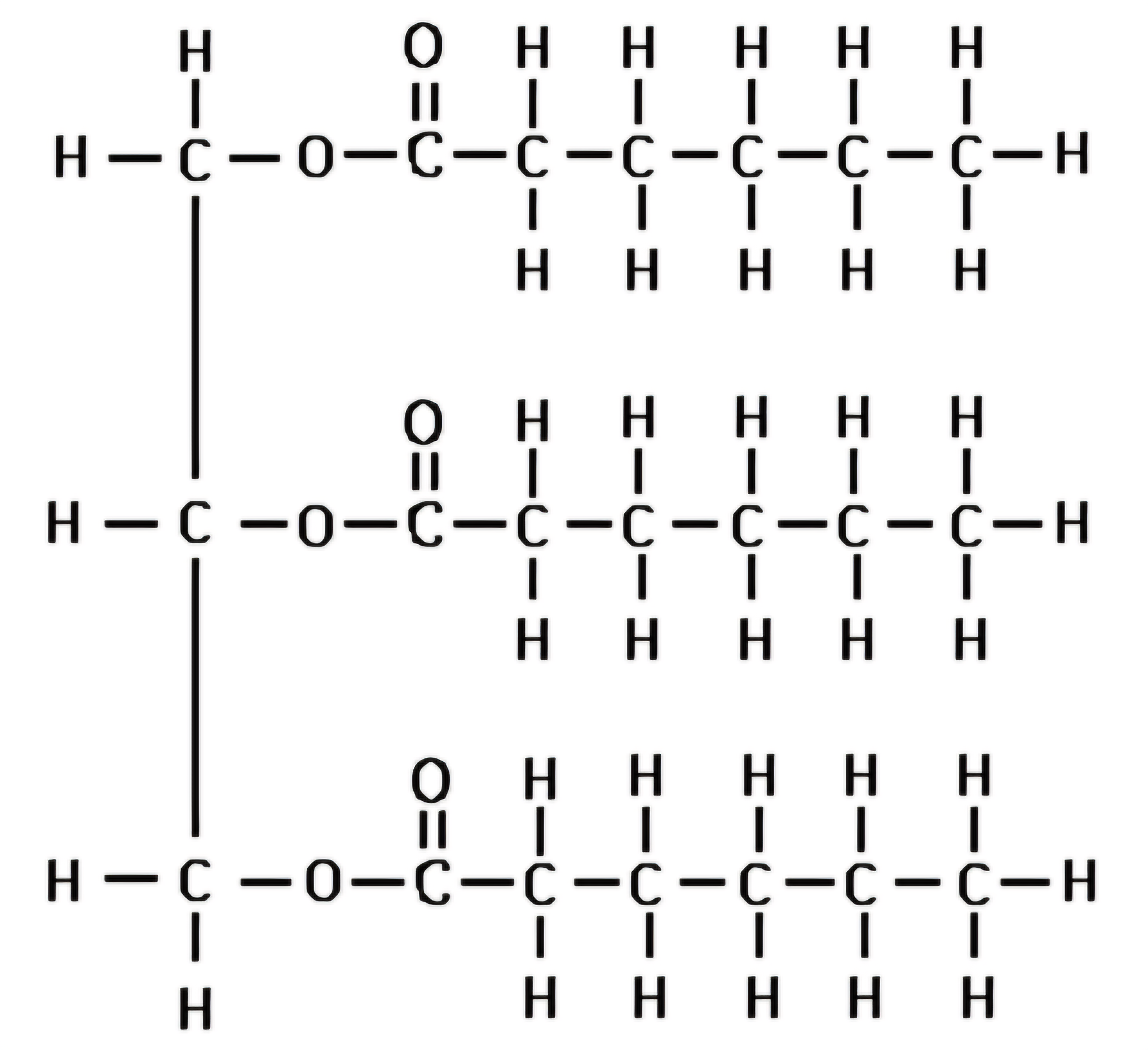
What is a triglyceride classed as?
a macromolecule
What is a macromolecule?
a molecule containing a large number of atoms
How are triglycerides formed?
they are formed by a condensation reaction when hydroxyl groups on the glycerol react with the carboxyl group of the fatty acid to form ester bonds
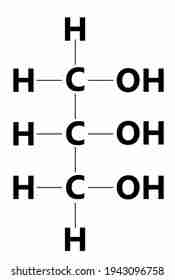
What is the structure of a glycerol molecule
C3H803
What is the structure of a fatty acid chain?
A hydrocarbon chain with a carboxyl group, and the chain can be from 2-20 carbons long
What are the two types of fatty acids?
saturated and unsaturated
What is a saturated fatty acid?
fatty acids that don’t contain any double bonds between carbon atoms
What is an unsaturated fatty acid?
fatty acids that have one or more double bonds between carbon atoms
Why are unsaturated lipids liquid at room temperature?
the greater the number of unsaturated bonds the weaker the intermolecular forces
What state are saturated lipids at room temperature?
solid
How can triglycerides be an energy source?
they can be broken down in respiration to release energy and produce ATP
How can triglycerides be an energy store?
because they are insoluble in water, they are stored without affecting the water potential of the cell
How do triglycerides help with insulation?
e.g adipose (fatty) tissue is a storage location for lipid in whales. They surround organs acting as a heat insulator
How do triglycerides help with buoyancy?
because fat is less dense than water, it is used by aquatic animals to help them stay afloat
How do triglycerides provide protection?
humans have fat around delicate organs to act as a shock absorber
How does the structure of triglycerides help it to perform its role in living organisms?
their long fatty acid chains and hydrophobic nature enables them to serve as an important energy reserve
What is a phospholipid?
lipids made up of glycerol, two fatty acid chains and a phosphate group
What are phospholipids classed as?
a macromolecule
What is the structure of a phospholipid?
there is the hydrophilic phosphate head (phosphate group has a negative charge -polar)
glycerol molecule
a saturated and unsaturated fatty acid known as the hydrophobic tail (non-polar)
What is the role of phospholipids in living organisms?
they are what make up membranes
Why do phospholipids form a bilayer or micelle when exposed to water?
because of the hydrophobic fatty acid chains and the hydrophilic phosphate heard
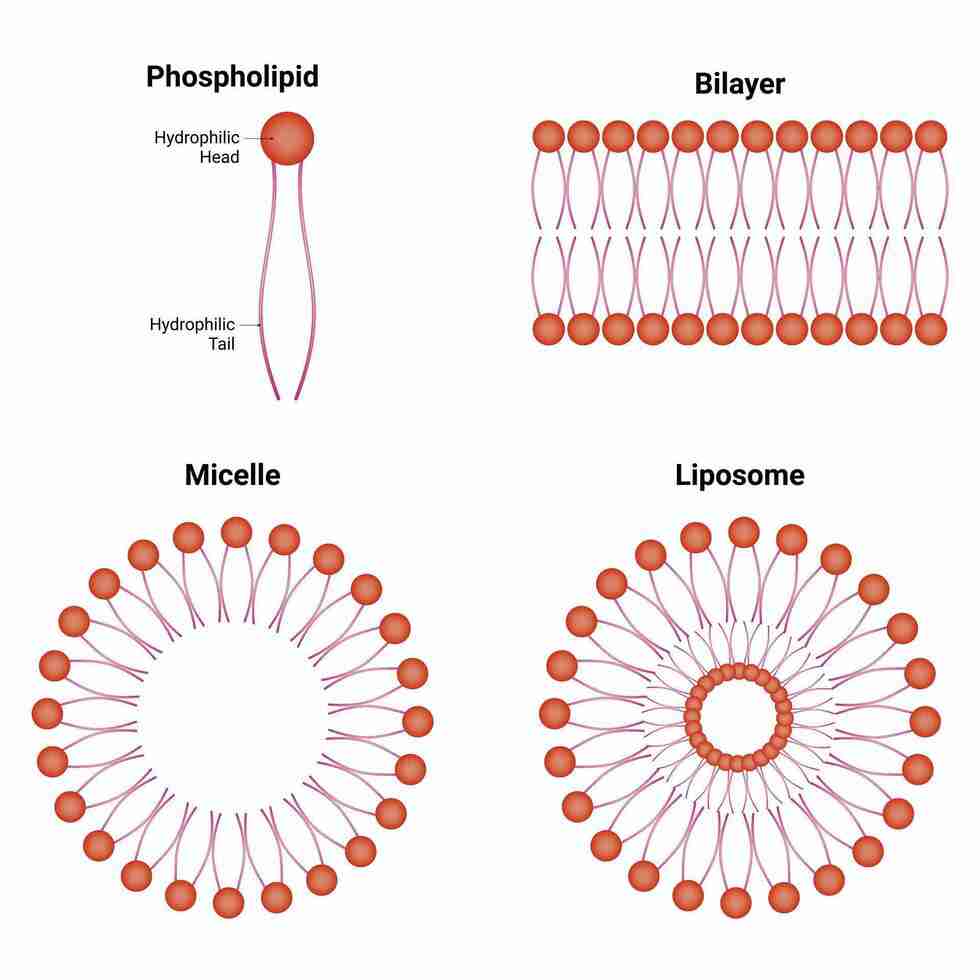
How does the structure of phospholipids help it to perform its role in living organisms?
polar head and non-polar tail - provides stability and controls the entry of molecules into cells
What is cholesterol?
a type of lipid known as sterol and is used by animal cells to increase the stability of the cell membrane