food micro molds
 Call Kai
 Learn
 Practice Test
 Spaced Repetition
 Match
 Flashcards
 Knowt Play
1/46

There's no tags or description
Looks like no tags are added yet.
Name | Mastery | Learn | Test | Matching | Spaced | Call with Kai | Chat |
|---|
No analytics yet
Send a link to your students to track their progress
47 Terms
what is a mold
a type of fungus that can grow on the surface of foods and cause food spoilage and decomposition
molds are a member of what kingdom
fungus
grow in form of multicellular filaments called
hyphae
hyphae intertwine to form ?
mycelium and are visible to naked eye
molds spread through
spores
mold growth and reproduction cycle
spore lands
germination
hyphal growth
mycelium formation
sporulation
spore lands
a spore lands on a suitable surface to start the mold growth and reproduction cycle
germination
2, the spore absorbs moisture and germinates
hyphal growth
3, hyphae elongate and branch, increasing the network
mycelium formation
4, hyphae interweave to form a mycelium that colonizes the substrate
sporulation
5, arial hyphae develop spore bearing structures that produce and release spores
hyphae
thread like filaments that make up the vegetative body of molds
septate hyphae
divded by cross walls
non septate (coenocytic) hyphae
no cross walls, with multiple nuclei in a continuous cytoplasm
mycelium
mass of interwoven hyphae that form the main body of the mold
vegetative mycelium
found within or on the substrate
areial mycelium
grows above the surface
sporangia
structures where spores are produced
typically, spherical or oval, found at the tip of the hyphae
conidiophores
specialized stalks that bear conidia the asexual spores of certain spores
conidia
non motile, asexual spores produced externally on coidiophores in chains or clusters , responsible for the dispersal of the mold
sclerotia
compact, hardened masses of hyphae that molds can form under adverse environmental conditions
zygospores
thick- walled, sexually produced spores formed when two compatible hyphae fuse
chlamydospores
thick walled, asexual spores formed from hyphal cells under stressful conditions

REVIEW THIS
PLEASE IMPORTANT SLIDE
issues with molds in foods
food spoilage
mycotoxins
mycotoxins
toxin produced by certain species of molds that can contaminate food, animal feedm and agricultural products
serious health risks when ingested or inhaled or absorbed through the skin
how are mycotoxins produced
as secondary metabolites, as they are not essential for the growth but may provide a competitive advantage in certain environments
why care about mycotoxins?
they are heat stable- cooking and processing does not destroy them
molds can grow before, during and after harvest, and during storage
regulatory oversight of mycotoxins
FDA monitors the food supply for mycotoxins by collecting and analyzing samples of domestic and imported foods
common molds found in food
Aspergillus
Penicillium
Rhizopus
Fusarium
Aspergillus
common genus of fungi, consisting of over 300 species
filamentous fungi characterized by branched, septate hyphae and abundant asexual spores
some species produce mycotoxins
some are beneficial in food fermentation
Aspergillus reproduction
produce asexual spores
common foods of Aspergillus
fruits, grains, breads, meat, milk, cheese
Aspergillus structure
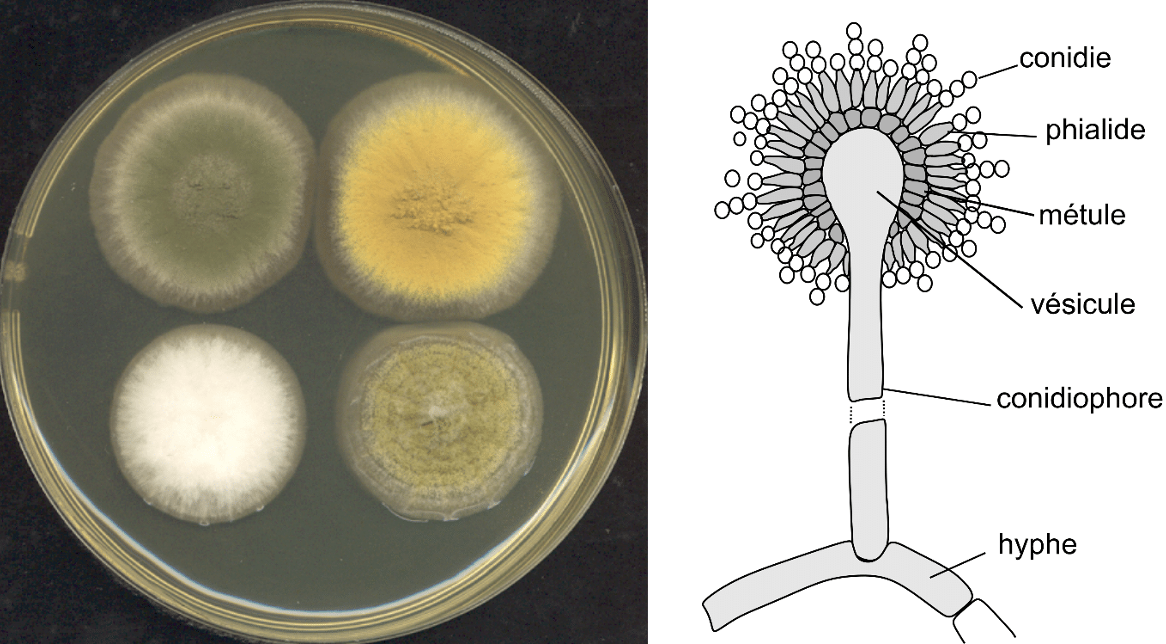
penicillium
genus of filamentous fungi characterized by branched septate hyphae
certain species produce penicillin
beneficial species are widley used in the production of blue cheese and soft cheeses
penicillium reproduction
produce chains of asexual spores on brush like conidiophores
penicillium common foods
production- Roquefort, Gorgonzola, Camembert, Brie
spoilage- fruits, breads, dairy products
penicillium structure

Rhizopus
often called black bread mold
filamentous fungus characterized by broad coenocytic hyphae
common cause of soft rot in fruits and vegtables
Rhizopus reproduction
produces asexual spores enclosed within spherical sporangia borne at the tips of specialized hyphae called sporangiophores
under favorable conditions some can reproduce sexually
Rhizopus common foods
production- teph, ragi
spoilage- fruits, veggies, grains
Rhizopus structure

Fusarium
a genus of filamentous fungi characterized by septate hyphae and distinctive curved or canoe shaped macrocoidia
common in agriculture environments and responsible for numerous plant diseases
Fusarium reproduction
produces asexual spores including macroconidia and micronidia
Fusarium appearance
•Colonies are often cottony or woolly and may appear white, pink, reddish, or purple, depending on the species.
fusarium common foods
foods- grains
issues- mycotoxins, fusarium wilt, fusarium head blight, root rot, seedling blight
fusarium structure
