flexor tendon
 Call Kai
 Learn
 Practice Test
 Spaced Repetition
 Match
 Flashcards
 Knowt Play
1/18

There's no tags or description
Looks like no tags are added yet.
19 Terms
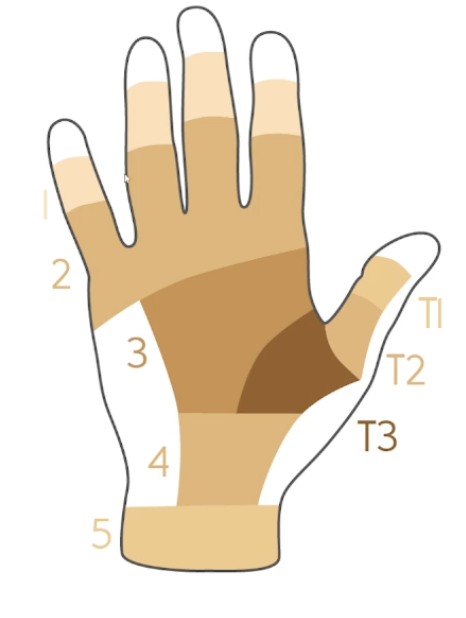
flexor tendon zones
“Five Flexors” (as opposed to 7 extensors)
2 sets of flexors
flexor digitorum profundus
passes through and goes to the distal phalanges (DIP)
flexor digitorum superficialis
splits, stops, and attaches to the middle phalanges (PIP)

cause of flexor tendon injuries
deep cuts, assault, or injury to the flexor tendons on the PALMAR side of the hand (e.g., deep cuts, sports, RA)
e.g., Jersey Finger = pull on shirt and finger gets caught, resulting in tendon being pulled from bone
e.g., Rheumatoid Arthritis = weakens the flexor tendons, making them more likely to tear
==> must be put back together with either stiches or sutures
flexor tendon repair approaches
“‘full flexion, no tension; the decision hinges on 2, 4, or more”
surgical repair approaches are differentiated by strand count
usually 2 or 4 are standard, but can be 6+
more threads = more stable
more stable = earlier PROM or AROM
follow physician’s protocol
mend vs move
respect a damaged, healing structure
too much movement or force can lead to damage— immobilize!
too little movement can lead to adhesions and contractures— mobilize!
we strike a balance (within the physician’s precautions)
mend vs move— flexor tendon
in other topics, especially with fractures, we were concerned mainly about the force exerted on a joint
for tendon injuries, we need to pay special attention to the tension on the tendons
tension-limiting mobility progression
tension-limiting: immobilization, PROM, AROM
as opposed to standard: immobilization, gentle AROM, gentle PROM
this is because we are most concerned with tension in the tendons; strictly controlled PROM will have less tension than AROM
AROM requires tension for movement
treatment will follow the protocol the physician/surgeon has chosen, which will start with immobilization, immediate PROM, or immediate AROM
3 protocol
patient will have 1 of 3 possible protocols from physician/surgeon; all protocols will involve some kind of dorsal block splint to relieve tension
immobilization
early PROM
early AROM

early immobilization
dorsal blocking splint (follows antideformity position) within 2-3 days post-surgery to block fingers from extending and creating another rupture/injury
wrist: flexion; MCP: flexion; IPs: extension
early phase: 0-4 weeks
discharge splint at week 6
rarely used, typically for noncompliance (i.e., children or adults with dementia)
early mobilization method 2-3 days after operation
the duran protocol
move digits passively in flexion and extension using your other finger while your hand is in the splint
exercises are done using a dorsal blocking splint— no rubber bands or active muscle contractions (i.e., no AROM)

early mobilization method: place and hold
PASSIVELY bring your hand to a fist and HOLD it


early PROM
passive flexion + active extension within dorsal block splint
early mobilization method: the kleinert protcool
passive digit flexion + active digit extension via rubber band traction
think of actively extending the rubber band waistband in calvin “KLEIN”ert underwear

early AROM
use dorsal block splint most of the time, and then a separate orthosis with a hinge for wrist extension for gentle active flexion (place and hold, etc.)
slight wrist extension will allow for easy, low-tension AROM of finger flexion
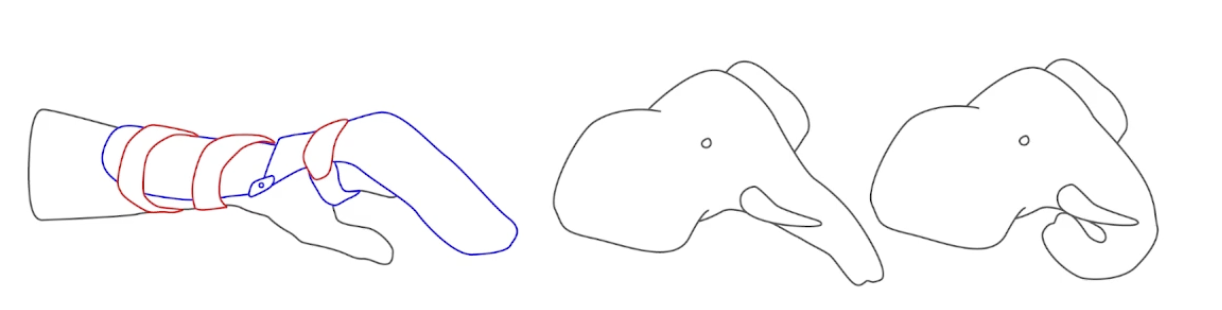
early mobilization method: 4-6 weeks post-op
differential flexor tendon gliding exercises

early mobilization method: 6-8 weeks post-op
light occupation-based activities +
discharge splint ~6 weeks
continue tendon gliding exercise
8 weeks post-op
strengthening and work
12 weeks post-op
resume normal activities
no man’s land = zone __
2
“no man attempted”— hard to diagnose and treat 2/2 high risk of complications
but due to advanced technology + therapy, we can now treat!