USII UNIT 1 STUDY GUIDE
 Call Kai
 Learn
 Practice Test
 Spaced Repetition
 Match
 Flashcards
 Knowt Play
1/79

There's no tags or description
Looks like no tags are added yet.
80 Terms
Industrialization
The process of changing an economy from a farming-based society relying on hand tools into one dominated by factory manufacturing and machine-driven production
Cities (Centralized Hub)
steam-powered factories required immense infrastructure (like railroad terminals, coal depots, and massive labor pools) that could only exist in concentrated areas.
Businesses naturally clustered together to share these shipping routes and to access a centralized, desperate workforce
clustering created a massive demand for secondary industries
Gilded Age
Following the Civil War, the United States rapidly industrialized
term refers to the act of gilding
time of massive economic growth that also created extreme wealth inequality
Imperialism
A policy in which a stronger nation extends political, economic, or military control over weaker territories.
Steel
Bessemer Process revolutionized manufacturing by making steel significantly cheaper, stronger, and faster to mass-produce than traditional iron
Steel skeletons allowed architects to build upwards instead of outwards, giving birth to the skyscraper and allowing millions of people to live and work in highly concentrated urban footprints
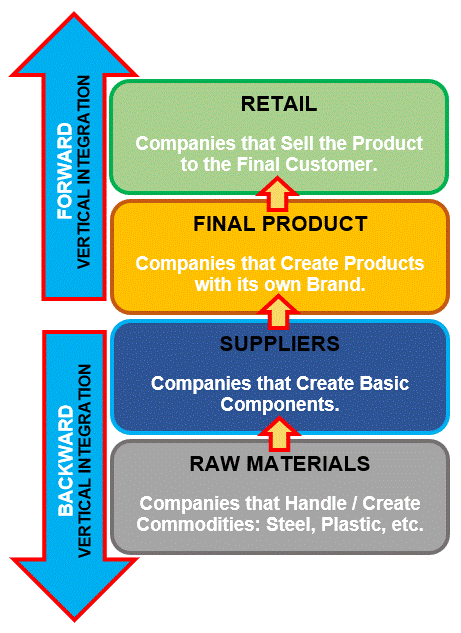
Vertical Integration
A business strategy where a company controls every stage of the supply chain
flow chart
ex: Amazon (own their own goods, sell, host own store, etc)
Capitalism
an economic system where private individuals and businesses own and control the means of production (such as factories, tools, and land) to make a profit
Titans of Industry
Andrew Carnegie dominated the steel industry, directly providing the physical building blocks—girders, bridges, and rails—that allowed urban centers to grow upward and outward.
John D. Rockefeller controlled the oil industry through Standard Oil, originally providing the refined kerosene that lit city streets and urban homes, extending the hours of both work and community life.
Horizontal Integration
A business strategy where a company acquires or merges with its competitors in the same industry to eliminate competition and create a monopoly.
circle
ex: Facebook (bought other companies: Instagram, whatsapp,)

Profit
the financial gain (MONEY) that is made or value (HOW MUCH IT’S WORTH) that is generated after the cost of production
The Urban-Industrial Feedback Loop
factories created a massive demand for labor, physically pulling millions of people into concentrated urban centers.
this massive, concentrated population created a huge new consumer market that desperately needed more mass-produced goods, housing, and food.
more factories meant more people, and more people meant a need for even more factories, forcing constant civic and technological innovation
Carnegie
dominated the steel industry
He directly provided the physical building blocks—girders, bridges, and rails—that allowed urban centers to grow upward and outward
owned every part of the steel industry
built an enormous monopoly and gained significant political influence
Goals of Imperialism
Gain natural resources
Expand trade and markets
Increase military power
Spread culture and influence
Tenements
massive shortage of safe housing for the new workers
Many lived in tenements, which were dark, poorly built apartment buildings that lacked fresh air, indoor plumbing, and basic space
Rockefeller
controlled the oil industry through his company, Standard Oil.
His company originally provided the refined kerosene that lit city streets and urban homes, extending the hours of both work and community life
aggressively bought out rival oil refineries to control the vast majority of the oil market
Social Darwinism
Belief that stronger nations and people would naturally become more powerful and successful.
Survival of the fittest
Slums
cities grew incredibly fast, there was a massive shortage of safe housing for the new workers
Factory workers and new immigrants were forced to pack into overcrowded neighborhoods called slums.
Captains of Industry
Leaders who transformed the American economy and built the modern world.
Supporters of this label argue that their immense wealth was a justified reward for their massive contributions to society
Scramble for Africa
European nations rapidly claimed African territory during the late 1800s
BECAUSE…..Africa was rich in:
Gold
Diamonds
Rubber
Ivory
Health
Early industrial cities could not handle the sudden explosion of millions of new people
Trash piled up in the streets, and raw sewage often flowed directly into local rivers and drinking water sources
deadly diseases, like cholera and tuberculosis, to spread rapidly through crowded neighborhoods
Robber Barons
this perspective views the industrial titans as ruthless, greedy predators who acquired their wealth by exploiting the working class and cheating the system
-frequently bribed politicians, bought elections, and forced the government to maintain a "laissez-faire" (hands-off) approach
Berlin Conference
European leaders met in Berlin, Germany to divide Africa.
African leaders were NOT invited.
—-
Set rules for claiming African territory
Prevented war between European nations
Accelerated colonization of Africa
Working Conditions
Dirty, unsafe!!
Triangle shirtwaist factory
Teddy Roosevelt
Before becoming president, Theodore Roosevelt served as governor of New York
As governor, Roosevelt supported Progressive reforms such as:
Regulating large corporations and railroad companies
Expanding civil service reform to reduce political corruption
Improving factory safety and working conditions
Supporting strikes
Taxing corporations more fairly
Competition
“Melting Pot”
being forced close together sparked incredible new cultural exchanges
Progressivism
Monroe Doctrine
Militarism
Isolationism
Spheres of Influence
Nationalism
Neutrality
Purchase of Alaska
Triple Alliance/Central Powers
Unrestricted Submarine Warfare
Hawaii
Entente/Allied Powers
The Lusitania
Goals of Imperialism
Assasination of Franz Ferdinand
The Zimmerman Telegram
Spanish-American War
July Crisis
Total War
Phillipine-American War
Propaganda
Homefront
“Big Stick” Diplomacy
WWI Technology
League of Nations
Panama & DR
Trench Warfare
Treaty of Versailles
US Global Position
Racism
Prohibition
Impacts of WWI
Jim Crow
Temperance Movement
Consumerism
Push Factors
Speakeasies/Bootlegging
Credit
Pull Factors
Women’s Social Advancement
Mass Production
“Promised Land”
Flappers
Markets/Marketing
Racial Violence
Jazz
Advertisement
Black Advancement
The First Red Scare
Fear of Missing Out
Du Bois
Sacco & Vanzetti
Harlem Renaissance
The Scopes Trial/Secularism