Sound & Continuity Editing
 Call Kai
 Learn
Learn Practice Test
 Spaced Repetition
 Match
Match Flashcards
1/21

Earn XP
Description and Tags
This lecture discusses the impact of sound effects, music, and spoken language on a scene, and the technique of continuity editing and how to analyze the editing in a film.
Name | Mastery | Learn | Test | Matching | Spaced | Call with Kai | Chat |
|---|
No analytics yet
Send a link to your students to track their progress
22 Terms
Sound
Sound effects are not recorded at the same time as the visuals; they’re mixed later in a studio. The Foley artists who mix the sound use a whole library of sounds and insert the sound in the recording, adding an intentionality to the sound.
Diegetic Sounds
Sounds that are part of the world of the film, which the characters can hear. This includes dialogue, ambient sounds, sounds made by objects, music that is in the story (source music).
Non-Diegetic Sounds
Sounds that are not part of the world of the film, which only the viewer can hear. This includes voiceover narration, music that is not in the story (scored music).
High-Pitched Sounds
Low-Pitched Sounds

Loud Sounds

Quiet Sounds

Silence
Faster Tempo
Slower Tempo
Music
It creates a mood in film and can suggest locale, class, or ethnic group. It can also foreshadow important plot points and provide an ironic contrast to the context of the scene.

Monologue
When one person is speaking. Documentaries may feature an off-screen narrator to provide information that isn’t apparent on screen.
Fictitious films use monologue to condense time and events, provide ironic contrast with the visuals, give a sense of objectivity, and convey a character’s inner thoughts.

Dialogue
When two ore more people are speaking. A quick and easy way to provide exposition, introduces important themes, can indicate social class or regional location, and emotional implications underneath what the characters are saying.
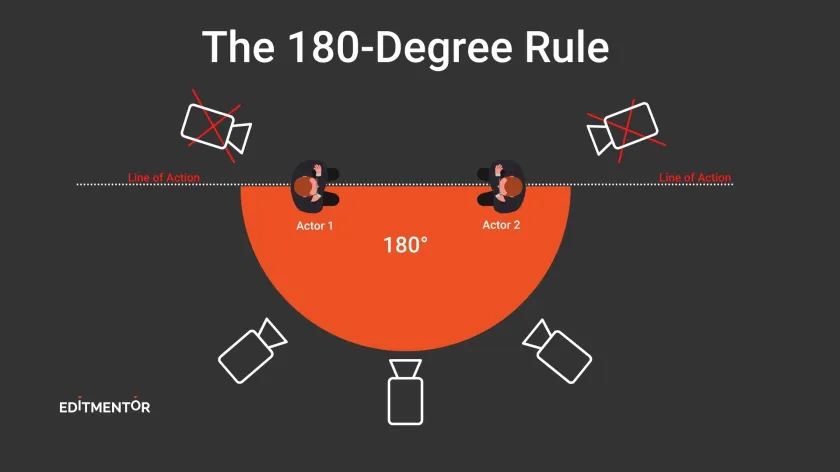
180 Degree Rule
The camera should stay on one side of the action to ensure consistent left-right spatial relations between elements from shot to shot.
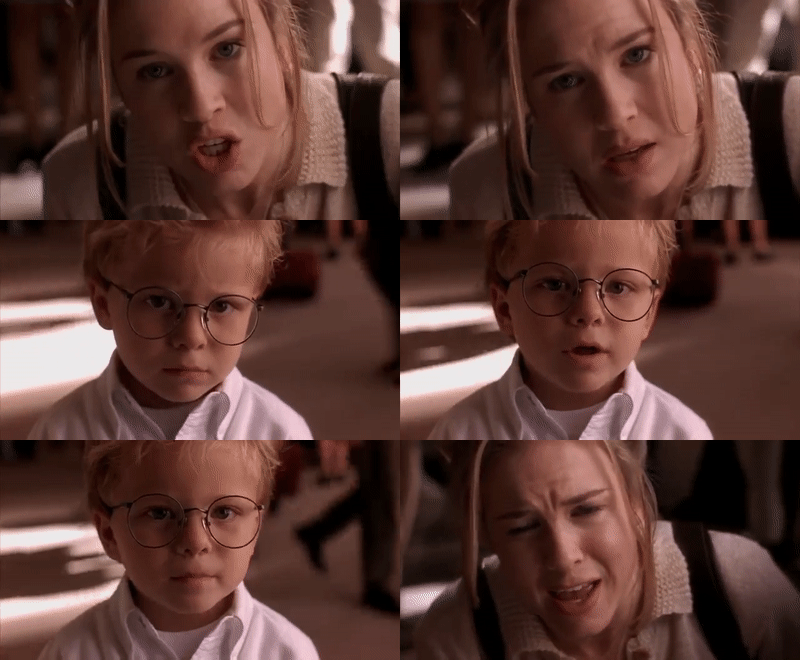
Shot Reverse-Shot
Two or more shots edited together that alternate characters, typically in a conversation. Characters in one frame look left in one frame and look right in the other. Over-the-shoulder framings are common.
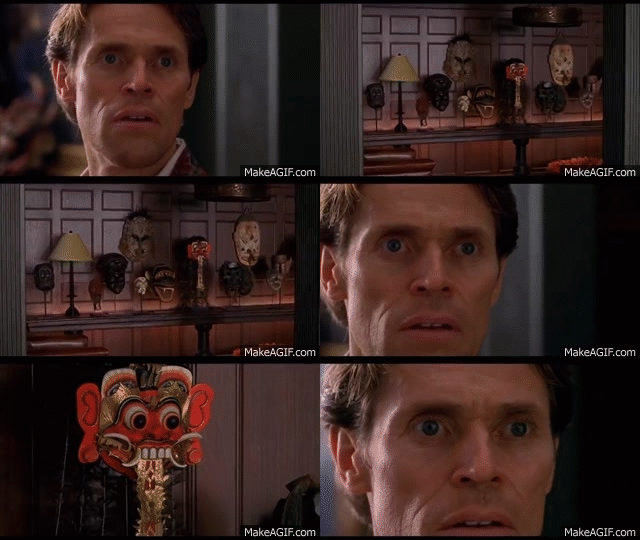
Eye-Line Match
First shot shows a person looking off in one direction, and the second shows a nearby space containing what they see.
Point-of-View Shot (POV)
A subjective shot that reproduces a character’s optical point-of-view, often preceded and/or followed by shots of the character looking.
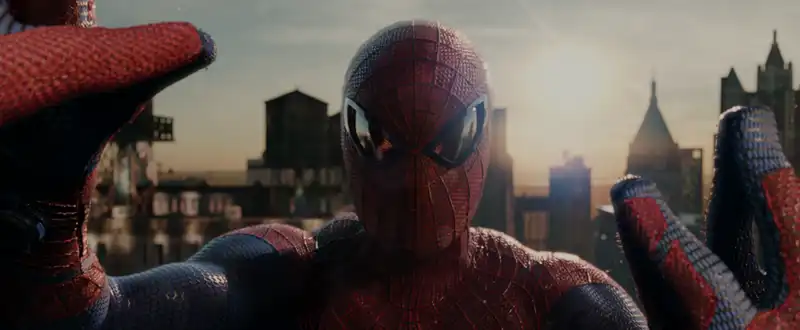
Establishing Shot
A shot that shows a broad view of where the subsequent action will take place or shows spatial relations among the important figures. Either shows the exterior of a building, then cuts to the interior. Or shows spatial relations between figures before cutting to closer framings.

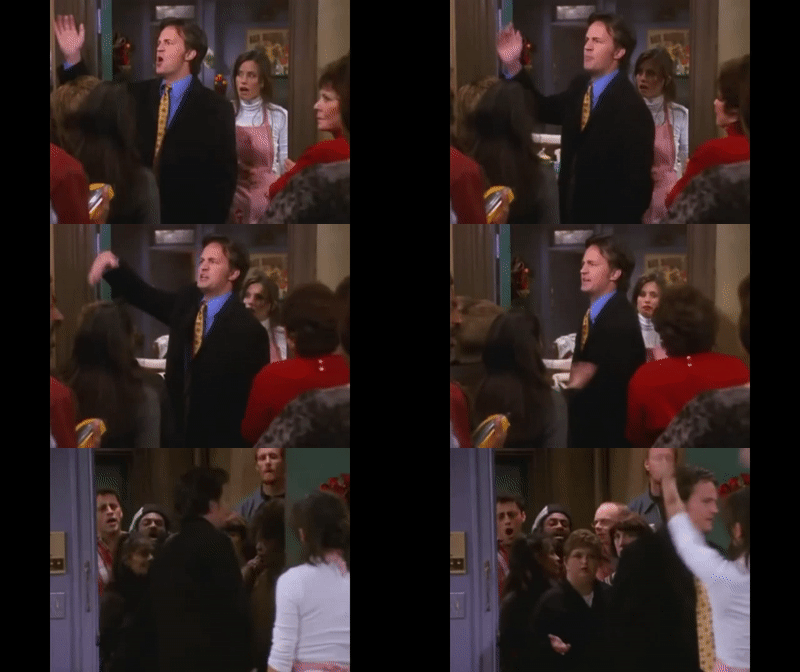
Match-on-Action
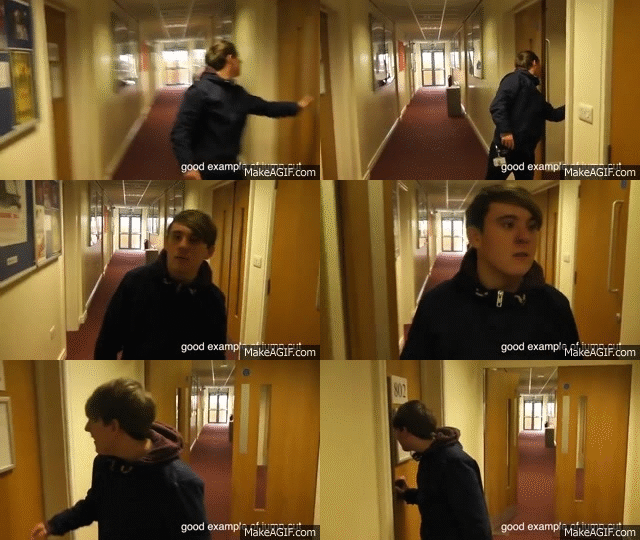
A cut that splices two different views of the same action together, making it seem to continue uninterrupted.
Jump-Cut
An elliptical cut that appears to be an interruption of a single shot.
Cutaway
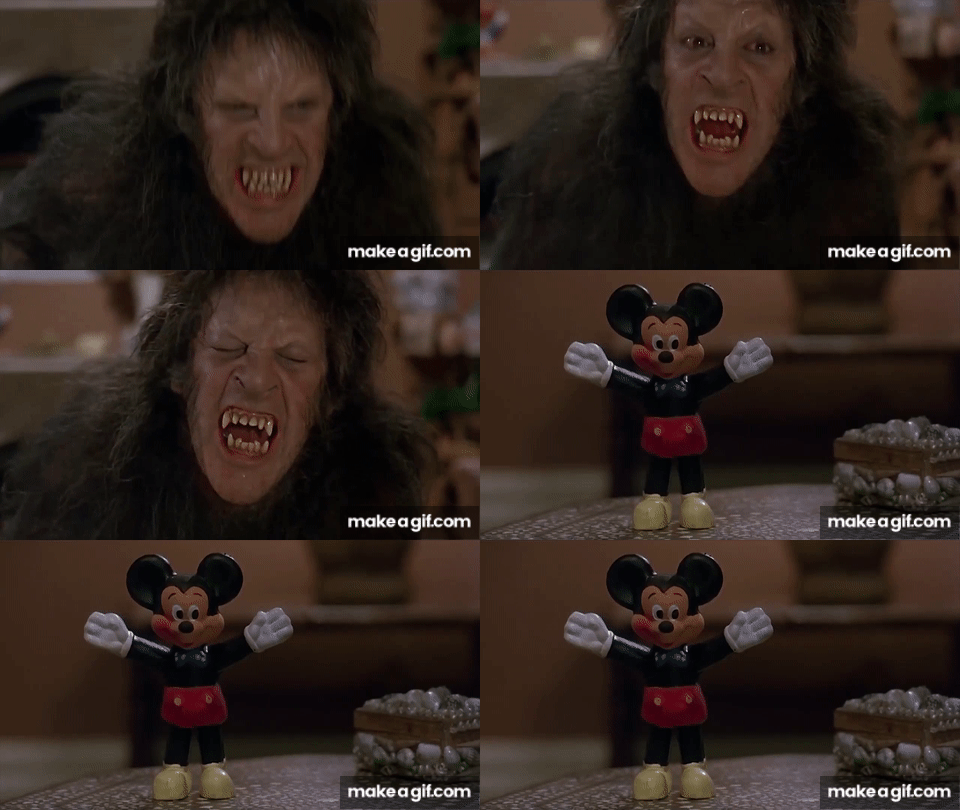
A shot that interrupts the flow of the main action to indicate an object or person that isn’t visible.
Non-Diegetic Insert
An image that doesn’t seem to be in the world of the film.