Bio-chemistry
 Call Kai
 Learn
 Practice Test
 Spaced Repetition
 Match
 Flashcards
 Knowt Play
1/47

There's no tags or description
Looks like no tags are added yet.
48 Terms
What is an anabolic reaction? + example
A metabolic reaction that produces complex molecules out of simpler ones, requiring energy input.
i.e. dehydration synthesis
OPPOSITE TO CATABOLIC
What is a catabolic reaction? + example
A metabolic reaction that breaks down complex molecules into simpler ones, releasing energy.
i.e. hydrolysis
OPPOSITE TO ANABOLIC
What is dehydration synthesis?
An anabolic reaction where 2 molecules bond with the removal of water.
releases water!
What is hydrolysis?
A catabolic reaction where 2 molecules are split with the use of water.
polymers → monomers
What is a monomer/polymer?
A monomer is a single molecule that has a chemical structure which lets it easily bond with other monomers.
When MANY monomers bond together they create a polymer.
What are functional groups?
These are specific clusters of atoms attached to a carbon backbone which gives a molecule its physical behaviour and reactivity.
Alkanes, Alkenes, Alkynes
These are three carbon to carbon bonds. (PART OF FUNCTIONAL GROUPS)
Alk-ane = C-C SINGLE BOND
Alk-ene = C=C DOUBLE BOND
Alk-yne = C≡C TRIPLE BOND
Alcohol functional group

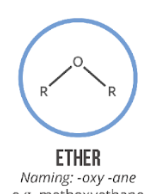
Ether functional group
Aldehyde functional group

Ketone functional group

Carboxylic acid functional group

Ester functional group

Amine functional group

Thiol functional group

Glycosidic Linkage
A bond between 2 monosaccharides, using dehydration synthesis.
i.e. most common is ether bond between sugars
What are monosaccharides/polysaccharides?
Monosaccharides:
Simplest form of carbohydrate (often called simple sugar), cannot be broken down using hydrolysis, single sugar molecule
Contain a ratio of 1:2:1 of C H O (C6H12O6).
i.e. Glucose, Fructose, Galactose
Polysaccharides:
Complex carb, formed by glycosidic-ly linking hundreds to thousands of monosaccharides.
Responsible for energy storage (starch in plants) & (glycogen in animals)
What is a disaccharide?
The resulting molecule when 2 monosaccharides are joined together by a glycosidic bond.
Maltose = Glucose + Glucose
Sucrose = Glucose + Fructose
Lactose = Glucose + Galactose
Ester linkage
The bond formed between the hydroxyl group of glycerol and the carboxyl group of a fatty acid during triglyceride formation.
the bond that makes triglycerides possible
Peptide bond
A bond between amino acids where you remove 2H and 1O (water) to make a carbon - nitrogen bond.

What is an Amphipathic molecule?
This is a molecule which posses both hydrophobic and hydrophilic regions.
i.e. phospholipids in plasma membranes
Activation Energy (Ea)
The energy required to initiate a chemical reaction.
What are the purpose of enzymes?
Biological catalysts that speed up chemical reactions by lowering activation energy.
Factors affecting enzyme function?
Temperature, pH, substrate concentration, Cofactors (inorganic) & coenzymes (organic)
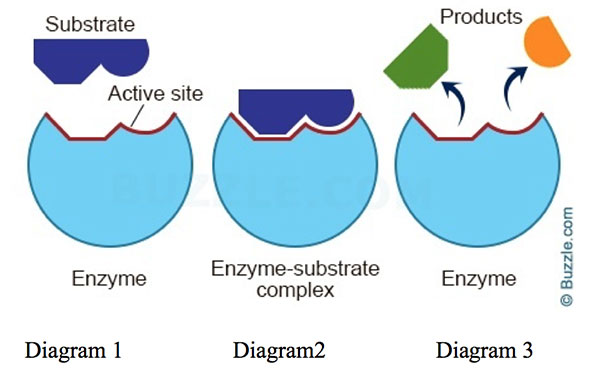
What is an enzyme’s active site?
An active site on an enzyme is the region where the enzyme interacts with reactant molecules, called substrates, binding and undergoing a chemical reaction.
Induced fit model
This is the scientific theory that an enzyme’s active site is not a rigid lock and key, instead it can conform slightly to the substrate bound to it.

Allosteric Site
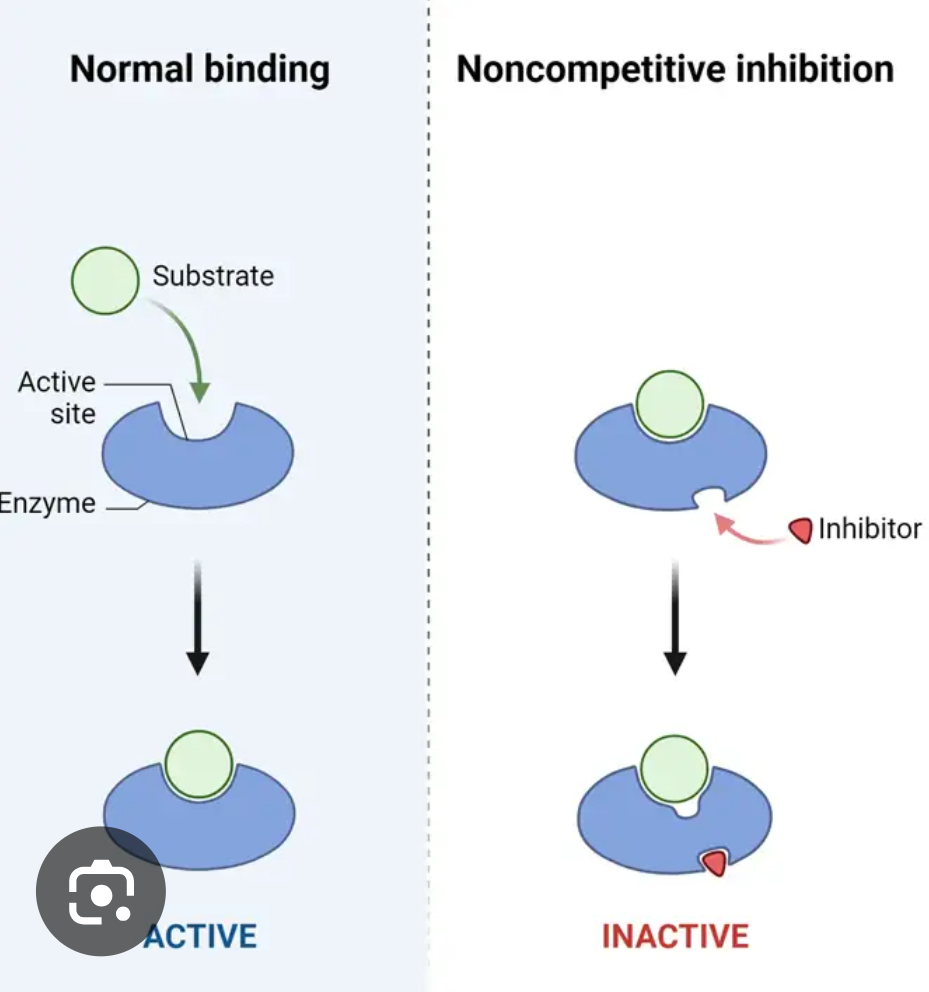
This is a region on an enzyme (seperate from the active site) where a regulatory molecule can bind to change the shape and function of the enzyme.

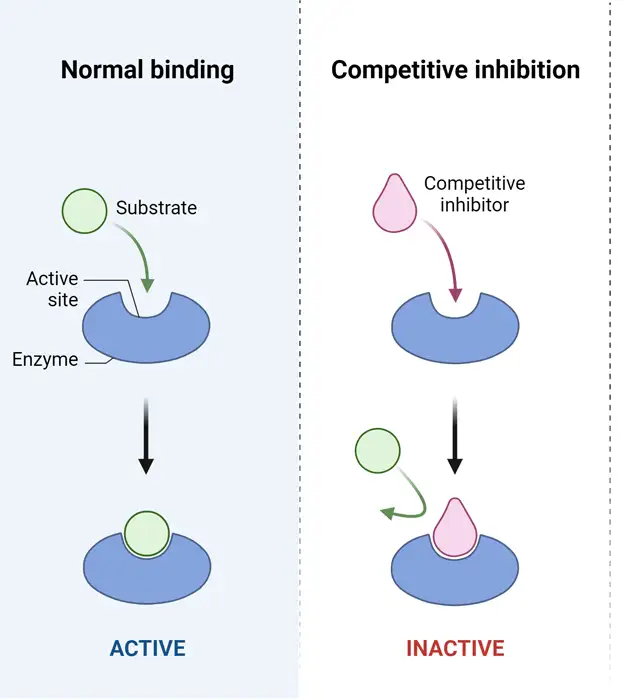
Competitive inhibition
This is where the wrong substrate binds to an enzyme, the inhibitor just sits there without reacting. This prevents the correct substrate from bonding.
Non-Competitive Inhibition
This is when the correct regulator molecule binds to the allosteric site and change the shape and function of the enzyme to effectively turn the enzyme off (temporarily).
Feedback inhibition
One amino acid must go through many enzymes before it reaches it’s final form. Once the amino acid is finished, and if the concentration of the same acid is high enough, there is a chance that it will bind to the allosteric site of the first enzyme it went though. This binding temporarily halts the function of that enzyme, until the concentration lowers.

Tonicity (Hyper/Hypo/Isotonic)
Describes the concentration of solutes in a solution.
Hyper - higher concentration outside the cell, causing it to swell and risk explosion (in animal cells)
Hypo - higher concentration inside the cell, causing it to shrink
Iso - equal concentration, keeps size

Fluid Mosaic Model
This is a structural theory of the cell membrane that states that it is a flexible phospholipid bilayer that has embedded proteins, cholesterol and carbohydrates. They are there to allow for the easy transportation of certain substances through the cell membrane.
Large molecules especially, like glucose, sodium, or water need help from the embedded to pass through the cell membrane.
Why is water a polar molecule?
Due to oxygen’s high electronegativity relative to hydrogen, creating partial negative (δ⁻) and partial positive (δ+) charges.
What is a polar molecule?
This is a molecule with a slightly positive charge on one end and a slightly negative charge on the other.
Key properties of water
High heat capacity, high heat of vaporization, and action as a universal solvent.
What is the Autoionization of Water?
This is a reversible reaction where two water molecules react to form H3O+ + OH-.
Important as this defines the PH scale.

What is metabolism?
This is the sum of all catabolic and anabolic reactions.
What are hydrocarbons?
Chemical compound which contains only hydrogens and carbons.
Carbon chain prefixes
Meth-
Eth-
Prop-
But-
Pent-
Hex-
Hept-
Oct-
Non-
Dec-
BE ABLE TO NAME AND DRAW HYDROCARBON CHAINS
Main types of lipids (which we covered)?
Phospholipids, Triglycerides, Cholesterol
What are Triglycerides? + How are they made?
These are the most common fats found in your body and in the foods you eat.
1 Glycerol + 3 Fatty Acid chains via ester bonds (released 3 H2O)
i.e. storage of energy

HDL vs. LDL cholesterol
These are types of cholesterol.
HDL (High-Density Lipoprotein) removes excess cholesterol from your arteries.
LDL (Low-Density Lipoprotein) adds cholesterol to your arteries.

Saturated fats
Saturated fats:
These are fats with zero double bonds between carbons, are solid at room temp. (butter), mostly from animals and has the potential to raise LDL
Unsaturated fats
Mono-unsaturated fats:
These are fats with one double bond between carbons, are liquid at room temp. (oils), increase HDL
Poly-unsaturated:
These are fats with two double bonds between carbons, found in fatty fish, decreases LDL.
Mono/poly -saturated fats can be either Cis or Trans.
Trans = hydrogen molecules are on different sides next to the double carbon bond. Increase LDL, decrease HDL.
Cis = hydrogen molecules are on the same side of the double carbon bond. Decrease LDL, increase HDL
What is the amino acid substructure unit made of?
4 parts:
central α-carbon
amino group
carboxylic acid group
variable/reactive (R) group

What are the 4 structural levels of proteins?
Primary
This is a simple chain of amino acids linked together in a poly-peptide chain.
Secondary
Regular/regional folding of the amino chain. (Helix/Pleated sheet)
Tertiary
3 dimensional folding due to side chain reactions
Quaternary
Multiple tertiary proteins fitting together to create a larger, functional protein machine.
Not all proteins have a quaternary structure, they however need the first 3 structures to function correctly.

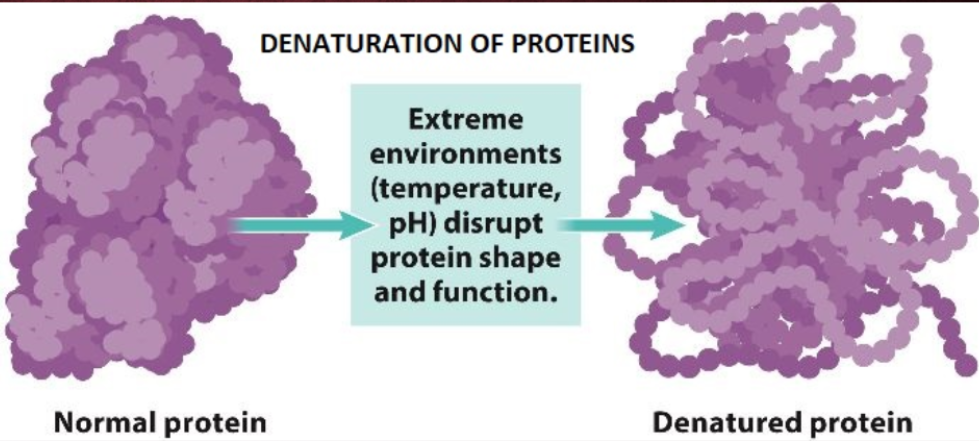
What is Denaturation?
Unfolding of protein structure (loss of secondary, tertiary, quaternary levels) due to heat or pH extremes, causing loss of function.