SA tech skills Test 3
0.0(0)
Studied by 2 people Call Kai
 Learn
Learn Practice Test
 Spaced Repetition
 Match
Match Flashcards
 Knowt Play
Card Sorting
1/20

Earn XP
Description and Tags
Last updated 5:05 PM on 11/21/22
Name | Mastery | Learn | Test | Matching | Spaced | Call with Kai | Chat |
|---|
No analytics yet
Send a link to your students to track their progress
21 Terms
1
New cards
what is the crown of the tooth
the portion of the tooth we see when we look in the mouth
above the gum
above the gum
2
New cards
what is the cervical portion of the teeth
where the crown meets the gum (neck)
3
New cards
what is the root of the tooth
the portion of the tooth that is found in the bone of the maxilla and mandible
below the gum
below the gum
4
New cards
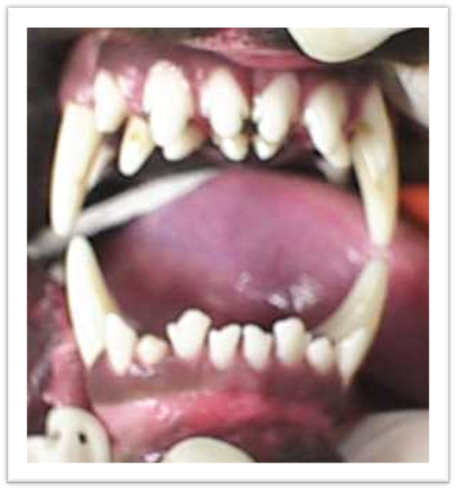
Triadan numbering system
right maxillary: 1
left maxillary: 2
left mandibular: 3
right mandibular: 4
left maxillary: 2
left mandibular: 3
right mandibular: 4
5
New cards
which teeth in the dog have 3 roots
Maxillary PM4
Maxillary M1,2
Maxillary M1,2
6
New cards
which teeth in the cat have 3 roots
Maxillary PM4
7
New cards
which organs are affected with periodontal disease
organs with the most blood flow
liver, heart, and kidneys
liver, heart, and kidneys
8
New cards
describe PD 0 of periodontal disease
clinically normal
9
New cards
describe PD 1 of periodontal disease
gingivitis with no attachment loss
1-2 mm sulcus depth greater than normal
visible tartar present
only one that can be reversed
1-2 mm sulcus depth greater than normal
visible tartar present
only one that can be reversed
10
New cards
describe PD 2 of periodontal disease
11
New cards
describe PD 3 of periodontal disease
25%-50% attachment loss
moderate periodontitis
8-9 mm sulcus depth in canine
50% loss of periodontal ligament
alveolar bone loss
plaque accumulation
tooth attachment loss
root debridement
gingival curettage
periodontal surgery may be required
moderate periodontitis
8-9 mm sulcus depth in canine
50% loss of periodontal ligament
alveolar bone loss
plaque accumulation
tooth attachment loss
root debridement
gingival curettage
periodontal surgery may be required
12
New cards
describe PD 4 of periodontal disease
> 50% attachment los
advanced periodontitis
sulcus depth > 9mm in canine
>50% loss of periodontal ligament
significant bone loss
severe attachment loss
poor to grave prognosis for tooth retention
often requires extraction
advanced periodontitis
sulcus depth > 9mm in canine
>50% loss of periodontal ligament
significant bone loss
severe attachment loss
poor to grave prognosis for tooth retention
often requires extraction
13
New cards
describe normal occulsion
with mouth closed, mandibular canine is distal to maxillary third incisor and medial to maxillary canine
centered between these two teeth without touching
centered between these two teeth without touching
14
New cards
Class I malccolusions
jaw length is correct but one or more teeth are in abnormal positions
15
New cards
Class II malocclusions
mandible is shorter than maxilla. can result in abnormally long maxilla (maxillary prognathism) or abnormally short mandible
(mandibular brachygnathism)
(mandibular brachygnathism)
16
New cards
Class III Malocclusion
Maxilla is relatively shorter than mandible
can either be abnormally long maxilla (maxillary prognathism) or abnormally short mandible
(mandibular brachygnathism).
can either be abnormally long maxilla (maxillary prognathism) or abnormally short mandible
(mandibular brachygnathism).
17
New cards
what is crossbite
crossbite can be rostral or caudal with one or more incisors positioned incorrectly, not allowing normal occlusion
18
New cards
Normal Class III Occlusion
maxillary brachygnathism. the upper jaw is shorter than normal relative to the lower jaw. it is also called mandibular meisocculusion.
Breed standard are Boxers, Pugs, and Boston Terriers
Breed standard are Boxers, Pugs, and Boston Terriers
19
New cards
What is a scissor bite
the normal occlusion in dogs and cats, upper
20
New cards
what do interceptive orthodontics involve
extraction of persistent deciduous or adult teeth that are interfering with normal occlusions.
the entire deciduous root must be removed for correction to occur
the entire deciduous root must be removed for correction to occur
21
New cards
can we use human toothpaste in animals
no. it has artificial sweetener with xylitol and a high concentration of flouride.