Physiology Block 2 Study Guide
 Call Kai
 Learn
Learn Practice Test
 Spaced Repetition
 Match
Match Flashcards
 Knowt Play
1/43

There's no tags or description
Looks like no tags are added yet.
Name | Mastery | Learn | Test | Matching | Spaced | Call with Kai | Chat |
|---|
No analytics yet
Send a link to your students to track their progress
44 Terms
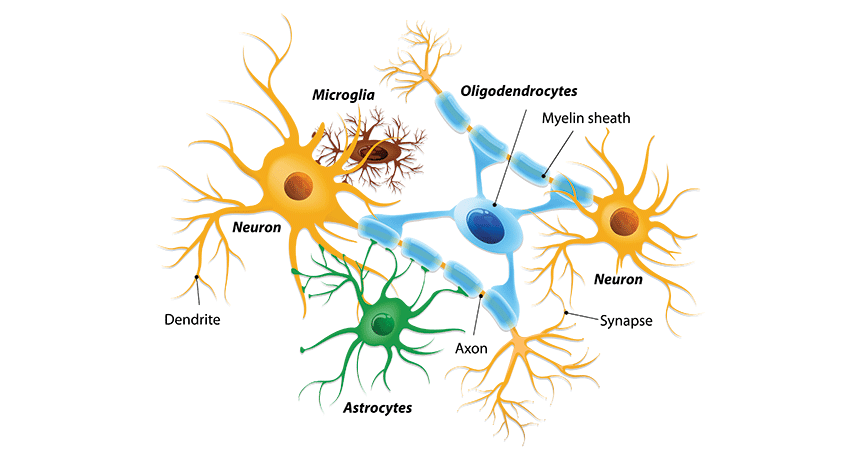
Glial Cells
a group of cells that support the neurons but do not conduct impulses

Sensory neurons conduct impulses to the
CNS

motor neurons conduct impulses
from the ___ to target organs
CNS

Dendrites
projections of the cell body
that receive signals and conduct graded impulses to the cell body

The axon is the
extension of the neuron that conducts action potentials away from the cell body using ….?
voltage-gated channels

Depolarization occurs when?
positive ions enter the cell

hyperpolarization
occurs when?
positive ions leave the cell

(PNS or CNS?) Schwann cells:
PNS, myelination
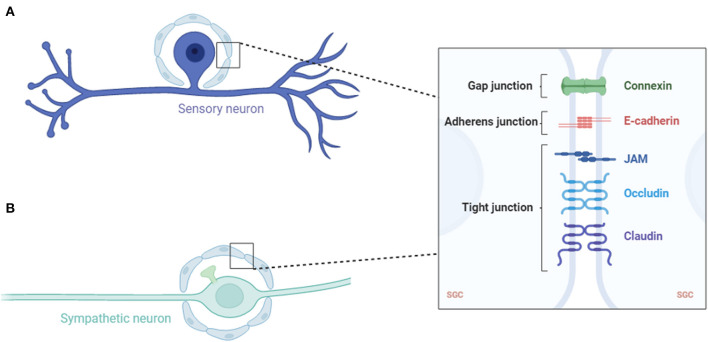
(PNS or CNS?) Satellite cells:
PNS, support cell bodies

(PNS or CNS?) Oligodendrocytes:
CNS, myelination

(PNS or CNS?) Microglia:
CNS, phagocytize foreign material

(PNS or CNS?) Astrocytes:
CNS, blood brain barrier

(PNS or CNS?) Ependymal cells:
CNS, secrete cerebrospinal fluid
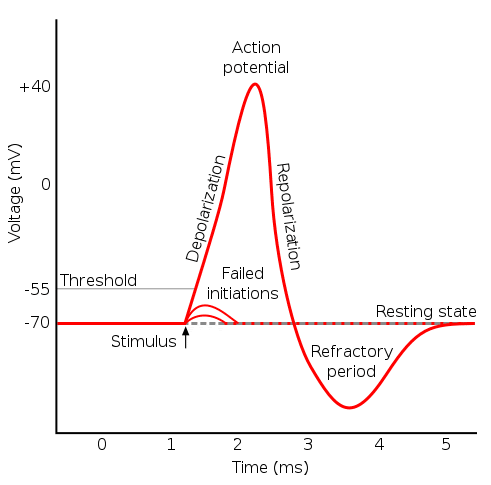
Action potential; at rest (when a neuron is not signaling), the inside of the cell is ______ compared to the outside of the cell
negative
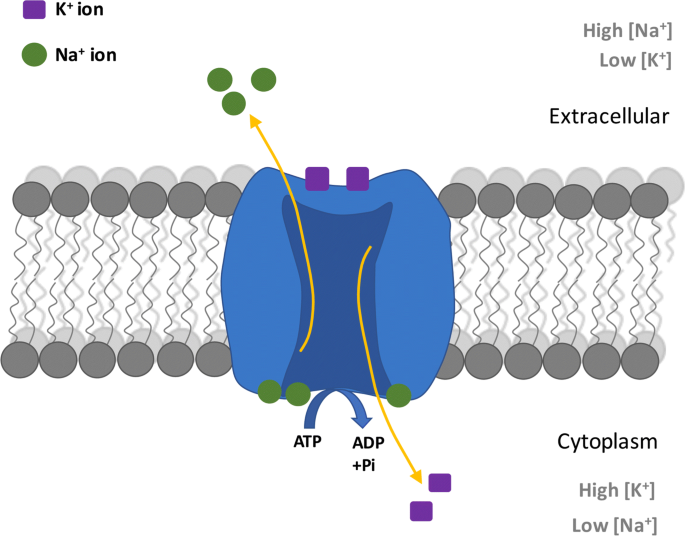
the Na+K+ATPase and the large number proteins which are ______ charged and stay ______ the cell so are often
termed fixed _____
the Na+K+ATPase and the large
number proteins which are negatively charged and stay inside the cell so are often
termed fixed anions

The resting membrane potential of a neuron is around ___ mV;
The resting membrane potential of a neuron is around -70 mV;

Depolarization is ____; hyperpolarization is ____ (excretory or inhibitory)
Depolarization is excitatory; hyperpolarization is inhibitory

During an action potential, the voltage-gated Na+ channel is critical for _______ (what kind of polarization?)
During an action potential, the voltage-gated Na+ channel is critical for depolarization
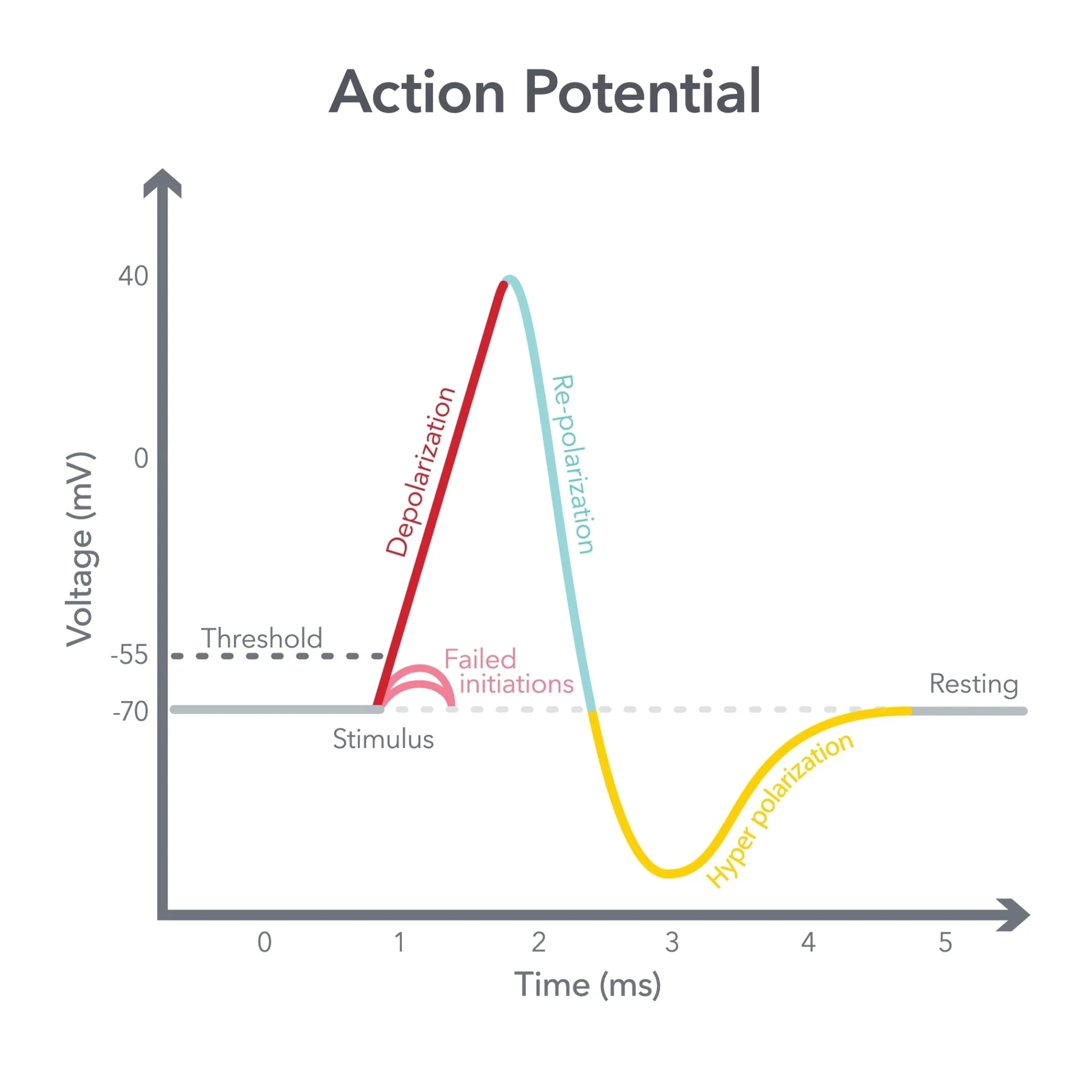
The voltage-gated K+ channel is critical for ______ (what kind of polarization?)
The voltage-gated K+ channel is critical for repolarization

If the membrane potential of
the neuron reaches ____mV – threshold - (remember, resting membrane potential is
-70 mV), the _______ (voltage/ligand, K+/Na+) channels will open and the neuron will ______ (polarization)
If the membrane potential of
the neuron reaches -55 mV – threshold the voltage-gated Na+ channels will open and the neuron will depolarize

An ________ is all-or-none, once threshold is reached, an ________ (same term as first blank) will fire
and this will initiate a train of _____ _____ (same term as first) down the axon
An
action potential is all-or-none, once threshold is reached, an action potential will fire
and this will initiate a train of action potentials down the axon

dendrites, which can send _____ , _____ (where?) impulses just to the cell body
dendrites, which can send graded, local impulses just to the cell body

During an
action potential, that portion of the membrane ______ (polarization) to ____ mV, then the _____ ____ ____ (what channel) are inactivated, while ______ ____ ____ (what channel) are opened,
leading to a rapid efflux of K+ and _____ (polarization)
During an
action potential, that portion of the membrane depolarizes to +30 mV, then the voltage-
gated Na+ channels are inactivated, while voltage-gated K+ channels are opened,
leading to a rapid efflux of K+ and repolarization
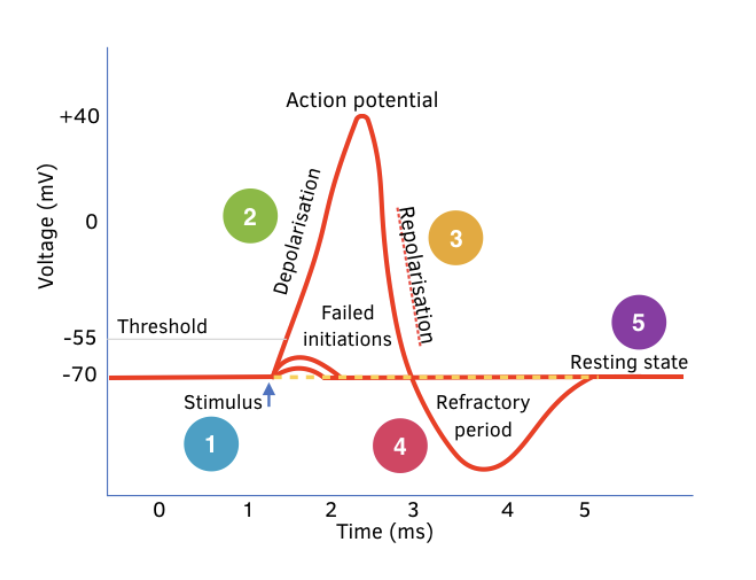
_____ ______ ______ corresponds to the period in
which the Na+ channels are inactivated
absolute refractory period corresponds to the period in
which the Na+ channels are inactivated

______ _____ _____ corresponds to
the time when the voltage gated Na+ channels have reset to the closed state but the K+
channels are still open and the neuron is hyperpolarized
relative refractory period corresponds to
the time when the voltage gated Na+ channels have reset to the closed state but the K+
channels are still open and the neuron is hyperpolarized

relative refractory period corresponds to
the time when the ______ ______ ______ channels have reset to the closed state but the __
channels are still open and the neuron is ______ (polarization)
relative refractory period corresponds to
the time when the voltage gated Na+ channels have reset to the closed state but the K+
channels are still open and the neuron is hyperpolarized
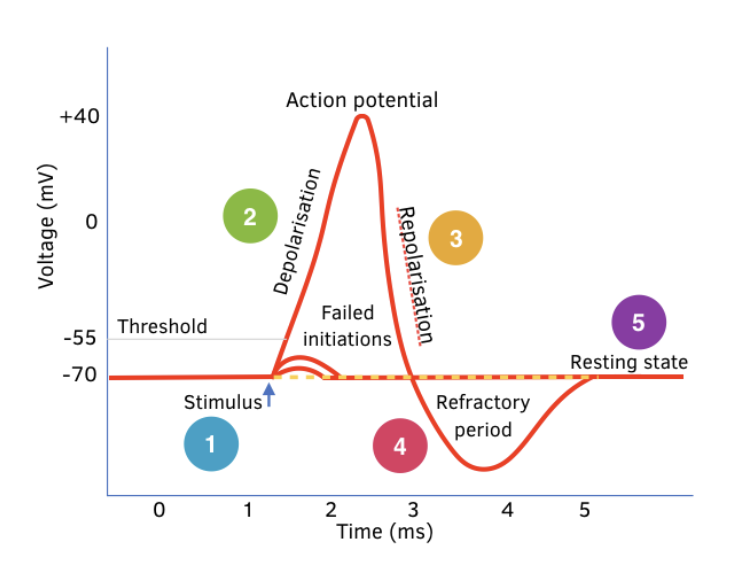
Another action potential
______ (can or cannot) be generated during the absolute refractory periods
Another action potential
cannot be generated during the absolute refractory periods

a very strong stimulus at
the cell body is needed to generate an action potential during the _____ _____ ____
a very strong stimulus at
the cell body is needed to generate an action potential during the relative refractory
period

The speed at which an action potential is conducted down the axon depends on the
____ _____ and _____
The speed at which an action potential is conducted down the axon depends on the
axon diameter and myelination
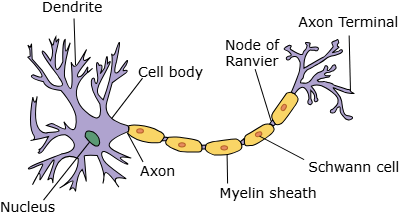
if the axon is
_______ , this ‘insulates’ the charges and improves speed
if the axon is
myelinated, this ‘insulates’ the charges and improves speed

_____ is not along
the entire length of the axon
Myelination is not along
the entire length of the axon
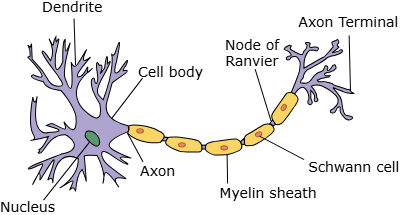
____ __ ______ are unmyelinated gaps at which the
voltage gated channels are clustered; this clustering allows the action potential to ‘leap’
from node to node
Nodes of Ranvier are unmyelinated gaps at which the
voltage gated channels are clustered; this clustering allows the action potential to ‘leap’
from node to node

A ______ is the functional connection between the neuron and its target cell
A synapse is the functional connection between the neuron and its target cell
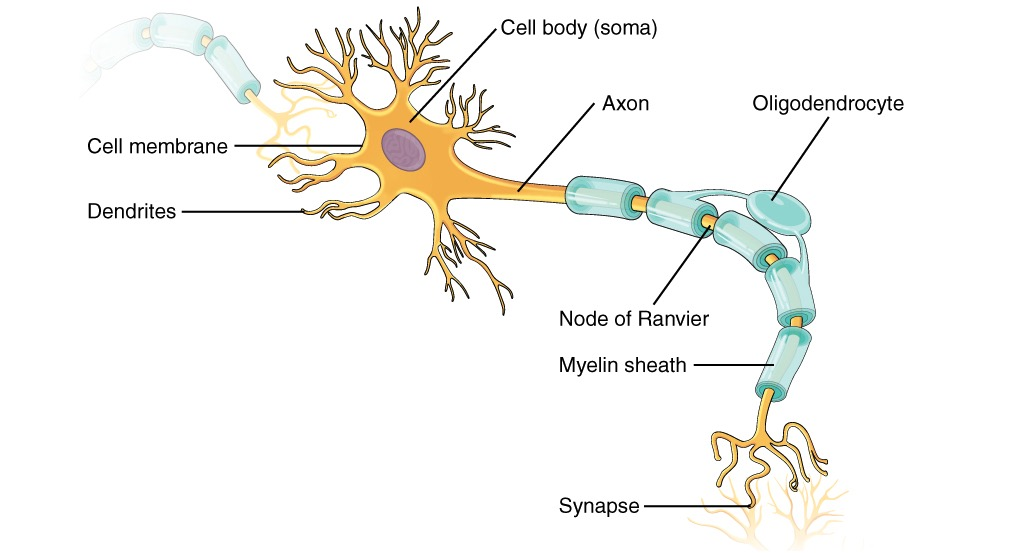
______ _____ (gap junctions) are critical in smooth and cardiac muscle
Electrical synapses (gap junctions) are critical in smooth and cardiac muscle

_______ _____ involve the release of a neurotransmitter
Chemical synapses involve the release of a neurotransmitter

The release of the
neurotransmitter is regulated by _____-_____ ____ channels that are located in the
terminal region of the membrane; when the action potential reaches the end of the
axon, these channels open and ____ enters the cell
The release of the
neurotransmitter is regulated by voltage-gated Ca2+ channels that are located in the
terminal region of the membrane; when the action potential reaches the end of the
axon, these channels open and Ca++ enters the cel
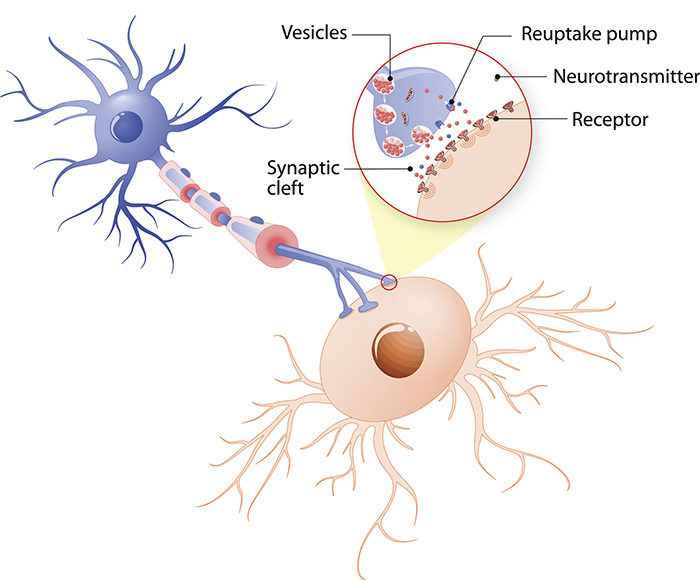
____ stimulates the fusion of
synaptic vesicles filled with neurotransmitter to the plasma membrane, leading to
exocytosis of the neurotransmitter
Ca++ stimulates the fusion of
synaptic vesicles filled with neurotransmitter to the plasma membrane, leading to
exocytosis of the neurotransmitter

The neurotransmitter diffuses across the synapse to
bind a specific receptor which is a ____-____ ion channel of a nearby neuron or target
cell, leading to a _____ ____ at the target cell.
The neurotransmitter diffuses across the synapse to
bind a specific receptor which is a ligand-gated ion channel of a nearby neuron or target
cell, leading to a graded potential at the target cell.

_________ is an important neurotransmitter in the somatic and autonomic motor
nervous system
Acetylcholine is an important neurotransmitter in the somatic and autonomic motor
nervous system

______ receptors are cholinergic receptors, and have two
subtypes – ______ and ______
Acetylcholine receptors are cholinergic receptors, and have two
subtypes – nicotinic and muscarinic
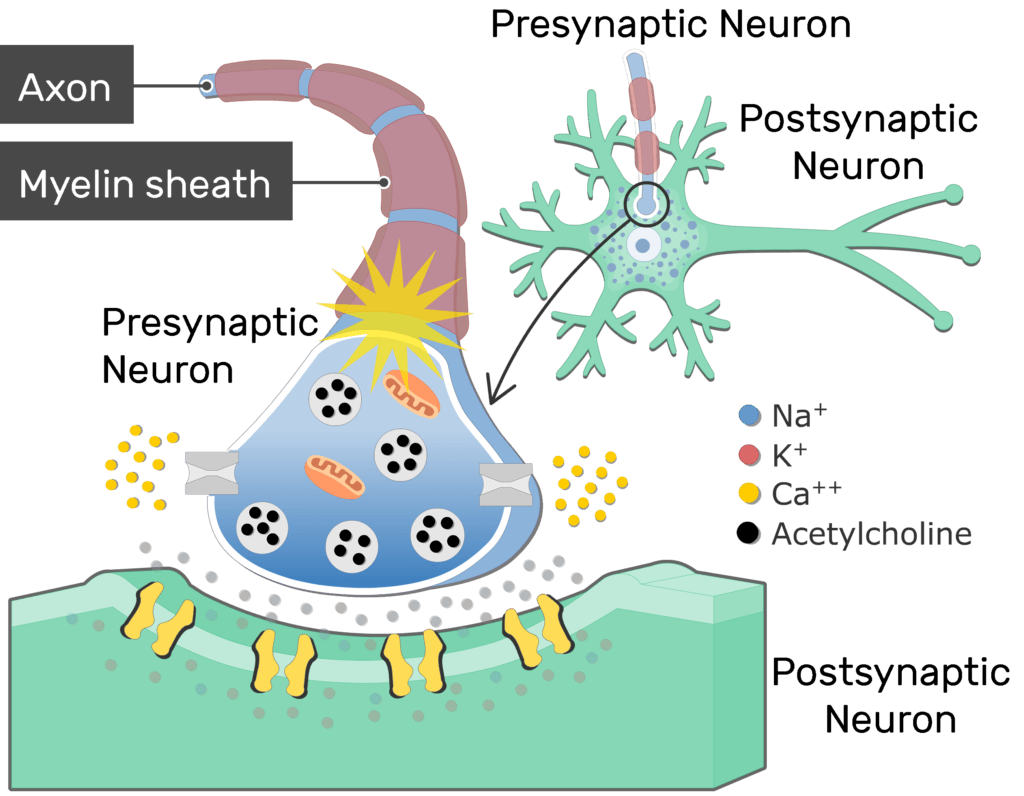
Acetylcholine is metabolized in the _____ on
the target cell membrane by ________, thereby terminating the signal
Acetylcholine is metabolized in the synapse on
the target cell membrane by acetylcholinesterase, thereby terminating the signal
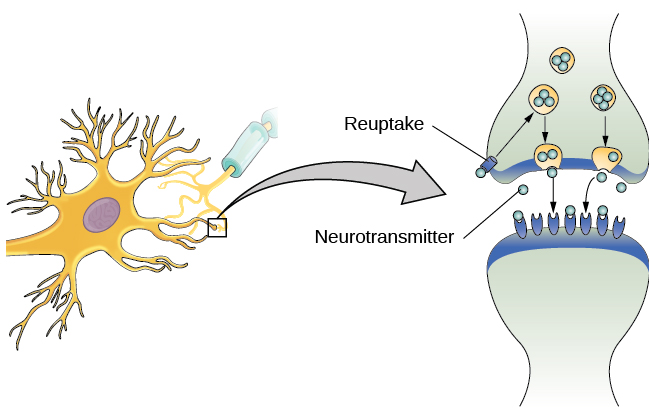
________ and _______ are monoamine neurotransmitters; these are
important in the autonomic motor nervous system
Norepinephrine and epinephrine are monoamine neurotransmitters; these are
important in the autonomic motor nervous system
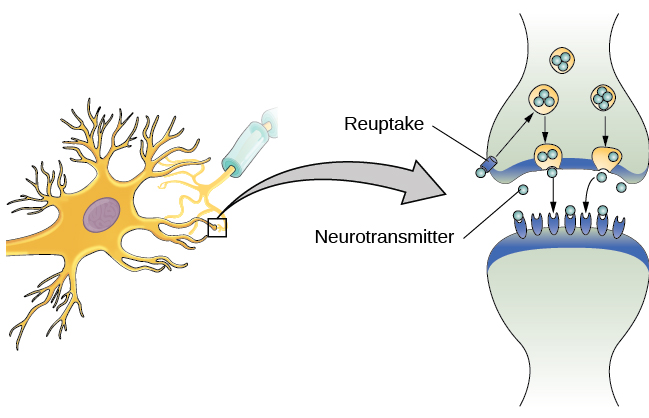
________ and
_________ receptors are adrenergic. These neurotransmitters are inactivated by
reuptake into the neurons.
norepinephrine and
epinephrine receptors are adrenergic. These neurotransmitters are inactivated by
reuptake into the neurons.