ap bio chapter 2 test
 Call Kai
 Learn
Learn Practice Test
 Spaced Repetition
 Match
Match Flashcards
 Knowt Play
1/63

There's no tags or description
Looks like no tags are added yet.
Name | Mastery | Learn | Test | Matching | Spaced | Call with Kai | Chat |
|---|
No analytics yet
Send a link to your students to track their progress
64 Terms
Surface area to volume ratio essential knowledge
Affect the ability of a biological system to obtain necessary nutrients, eliminate waste products, acquire or dissipate thermal energy, and other wise exchange chemicals and energy with the environment.
The surface area to volume ratio can restrict size and shape.
Smaller cells typically have a higher surface area to volume ratio as well as a more efficient exchange of materials with the environment than do larger cells.
When a cells volume increases
The surface area to volume ratio decreases and the demand for internal resources increases
Necessary to adequately exchange material with the environment
More complex cellular structures
As organisms increase in size the sa to volume what?
Decreases affecting properties like rate of heat exchange with the environment. Smaller amounts of mass exchange proportionally more heat with the ambient environment than do larger masses. As mass increases both the surface area to volume ratio and the rate of heat exchange decreases.
The relationship between metabolic rate and body mass
The smaller organism will have the higher metabolic rate per unit body mass.
Phospholipids
Have both hydrophilic and hydrophobic regions. Polar hydrophilic regions are external or internal environment. Non polar hydrophobic regions face the interior.
Embedded proteins
Hydrophilic, hydrophobic, or both
Hydrophilic is inside the interior of the protein or exposed to cytosol
Hydrophobic regions of proteins make up the protein surface that interacts with the fatty acids in the interior membrane
Plasma membranes
Consists of phospholipid molecules embedded with proteins, steroid (such as cholesterol in vertebrate animals), glycoproteins, and glycolipids.
What do plasma membrane do
Separate the internal environment of the cell from the external environment.
Selective permeability
The result of the plasma membrane having a hydrophobic interior.
How do nonpolar small molecules move across membrane
Freely pass the membrane
Cells moving across membrane Hydrophilic substances large polar molecules and ions
Through embedded channels and transport proteins
Pass through in small amounts
Small uncharged molecules like H O 2 or NH3 pass through in small
The selective permeability of membranes causes what
Allows for the formation of concentration gradients of solutes across the membrane
Passive transport
Is the movement of molecules from regions of high concentration gradients to regions of low concentration without the direct input of metabolic energy
Active transport
Requires the direct input of energy to move molecules. Sometimes moves molecules from regions of low to regions of high.
Endocytosis
The cell takes in large molecules and particulate matter by folding the plasma membrane in in itself and forming new small vestibules that engulf material from the external environment
Exocytosis
Internal vestibules release material from cells by fusing with the plasma membrane and secreting large molecules from the cell
Facilitated diffusion
Requires transport or channel protein to enable the movement of charged ions across the membrane
*membranes may become polarized by the movement of ions across the membrane
*charged ions require channel proteins to move through membrane
Facilitated diffusion movement
Enables the large polar molecules through membranes with no energy input. Substance move down the concentration gradient
Aquaporins
Transport large quantities of water across membrane
Ribosomes
made up of ribosomal RNA and protein
Non membrane sub cellular structures are found in cells in all forms of life and reflect the common ancestry
Synthesize proteins according to messenger RNA sequences
endomembrane system
Consists of a group of membrane-bound organelles and sub cellular components that work together to modify, package, and transport polysaccharides, lipids, and proteins intercellularly.
Endoplasmic reticulum
Provides mechanical support by helping cells maintain shape and plays a role in intracellular transport
rough ER
Is associated with membrane bound ribosomes, allows for the compartmentalization of cells, and helps carry out protein synthesis
Smooth er
Functions include the detoxification of cells and lipid synthesis
Golgi complex
Is a membrane bound structure that consists of a series of flattened membrane sacs
Functions are correctly folding and chemically modifying newly synthesized cellular products, packaging proteins for trafficking.
Mitochondria
Have a double membrane that provides compartments for different metabolic reactions involved in aerobic cellular respiration.
The outer membrane is smooth while the inner is highly convoluted.
Mitochondria functions
Forming folds that enable ATP to be synthesized more efficiently
Lysosomes
Are membrane enclosed sacs that contain hydrolytic enzymes that digest material also play a role in programmed cell death (apoptosis)
Vacuoles
Are membrane bound sacs that play many different roles
Vacuoles in plant cells
A specialized large (one of these) maintains turgor pressure through nutrient and water storage
Vacuoles in animal cells
Smaller in size are more plentiful than in plant cells, and store cellular materials.
Chloroplasts
Specialized organelles that are found in plants and photosynthetic algae. Contains a double membrane and serve as the location for photosynthesis.
Movement of water
Hypotonic to hypertonic regions
Osmosis
Water moves from regions of high water potential to regions of low water potential
Growth and homeostasis
Are maintained by the constant movement of molecules across membranes
Osmoregulation
Maintains water balance and allows organisms to control their internal solute composition and water potential.
Osmolarity
Another phrase foe solute concentration
Low osmolarity to regions of high osmolarity
The movement of water
Metabolic energy is required for what
Active transport of molecules and ions across the membrane and to establish and maintain electrochemical gradients
Membrane protein
Are necessary for active transport.
Na/K pump and ATP
Contribute to the maintenance of the membrane potential by the pump using ATP to move positive and negative ions against the concentration gradients
Membrane potential
Difference in electronegative charge between the inside and outside of a cell
Membranes and membrane bound organelles in eukaryotic cells
Compartmentalize intra cellular metabolic processes and specific enzymatic reactions
Compartmentalization
The organization of cellular activities into distinct membrane bound regions to isolate incompatible processes and increase efficiency.
Intracellular metabolic processes
The sum of all chemical reactions occurring with a cell including energy production, molecule synthesis, and waste breakdown
Specific enzymatic reactions
Highly selective chemical processes where an enzyme lowers the energy barrier to create the product (catalyst) to transform a specific molecule called a substrate into a product.
Endosymbiosis
Membrane organelles such as mitochondria and chloroplasts evolved from once free living prokaryotic cells using this process
Prokaryotes compartmentalization
Typically lack internal membrane bound organelles but have internal regions with specialized structures and functions
Eukaryotic compartmentalization
Maintain internal membranes that partition the cell into specialized regions.
Prokaryote cells (bacteria)
Have no defined nucleus
Divided by binary fission
Contains very little specialization within the cell
Unicellular
DNA single loops

Eukaryote cell (plants and animals)
Multicellular
Distinct nucleus
Replicate by mitosis and meiosis
Have specialized membrane enclosed organelles
More organelles then the other type of cell

Nucleoid
A region within bacteria where most of the DNA is found with some RNA and proteins not bounded by a membrane

Genophore
Bacterial chromosome contained in nucleoid region

Plasmid
Can be transferred between bacteria
Ribosomes
Gives the cytoplasm a granular appearance smaller than eukaryotic cells are the site for messenger RNA translation into proteins

Cytoplasm
Internal soup of the cell that is bounded on the outside by the cell envelope.
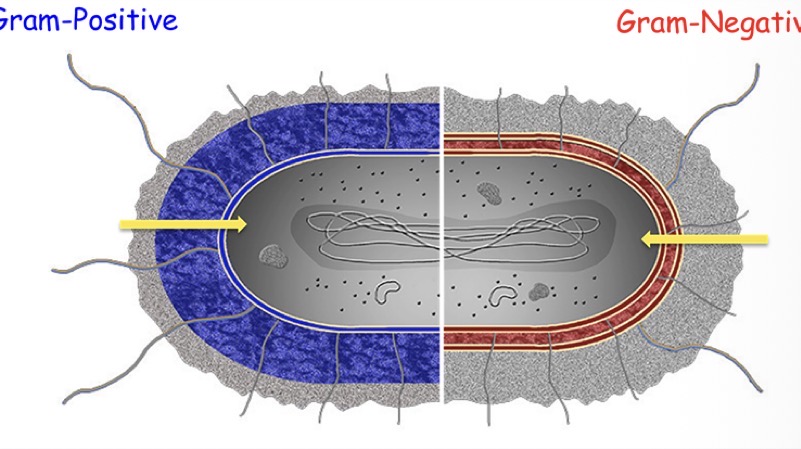
Capsule
Made of polysaccharides and sometimes protein protects cell by acting as a barrier against phagocytosis by white blood cells

Cell envelope
The cytoplasm is bounded on the outside by this it divides membrane into two groups

Pili, Fimbriae
Hollow hairlike structures made up of proteins how bacteria attaches to other cells. Can transfer DNA between bacterial cells.

Flagella
Long appendages containing micro tubules used for motility they rotate by means of a motor located just under the cytoplasmic membrane