7A: Neurogenic Communication disorders
 Call Kai
 Learn
Learn Practice Test
 Spaced Repetition
 Match
Match Flashcards
 Knowt Play
1/42

There's no tags or description
Looks like no tags are added yet.
Name | Mastery | Learn | Test | Matching | Spaced | Call with Kai | Chat |
|---|
No analytics yet
Send a link to your students to track their progress
43 Terms
Central nervous system
Brain and spinal cord
Peripheral nervous system
Nerves that connect body to brain and spinal cord
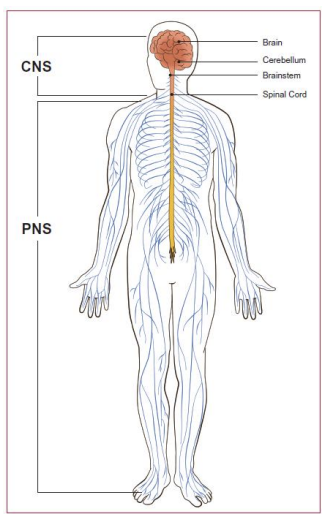
Central Nervous System
Brain enables high-level functions
Damage can lead to many types of communication disorders
Brainstem and spinal cord provide sensory and motor pathways between body and brain
Damage can disrupt biological support for speech
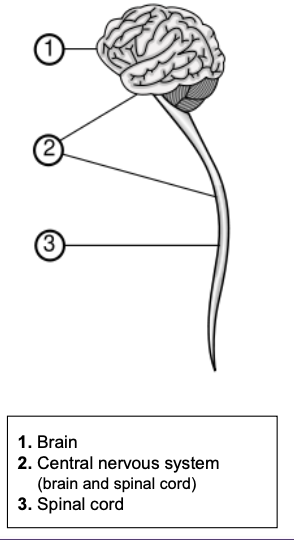
Brain: Cerebrum
Majority of brain
Right and left hemispheres
Left hemisphere
controls right side of the body
tasks linked to language and logic
Right hemisphere
controls left side of the body
Tasks linked to creativity, cognition
Brain: Cerebellum
Below cerebrum, behind brainstem
Helps coordinate and regulate neural impulses
Regulates balance, posture, and fine motor movements
Cerebrum: Lobes
Frontal
Parietal
occipital
Temporal
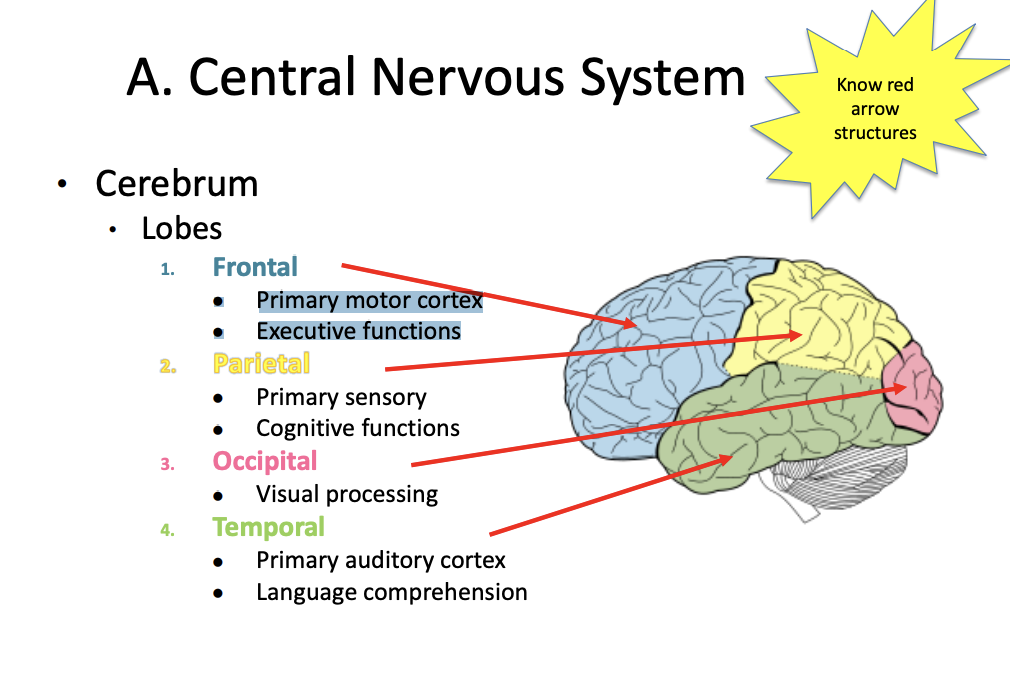
Frontal lobe
Primary motor cortex
Executive functions
Parietal lobe
primary sensory cortex
cognitive functions
Occipital
visual processing
Temporal
primary auditory cortex
language comprehension
Cortical regions of interest (and know where they are)
Primary auditory cortex
Primary motor cortex
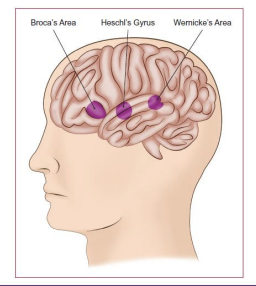
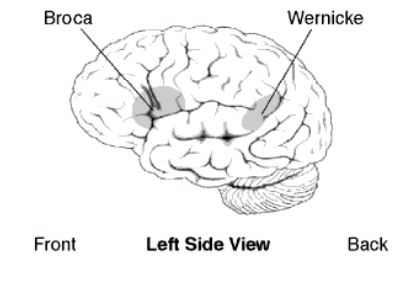
Broca’s area
Wernicke’s area
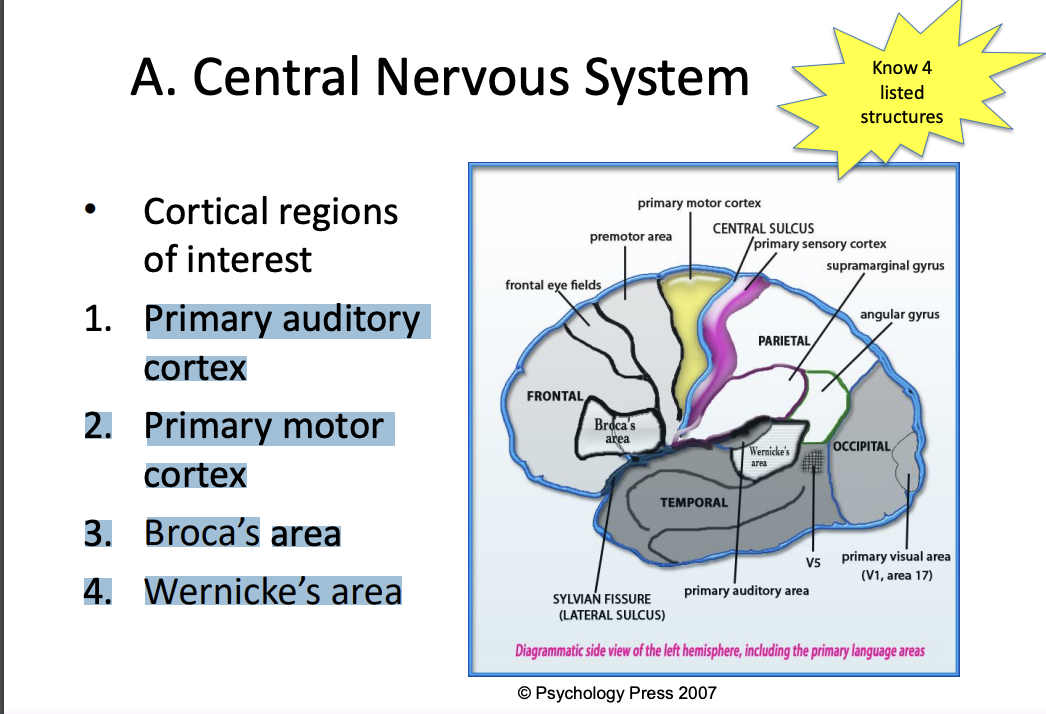
Primary auditory cortex
In temporal lobe
bilateral
includes Heschl’s gyrus
the first area of cortex to process auditory information
awareness or perception of sound
Primary Motor cortex
In frontal lobe along precentral gyrus
Bilateral
Controls muscles (including for speech)
Brocas area
In frontal lobe
Involved in speech production and expressive language
Also plays a role in language comprehension
Unilateral
In left hemisphere in most people
Wernicke’s area
Temporal lobe, beside primary auditory cortex
Involved in language comprehension
Also plays a role in language production
Unilateral
In left hemisphere in most people
Subcortical regions of interest
Basal Ganglia
Thalamus
Basal Ganglia
Involved in movement
Connected to cerebellum and cortex
Thalamus
Relay area between parts of cortex
Many functions, including motor and sensory
Peripheral Nervous System
Helps the CNS communicate with the body
made of:
Cranial Nerves
Spinal nerves
Cranial nerves
12 pairs of nerves
Enter/exit brain and brainstem
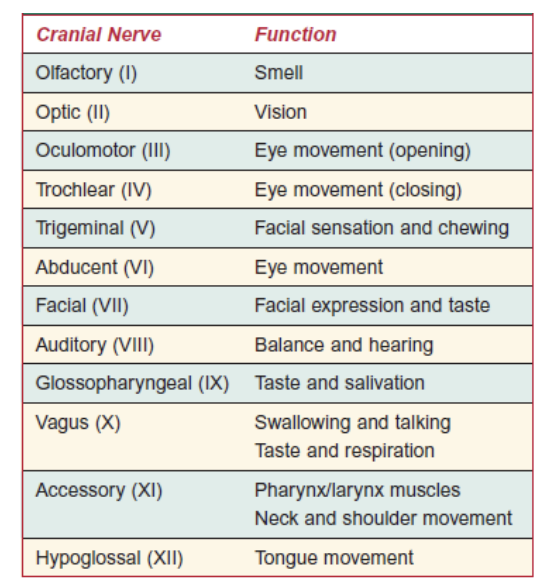
Spinal nerves
31 pairs of nerves
Enter/exit spinal cord
Ascending nerve tract
Descending nerve tracts
Ascending nerve tract
Sensory
From glands, tissues, joints, etc.
Posterior (exit back portion of spinal cord)
Descending nerve tracts
Motor
Innervate muscles of chest, abdomen, limbs
Anterior (exit front portion of spinal cord)
Neurogenic communication disorders are usually…
brain-based, acquired disorders
Types of Neurogenic communication disorders
Acquired motor speech disorders
Dysarthria
Apraxia
Acquired language disorders
Aphasia
Cognitive-communication disorders
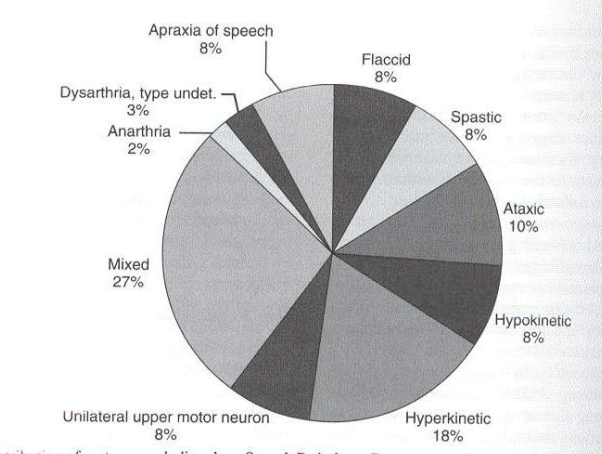
Distribution of neurogenic communication disorders
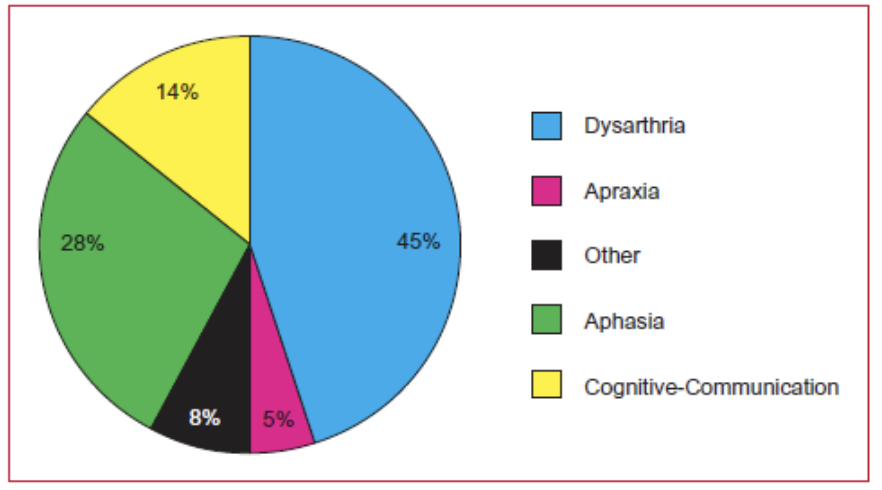
Dysarthria
Caused by weakness, paralysis, slowness, or incoordination of muscles responsible for speech
Impairment in speed, force, range, direction, or timing of motor control for speech
May also have involuntary movements or alterations in muscle tone
Different types based on lesion location within CNS/PNS
Common causes: stroke, Parkinson’s Huntington’s, ALS, cerebellar disease
6 types of Dysarthria
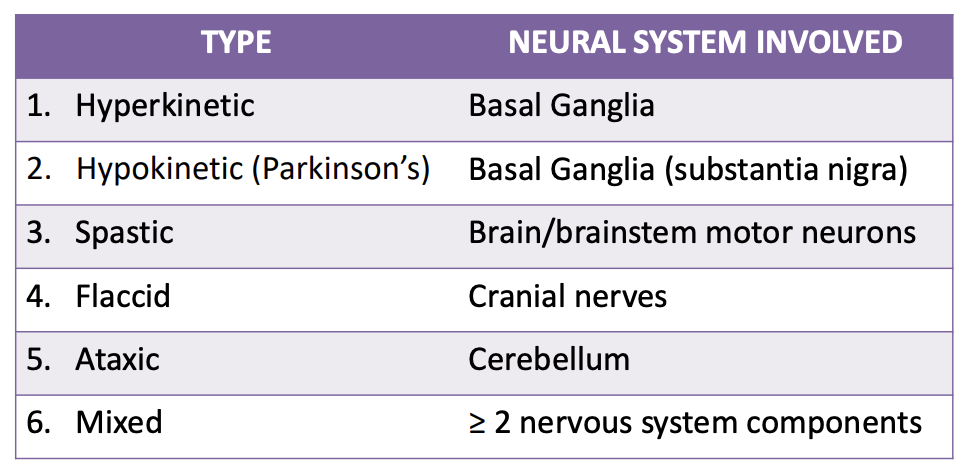
Hyperkinetic Dysarthria
Involuntary movements
Several subtypes
Chorea
Oromandibular Dystonia
Spasmodic Dysphonia
Essential voice tremor
Chorea
Fast, unpredictable, random and arrhythmic involuntary movements
Some common causes: Huntington's disease, stroke, HIV infection
Distinctive speech characteristics: variable speech rate, excess loudness variation, rapid and unpredictable consonant and vowel distortions
Oromandibular Dystonia
Slow, sustained involuntary movements and spasms of face, lips, jaw, tongue, and velum
Some common causes: unknown (idiopathic), drugs, head trauma
Distinctive speech characteristics: voice stoppages, voice tremor, prolonged consonant and vowel distortion
Spasmodic Dysphonia
Strained, effortful phonation or irregular voice stoppage due to hyperadduction or hyperabduction of vocal folds
Cause: Unknown
Essential voice tremor
Rhythmic tremor in voice intensity or voice pitch, regular voice stoppages
Cause: Unknown, 30% have family history
Hypokinetic Dysarthria
Hypokinetic: reduced ability to move, rigidity, reduced range of motion, slowness
Most common cause: Parkinson’s disease and related Parkinson-like disorders
Distinctive speech characteristics
Hypophonia (soft speech)
Imprecise consonant articulation
Short rushes and rapid rate of speech
Monotone pitch and monoloudness
Spastic Dysarthria
Increased tone (stiffness, tightness) in muscles with reduced fine motor control, weakness, and slowness of movement
Some common causes: stroke, ALS, TBI, MS
Distinctive speech characteristics
Slow rate
Low pitch
Harsh and strained-strangled vocal quality
Imprecise production and distortion of consonants and vowels
Flaccid Dysarthria
Flaccid: Muscle weakness, reduced muscle tone
Some common causes: trauma, neurosurgery, ALS, muscular dystrophy, tumour, stroke
Distinctive speech characteristics
Hypernasality
Breathiness
Nasal emission
Audible inspiration
Ataxic Dysarthria
Impaired coordination of movement
Some common causes: stroke, TBI, MS, brain tumours
Distinctive speech characteristics
Sounds “slurred,” “intoxicated”
Imprecise consonant and vowel production
Irregular breakdown in articulation accuracy
Excess and equal stress (metering out syllables)
Mixed Dysarthria
Most common dysarthria type •
Two or more pure dysarthria types •
Causes –
More diffuse damage than other dysarthrias
Commonly associated with degenerative disorders (e.g., ALS, MS)
E.g., ALS commonly presents with spastic flaccid dysarthria)
Dysarthria Summary
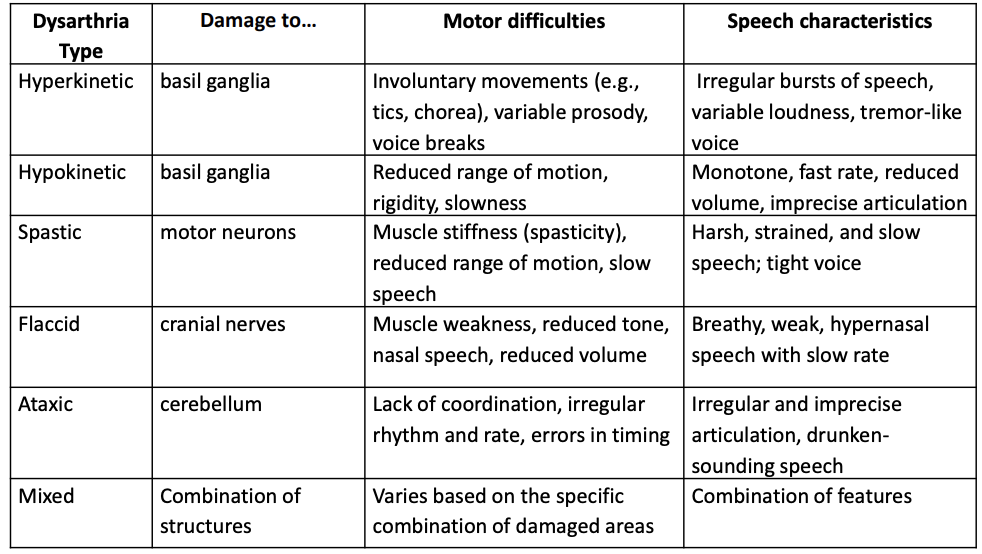
Apraxia
Acquired neurological impairment in motor speech planning and programming
Inability to voluntarily select and program skilled motor movements for speech
Unrelated to weakness, slowness, paralysis
Speech characteristics
Groping attempts and great variability
Repeated attempts to correct errors
Complex, long words are difficult
Distribution of acquired motor speech disorders