Hominin Evolution
 Call Kai
 Learn
Learn Practice Test
 Spaced Repetition
 Match
Match Flashcards
 Knowt Play
1/47

There's no tags or description
Looks like no tags are added yet.
Name | Mastery | Learn | Test | Matching | Spaced | Call with Kai | Chat |
|---|
No analytics yet
Send a link to your students to track their progress
48 Terms
Australopithecus Afarensis - Time Line and geographical distribution
3.7 - 2.5 million years ago
Lived in Central East Africa
Australopithecus Afarensis - Cranial Capacity and features
Capacity: 430 cc
Foramen magnum almost central
Steep forehead
Brow ridge
Large prognathism
Chin underdeveloped
Long flattened cranium
Australopithecus Afarensis - Jaw and dentition
Becoming parabolic
Diastema present
More prominent canines
Small molars and pre molars
Australopithecus Afarensis - Other adaptations
Pelvis: bowl-shaped but narrow hips
Vertebrae: More wedge-shaped
Hand: Power and precision grip (thumbs getting longer and fingers straighter)
Femur sloping inwards towards knee - large carrying angle
Arms longer than legs
Australopithecus Afarensis - Diet
Opportunistic omnivores
Australopithecus Africanus - Time line and geographical distribution
3-2 million years ago
Lived in South Africa
Australopithecus Africanus - Cranial capacity and skull features
460 cc
(same as afarensis)
Foramen magnum almost central
Steep forehead
Brow ridge
Large prognathism
Chin underdeveloped
Long flattened cranium
Australopithecus Africanus - Jaw and Dentition
More parabolic than apes
No diastema
Less prominent canines
Small molars and premolars
Australopithecus Africanus - Other adaptations
(same as afarensis)
Pelvis: bowl-shaped but narrow hips
Vertebrae: More wedge-shaped
Hand: Power and precision grip (thumbs getting longer and fingers straighter)
Femur sloping inwards towards knee - large carrying angle
Arms longer than legs
Australopithecus Africanus - Diet
Opportunistic omnivores
Paranthropus Robustus - Time line and geographical distribution
2-1 million years ago
Lived in South Africa
Paranthropus Robustus - Cranial capacity and skull features
540 cc
Foramen magnum almost central
Flatter forehead
Brow ridge
Large prognathism (slightly less than Australopithecus)
Sagittal Crest
Paranthropus Robustus - Jaw and Dentition
More parabolic than apes
No diastema
Small canines
Large molars and premolars
Paranthropus Robustus - Other adaptations
Pelvis: hips getting wider (bowl-shaped)
Vertebrae: more wedge-shaped
Hand: power and precision grip (thumb getting longer and fingers straighter)
Femur sloping inwards towards knee
Arms longer than legs
Sexual dimorphism
Homo Habilis - Time line and geographical distribution
2-1.7 million years ago
Lived in East Africa
Homo Habilis - Cranial capacity and skull features
600 cc
Foramen magnum central
Brow ridge
Moderate prognathism (slightly less than P. Robustus)
Chin underdeveloped
Homo Habilis - Jaw and Dentition
Parabolic
No diastema
Small canines
Small molars and premolars
Homo Habilis - Other adaptations
Pelvis: hips getting wider (bowl-shaped)
Vertebrae: more wedge-shaped
Hand: precision grip (thumb getting longer and fingers straighter)
Legs longer than arms
Homo Erectus - Time line and geographical distribution
1.7 million years ago to 200 000 before present
Africa, Asia, and Europe
Homo Erectus - Cranial capacity and skull features
1000 cc
Foramen magnum central
Long flattened cranium
Low forehead
Brow ridge
Moderate prognathism (slightly less than Homo Habilis)
Chin development
Homo Erectus - Jaw and Dentition
Parabolic (Wider than homo habilis)
No diastema
Small canines
Molars and premolars getting smaller
Homo Erectus - Other adaptations
Pelvis: hips getting wider (broad hip bones and bowl shaped)
Vertebrae: Wedge-shaped
Hand: precision grip (thumb getting longer and fingers straighter)
Legs longer than arms
Homo Neanderthalensis - Time line and geographical distribution
200 000 - 30 000 years before present
Europe, Western Asia
Homo Neanderthalensis - Cranial Capacity and skull features
1485 cc
Foramen magnum central
Occipital bun
Swept back cheekbones
Large nose
Low prognathism (slightly less than H. Erectus)
Chin development (no chin yet)
Homo Neanderthalensis - Jaw and Dentition
Parabolic (wider than H. Erectus)
No diastema
Small canines
Molars and premolars getting smaller (larger than H. Sapiens though)
Homo Neanderthalensis - Other adaptations
Pelvis: Hips getting wider (broad hip bones and bowl shaped)
Vertebrae: Wedge shaped
Hand: Precision grip (thumb getting longer and fingers straighter)
Barrel chest - for warming air
Thick muscular neck
Short limbs - to give a lower SA to volume ratio making it better for them to retain heat
Homo Sapiens - Time line and geographical distribution
160 000 to present
Africa, Europe, Asia (spread worldwide from Afrcia)
Homo Sapiens- Cranial Capacity and skull features
1350 cc
Foramen magnum central
No brow ridge
Vertical forehead
Taller and more rounded skull
No prognathism
Chin
Homo Sapiens - Jaw and Dentition
Parabolic (wider than H. Neanderthalensis)
No diastema
Small canines
Smallest molars and premolars
Homo Sapiens- Other adaptations
Pelvis: broad hip bones and bowl shaped
Vertebrae: wedge shaped
Hand: Precision grip (long thumbs and straight fingers)
Homo Habilis Tool Culture Name
Oldowan
Homo Habilis (Oldowan) - Food Collection Method
Hunted and scavenged meat occasionally
Mostly plant based diet
Males would hunt and females would gather plant material - division of labour
Homo Habilis (Oldowan) - Tool Use
Used pebble tools (very simplistic): Crudely flaked on one side of the pebble
Choppers (tennis ball size)
Scrapers (marble size)
Flakes (small, shark section of rock)
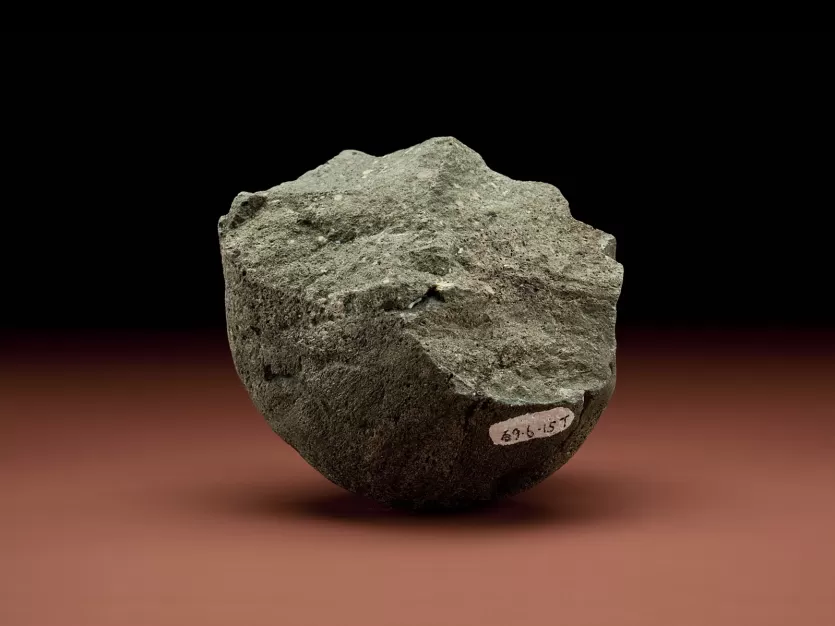
Homo Habilis (Oldowan) - Cultural development
Shared food so selection pressure for simple communication methods
Simple language development possibly
Evidence for increase in speech producing part of the brain
Homo Erectus Tool Culture Name
Achuelian
Homo Erectus (Acheulian) - Food collection method
Hunting more important
Mainly plant based food with increasing amounts of meat including fish
More organised and skillful hunters using a variety of techniques to catch prey
Tapping and butchering
Homo Erectus (Acheulian) - Tool Use
More complex and diverse tools
They have flakes on all sides
An increased number of bows and flakes
Increase in the number of materials used (bone, bamboo)
Hand Axes - have flaking on all edges, bifacial, teardrop shaped
Used butchering and removing animal hides
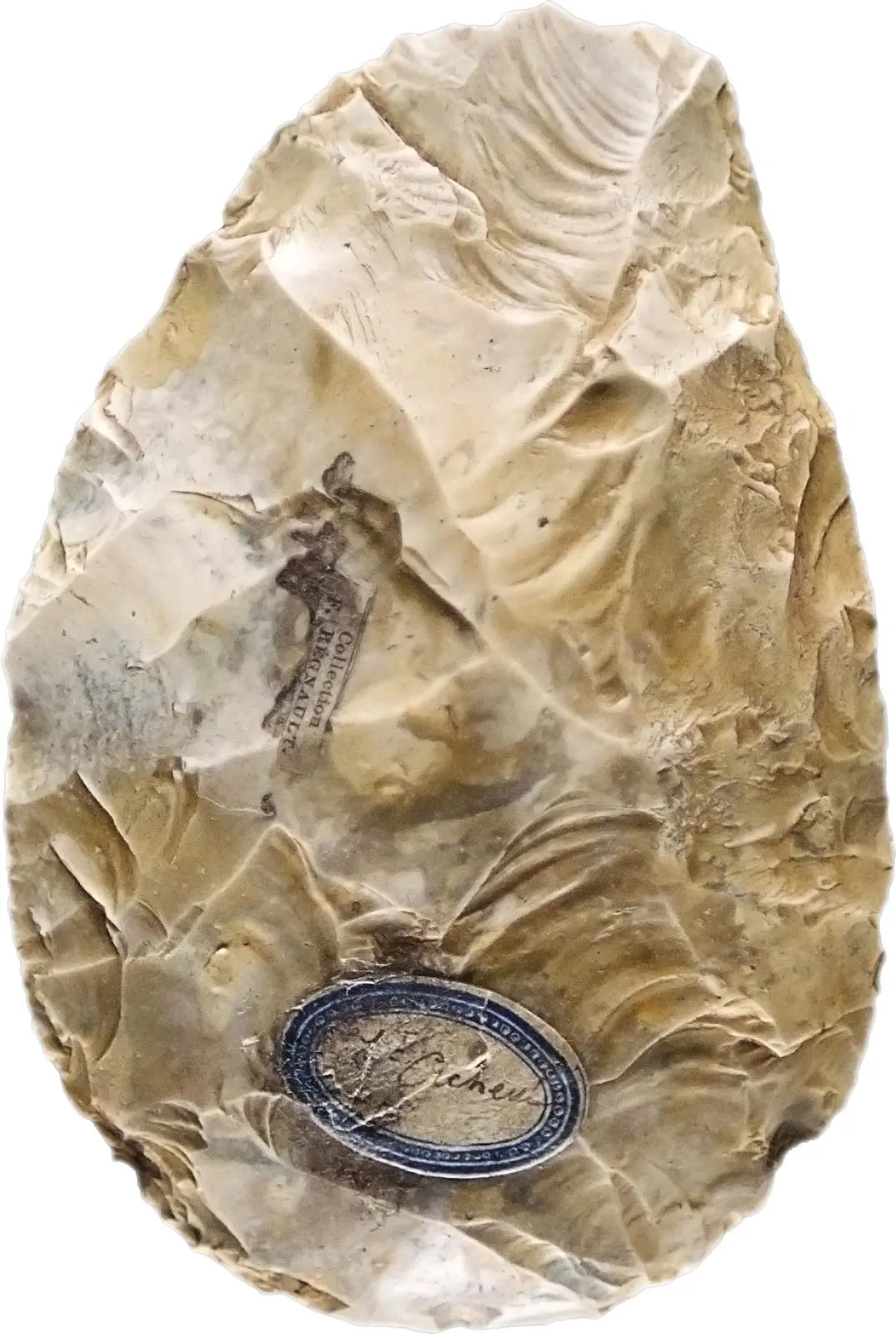
Homo Erectus (Acheulian) - Cultural Development
Possibly developed complex language
Constructed simple shelters
Modified environment to suit needs
Used fire for warmth, protection, cooking (increasing digestibility and flavour)
Mutual corporation
Homo Neanderthalensis Tool Culture Name
Mousterian
Homo Neanderthalensis (Moustarian) - Food
Hunter gatherers
Increasing meat content
Big game hunting (wooly mammoths)
Homo Neanderthalensis (Moustarian) - Tool Use
Flake tools for cutting, scraping, piercing (these tools had much smaller flakes)
Scraping tools to prepare animal hides for clothes
Hafting: a process by which an artifact (stone flake or bone) is attached to a haft (stick)
Levallois Technique:
A piece of stone was first trimmed into a disc-shaped core and struck many times to produce flakes that were flat on one side and had sharp edges. This process was slow and labour intensive.
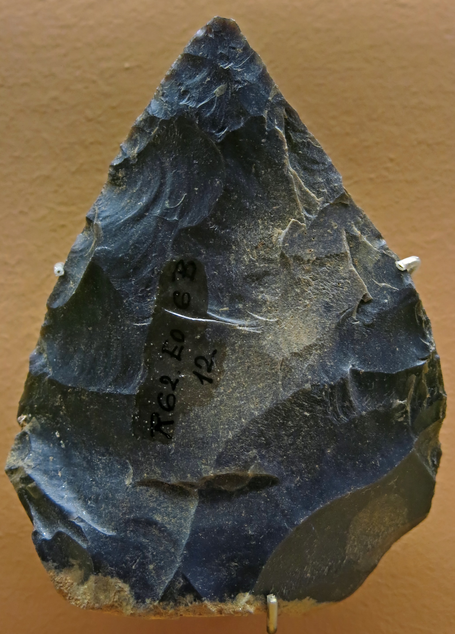
Homo Neanderthalensis (Moustarian) - Cultural Development
Animal hides used for clothing to protect them from cold climate
Sharing of resources
Buried their dead - ceremonial burials
Caring for sick and disabled members of the group
Homo Sapiens Tool Culture Names and Time Period
Cro-Magnon (France, Europe)
Aurignacian: 43 000 - 26 000 BP
Solutrean: 22 000 - 19 000 BP
Magdelenian: 18 000 - 12 000 BP
Cro Magnon Food
Increasing meat content in diet
Animals provided a source of meat, clothing, tools, and material for shelter
Cro Magnon (Aurignacian) Tools
Blade tools with parallel sides
Bone tools
Tools prepared from cores (not crude flakes)

Cro Magnon (Solutrean) Tools
Used flint and stone
Developed ornamental ‘laurel-leaf’ blade
Ornamental rather than practical

Cro Magnon (Magdelenian) Tools
Bone, ivory, and antler tools
Burin (chisel like cutter) - making tools to make tools
Fine needles
Barbed spear points and throwers
Hooks
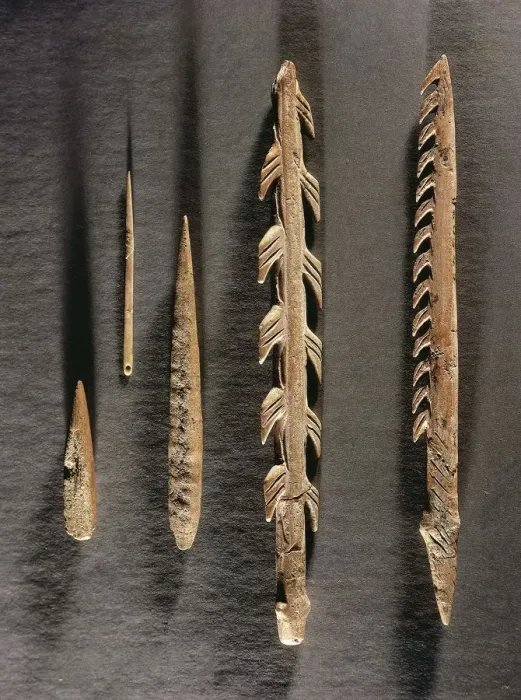
Cro Magnon Cultural Development
Created portable art - figurines and statuettes
Sewing of animal skins, clothing, and shelter
Developed coordinated hunting techniques
Mural art