SysSig 244 better - 12.1 to 12.9
 Call Kai
 Learn
 Practice Test
 Spaced Repetition
 Match
 Flashcards
 Knowt Play
1/20

There's no tags or description
Looks like no tags are added yet.
21 Terms
Define the Laplace transform:
State its equation

Define the unit step function with K as the amplitude:
Draw the graph
State the equations for it

Describe the step function’s linear approximation at t = a:
Draw the graph for 0- and 0+
state its value at t = 0

Describe the step function for when a discontinuity occurs at a:
Draw the graph
state the equations
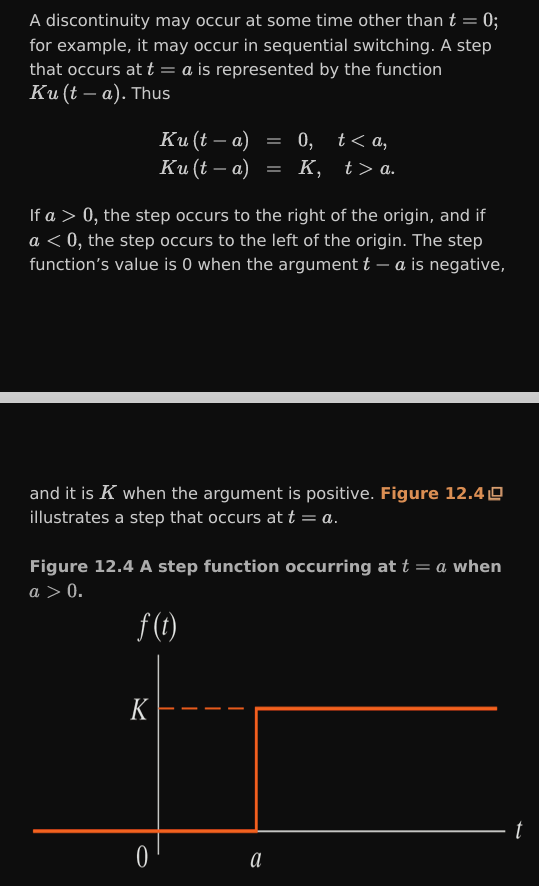
Describe the step function for when a discontinuity occurs at a and the step function occurs when t < a
Draw the graph
state the equations

Describe the procedure of defining a function with a finite width pulse


Solve:

State the characteristics of a impulse function


Describe the impulse function:
Deine it mathematically
Describe its sifting property


Derive the general formula for the Laplace transform of the derivative of functions


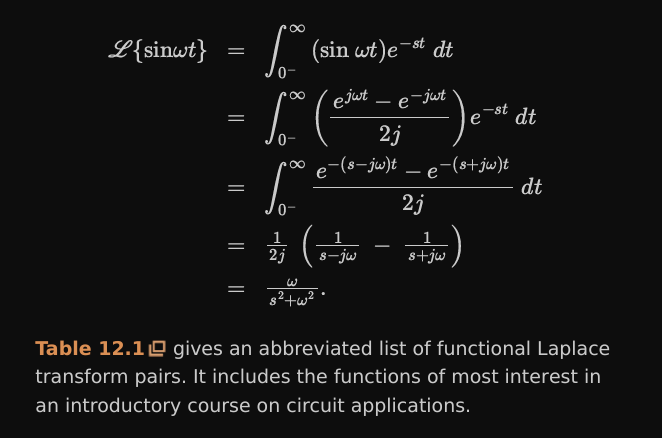
Use the Laplace integral to find the Laplace transform of sinwt
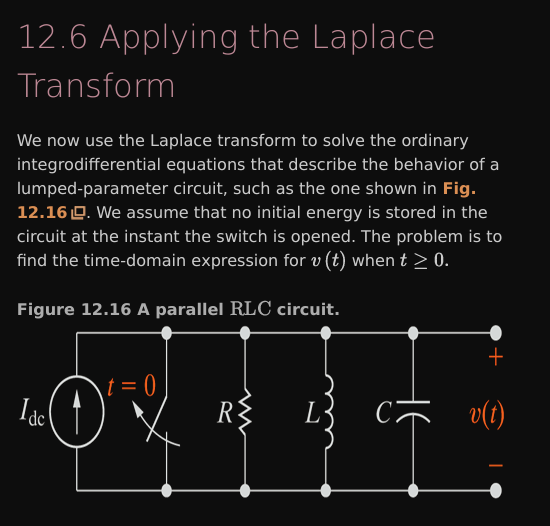
Solve:

Describe how to perform partial fraction expansion on rational functions of s with distinct real roots

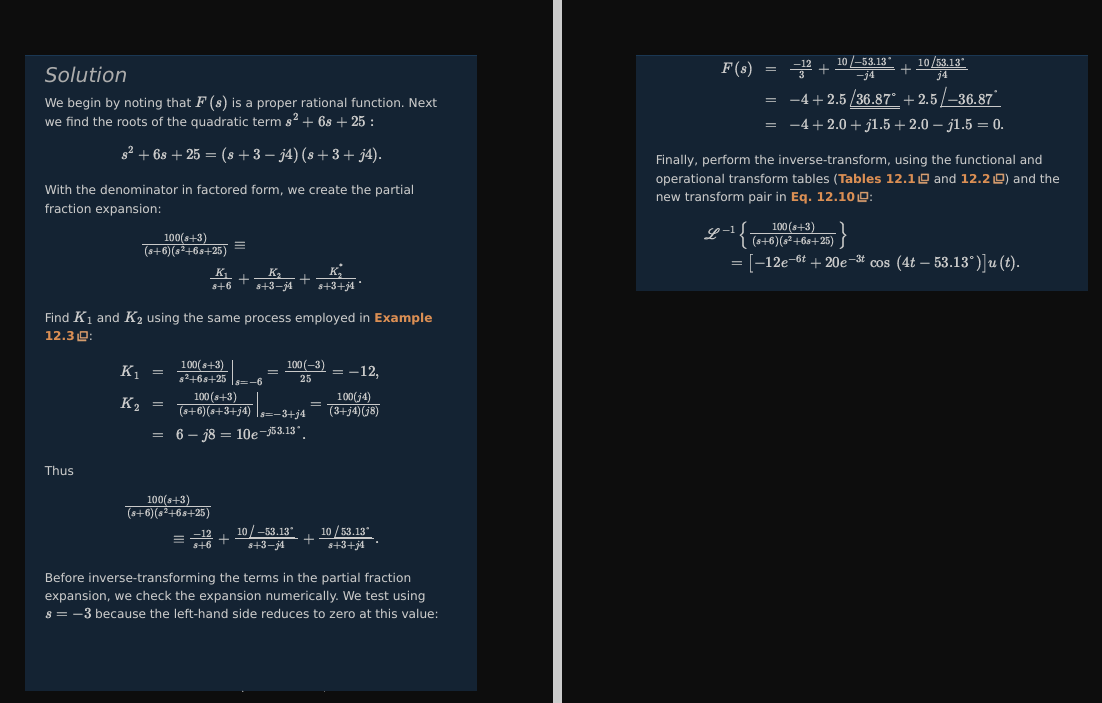
Describe how to perform partial fraction expansion on a rational function of s with complex zeroes

Bro it’s literally just the same as real roots. just use complex roots
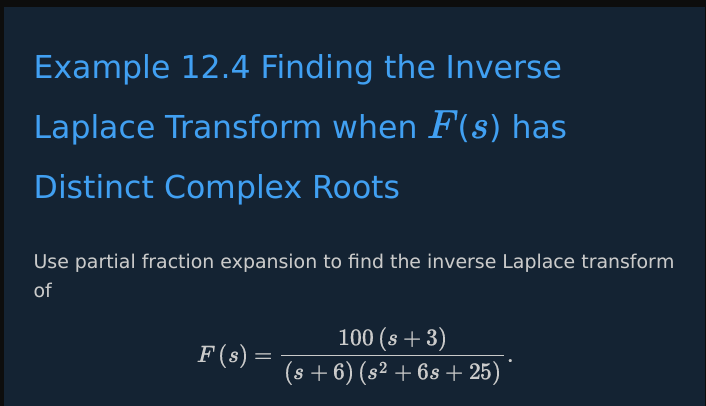
Solve
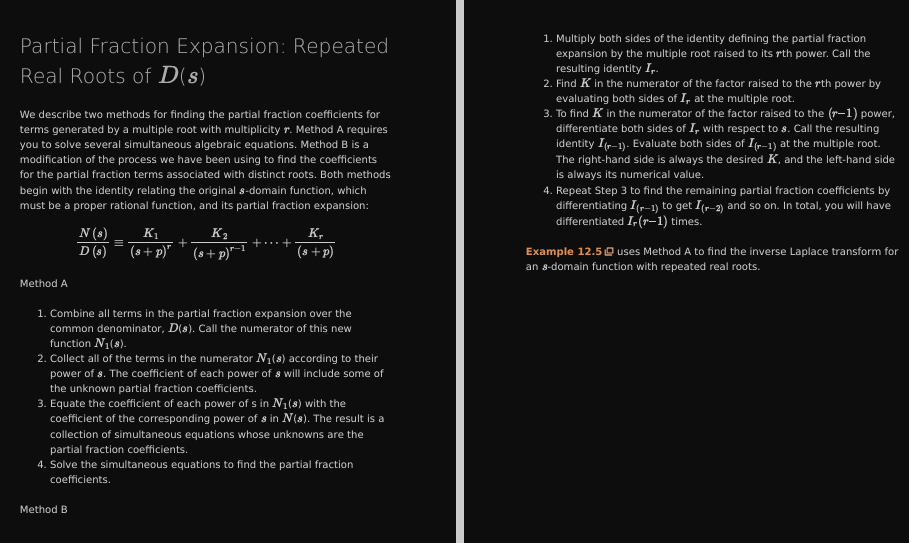
Describe how to perform partial fraction expansion of rational functions with s with real repeated roots

Solve

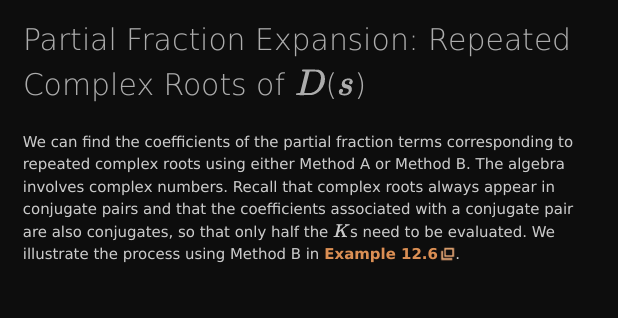
Describe how to perform partial fraction expansion of rational functions with s with complex repeated roots

Solve:

Describe the zeroes and poles of a rational function of s


Solve

