Lect 3 & 4: demand, supply, and price
 Call Kai
 Learn
Learn Practice Test
 Spaced Repetition
 Match
Match Flashcards
 Knowt Play
1/42

There's no tags or description
Looks like no tags are added yet.
Name | Mastery | Learn | Test | Matching | Spaced | Call with Kai | Chat |
|---|
No analytics yet
Send a link to your students to track their progress
43 Terms
a market
consists of any situation where buyers (consumers) and seller (producers) can negotiate the exchange of a good or service
markets can be:
confined to a single specific time and location (ex: local farmers market or grocery store)
span vast geographic territories (ex: amazon, ebay, or most online stores)
3 important characteristics:
reciprocity
voluntary participation
competition
a market is a way of transferring goods and services from one person to another
what is a market?
reciprocity, voluntary participation, and competition
what are the 3 important characteristics of a market?
reciprocity
the transfer of a good on a market is reciprocated
one person’s transfer is directly matched by a transfer in the other direction
ex) transfer of a good from a seller to a buyer is matched by a transfer of money from the seller to the buyer
voluntary participation
because both the buyer and seller benefit
ex) buyer gets good and seller gets compensation for the good
competition
buyers and sellers are limited in the prices they set
ex) consumer will choose to buy from a seller with a lower price if another seller charges a price too high
seller earnings = price - cost
equation for seller earnings:
price should not be below cost for seller earnings
price should not be below cost for seller earnings
buyer earnings = value - price
equation for buyer earnings:
price should not be above value for buyer earnings
price should not be above value for buyer earnings
quantity demand
the total amount that consumers desire to purchase in some time period
the total amount that consumers desire to purchase in some time period
what is quantity demand?
demand schedule
identify this:
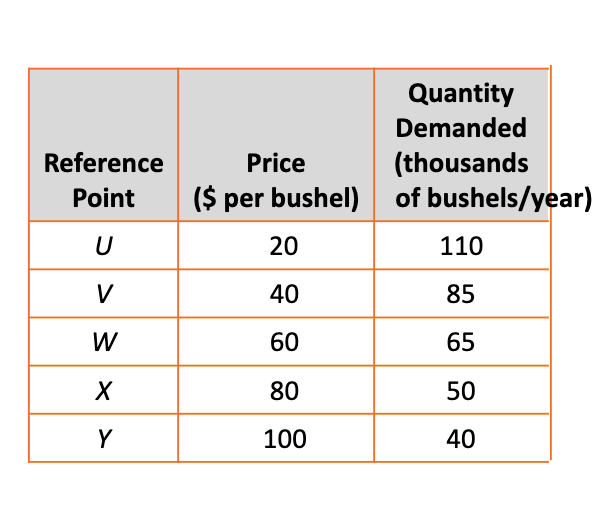
demand curve
Identify this:

Law of demand
the empirical observation that when the price of a product falls, people demand larger quantities of it
ex) as a product gets cheaper the more people want of that product
consumer’s income, price of other goods, tastes, population
what variables other than price can change to shift the demand curve to a new position:
an increase in demand
a rightward shift in the demand curve indicates ____

a decrease in demand
a leftward shift in the demand curve indicates _____
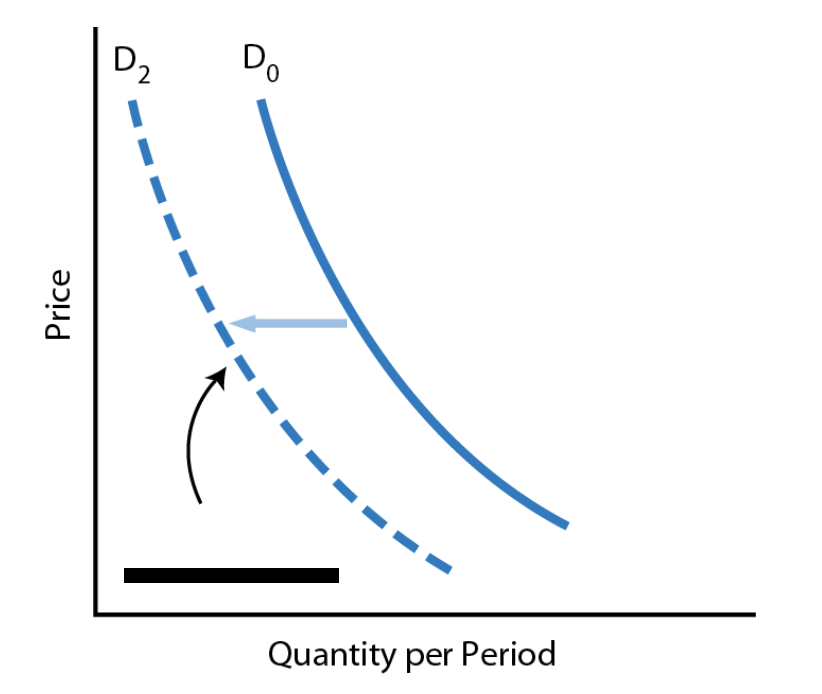
a change in demand
______ is a change in quantity demanded at every price
a shift of the entire curve
a change in quantity
_______ refers to a movement from one point on a demand curve to another point (either on the same demand curve or on a new one)
decreases
if price increases, quantity demand _____
increases
if quantity demand increases, price _____
Normal goods
the quantity demanded rises with a rise in income
ex) more expensive/ good quality food
Inferior goods
the quantity demanded falls with a rise in income
ex) cheap/bad quality food
complements
an increase in the price of one good decreases demand for the other good
ex) hot dogs and buns → if price of hot dogs goes up then the demand for buns will do down because ppl will stop buying dogs and no one eats a bun without a dog
substitutes
an increase in the price of one will tend to increase the demand for the other
ex) tank air → increase in price of shirt, increases the demand for other cheaper shirts that look just like the expensive shirt (dupes)
quantity supplied
the amount of a product that firms desire to sell in some time period
the amount that firms are willing to offer for sale and NOT necessarily the actual quantity sold
supply schedule
Identify this:

supply curve
Identify this:

law of supply
the empirical observation that when the price of a product rises, firms offer more of it for sale
as the price of a product increases, firms offer a bigger supply of it
change in any variable other than price will shift the supply curve to a new position
how to shift a supply curve?
prices of inputs, tech, government taxes, price of other products, and the number of suppliers
what variables getting changes will shift the supply curve?
a change in supply
a change in the quantity that will be supplied at every price
a shift of the entire curve
a change in quantity
a movement from one point on a supply curve to another point (on the same supply curve or on a new one)
perfect competition
when none of the buyers and sellers have any appreciable influence on the market price
large number of consumers
large number of producers
producers sell identical or homogenous versions of the product
the market clears when every buyer finds a seller and every seller finds a buyer
when does the market “clear”?
at the equilibrium price
when does every buyer find a seller and every seller find a buyer?
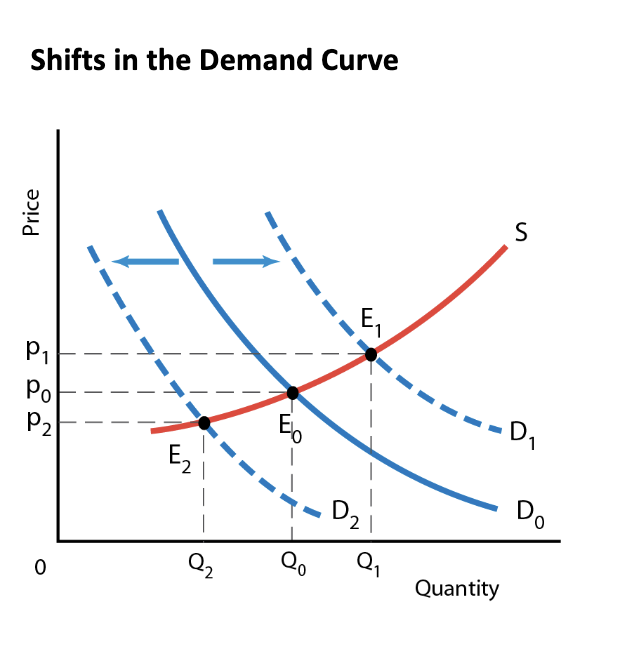
law #1 of supply and demand
an increase in demand causes an increase in both the equilibrium price and equilibrium quantity

law #2 of supply and demand
a decrease in demand causes a decrease in both equilibrium price and equilibrium quantity
law #3 of supply and demand
an increase in supply causes a decrease in the equilibrium price and an increase in the equilibrium quantity

law #4 of supply and demand
a decrease in supply causes an increase in the equilibrium price and a decrease in the equilibrium quantity

P = 2 + 3Qs
supply schedule equation:
P = 10 - Qd
demand schedule equation: