Lecture 11 - Global Chronic Disease
 Call Kai
 Learn
 Practice Test
 Spaced Repetition
 Match
 Flashcards
 Knowt Play
1/38

There's no tags or description
Looks like no tags are added yet.
39 Terms
Historical roots of “global health”
Historically, the field of “global health” has focused on the eradication and suppression of infectious diseases (e.g., smallpox, cholera, yellow fever)
Roots in colonial Tropical Medicine (19th century/early 20th century)
Shaped by multilateral agreements and donor priorities
Rockefeller Foundation in early 20th century
More recently, organizations such as the Gates Foundation
World Health Organization established in 1948
Initial priorities: Malaria, maternal and child health, tuberculosis, venereal disease, nutrition, and environmental sanitation
Key priority documents
“Health for All by 2020”: Alma-Ata Declaration at the 1978 International Conference on Primary Care
Millenium Development Goals: 2000-2015
Sustainable Development Goals: 2015-2030
“Health for All by 2020”: Alma-Ata Declaration at the 1978 International Conference on Primary Care
First international declaration highlighting the importance of primary care
Occurred alongside continued efforts to eradicate smallpox and other communicable diseases
Criticized as being unrealistic and unspecific
Millenium Development Goals: 2000-2015
Focus on determinants of health (poverty, hunger, education) and specific health outcomes (reduce child mortality, improve maternal health, combat HIV/AIDS and malaria)
Sustainable Development Goals: 2015-2030
“Good health and wellbeing”
Global health research and policy typically separates diseases into one of two categories:
1. Communicable, maternal, neonatal, and nutritional diseases
2. Non-communicable diseases
Limitations for separates diseases into one of two categories
Many maternal, neonatal, and nutritional diseases are related to infectious pathogens (e.g., diarrheal diseases, maternal mortality due to infection), but not all
Some non-communicable diseases have origins in infectious diseases
Many communicable diseases are now chronic!
cause of death categorization - communicable, maternal, neonatel, and nutritional disease
HIVIAIDS (e.g., resulting in other diseases)
Syphilis
Lower and upper respiratory infections
Maternal hemorrhage
Preterm birth
Protein-energy malnutrition
cause of death categorization - noncommunicable disease
Liver cancer (including due to hepatitis B)
Ischemic heart disease
Endocarditis
Cirrhosis
Alcohol use disorders
Falls
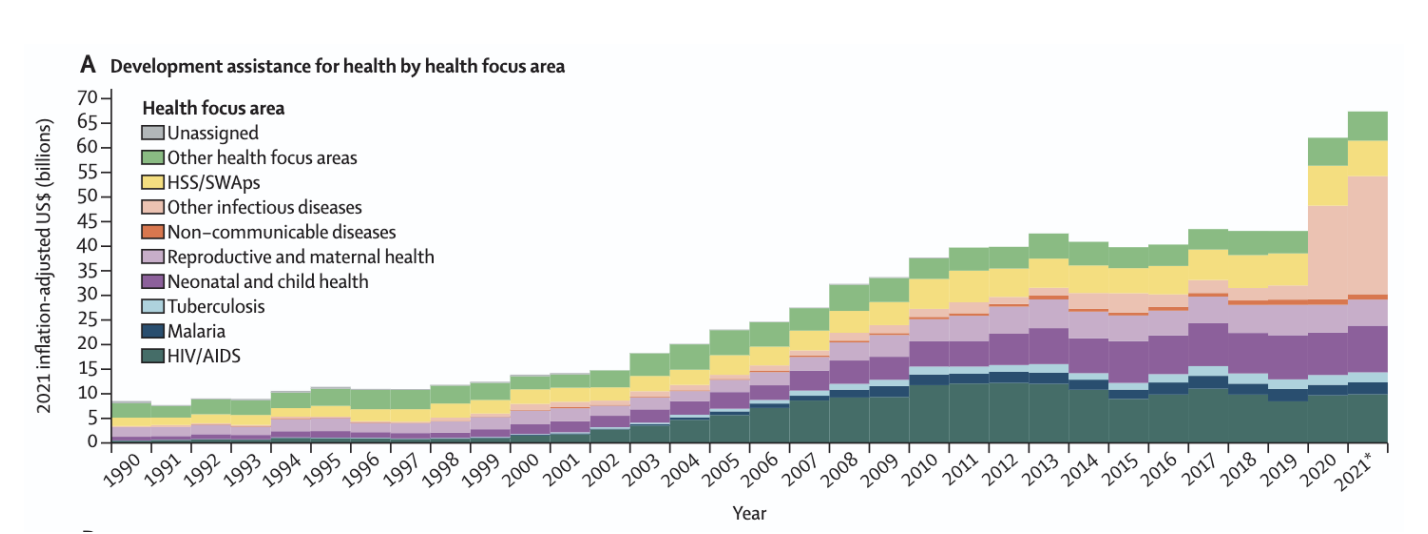
Where is development assistance for health money going?
hiv pretty substanstial
infectious
tiny = chrpmich
Epidemiologic Transition and the Complexity of Chronic Disease
Shift in global attention and funding priorities has occurred alongside the “epidemiologic transition”
Chronic disease is a growing contributor of morbidity and mortality in many lower and middleincome countries, yet domestic and international funding continues to focus on communicable diseases
Scientific progress means many people are living longer with communicable diseases such as HIV, yet worsening inequality is highlighting divides between who can access cutting edge treatment and who is exposed to risk factors
Chronic disease prevention and care is seen as___ and why
complex – requiring multiple stakeholders, addressing long standing inequalities in the social determinants of health, and strengthening healthcare systems
Global Burden of Disease Study
“Largest and most comprehensive effort to quantify health loss across places and over time, so health systems can be improved and disparities eliminated”
Established in 1990 by the World Bank, led by Charles Murray (Harvard economist) and Alan Lopez (WHO)
Created the DALY to quantify the burden of diseases and risk factors
1993 World Development Report
In 2007, the Institute for Health Metrics and Evaluation at the University of Washington was established with a 105 million dollar grant from the Gates Foundation (led by Charles Murray, independent from the WHO)

The GBD study vs the World Health Organization
There continues to be substantial debate regarding the Global Burden of Disease study
The WHO continues to publish “World Health Estimates” that differ to varying degrees from the GBD results
GBD has been criticized for opaque estimation methods, while WHO has been criticized for political interference
DALY
Disability-adjusted life years (DALY): quantification of disease and disability in populations
DALY = YLL + YLD
YLL
= Years of life lost due to premature mortality
Function of (a) number of deaths for a given cause, age and sex and (b) life expectancy
YLD
= Years of healthy life lost due to premature mortality
Function of (a) incident cases by cause, health state, age, and sex; (b) average duration of health state; (c) severity weight associated with the health state
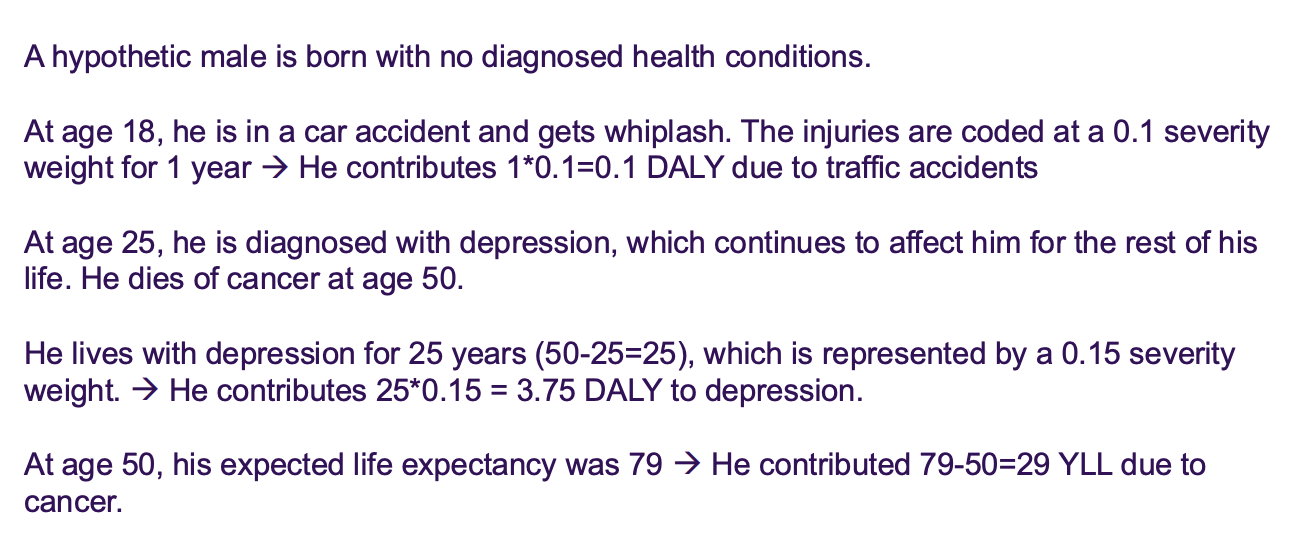
daly example
GBD: Methods
The GBD study uses the “best available data” to estimate health loss around the world
Data sources include: vital registration data, verbal autopsy, survey, census, surveillance, cancer registry, and police record data; opensource databases; and minimally invasive tissue sampling
What is the “true” burden of disease ?
Causes of death are typically recorded on death certificates by physicians or health care workers
The accuracy of cause of death, completeness of the certificate, and processing of that cause of death into a database differs substantially from country to country
The GBD study uses recorded data to then estimate burden of disease
study results

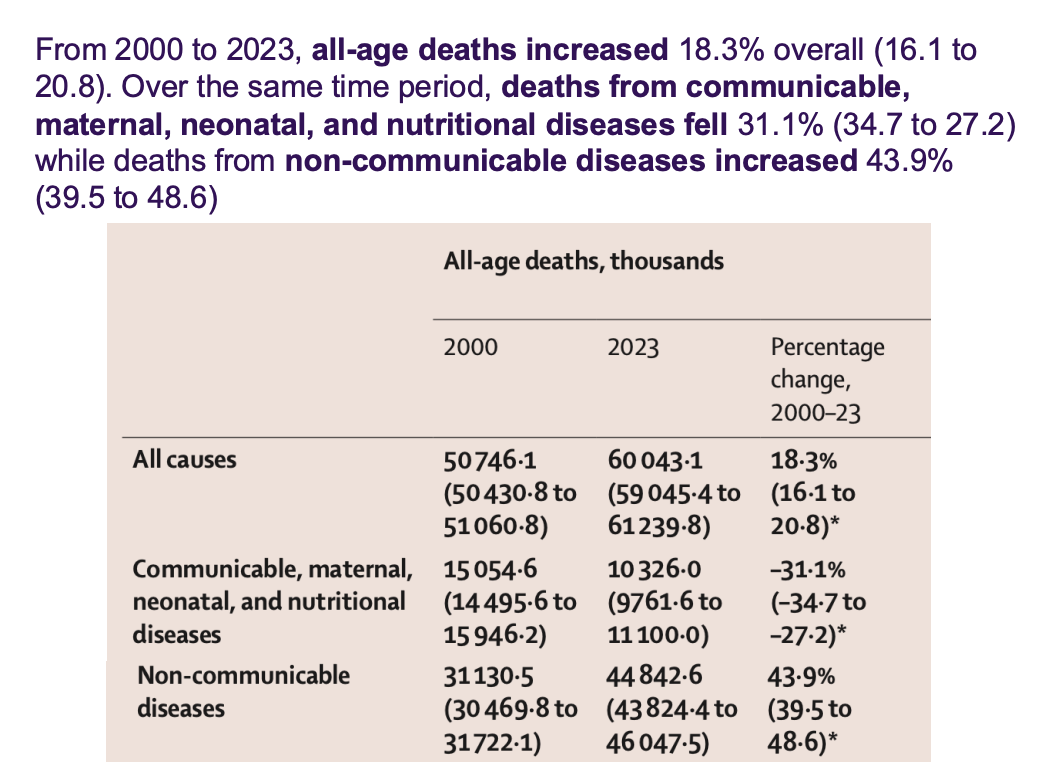
Global Causes of Death
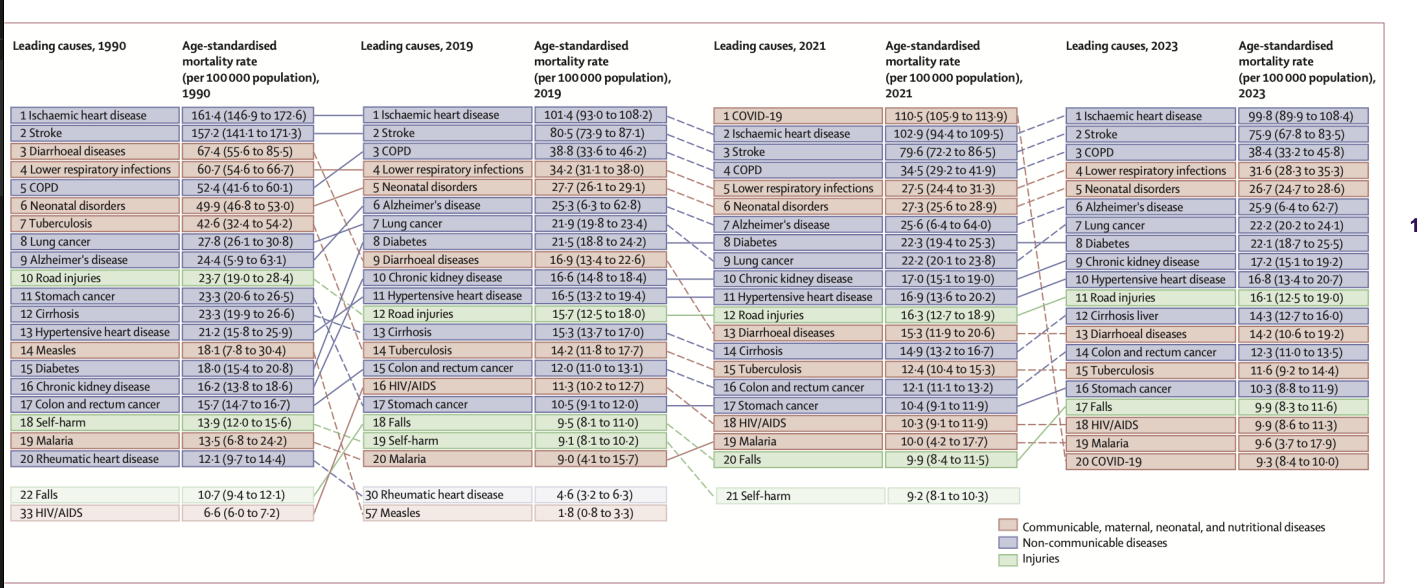
Leading causes of death, 1990-2023
usually ihd or stroke, except 2021 which was 2021
Leading causes of DALY in 2023 by SDI

Age-standardized DALY rate attributable to smoking
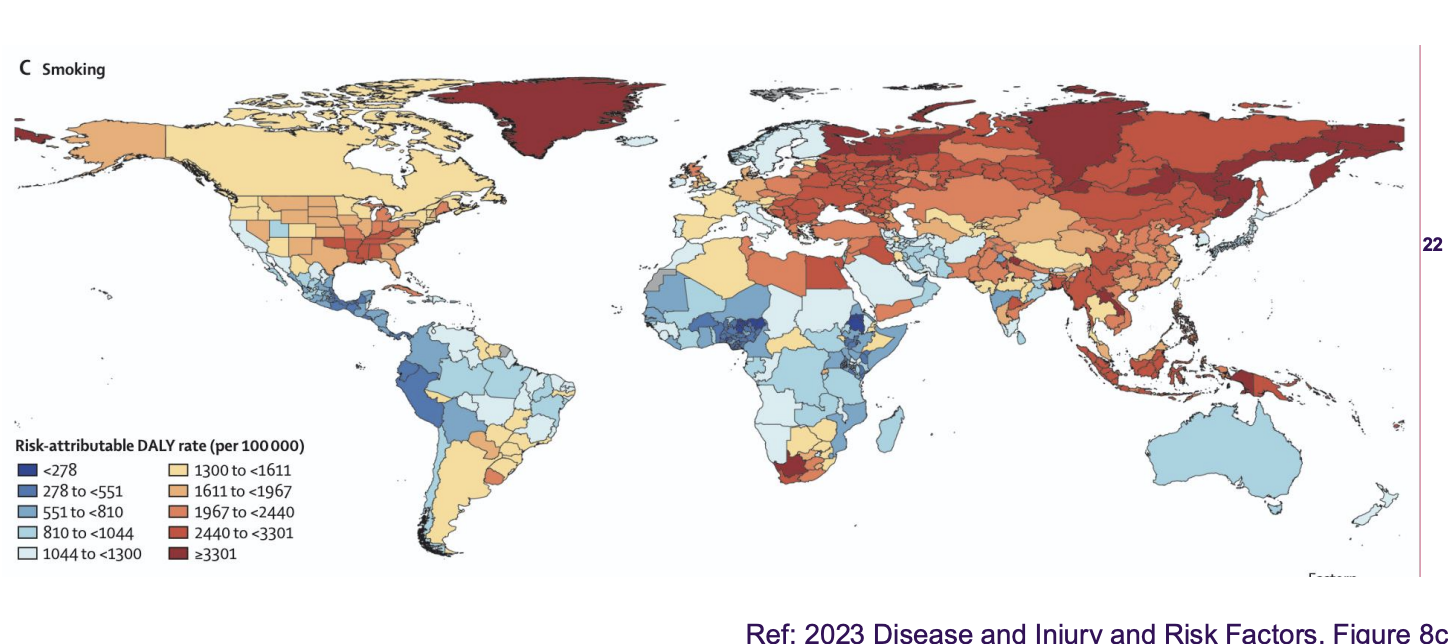
Inter-country comparisons: Canada, USA, Kenya, Peru (2023)
Top 5 leading causes of death:
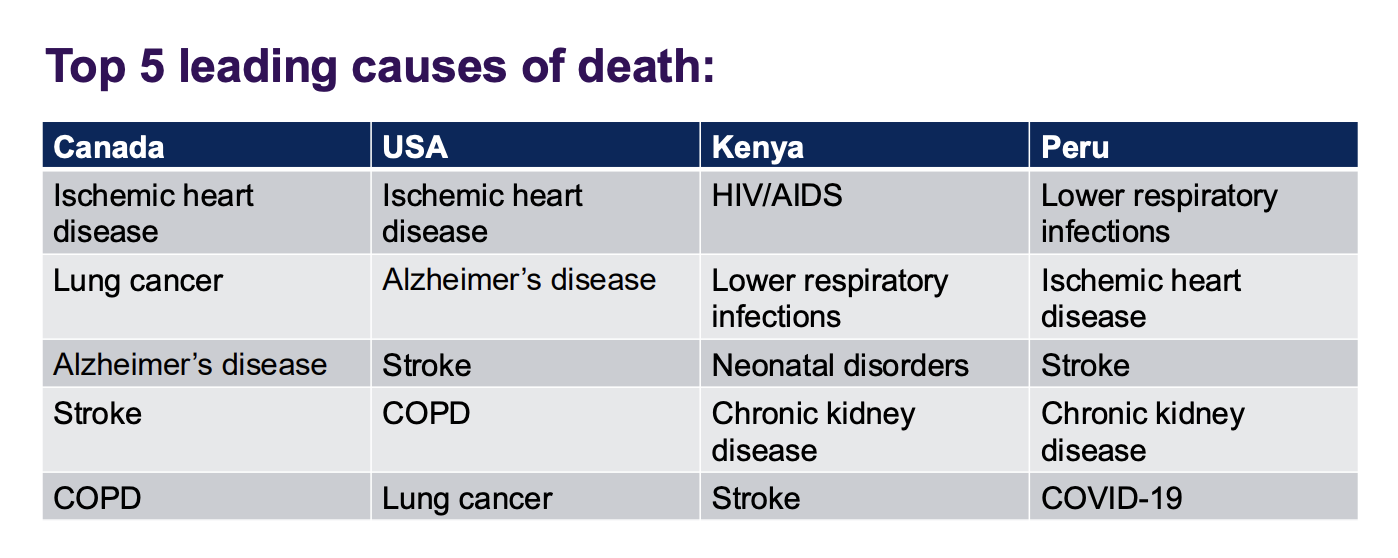
Inter-country comparisons: Canada, USA, Kenya, Peru (2023)
Top 5 leading risk factors driving death and disability combined (DALYs):
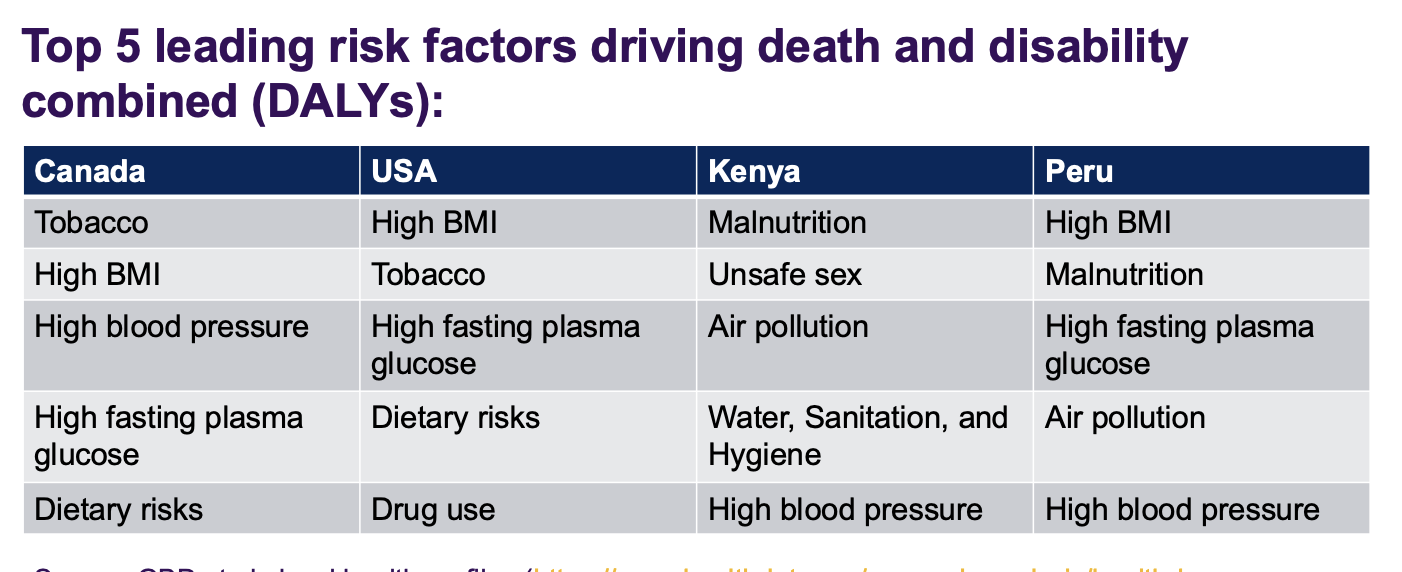
Inter-country comparisons: Canada, USA, Kenya, Peru (2023)
Do causes of death tell the whole story?

What gets counted?
DALYs are now the standard metric for assessing costeffectiveness, health systems outcomes, and cross-context comparisons
DALYs are “context-independent” metrics
Triangulation with contextual knowledge and lived expertise is critical to understanding the distribution of disease
National estimates do not show internal health inequalities
DALYs are now the standard metric for assessing costeffectiveness, health systems outcomes, and cross-context comparisons
Helped shed light on lack of funding towards very neglected diseases and guide policy choices
Aided evidence-based decision making
DALYs are “context-independent” metrics
Discount subjective experiences of illness Do not encapsulate community effects of illness Life expectancy varies substantially by country; overweighting of workingage adults
AI funders
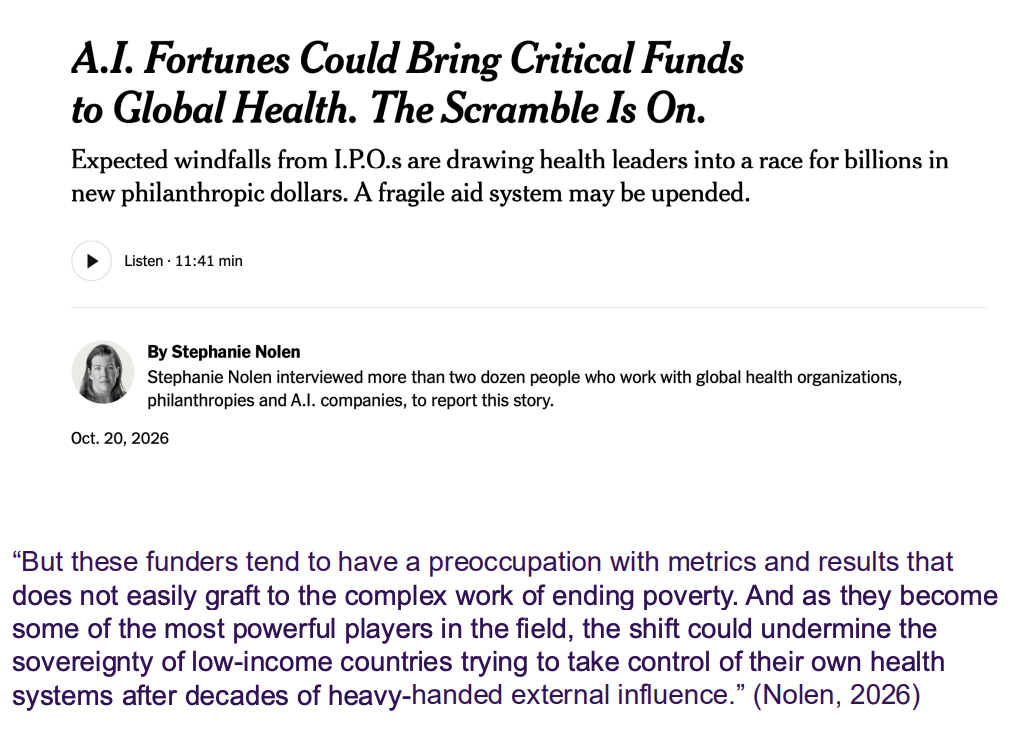
Changes to global health funding could reinforce existing power differentials and continued lack of attention to chronic disease
Strengthening health systems takes time, money, and trust: new donors attempting to fil gaps left by the US or exert control have to contend with a changing global landscape
Focus on ”evidence-based” interventions often leads to one-time projects: anti-malaria bed nets, immunization, deworming medication, oral rehydration salts
AI is continuing to reshape human health globally – not just from the power wielded by tech donors, but also through the use of AI in health systems
AI is continuing to reshape human health globally example
Recent example: Kenya is using an AI system to estimate health insurance premiums, leading to many households being asked to pay more than they can afford:
HIV: Now a Chronic Disease?
Someone living with HIV has a similar life expectancy to someone who is HIV-negative if they are able to access treatment
In lower- and middle-income countries with a high burden of HIV, the 2025 cuts to PEPFAR and USAID have accelerated attempts to integrate HIV care into chronic disease care due to a lack of HIVspecific funding
Many of the individual and social factors that drive disease risk also drive __ disease risk – time for a focus on prevention?
infectious
chronic
Global health funding and research must contend with the complex interplay between____ diseases and let _____ set priorities rather than _______
acute and chronic
people
orporations or foundations
There is still a need to support the _____ of lower-income countries to develop and operate their own health systems, but the COVID-19 pandemic and more recent changes in the United States threaten ________
sovereignty
progress
Quantitative metrics should be complemented by
a robust, contextual understanding of health and health systems