2.1 QUALITATIVE CHEMISTRY
 Call Kai
 Learn
 Practice Test
 Spaced Repetition
 Match
 Flashcards
 Knowt Play
1/67

There's no tags or description
Looks like no tags are added yet.
68 Terms
Kinetics
speed or rate of reaction
Reaction rate
change in the concentration (M) of a reactant or a product with time (s) (expressed as M/s)
Collision Theory of Chemical Kinetics
Activation energy (Ea)
minimum amount of energy required to initiate a chemical reaction
FACTORS AFFECTING REACTION RATE
Nature of reactants & its state of subdivision
Concentration:
Temperature
Concentration
Rate ɑ= no. of collisions / s
Temperature
the faster the molecule moves ↑KE
Arrhenius equation
temperature dependence rate constant
Catalyst
increases the rate of a chemical reaction without itself being consumed
CHEMICAL EQUILIBRIUM IS ACHIEVED WHEN
Rates of the forward and reverse reactions are equal and the concentrations of the reactants and products remain constant
rf = rr concentration constant
Equilibrium Constant
aA+bB → cC+dD
Homogenous Equilibrium
All the reacting species are in the same phase
Heterogenous Equilibrium
The reacting species are in two or more phases
Equilibrium Constant (Kc) helps to:
Predict the direction of a reaction
Reaction quotient (Qc)
calculated by substituting the initial concentrations of the reactants and products into the equilibrium constant (Kc) expression.
Qc>Kc
system proceeds from right to left to reach equilibrium
Qc= Kc
system is at equilibrium
Qc<Kc
system proceeds from left to right to reach equilibrium
Le Châtelier's Principle
If an external stress is applied to a system at equilibrium, the system adjusts in such a way that the stress is partially offset as the system reaches a new equilibrium position
FACTORS AFFECTING CHEMICAL EQUILIBRIUM
concentration
pressure and volume
temperature
Concentration:
Backward reaction favored
⬆Product concentration
↓ reactant concentration
Concentration:
Forward reaction favored
↓ Product concentration
⬆Reactant concentration
Pressure & Volume
↑ Pressure / ↓ Volume
Favors fewest moles of gas
Pressure & Volume
↓ Pressure / ↑ Volume
Favors greater moles of gas
Temperature
Exothermic
↑ Temperature favors backward (reactants)
↓ Temperature favors forward (products)
Temperature
Endothermic
↑ Temperature favors forward (products)
↓ Temperature favors backward (reactants)
Adding a Catalyst
does not change K
no shift in the position of an equilibrium system only change in temperature will affect EQUILIBRIUM CONSTANT
ARRHENIUS
Acid -substance that produces H+ (H3O+) in water
Base -substance that produces OH- in water
BRONSTED
Acid - Proton donor
Base - Proton acceptor
LEWIS
Acid - Electron acceptor
Base - Electron donor
STRONG ELECTROLYTES
strong acids, strong bases & salts containing the ions of strong acids & bases
100% ionization / dissociation in H2O
undergoes irreversible reaction
Strong Acid
HCI
HBr
HI
H2SO4
HClO4
HNO3
Strong Base
NaOH
KOH
Ba(OH)2
Sr(OH)2
Ca(OH)2
Mg(OH)2
Weak Acids (HA)
Not completely ionized / dissociated
Undergoes reversible reaction
Amphoteric
May act as acid or base
Autoionization of Water
H2O (l) ⇌ H+ (aq) + OH- (aq)
Ion-Product Constant (Kw)
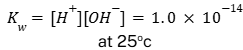
pH Formula
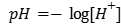
pOH Formula

pKw Relationship

pH & Concentration Trend
↑pH [H+]↓
Isohydric Solution
A solution with the same pH as another solution to which it is compared
Weak Acids (HA) and Acid Ionization Constants
HA (aq) ⇌ H⁺ (aq) + A⁻ (aq)
Ka (Acid ionization constant)

Weak Bases and Base Ionization Constants
NH₃ (aq) + H₂O (l) ⇌ NH₄⁺ (aq) + OH⁻ (aq)
Kb (Base ionization constant)

SALTS
Compounds made up of the cation of the base and the anion of the acid
Compounds made up of the metal & non-metal
Weaker ions will undergo hydrolysis
Neutral Solutions
ion of strong base + ion of strong acid
no hydrolysis
Basic Solutions
ion of strong base + ion of weak acid
will hydrolyze
Acid Solutions
ion of strong acid + ion of weak base
will hydrolyze
ion of strong acid + ion of weak base lowly charged

ion of strong acid + ion of weak base highly charged
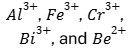
Solutions in which both the cation and the anion hydrolyze
Kb for anion > Ka for cation
solution will be basic
Solutions in which both the cation and the anion hydrolyze
Kb for anion < Ka for cation
solution will be acidic
Solutions in which both the cation and the anion hydrolyze
Kb for anion ≈ Ka for cation
solution will be neutral only for NH4CH3COO
Metallic oxide/basic oxide/basic anhydride + water
base
Non-metallic oxide/acid oxide/acid anhydride +water
acid
Amphoteric oxide
can be base or acid
BUFFER SOLUTION
Solution of:
weak acid + its salt
weak base + its salt
Buffers
Have the ability to resist changes in pH upon the addition of small amounts of either acid or base
Buffer capacity
Amount of acid or base the buffer can neutralize before the pH begins to change in an appreciable degree
Henderson Hasselbalch equation

SOLUBILITY PRODUCT CONSTANT (Ksp)
Ca3(PO4)2 (s) ⇌ 3 Ca2+ (aq) + 2 PO43- (aq)
Ksp = [Ca2+]3 [PO43-]2
↑ Ksp ↑ soluble
↓ Ksp ↓ soluble
Q < Ksp
Unsaturated solution
No precipitate
Q = Ksp
Saturated solution
No precipitate
Q > Ksp
Super saturated solution
Precipitation
FRACTIONAL PRECIPITATION
Removing selected ions from solution while leaving others with similar properties in solution
Complex ion
Ion containing a central metal carbon bonded to one/ more molecules or ions (LIGANDS)
Formation constant / Stability constant (Kf)
Equilibrium constant for the complex ion