VMED 02610 –Pathology III Systemic Pathology – Alimentary System Lecture 2
 Call Kai
 Learn
 Practice Test
 Spaced Repetition
 Match
 Flashcards
 Knowt Play
1/78

There's no tags or description
Looks like no tags are added yet.
79 Terms

Dog. This lesion suggests dysfunction of the:
kidneys would be affected due to uremia
What animals contian Hypsodont teeth
in herbivores
What animals are considered Brachydont teeth
in carnivores
What do we mean by Prognathia (talking about the teeth//jaw of an anima;)
is protrusion of the lower jaw
What do we mean by Brachygnathia (talking about the teeth//jaw of an anima;)
is short lower jaw
How do dogs get enamel hypoplasia
caused by canine distemper viral infection of ameloblast
How do cows get enamel hypolasia
caused by BVD infection in cattle
if Dam is affected leads to BVD
Can Excessive fluorine exposure (fluorosis) cause enamel hypoplasia ?
yes Excessive fluorine exposure can cause enamel hypolasia
see discoloration (yellow → loose the enamel
What infection can abnormal wear cause
can also lead to ab abscess and affect eating
decrease BCS
Which animal is affected by abnormal wear? Why?
horses
horses are considered hyposdont which means thet erupt always (teeth are constantly growing back)

What is plaque
is the accumulation of bacteria on tooth surfaces
What disease or infection can Supragingival plaque cause
dental caries (cavities)
What disease or infection can Subgingival plaque cause
periodontal disease
affects the peridontal ligament around the tooth and can lead to an abscess
Mineralized plaque is called what
dental calculus (tartar)

Do cats and dogs get cavities?
no they dont but can get supraventral plaques (below the ginigval line)
What kind of dental neoplasms do we commonly see
Most are odontomas or ameloblastomas
Are dental neoplasms metastasize?
Locally destructive but rarely metastasize
Describe the structural epithelium layer of the esophagus
Stratified squamous epithelium with submucosal mucus glands
Does the esophagus have serosa ?
Lacks a serosa
What is muscularis
is skeletal muscle or skeletal/smooth muscles
Which animals have a muscularis that is completely skeletal
dogs and ruminants
Which animals have a muscularis that has a Distal part smooth muscle
cats and horses
How does one get Megaesophagus
cogenital
acquired
What is the defintion of a congenital megaesophagus? How does it look like/describe
vascular ring anomalies (persistence of the right fourth aortic arch)
born with it or can be secondary to a vascular ring anomaly
How does one “acquire” Megaesophagus
often idiopathic or secondary to polymyositis, myasthenia gravis, hypothyroidism, or esophagitis
So what do you think could be a sequela of having a megaesophagus
aspiration pneumonia
regurgitation
What causes reflux esophagitis
occurs with regurgitation and bomiting
can cause chemical damage and lead to an ulceration
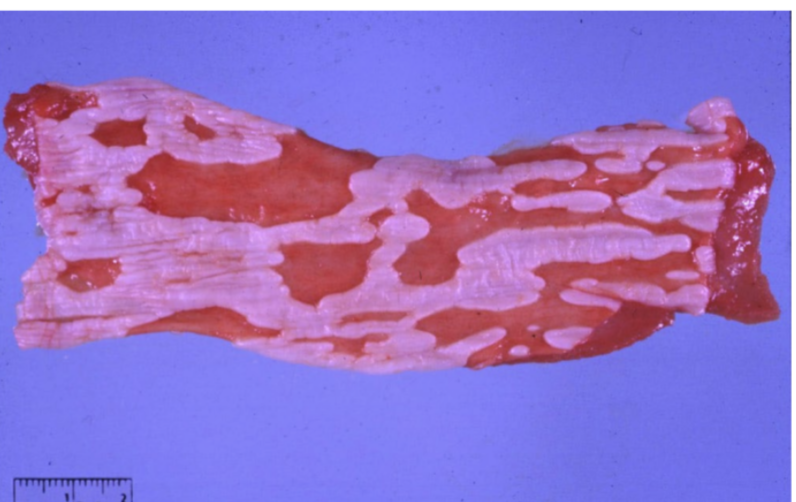
In BVD it can cause erosive/ulcerative esophagitis what do we typically see
BVD virus - can look linear (forming a linear ulceration)

What causes Parasitic Esophagitis
Spirocerca lupi causes granulomas in the esophagus
worm that causes the granulomas in the esophagus
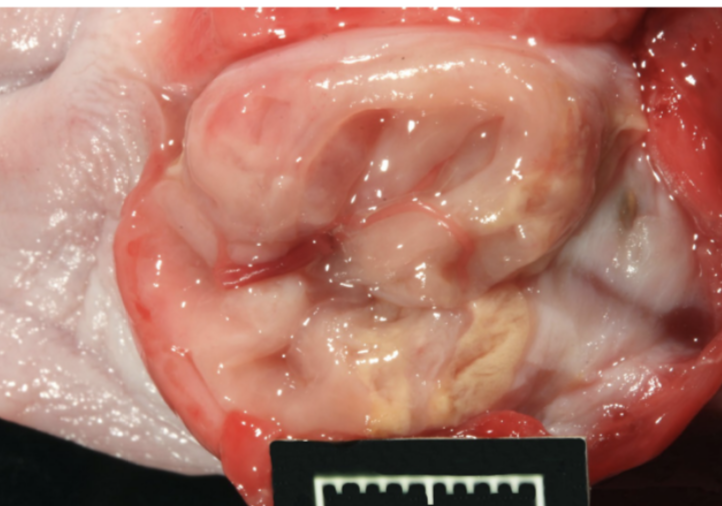
What animals are commonly affected by Parasitic Esophagitis
dogs and wild canids
Parasitic Esophagitis can eventally lead to what (think of bad disease)
Can lead to sarcoma formation
What is the bacteria that causes Candidiasis
Candida albicans is a commensal fungus of keratinized epithelium
Who does Candidiasis affect
Pigs
calves
foals
birds
What kind of lesions will see if an animal had Candidiasis
Lesions are typically necrotizing and proliferative
What tool do we use to find Candidiasis
PAS
also with GMS to highlight fungus
Why do we choke ?
may result in pressure necrosis and ulceration of the mucosa
due to an obstruction or foreign body
Choking can lead to what and what happens if we have a chronic choke
can lead to aspiration pneumonia
chronic cases can lead to stricture
What happens if we have an obstruction for a couple days what kind of lesions will we see
ulceration
necrosis
from a scar tissue
What are the common neoplasia for the esophagus
Papilloma: BENIGN TUMOR
squamous cell carcinoma: MALIGNANT
fibrosarcoma: TUMOR OF THE SUBMUCOSSA
lymphoma: ALL OVER THE BODY
What is the one thing we see in a necropsy of a ruminant
uncommon for mucosa to just slough
occurs 2-3 months after death
How do cows get foreign bodies into their forestomach?
they basically eat everything
“Cattle are notoriously lacking in alimentary finesse”
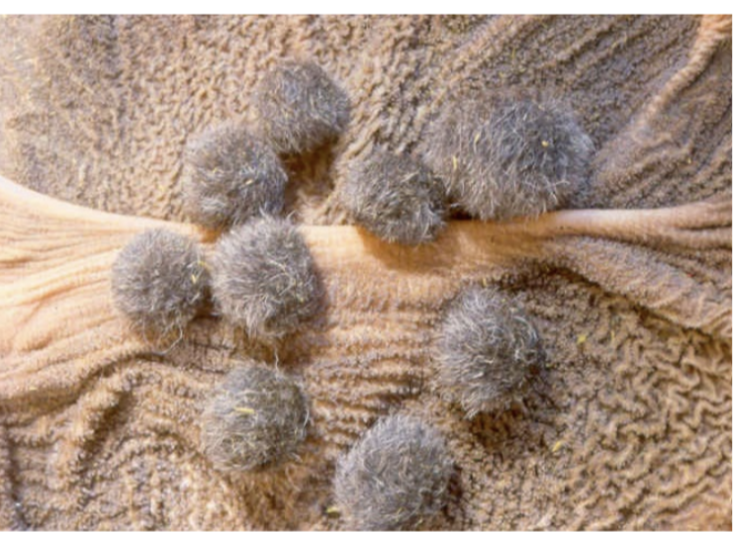
What kind of foreign body is this
trichobezoars
caused by cats licking their calves
aka hair balls
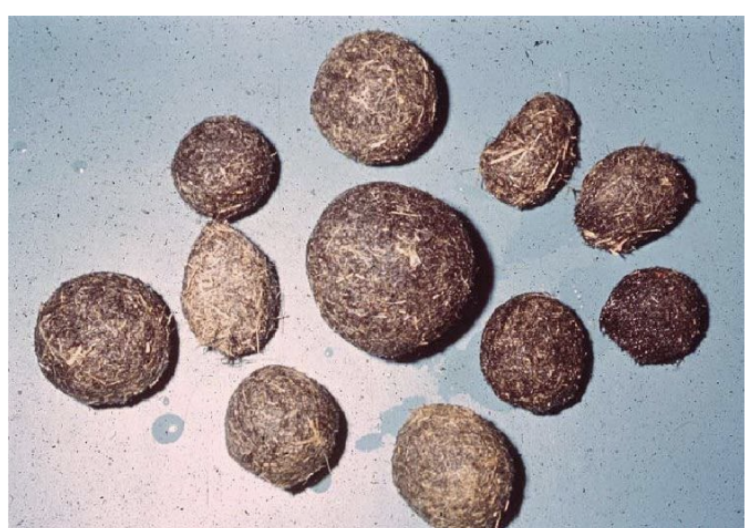
What kind of foreign body is this
these are phytobezoars
plants balls
What do we mean by Traumatic petriculperitonitis and what causes it
hardware disease when cattle eats wite in the reticulum
can penetrate into your reticulum, liver, and diaphragm
What is ruminal tympany
the dilation of the rumen
aka BLOAT
What would we see a necropsy for ruminal tympany
at necropsy a line of demarcation between dark esophageal mucosa (cranially) and pale esophageal mucosa (caudally is called a bloat line
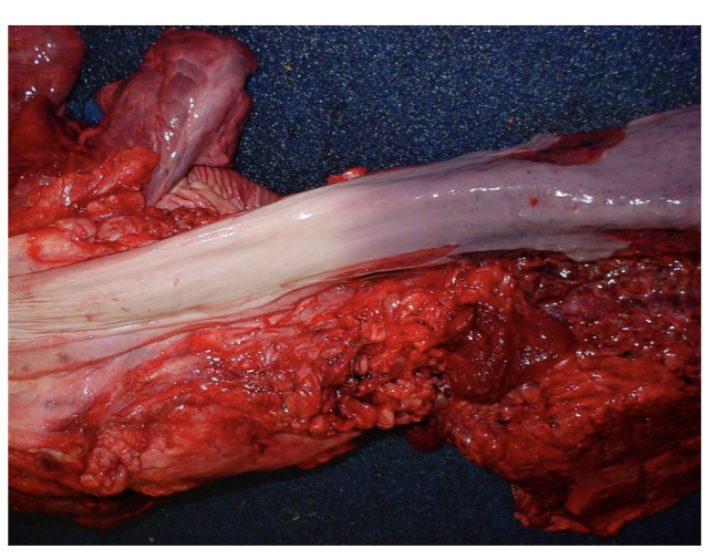
So how would you know or tell a true antemortem bloat from postmoartem bloat
bloat line is the key
If we have a primary ruminal tympany how would we describe it
frothy
If we have a secondary ruminal tympany what would it look like
free gas
What is the pathogenesis of primary ruminal tympany
Primary tympany involves ingestion of legumes, small grains, or grain concentrate
volatile and non-volatile fatty acids production and ruminal fermentation
lower ruminal pH which causes foam formation (the environment will be ACID)
In primary ruminal tympana when we lower the ruminal pH and foam forms what does it cause
blockage of cardia
prevention of eructation
ruminal distension
What causes secondary ruminal tympany
bloat involves physical or functional esophageal obstruction
What are the oitential causes of vagal indigestion
peritonitis
abomasal displacement
abomasal lymphoma
pregnancy related compression
What kind of bacteria is carbohydrate (grain) overload and where does it reside
gram (-) bacteria
resides in the rumen
But if we have a high carbohydrate diet it changes from a gram (-) to what and what is occurring
high carb diets leads to a gram (+)
which means we have an overgrowth which leads to fermentation of carbohydrates which lowers our ruminal pH (ruminal acidosis)
If we ruminal acidosis and to much production of carbohydrate (grain) overload what can happen to the animal
death of normal microbiome and ruminal protozoa
damage to the ruminal mucosa
What would we see grossly of the carbohydrate (grain) overload
might see loss of papillae in the rumen
can see the greens mixed with rumen content

What would we see histologically for carbohydrte (grain) overload
inflammation within the epithelium of the rumen

What are the two ways we diagnose carbohydrate (grain) overload
check for live protozoa (take the rumen content and put it under a microscope to see if there is an increase of movement, if no movement no true acidosis but if their is dead protozoa we can assume acidosis)
we can also do a pH drip
What is the normal rumen pH
5.5-7.5
If the pH in the rumen is lower then 5 what does that mean
is acidic but take with a grain of salt
Bacterial rumenitis is often secondary to
ruminal acidosis
What are the two bacterias that can causes rumenitis
Fusobacterium necrophorum and Trueperella pyogenes frequently involved
What happens if we don’t treat rumenitis
can lead to a liver sbascesses
damages mucosa and leads to opportunisitc bacteria invading the mucosa
Which animals are affected most to rumenitis
bucket fed calves are especially prone to rumenitis
What is the pathogensis of rumenitis for bucket fed calves
Weak esophageal/abomasal groove reflex
Milk misdirected into rumen
Fermentation and bacterial overgrowth
Rumenitis
Mycotic rumenitis is also secondary to what
secondary to ruminal acidosis
What are the lesions for mycotic rumenitis
lesions are typically well demarcated due to vasculitiis
infarction
Lymphoma is most common due to what
leukosis virus (BLV)
What causes bacterial abomasitis
Clostridium septicum produces hemorrhagic and necrotizing abomasitis in lambs and calves
What animals are mostly affected by bacterial abomasitis
lambs
calves
Bacterial abomasitis is also known as
Commonly called braxy
Bacterial abomasitis is associated with what weather
cold weather
What causes parasitic abomasitis: Haemonchus contortus
leads to blood, resulting in anemia, hypoproteinemia, and edema
Which animal is affected by parasitic abomasitis: Haemonchus contortus
Most important parasite of small ruminants!
Ostertagia ostertagi affects what animal
cattle
O. cricumcincta affects what animal
small ruminants
O. cricumcincta and Ostertagia ostertagi affect what
epithelial hyperplasia
If we have a chronic case of parasitic abomasitis with O. cricumcincta and Ostertagia ostertagi what would we see
the mucosa will appear thickened and nodular, sometimes referred to as Moroccan leather