knee replacements/Total Knee Arthroplasties (TKA)
 Call Kai
 Learn
 Practice Test
 Spaced Repetition
 Match
 Flashcards
 Knowt Play
1/12

There's no tags or description
Looks like no tags are added yet.
13 Terms
etiology
often 2/2 OA, degenerative joint disease, trauma, or injury to the knee, or other rheumatic conditions
may be compounded by obesity or aging
2 types
partial or uni-compartmental knee arthroplasty (UKA)
client has medial or lateral compartmental damage between femur and tibia
UKA is often performed with minimally invasive technique
total knee replacement or arthroplasty (TKA)
client has damage to 2 or more compartments of the knee
minimally invasive techniques have been developed for TKA
medical management
goals of treatment= to alleviate pain, increase motion, and maintain alignment and stability of the knee joint
involves cutting away damaged bone and attaching prosthetic component of new joint
ambulatory device (walker or crutches) may be used for greater stability
knee immobilizer or brace may be used if knee joint is unstable post-surgery
client should avoid excessive knee rotation for up to 12 weeks after surgery
usually no restriction on flexion and extension of knee; clients will usually start out-of-bed activity on the 1st day after surgery (sometimes even sooner)
mobility of knee is important
some surgeons will recommend use of continuous passive motion device (CPM) to improve ROM
pain
cryotherapy in acute recovery,
in acute stage, there is still lots of swelling and inflammation
DO NOT use heat— contraindication, as it increases the amount of blood flow and circulation coming into the area (would cause more swelling)
balancing pain and activity
positioning
precautions to promote proper healing; knees are “straightforward” in 3 ways
they’re simple and straightforward
we keep them in extension at rest (keep them straight)
it is easier to get a stiff knee to flex than it is to extend
we position the knee in full extension while at rest to avoid a flexion contracture/stiffness
DO put pillows distal to the knee (promotes extension)
DO NOT put pillows under the knee (promotes flexion)
we avoid twisting movements (keep them forward)
performance/ADLs & AE
functional, ADL focus
the main problem besides mobility/transfers is reaching the affected LE
we use AE to compensate for limited ROM
dressing
shoe horn
sock aid
reacher
dressing stick
bathing
long-handled sponge
also train to don/doff knee immobilizer
early movement and transfers
we can typically get moving early; out of bed post-op day 1
WBAT is common, but still check physician’s orders
transfers (sit-stand) are of obvious concern
use UEs
armrests
handholds/grab bars
toileting
toilet safety frame
raised toilet seat
commode chair
bathing
non-slip strips
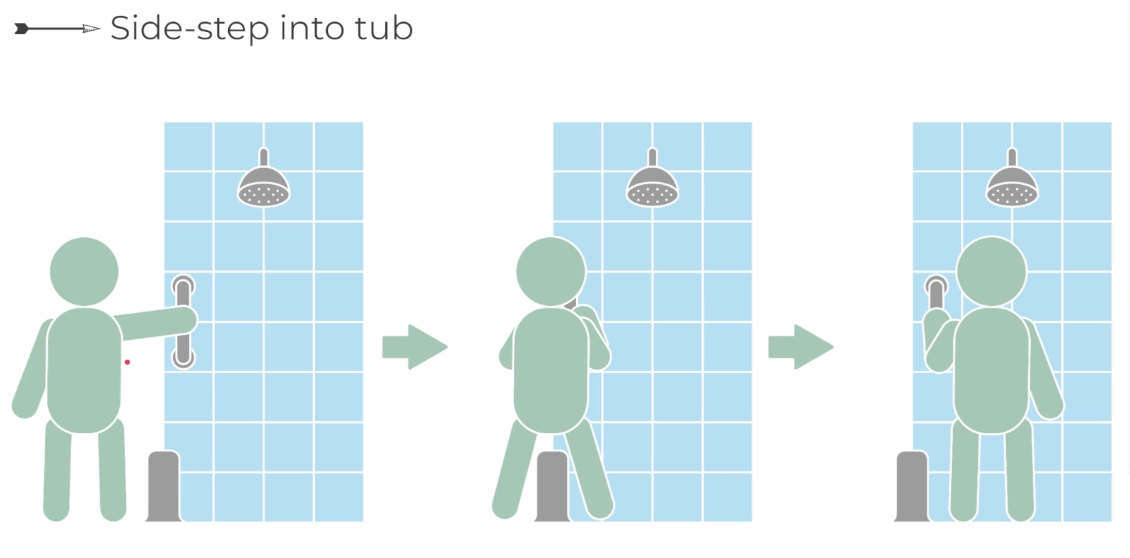
side-step into tub (instead of facing the tub)
non-weight bearing
no weight on affected extremity
toe-touch weight bearing
toe of the affected extremity can touch the ground for balance only; 90% of the body weight is placed on unaffected leg
partial weight bearing
affected extremity may bear only 50% of client’s body weight
weight bearing at tolerance
client judges how much weight they can tolerate on the basis of pain response
full weight bearing
client may put 100% of weight on the affected extremity without causing damage
role of OT
help client maximize performance skills in occupations while maintaining precautions
complete an OTPF with the client and family or caregiver
consider psychosocial impact on lifestyle
provide education and reeducation regarding weight bearing restrictions and precautions, including with
bed mobility
proper transfer techniques
home modification recommendations
positioning to perform ADLs
emphasize increasing independence and participation in ADLs and IADLs
teach prescribed precautions, safety techniques, and compensatory strategies for IADLs such as lower-body dressing, bathing, sexual activity
alternative options for bathing (e.g., dry shampoo, rinse-free shampoo cap, washing hair in the sink) may be considered for clients unable to shower in a tub or walk-in shower
emphasize maintaining or increasing joint motion
increase strength of surrounding musculature
prescribe and instruct the client (and family or caregiver, as necessary) in use of AE
provide home safety recommendations
assist in return to work
address and assist with return to driving and community mobility