😘 Joint classification structural and functional + movement 😘
 Call Kai
 Learn
 Practice Test
 Spaced Repetition
 Match
 Flashcards
 Knowt Play
1/71

There's no tags or description
Looks like no tags are added yet.
72 Terms
Coronal suture
Structural: fibrous suture
Functional: synarthrotic suture
Sagittal suture
Structural: fibrous suture
Functional: synarthrotic suture
lambdoid suture
Structural: fibrous suture
Functional: synarthrotic suture
squamous suture
Structural: fibrous suture
Functional: synarthrotic suture
Aveloar joints
(teeth)
Structural: fibrous gomphoses
Functional: synarthrotic gomphoses
interosseous tibofibular joint
Structural: fibrous syndemoses
Functional: amphiarthrotic syndemoses
interosseous radioulanar joint
Structural: fibrous syndesmoses
Functional: ampiarthrotic syndemoses
costosternal joint of rib 1
Structural: cartilaginous sychondroses
Functional: synarthrotic synchondroses
pubic symphsis
Structural: cartilagnous symphyses
Functional: amphiarthrotic symphyses
intervertevtral disc joints
Structural: cartiloganous symphyses
Functional: ampiarthrotic symphyses
Synarthrotic
type of joint that is immovabe or allows virtually no movement under normal conditions
Syndesmoses
type of fibrous joint where 2 parallel bones are bound together by strong collagen rich connective tissue (ex: radius and ulna)
Amphiarthrotic
only slight or limited movement
Synchondroses
2 bones are entirely joined by hyaline cartilage
Synovial
freely movable
Diarthrotic
freely movable joint

hinge
type of synovial joint that allows motion primarily in one plane
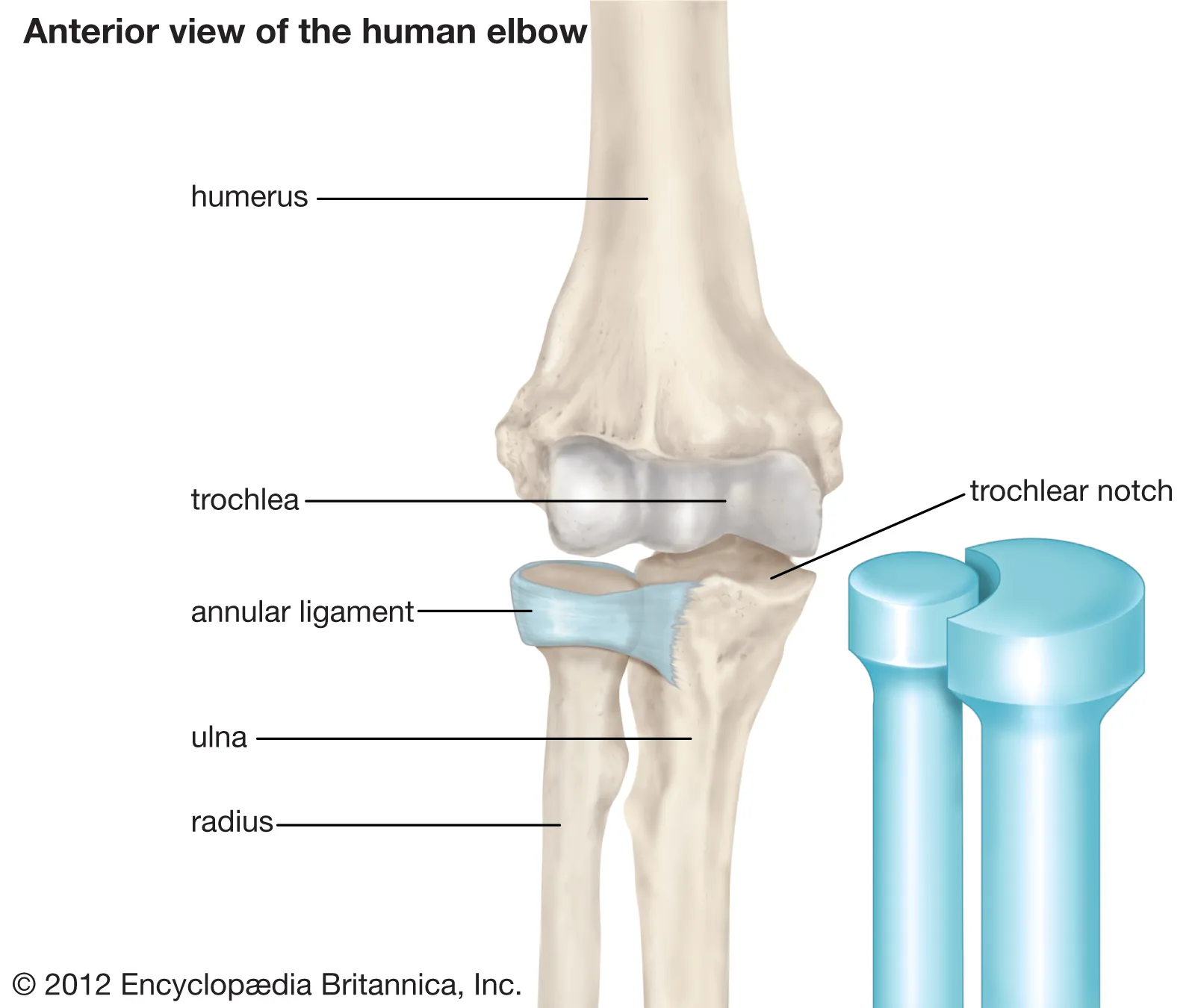
pivot joint
freely movable synovial joint, where a cylinder shaped bone rotates within a ring formed by another bone and an adjoning ligament

saddle joint
type of synovial joint where the opposing bone surfaces are reciprocally concave and convex, interlocking.

plane joint
a type of synovial joint featuring flat or nearly flat bone surfaces that slide past one another

condylar joint
type of biaxial xynovial hoint where an oval-shaped (convex bone surface fits into a complementary elliptical (convave) cavity

ball and socket joint
type of synovial joint where the rounded, ball like surface of one bone fits into the cup like depression of another bone
Tibiofemoral joint
structure:synovial hinge
function: diarthrotic hinge
talocrural joint
structure: synovial hinge
function:diarthrotic hinge
humeroulnar joint
structure: synovial hinge
function:diarthrotic hinge
interphalangeal joints between all 20 digits (proximal and distal)
structure: synovial hinge
function: diarthrotic hinge
pollex interphalangeal joint
structure: synovial hinge
function:diarthrotic hinge
hallux interphalangeal joint
structure: synovial hinge
function: diarthrotic hinge
proximal radioulnar joint
structure: synovial pivot
function: diarthrotic pivot
alantoaxial joint
structure: synovial pivot
function: diarthrotic pivot
trapeziometacarpal joint (carpometacarpal joint of digit 1 pollex)
structure: synovial saddle
function: diarthrotic saddle
sternoclavicular joint
structure: synovial saddle
function: diarthrotic saddle
acromioclavicular joint
structure: synovial plane
function: diarthrotic plane
sacroiliac joint
structure: synovial plane
function: diarthrotic plane
intercarpal joints
structure: synovial plane
function: diarthrotic plane
carpometacarpal joints of digits II-V
structure: synovial plane
function: diarthrotic plane
intertarsal joints
structure: synovial plane
function: diarthrotic plane
costosternal joints of ribs 2-7
structure: synovial plane
function: diarthrotic plane
costochondral joints of ribs 8-10
structure: synovial plane
function: diarthrotic plane
costovertebral joints of ribs 1-12 (all rib articulations w/ vertebrae)
structure: synovial plane
function: diarthrotic plane
intervertebral facet joints (between superior/inferior articular processes of vertebrae)
structure: synovial plane
function: diarthrotic plane
alanto - occipital joint
structure: synovial condylar
function: diarthrotic condylar
radiocarpal (scaphoradial) joint
structure: synovial condylar
function: diarthrotic condylar
temporomandibular joint
structure: synovial condylar
function: diarthrotic condylar
metacarpophalangeal joints I-V
structure: synovial condylar
function: diarthrotic condylar
metatarsalphalangeal joints I-V
structure: synovial condylar
function: diarthrotic condylar
glenohumeral (humeroscapular) joint
structure: syunovial ball and socket
function: diarthrotic ball and socket
coxofemoral (coxal or femoroacetabular) joint
structure: synovial ball and socket
function: diarthrotic ball and socket
hinge joint movement
capable of flexion and extension only
hinge joint movement exception: talocural joint (ankle)
felxion of the foot is called forsiflexion and extensiton/hyperextension is callted plantar flexion
dorsiflexion
felxion of the foot
plantar flexion
extension/hyperextension of the foot
piviot joint movement
only allow for slight gliding movements
plane joint movement exctption: costovertebral joints of ribs 2-10 + sternocostal joints of ribs 2-7
elevate and depress associated ribs
plane joint movement exception: intervertebral joints at articular facets
collevtevly premit medial and lateral rotation, and lateral flexion and extenstion of vertebral column
saddle joint movement
opposition and reposition of the pollex (thumb)(that only occurs at this joint)
abduction and adduction of the pollex
flesion, extension, hyperextension of the pollex
considerations for scapular saddlelplane joint movement: acrpminoclavicular (plane) and sternalclavicular joints (saddle)
collectively permit elevation, depression, protraction, and retraction
condylar joint movement all joints w/ one exception
capable of only flexion, extension, hyperexctension, and circumduction
condylar joint movement exception: temporomandibular joint
unique, allowing also protraction and retraction, elevation and depression, and limited circumduction of the jaw (does not do hyperextension)
ball and socket joint movement
both allow nearly all typical movement
flexion, extension, hyperextension, adduction, abduction, circumduction, lateral and medial rotation
flexion
movement that decreases the angle between 2 body parts or bones at a joint
extension
increases the angle between 2 parts or bones (straightening a joint)(straighting a bent elbow or knee)
abduction
a limb, digit, or structure moving away from the midline of the midline of the body, or the axis of a limb/hand/foot
adduction
where a limb or body part moves towards the midline of the body, or towards the central axis of a specific hand or foot
supine
spatial orientation where the body or specific body part is facing upwards
prone
bodyparts orientation is face down
plane axial classification
nonaxial
saddle axial classification
biaxial
condylar axial classification
biaxial
hinge axial classification
monoaxial
pivot axial classification
monoaxial
ball and socket axial classification
multiaxial