FRST 303 Space
 Call Kai
 Learn
Learn Practice Test
 Spaced Repetition
 Match
Match Flashcards
 Knowt Play
1/181

There's no tags or description
Looks like no tags are added yet.
Name | Mastery | Learn | Test | Matching | Spaced | Call with Kai | Chat |
|---|
No analytics yet
Send a link to your students to track their progress
182 Terms
What is a tree?
A woody plant that is perennial (lives multiple years) with a single stem and lateral branches, reaching at least 8 m and largest 116 m
How is the scientific name of a tree written?
Genus name then species name in italics or underlined

What is the name of this Tree Of The Day?
Western redcedar (thuja plicata) [Despite the name, it’s actually a cypress cause of its “needle” leaves]

What makes the Western redcedar unique?
It has the widest diameter of any tree species in BC and is resistant to terpenes (naturally occuring compounds)
How are Western redcedars used by BC First Nations?
To make canoes, hats, baskets, and for carving totem poles
What are four ways that forests are important to humans?
Carbon uptake reduces greenhouse gases in the atmopshere
Produce oxygen for us to breathe
Wood is a sustainable building material
Forest bathing improves human mental and physical health
Why are forests important for biodiversity?
Provide them habitat
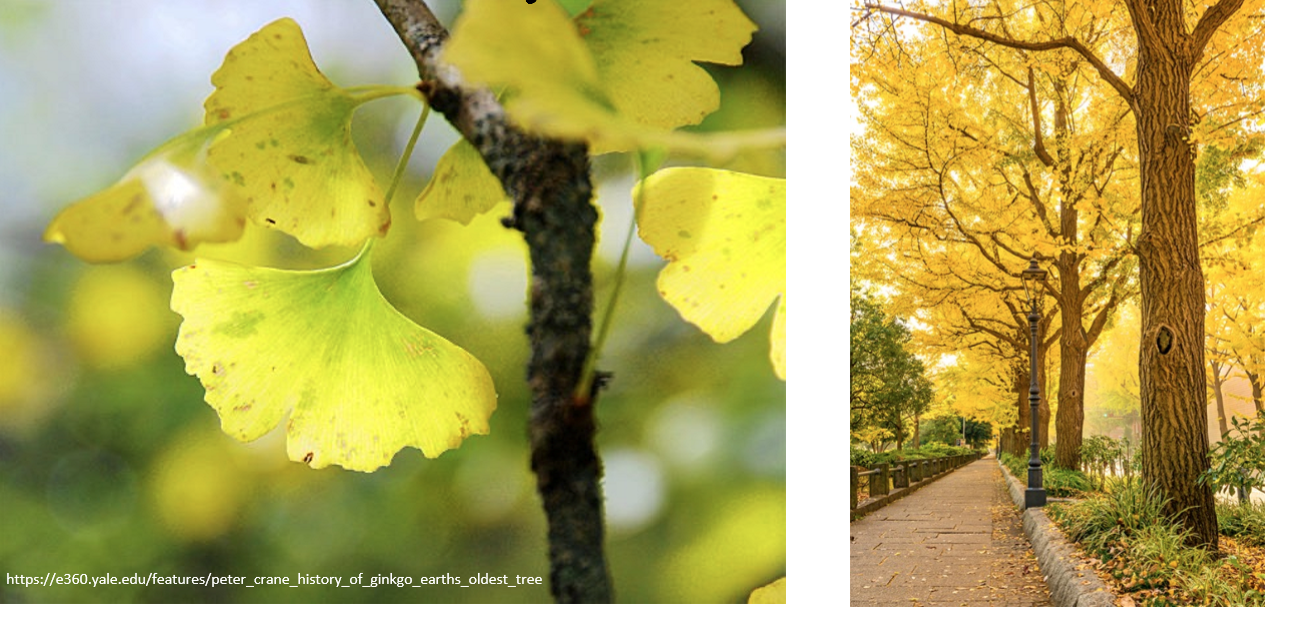
What is the name of this Tree Of The Day?
Ginko (Ginko biloba)

What makes the Ginko unique?
It is the only living species in its phylum and its seeds have medicinal properties
Early bacteria (prokaryotes) used chemical energy, so what was the first photosynthetic organism?
Cyanobacteria (“blue-green algae”) were the first photosynthetic organism around 3.5 billion years ago (SHEESH)
Why is the term “blue-green algae” not quite correct?
Algae are plants, which are eukaryotes while cyanobacteria are prokaryotes
What evidence do we have for cyanobacteria?
Fossilized stromatolites formed by cyanobacteria
What is the endosymbiotic theory for chloroplasts about?
The chloroplast evolved from being a cyanobactereum that was engulfed by a single-celled prokaryote and became an organelle inside the cell
What were the first plants?
Single-celled algae living in aquatic environments
Which kingdom of eukaryotes was last to evolve?
The best one kingdom Plantae
Where was the first place evolving plants inhabited before moving on land?
Intertidal zones (sometimes wet and sometimes dry) and estuaries
How is temperature different in aquatic environments versus on land?
Narrow temperature variability in water versus extreme high and low temperatures possible on land
How are nutrients different in aquatic environments versus on land?
Nutrients/CO2 are accessible (in the photic zone) in water versus CO2 is in the atmosphere and nutrients buried in the soil on land
How is light different in aquatic environments versus on land?
Not too harsh light exposure and decreases with depth in water versus harsh light and UV exposure on land
How is weight different in aquatic environments versus on land?
Plants are supported by water versus both gravity and wind can bring a tree down on land
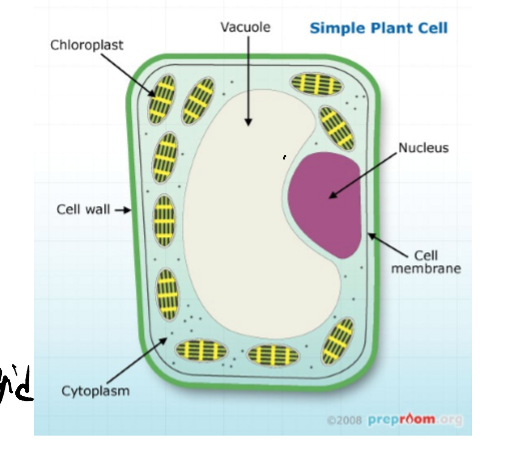
What are the four important features of a plant cell?
Cell wall made of cellulose that provides structural support and rigidity
Chloroplast for photosynthesis
Other plastids for pigment and starch storage
Vacuole for containing water, sugars, and salts to provide turgor pressure for the plant
What were the early terrestrial plants?
Mosses and liverworts which were small, non-vascular plants that could not actively transport water and nutrients
What was the first major step in plant evolution?
Vascular tissue: xylem transports water up and phloem transports nutrients up and down
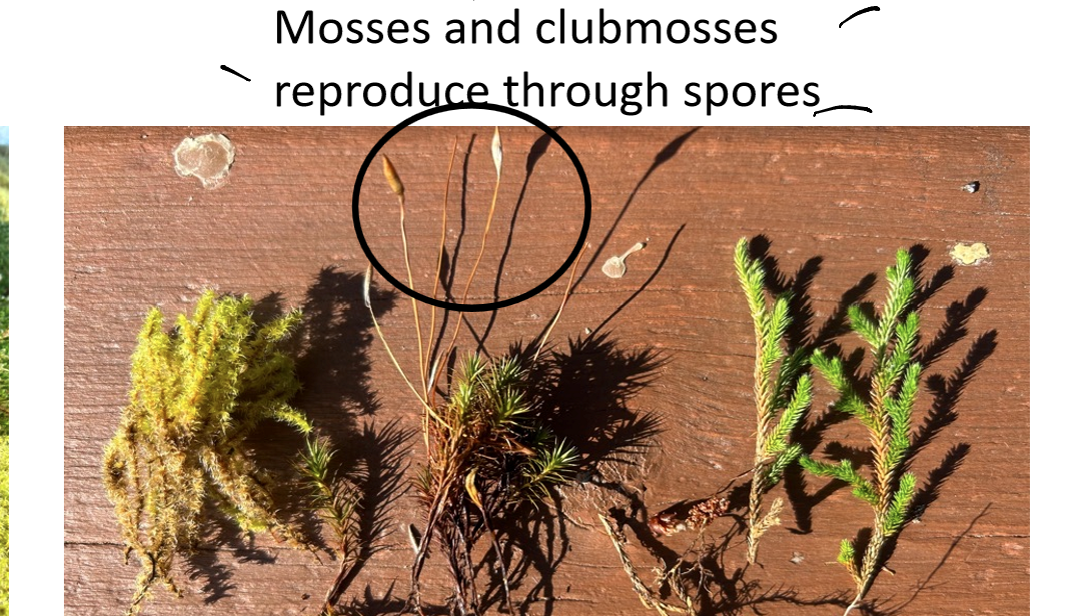
What is the difference between a moss and a club moss other than size?
Mosses are non-vascular while club mosses are vascular
What was the second major step in plant evolution?
Larger leaves = more SA to absorb sunlight = more photosynthetic potential
What was the third major step in plant evolution?
Gymnosperms and angiosperms reproducing through seeds
What are four advantages seeds have over spores?
Protection by seed coating
Can be transported via animals eating them
Have nutrients to help plant embryo grow
We eat seeds (rice, corn, and beans)
What is an advantage spores have over seeds?
They are much cheaper to produce than seeds
What was the final major step in plant evolution?
Flowering plants with fruits and flowers

From Quiz 1, apparently this is important

This too; does NOT increase ozone levels

What Tree of the Day is this?
Monkey puzzle or pehuen (Araucaria araucana)

Why is the tree important to the Pehuenche people in Chile?
The seeds are a staple part of their diet and they considered it sacred
True of False: All gymnosperms (naked seeds without fruits) are conifers
False. All conifers are gymnosperms, but not all gymnosperms are conifers

True or False: Most conifers, but not all, are evergreens (have leaves on throughout the seasons)
True
True or False: Not all evergreens are conifers
True. There are evergreen angiosperms

True or False: All conifers have cones
False. Most, but not all, conifers have cones
What are the 2/4 phylum of gymnosperms that we are expected to know?
Ginkophyta (1 species remember) and Coniferophyta (600 conifer species)
What is the seed structure of conifers (5 things)?
Embryo (2N)
Megagametophyte (N): Provides nutrients for the seed to germinate and us if we decide to eat the seed
Nucellar cap
Cotyledon
Seed coat

Where are seeds cones and pollen cones located relative to each other?
On the same tree, with the pollen cones lower on the tree for the wind to carry pollen up to the seed cones


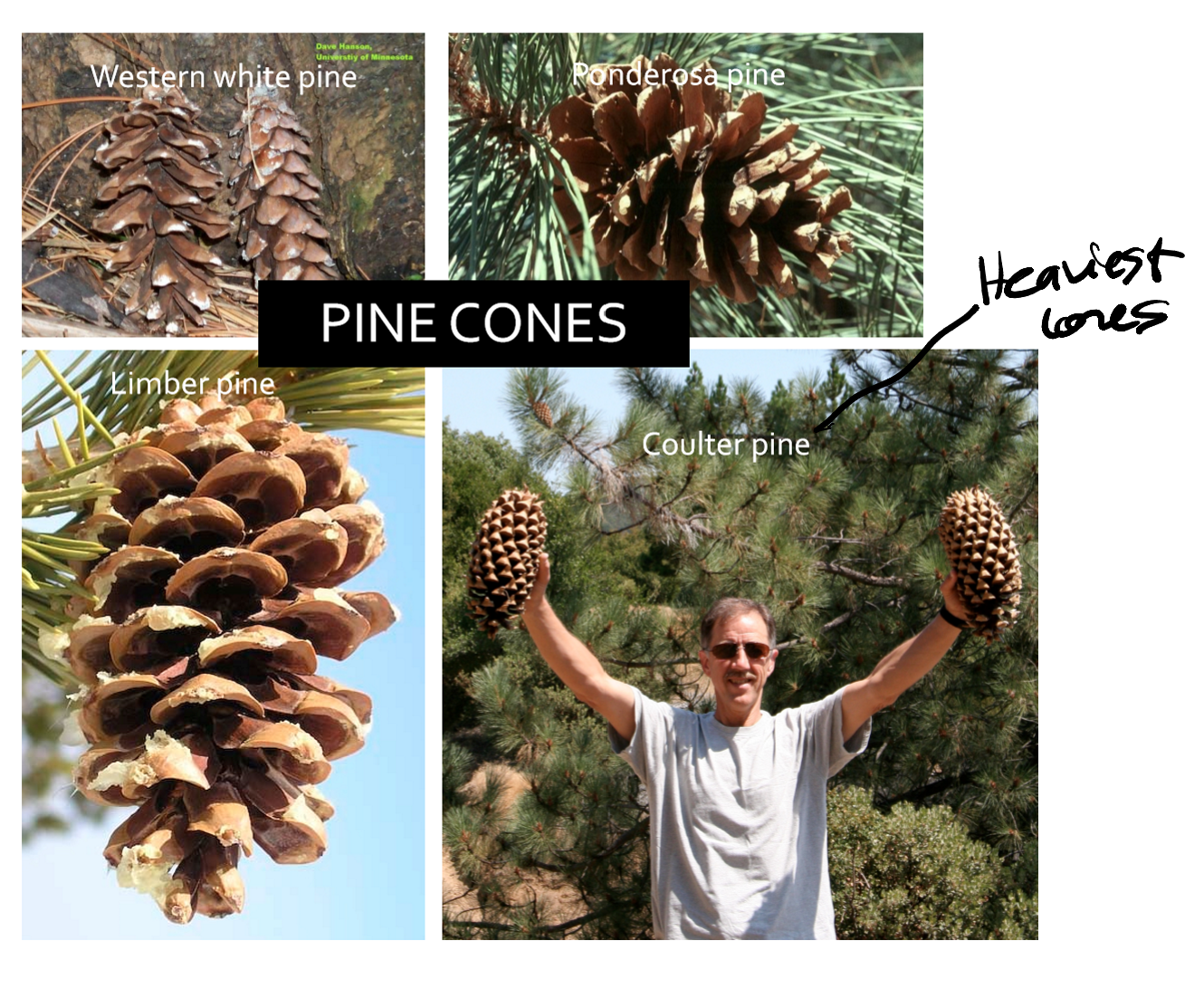
True or False: This is a pine cone
False. A pine cone can only come from a pine tree
Most conifers have “wings” for wind dispersal; what is an advantage of this?
The tree does not have to spend resources on attracting animals

As we know most, but not all, conifers have cones, how are Yew tree seeds dispersed?
By birds, not the wind
Why is it better to call pine nuts “pine seeds”?
Nuts are a type of fruit and only angiosperms produce fruits; pines are gymnosperms
True or False: 99% of all tree species are angiosperms
True
What is the structure of an angiosperm seed (4 things)?
Embryo (2N)
Endosperm (3N): Provides nutrients for the seed to germinate
Cotyledon
Seed coat
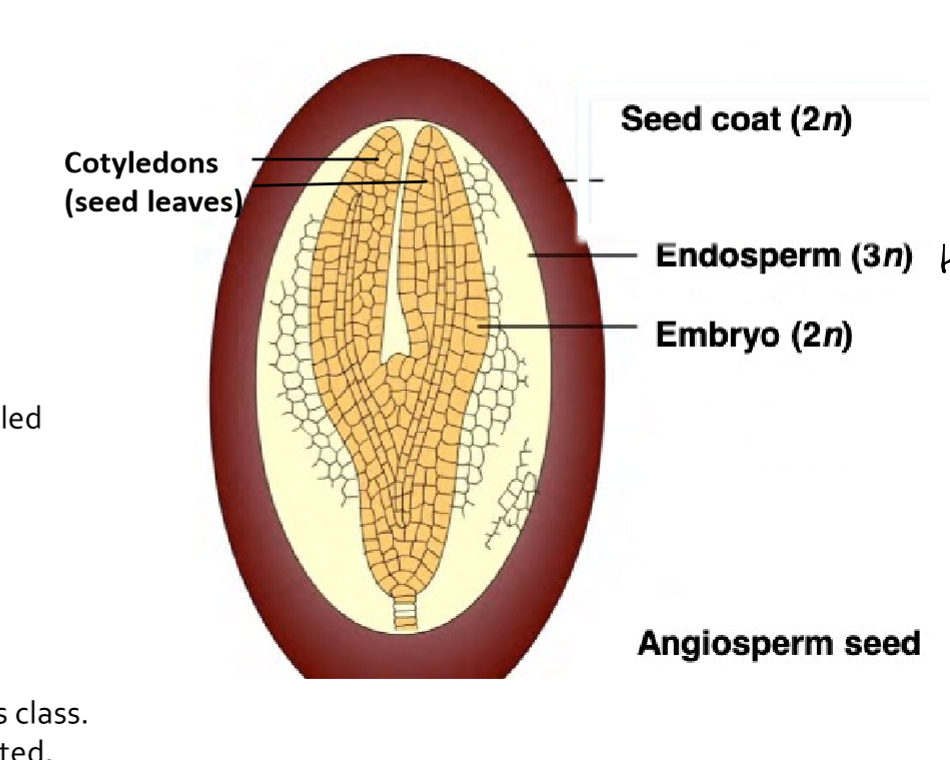
What are monocots and dicots?
Monocots have one cotyledon and dicots have two cotyledons
Examples of monocots?
Rice, wheat, and palm trees (which are not actually trees because they don’t have a woody stem)
Examples of dicot?
All angiosperm trees are dictos where they store resources in their two cotyledons
Where are nutrients found in an angiosperm seed?
In both the endosperm and cotyledons
What is the #1 method to disperse angiosperm seeds?
Animal transport because it can usually go farther
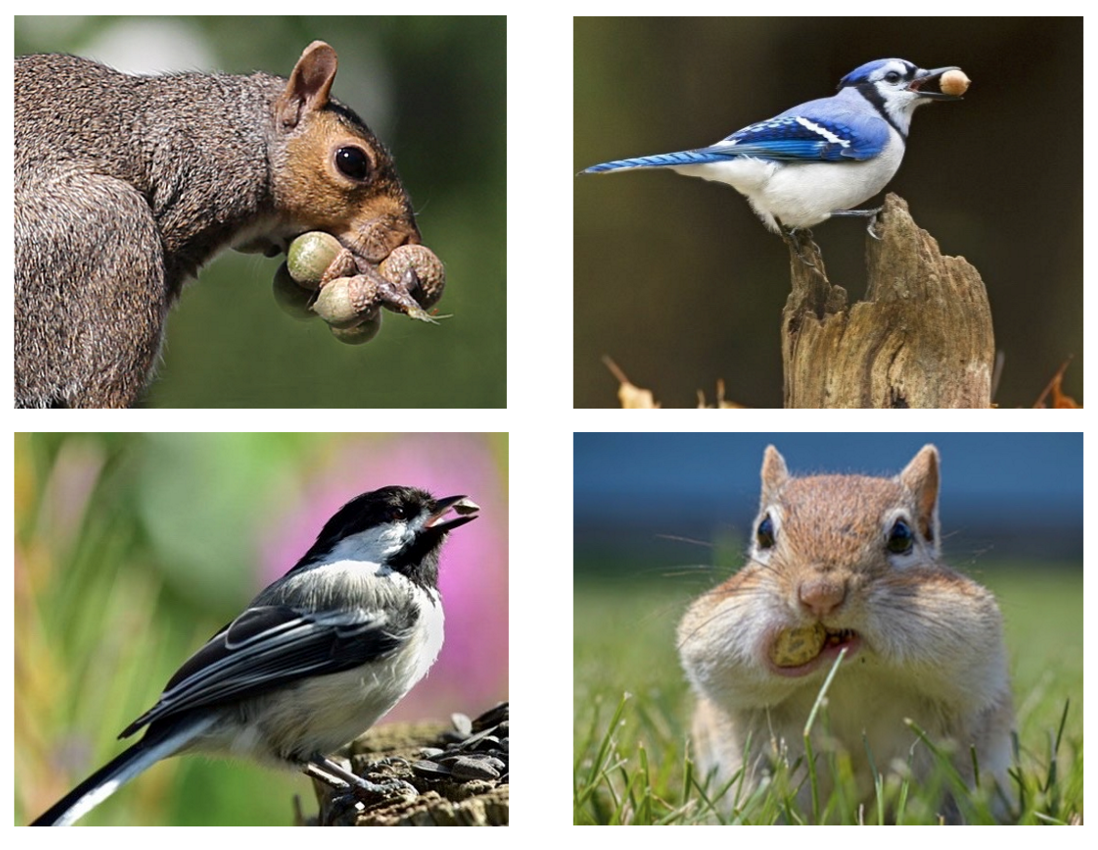
What are the other methods?
Light hairy seeds blown by the wind, hooks to attach to things, and transport by water
What is seed dormancy?
It is when a seed is dispersed and mature yet does not grow despite favourable conditions
What about embryo dormancy (a type of seed dormancy)?
Requires exposure to low T to get out of dormancy and then heat and moisture to germinate
What is the purpose of embryo dormancy?
So the seed doesn’t grow during winter and die; rather it grows during spring to summer time
What is seed coat dormancy (another type of seed dormancy)?
When a seed coating’s impermeability to water and gasses cause it to remain dormant that can only be broken by physical damge or low T
What is the purpose of seed coat dormancy?
Same as for embryo dormancy

C
Why have trees evolved to grow tall
Better access to sunlight (competition)

What tree of the day is this and what makes it special?
Coast redwood (Sequoia sempervirens) and it is the tallest tree species in the world
Why is Coast redwood (Sequoia sempervirens) used for fences, decks, and outdoor furniture?
Because it is decay resistant

What tree species do these seeds and cones belong to?
Of course, coast redwood
What are stem cells and what are they called in plants?
Undifferentiated cells that can continue to divide for hundreds or thousands of years that are called meristematic cells in plants
Where are the two types of meristematic cells?
Shoot apical meristems at the stem and branches and root apical meristems
True or False: The root apical meristems are at the root tips just comme how the shoot apical meristems are at the tip of stems and branches
False. While the shoot apical meristems are at the tip of stems and branches, the root apical meristems are not at the root tips so as to not get torn by the soil
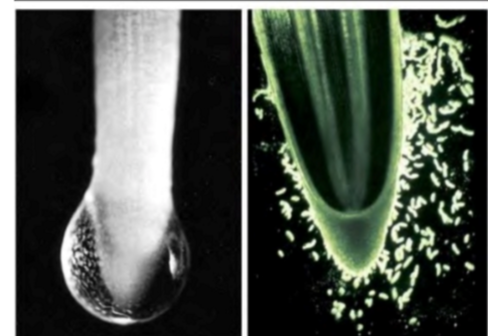
So, what is at the root tip?
Slimy cells called mucilaginous cells
What grows first?
The roots
What does mutualistic mycorrhizal relationships involve?
Plant roots access more water and nutrients due to the fungi while the fungi receives food from the plant (Win-Win)
What other type of mutualistic relationship can roots have?
With bacteria that fix nitrogen from the atmosphere into its available nutrient forms in exchange the bacteria receives sugars
What does it mean that roots are gravitropic and shoots are anti-gravitropic?
Roots grow down and shoots grow up
What four resources do roots need to grow?
Water
Nutrients in the soil
Nitrogen
Space to anchor
True or False: Roots grow in a set pattern
False. They grow where resources are available

What is the name of this stem?
The main stem aka the leader stem and is where the shoot apical meristem is at the tip
True or False: There are other shoot apical meristems at the tip of every branch
True
In what interval do shoot apical meristems produce new leaves?
At a fixed pattern arrangement (phyllotaxy) for best sunlight access

What is the phyllotaxy of this plant?
1,3
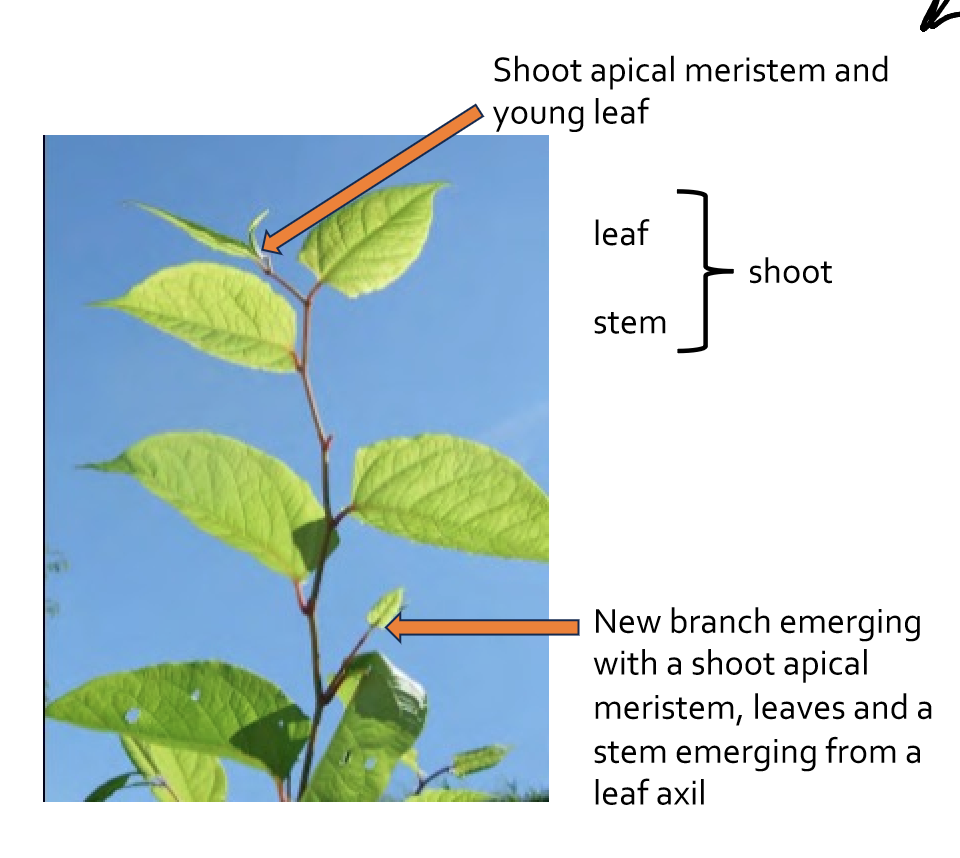
How do lateral branches form?
When a new shoot apical meristem forms in the axil of a leaf (where a leaf joins the stem aka the V shape)
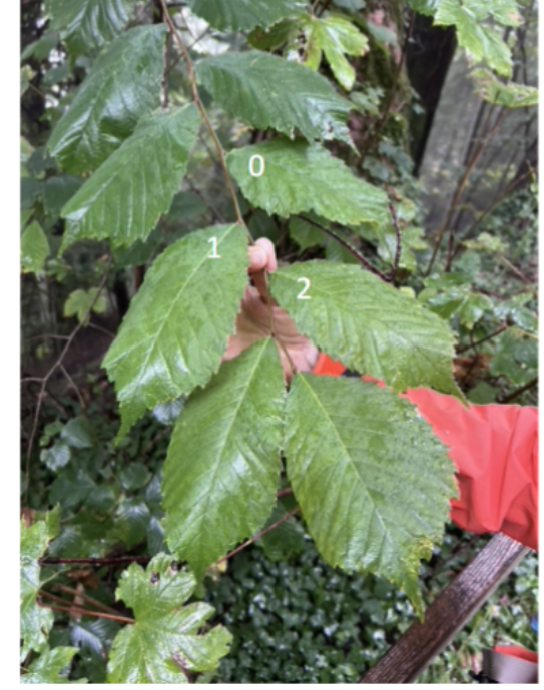
What is the phyllotaxy of this Hazelnut tree?
1,2

Name the arrangement patterns from left to right
Alternate, Opposite, and Whorled

This plant produces leaves in opposite pairs: Which is the younger pair and which is the older pair


(This shows the shoot apical meristems and developing leaves of coast redwood) Which is the youngest pair?
The ones closer to the centre aka the shoot apical meristem

True or False: Trees can get taller by dividing at the branches and at the top
False. Trees can only get taller by dividing at the top from the shoot apical meristem tip of the leader
True or False: Branches move up in height as the tree grows taller
False

What is this Tree of the Day?
Giant sequoia (Sequoiadendron giganteum)

What makes it unique?
Tallest tree species by main stem
What is similar between Giant sequioa, Coast redwood, and Western redcedar?
They are all in the cypress family
What do Herbaceous (non-woody plants) only have?
Primary vascular tissue: xylem and phloem

Why is secondary vascular tissue important for trees to grow tall?
For support and water conduction/transport
What is the vascular cambium?
A circle of meristem that produces secondary growth in width by dividing to form the secondary xyelm (wood) to its inside and secondary phloem (inner bark) to its outside
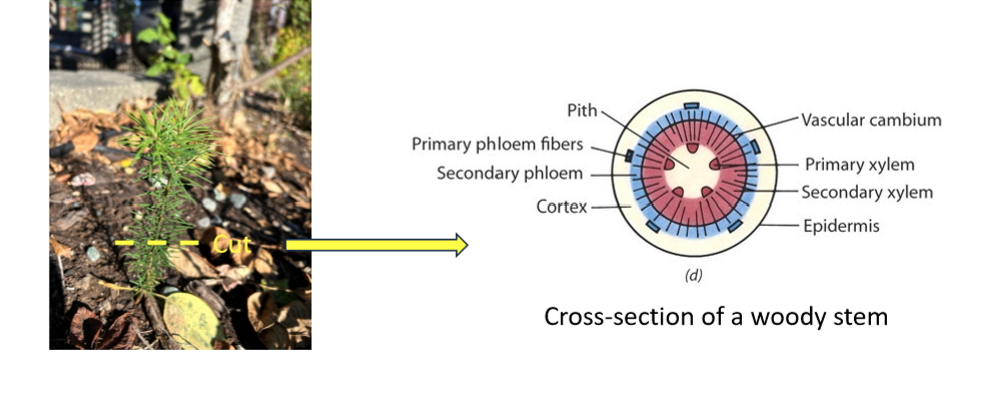
What is wood?
Cells with thick and strong secondary cell walls
True or False: Most wood cells die immediately after they mature
True; due to apoptosis
What are wood cells called in conifers and what do they do?
Tracheids that are involved in water transport and support (think hollow straws)
What do wood cells do in angiosperms?
They are more specialized for water transport and support
What does wood formed in the spring/earlier in the year do for non-tropical trees?
Water conduction/transport up
What does wood formed in the summer/later in the year do for non-tropical trees?
Support
What are four useful properties of wood for us?
Sustainable building supply
Paper
Fire/heating
Cellulose as a bulking agent in food
How do tree rings look in the growing season (spring)?
Thinner due to the wood cell walls being less dense at the time and a large lumen (opening) for water conduction/transport
How do tree rings look in the summer?
Thicker due to the wood cells walls being denser for support

What do Earlywood tracheid and Latewood tracheids do?
Earlywood tracheid (spring) conduct water and Latewood tracheid (summer) support [Pattern]