Mock Unknown #2: Identification of Wound, Throat, and Genitourinary Tract Bacteria
 Call Kai
 Learn
 Practice Test
 Spaced Repetition
 Match
 Flashcards
 Knowt Play
1/15

Earn XP
Description and Tags
Vocabulary flashcards covering the differential and selective media, biochemical tests, hemolysis patterns, and bacterial families used in the identification of mock clinical unknowns.
16 Terms
Blood Agar Plate
A rich differential medium composed of Brain Heart Infusion plus 5% defibrinated sheep's blood, utilized to detect bacterial hemolysis and test antibiotic susceptibility.

Hemolysins
Bacterial enzymes that catalyze the lysis and destruction of red blood cells (erythrocytes).
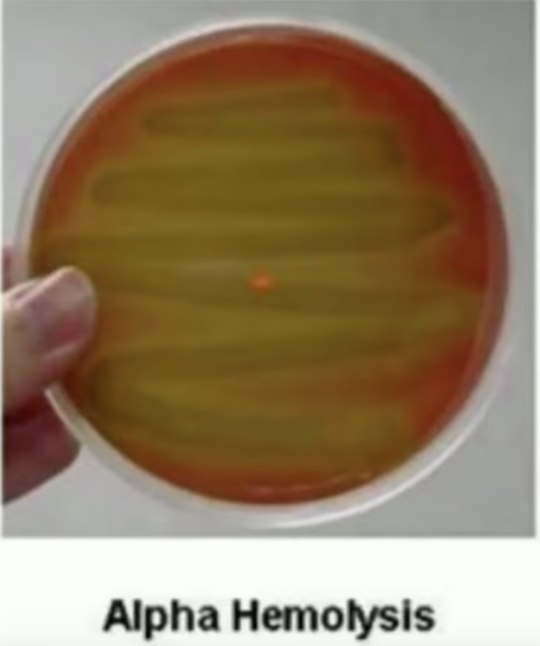
Alpha Hemolysis
Partial hemolysis in which bacteria damage red blood cells by converting hemoglobin to methemoglobin, creating a greenish-brown color change in the medium without transparency.
Beta Hemolysis
Complete hemolysis in which bacteria destroy red blood cells, producing a clear, transparent zone around the colonies through which light and background text can be viewed.

Gamma Hemolysis
The absence of hemolysis (negative result) where bacterial cells cause no damage or lysis to red blood cells, leaving the red agar completely opaque.

Mannitol Salt Agar (MSA)
A selective and differential medium containing 5% salt, mannitol, and phenol red; it selects for salt tolerance and differentiates mannitol fermenters (which produce acidic end products turning the agar yellow) from non-fermenters (which remain red).

DNAse Agar
A differential medium containing methyl green bound to DNA; if an organism secretes the enzyme DNAse to degrade DNA, the dye releases and volatilizes into the air, creating a clear zone around growth.

Salt Broth
A selective liquid medium consisting of nutrient broth with 6.5% NaCl; a positive result is indicated by turbidity (cloudiness) after suspending settled cells, whereas an inability to grow leaves the broth clear.

Bile Esculin Slant
A selective and differential medium containing bile (to inhibit non-tolerant organisms), ferric citrate, and esculin; bacterial hydrolysis of esculin produces esculetein, whose sulfur groups react with iron to form a distinct black FeS precipitate.

Catalase
An enzyme that breaks down toxic end products of oxygen metabolism by catalyzing the reaction H2O2→H2O+21O2(g).
Micrococcaceae
A family of Gram-positive cocci arranged in clusters or tetrads that are always catalase positive, including the genera Staphylococcus and Micrococcus.
Streptococcaceae
A family of Gram-positive cocci arranged in pairs or chains that are obligate fermenters and always catalase negative, including the genera Streptococcus, Enterococcus, and Lactococcus.
Neisseriaceae
A family of Gram-negative diplococci that are capnophiles and always catalase positive, including the genera Neisseria, Branhamella, and Moraxella.
Capnophiles
Organisms that require or thrive in elevated concentrations of carbon dioxide, characteristic of the family Neisseriaceae.
Corynebacterium
A genus of Gram-positive, catalase-positive short rods characterized by irregular cell branching patterns that form palisade structures ('Chinese letters').
Esculetein
A product formed from the bacterial hydrolysis of the sugar alcohol esculin that binds with iron in a bile esculin slant to produce an insoluble black iron sulfide (FeS) complex.