Unit 3 - Practice Variation and Feedback
 Call Kai
 Learn
 Practice Test
 Spaced Repetition
 Match
 Flashcards
 Knowt Play
1/73

There's no tags or description
Looks like no tags are added yet.
74 Terms
Example of implicit learning
Texting
Example of explicit learning
Writing
Implicit learning
Long-term memory acquired without awareness
Executed reflexively
Explicit learning
Actions that become motor habits that require deliberate practice
Intentional; goal = increase skill
Practice requires conscious attention.
What type of learning do we want to support during practice?
Implicit
The power law of practice describes…
the relationship between behavioral changes and practice.
Stage theories of motor learning
Fitts and Posner Theory of Learning
Meinel and Schnabel Mental Effort Theory
Mediator
Aka intervening variable
A hypothesized mechanism by which an independent variable can produce changes in a dependent variable
Example of a mediator variable
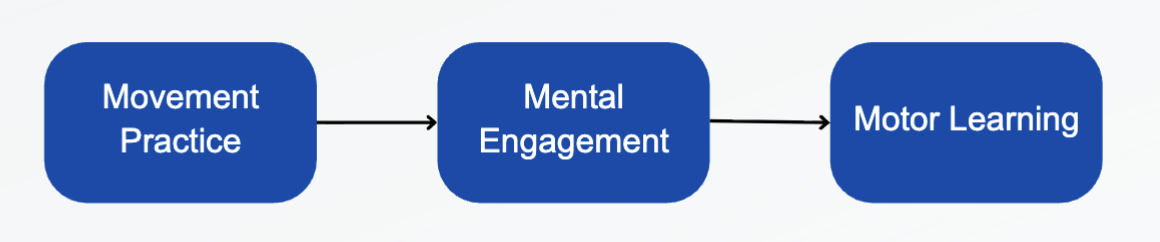
What is the mediator variable in Fitts and Posner’s theory?
Mental engagement/working memory demands
How do Fitts and Posner’s theory and Meinel and Schnabel’s theory differ?
Fitts and Posner’s model says that mental engagement level is the mediator variable. Meinel and Schnabel say this doesn’t necessarily make sense because there is a lot of mental engagement in late stages.
Meinel and Schnabel Theory of Learning
Stages 1 and 2: The raw coordination stage and the refined coordination stage → Similar to the cognitive and associative stages of learning
Stage 3: The variable availability stage; at the end of the learning curve → Learners adapt refined movement skills to changing situations.
* Emphasis on schema
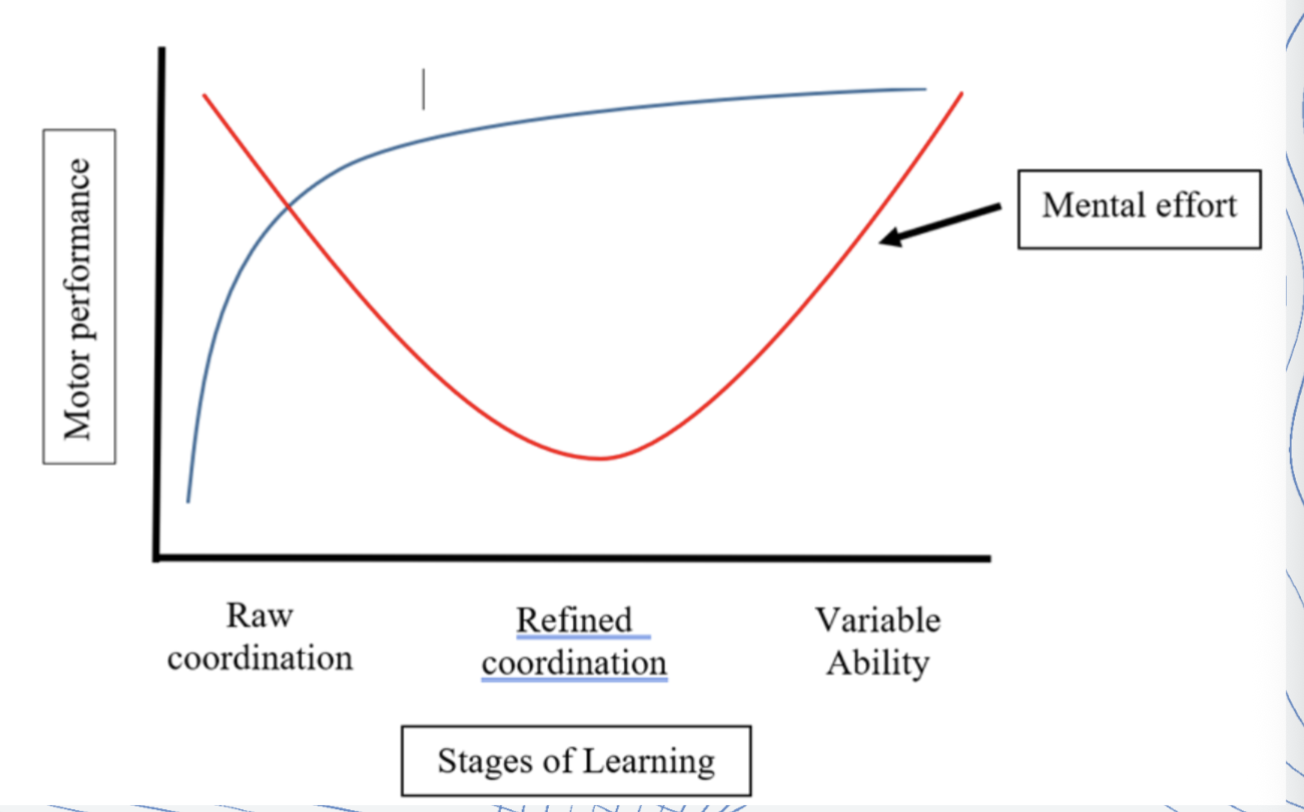
Draw the Meinel and Schnabel curve.

How do we challenge the learner to support development in the variable ability stage?
Change practice context.

Practice structures for teaching multiple skills in one session
Blocked practice = Repeating the same action for a designated number of attempts
Random practice = The performance of several tasks in unpredictable fashion (different foundational GMPs)
20 successive free throws followed by 20 successive hook shots
What kind of practice is this?
Blocked practice
Coach calls out a shot for players to execute then get back in line.
What kind of practice is this?
Random practice
Contextual interference
Method of varying practice trials in ways that repeatedly switch from one skill to another skill over the course of a training session
When to use blocked practice?
Better for practice performance
Helps develop GMP
Cognitive stage
When to use random practice?
Better for learning/skill development
Associative/autonomous stage
Competitive context
Outcome goals
Contextual interference effect
Certain conditions that depress performance during practice produce more learning as measured on delayed tests of retention or transfer


Explain this.
The contextual interference effect → Contextual interference in practice depresses motor performance but facilitates greater motor learning. This improves motor performance in transfer tasks.
Why is contextual interference beneficial?
Elaboration hypothesis → Forces learner to distinguish between different tasks
The forgetting hypothesis → Task change forces learner to “forget” how to do task 1 and transition to task 2 planning
What does random practice increase?
Mental effort
GMP parameterization → Schema development
In the cognitive stage, what kind of multi-skill practice should you do?
Blocked
In the associative stage, what kind of multi-skill practice should you do?
Mixed blocked and random
In the autonomous stage, what kind of multi-skill practice should you do?
Random
Types of single task practice
Constant vs. variable
Constant practice
A practice sequence in which individuals rehearse only one variation of a given class of tasks during a session
Variable practice
A practice sequence in which learners rehearse a number of variations of a given class of tasks during a session
Specificity hypothesis
Each skill depends on specific combinations of abilities.
Additional practice under mixtures of blocked/random or constant/variable conditions
reduces movement constraints
promotes changes in learner’s information processing speed, attentional allocation, memory storage, and schema development
20 baseline forehands, 20 half court forehands, 20 forehands down the line, and 20 forehands crosscourt
What kind of practice is this?
Constant practice
All types of forehands are practiced.
What kind of practice is this?
Variable practice
How can practice variation be beneficial in rehab?
More translation to a real-world environment → with and without assistive devices, different floor tractions, different shoes
In the cognitive stage, what kind of single task practice should be done?
Constant
In the associative stage, what kind of single task practice should be done?
Mixed constant and variable
In the autonomous stage, what kind of single task practice should be done?
Variable
Advantages of varied practice
Develop competence in parameterizing
Selecting parameter values that match task demands
Schema development!!
Parameterization
Making customizations to variant features → applying schema
How does open vs. closed skill impact kind of practice?
Open skill benefits more from variation in practice. Closed skill can still benefit though.
How do we reinforce skill development during practice sessions, no matter their structure?
Feedback
Map out/describe the types of feedback

Where do interoceptive and exteroceptive feedback lie on the closed loop model?

Where do knowledge of results and knowledge of performance lie on the closed loop model?

Augmented feedback
Aka extrinsic feedback, enhanced feedback
Information that is not directly available to the learner
Provided by an outside source during or after practice
Provided in addition to intrinsic feedback
Examples of augmented feedback
+ knowledge of performance and knowledge of results

Knowledge of performance
Information regarding the quality of movement; provides qualitative information concerning “form”
Knowledge of results
Information regarding the outcome of movement; provides quantitative concerning the outcome of the movement and how well a goal has been achieved
Is knowledge of results always quantitative?
No
Descriptive knowledge of results
Information concerning the degree of error in performance
Prescriptive knowledge of results
Corrective information provided about performance → May be best for skill progression
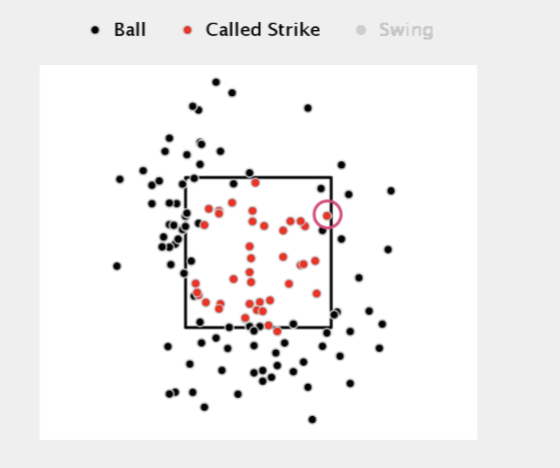
What is this an example of?
Descriptive knowledge of results
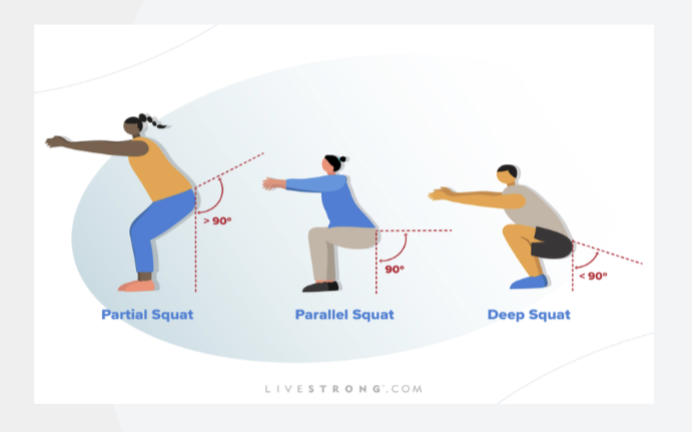
What is this an example of?
Descriptive knowledge of results

What is this an example of?
Prescriptive knowledge of results
How can we foster engagement with prescriptive knowledge of results?
Increase learner autonomy by including them in the conversation. What kind of drills do they think would help?
What are the recommendations for use of knowledge of results?

Types of knowledge of performance
Kinematics and kinetics
Kinematics
External feedback about the physiological error in motor program execution; shape, form, pattern, and sequencing of action through time
Kinetics
Information regarding forces that cause or result from movement

What is this?
Kinematic feedback
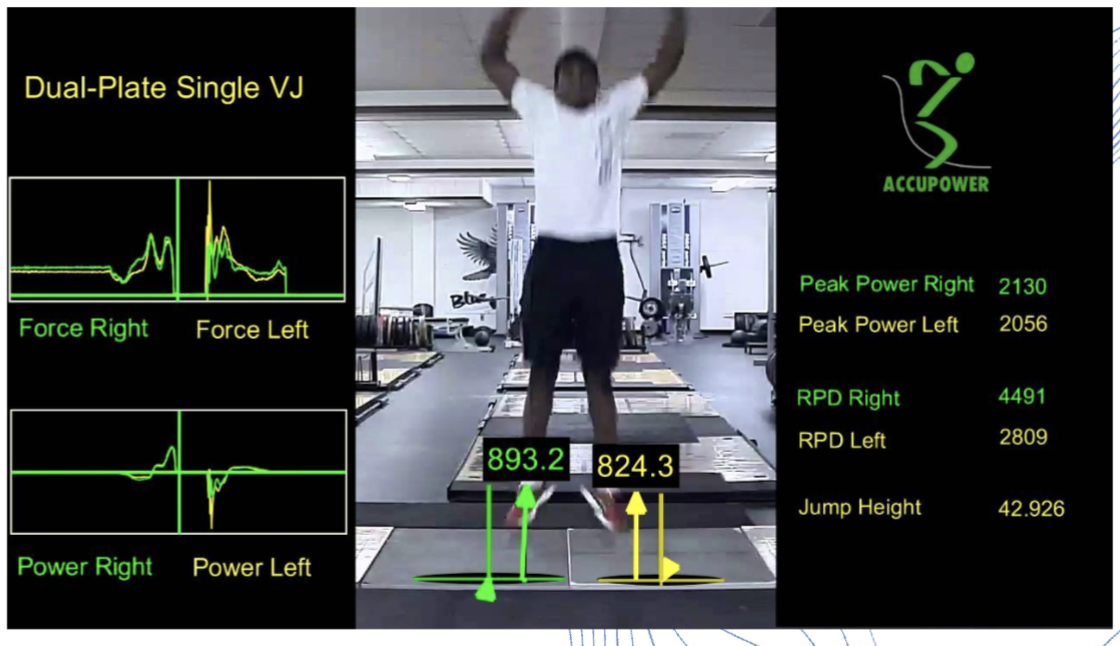
What is this?
Kinetic feedback
KP biofeedback
Electronic monitoring of a normally automatic function; sensory feedback that is not consciously available to learners
Informational properties of extrinsic feedback? Ask
Law of effect
Proposes that when satisfaction follows a behavior it is more likely to be repeated; if an unfavorable outcome follows a behavior, it becomes less likely to be repeated
Reinforcer
A good thing (ex. money, praise, facial expression)
Reinforcement
An event following the response
Explain/draw out the positive/negative punishment/reinforcement spectrum.
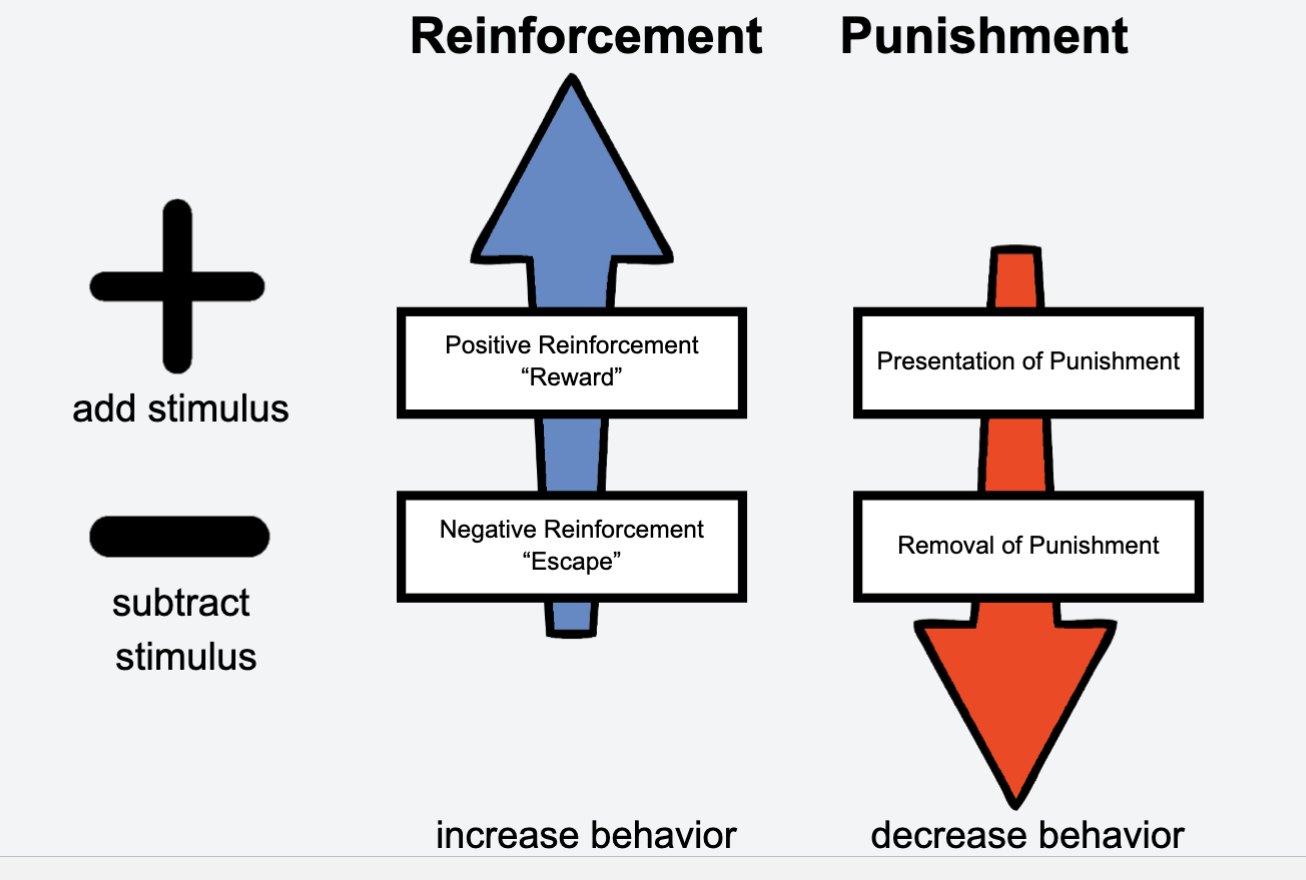
Procedure of motor reinforcement

Why does feedback require scaffolding?
Too little feedback means slow learning. Too much feedback means dependence on instructor.
Concurrent feedback
Provided as the learner is practicing
What happens if the learner’s attention is directed to proprioceptive feedback?
It competes with the practitioner’s extrinsic feedback and lessens the informational value of extrinsic feedback.