Microbial Metabolism: Respiration, Anabolism, Photosynthesis and N-fixation
 Call Kai
 Learn
 Practice Test
 Spaced Repetition
 Match
 Flashcards
 Knowt Play
1/36

There's no tags or description
Looks like no tags are added yet.
37 Terms
proton motive force (pmf)
energized membrane with more hydrogen ions (H+) on the outside of the cell than inside. This is what powers the production of ATP using ATP synthase

anaerobic respiration
process that uses the electron transport chain with a non-oxygen terminal electron acceptor

oxidative phosphorylation
ATP-synthesizing process that takes place in the mitochondria. Electrons from NADH or FADH2 are passed through a series of redox reactions, the energy from which is used to create an energized membrane, which is then used to phosphorylate ADP to ATP.

fermentation
process that oxidizes a large organic compound and regenerates NAD+ from NADH without an exogenous electron acceptor.

terminal oxidase
a protein that catalyzes the reaction of electrons going to a final electron acceptor in the ETC

NADH dehydrogenase
the first of the proteins in the electron transport chain to receive the electrons; complex. membrane-embedded enzyme
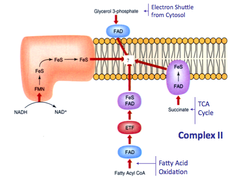
electron transport chain
molecules embedded in the cell membrane that can gain or donate electrons due to their location on the electron transport tower

ATP synthase
a reversible enzyme that is powered by the PMF and catalyzes the formation of ATP from ADP and Pi

azide
toxic chemical that inhibits the use of oxidase in the electron transport chain (doesn't kill pure fermentors)

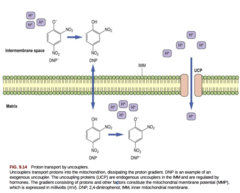
dinitrophenol (DNP)
chemical that allows hydrogen ions back into the cell which interupts the PMF
aerobic respiration
form of respiration that requires oxygen to produce cellular energy

Chemoorganotrophy
process to obtain energy from the oxidation of reduced organic compounds

Chemolithotrophy
process to obtain energy from the oxidation of reduced inorganic compounds and carbon dioxide as a carbon source

autotrophy
process by which organisms obtain carbon from carbon dioxide.
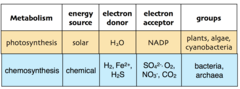
anoxygenic photosynthesis
type of photosynthesis that uses electron donors other than water to produce ATP and needs light only for energy generation. Oxygen is not produced

oxygenic photosynthesis
type of photosynthesis that oxidizes water and reduces NADP+ to NADPH. Needs light for reducing capability and energy generation

chlorophyll
green pigment that absorbs light to provide energy for photosynthesis

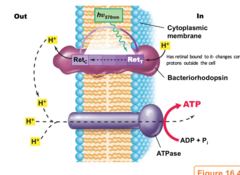
bacteriorhodopsin
a light sensitive pigment used by some bacteria that transport protons across the cytoplasmic membrane using light energy to generate a PMF. This is used by some photoheterotrophs.
bacteriochlorophyll
photosynthetic pigment that is related to chlorophyll but is present in anoxygenic photosynthetic bacteria.

antenna complex
complex of pigment with proteins and grouped molecules of chlorophyll to maximize light absorption

phototrophy
process of converting light energy into chemical energy such as ATP, NADH, or NADPH

reaction center
cluster of antenna complexes that associate in a ring around this structure

nitrogenase
enzyme that uses energy to reduce N2 into a usable form (NH3). This enzyme is inactivated by oxygen.

Acyl carrier protein (ACP)
protein used to hold the growing fatty acid chain and release it once it is built

amphibolic
term that describes a biochemical pathway that involves catabolism and anabolism

reductive TCA cycle
series of chemical reactions that are used by some bacteria to make carbon compounds from carbon dioxide and water
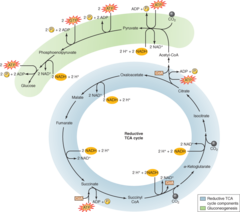
Calvin cycle
chemical reactions that occur in chloroplasts during photosynthesis but is light independent . Uses NADPH and ATP to make G3P

carboxylation
1st phase in the Calvin cycle which is a chemical reaction that produces a carboxylic acid group from reacting a substrate with carbon dioxide
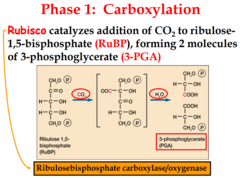
reduction phase
stage in the Calvin cycle that uses ATP and NADPH to reduce 3-PGA into G3P

anaplerotic reactions
chemical reactions that help replenish carbon from the TCA cycle
fructose bisphosphotase
enzyme that converts 1,6-biphosphotase to fructose 6 phosphate in the Calvin cycle and gluconeogenesis

glucose 6 phosphotase
enzyme that hydrolyzes glucose 6-phosphate which creates a phosphate group and a free glucose molecule

pyruvate kinase
enzyme that acts as a catalyst in the last step of glycolysis that transfers a phosphate group from PEP to ADP to yield a pyruvate and ATP molecule

phosphofructokinase
kinase enzyme that phosphorylates fructose 6-phosphate in glycolysis

hexokinase
enzyme that phosphorylates six carbon sugars to make hexose phosphates

Z scheme pathway
oxidation and reduction process of the light reactions in photosynthesis and shows electron transfers in this process

regeneration phase
third phase in the Calvin cycle in which remaining PGAL is converted from 3 carbon sugar phosphate to ribulose 1,5-biophosphate so the cycle can continue again
