week 11: bacterial infections of humans - part 1
 Call Kai
 Learn
 Practice Test
 Spaced Repetition
 Match
 Flashcards
 Knowt Play
1/86

There's no tags or description
Looks like no tags are added yet.
87 Terms
bacterial structures linked to disease:
fimbriae/adhesive pili
capsule (outside of cell)
flagella
biofilm matrix
cell wall (peptidoglycan)
outer membrane (gram negative)
sex pilus + plasmid
endoscpore (survival form)
fimbriae/adhesive pili - general structure
attach bacteria to host cells or other surfaces
fimbriae/adhesive pili - example
escherichia coli
urinary tract attachment can support UTI
capsule (outside of cell) - general function
helps bacteria resist engulfment by immune cells
capsule (outside of cell) - example
streptococcus pneumoniae
pneumonia or meningitis
flagella - general function
enable movement toward suitable environments
flagella - example
helicobacter pylori
gastric mucus colonization disease: gastric/peptic ulcers
biofilm matrix - general function
holds bacteria together and helps them persist
biofilm matrix - example
staphylococcus aureus
device-associated infection
cell wall (peptidoglycan) - mechanism
cell-wall synthesis is a beta-lactam target
cell wall (peptidoglycan) - clinical connection
mycoplasma pneumoniae
no cell-wall: beta-lactams are ineffective
outer membrane (gram negative) - mechanism
lipid A in LPS/LOS can trigger inflammation
outer membrane (gram negative) - clinical connection
neisseria meningitidis
LOS can contribute to sepsis
sex pilus & plasmid - mechanism
DNA transfer may spread resistance genes
sex pilus & plasmid - clinical connection
resistant bacterial infection
susceptibility testing helps guide treatment
endospore (survival form) - mechanism
resists harsh conditions and can persist after release
endospore (survival form) - clinical connection
clostridioides difficile
spore control helps prevent transmission
viral infections - multipliction
must use living host cells to make new virus particles
viral infections - possible pathogen effects
can damage infected cells or disrupt their function
bacterial infections - multiplication
many multiply outside host cells, some multiply inside cells
bacterial infections - possible pathogen effects
invasion and products, including toxins, can injure tissues or disrupt function
host response in both viral and bacterial infections:
protective effects
help ctrl or clear infection
potentially harmful effects
tissue injury or organ dysfunction
viral vs bacterial infections diagram

common pathways of bacterial infection
** host defenses act throughout. these are possible pathways, not fixed stages !!
exposure → adherence & growth + biolfilnm may form → colonization OR disease → disease into clinical findings

adherence (bacteria)
bacteria attach
growth (bacteria)
bacteria multiply
colonization (bacteria)
bacteria remain without causing disease
example of adherence, growth, and colonization of bacteria
methicillin-resistant staphylococcus aureus (MRSA) can colonize nose without causing illness
testing of adherence, growth, and colonization of bacteria
a positive nasal MRSA screen indicates carriage
interpret results w/ findings at suspected infection site
nursing priorities of adherence, growth, and colonization of bacteria
use indicated infection-prevention measures
colonized patients can spread bacteria
biofilms and persistence
bacteria attach and make a matrix that holds them together
biofilm growth can help bacteria survive immune defenses and antibiotics

biofilms and persistence - example
urinary catheter
bacteria may persist on catheter without urinary symptoms
history for biofilms and persistance
device use or persistent wound
testing for biofilms and persistence
a positive urine culture doesn’t establish symptomatic UTI
nursing priorities for biofilms and persistence
review catheter needs
remove when no longer indicated, following the care plan or protocol
invasion
bacteria enters tissues or cells, and infection may remain local or spread
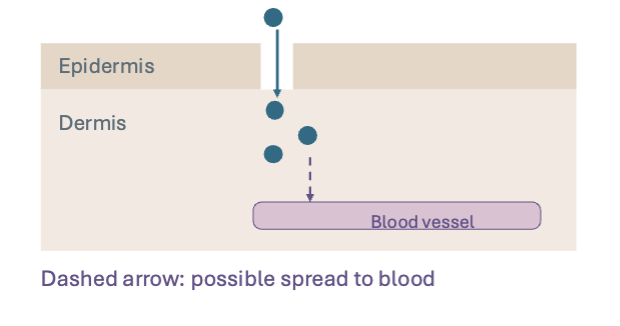
invasion - example
a break in the skin
invasion - clinical findings
streptococcus pyogenes can cause cellulitis: local pain, warmth, and swelling
invasion - possible complication
bloodstream spread (bacteremia)
local invasion doesn’t establish bloodstream infection
history for invasion
ask about skin breaks, wounds, and recent procedures
nursing priorities for invasion
monitor pain, extent, function, and vital signs
escalate rapid worsening or severe pain beyond visible changes
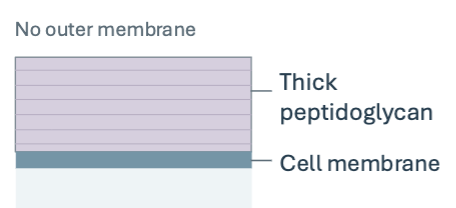
gram-positive (gram reaction and cell-wall features)
stain color: purple
no outer membrane
gram-negative (gram reaction and cell-wall features)
stain color: pink/red
LPS endotoxin

testing for gram reaction
gram reaction and shape prvoide early clues
identification and susceptibility results guide treatment
**both grps can cause serious infection, gram reaction doesn’t determine severity !!
exotoxins - what is it?
proteins produced by certain bacteria
exotoxins - what bacteria?
some gram-positive and gram-negative bacteria
exotoxins - main effect
disrupt cell function or activate immune responses
endotoxin - what is it?
lipopolysaccharide (LPS) in outer membrane
endotoxin - what bacteria?
gram-negative bacteria
endotoxin - main effect
activates host inflammation
clinical findings for exotoxins
clostridium tetani exotoxin disrupts nerve signaling, causing muscle rigidity and spasms
nursing priorities for exotoxins and endotoxins
assess swallowing and breathing
escalate difficulty swallowing or breathing immediately
protective effects w/ bacteria, bacterial components, or toxins
immune cells and proteins help contain and clear bacteria
potentially harmful effects w/ bacteria, bacterial components, or toxins
a dysregulated response can injure tissues and impair organ function
clinical findings w/ bacteria, bacterial components, or toxins
inflammation can cause warmth, swelling, pain, and fever
possible complication w/ bacteria, bacterial components, or toxins
sepsis: life threatening organ dysfunction from a dysregulated response to infection
ESCALATE w/ bacteria, bacterial components, or toxins involved
new confusion, falling bp, breathing difficulty, or markedly reduced urine output
bacterial infection assessment - history
onset and course; skin breaks, procedures, devices, prior antibiotics, and factors that increase risk
bacterial infection assessment - clinical findings
assess the affected site and function
baseline and trend of pain, swelling, drainage, fever, and vital signs
bacterial infection assessment - assess for complications
assess mental status, breathing, perfusion, and urine output
look for deeper infection or organ dysfunction
bacterial infection assessment - testing
select tests by site and syndrome: culture/susceptibility, NAAT, or toxin testing when indicated
interpret context
bacterial infection assessment - nursing priorities
use indicated precautions, give prescribed treatment, and support function and reassess the response
bacterial infection assessment - escalate
new confusion, falling bp, breathing difficulty, or rapidly worsening pain
bacterial infections for eye, ear, throat, and oral
strep throat
conjunctivitis/otitis
dental caries
strep throat bacterial infection
S. pyogenes (throat)
conjunctivitis/otitis bacterial infection
H. influenzae, S. pneumoniae
dental caries bacterial infection
streptococcus mutans
bacterial infections for skin and soft tissue
impetigo
cellulitis
Necrotizing soft tissue infections
impetigo bacterial infection
S. aureus, S. pyogenes
cellulitis bacterial infection
S. pyogenes (skin and tissue)
necrotizing soft tissue bacterial infections
group A strep or mixed bacteria
bacterial infection for respiratory
pertussis
pneumonia
tuberculosis
pertussis bacterial infection
B. pertussis
pneumonia bacterial infection
S. pneumoniae, M. pneumoniae, Legionella pneumophila
tuberculosis bacterial infection
M. tuberculosis
bacterial infection - possible complications across systems
sepsis and organ dysfunction
impetigo is a disease of:
superficial infection of the epidermis (outer skin layer)
types of impetigo
nonbullous
bullous
nonbullous (impetigo)
staphylococcus aureus
streptococcus pyogenes
or both!
bullous (impetigo)
toxin-producing S. aureus
reservoir of impetigo
people carrying bacteria on skin or mucosal surfaces
transmission of impetigo
contact w/ sores, drainage, or contaminated items
scratching can transfer bacteria to other skin sites
mechanism of nonbullous (impetigo)
bacteria multiply in superficial skin → small sores or pustules develop → lesions rupture → fluid dries into honey-colored crusts
mechanism of bullous (impetigo)
toxin-producing S. aureus grows locally → exfoliative toxin disrupts connections between superficial skin cells → fragile blisters form → rupture leaves moist, shallow erosions