BIOCHEM EXAM 5: Glycogenesis + Glycogenolysis
 Call Kai
 Learn
 Practice Test
 Spaced Repetition
 Match
 Flashcards
 Knowt Play
1/197

There's no tags or description
Looks like no tags are added yet.
198 Terms
What is homeostasis?
carefully controlling circulating glucose concentrations
What is an anabolic pathway in the liver?
gluconeogenesis
What type of linkage does glycogen have?
alpha- 1,4
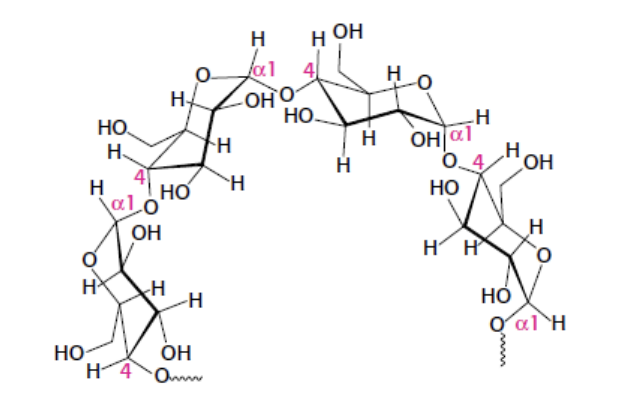
What structure is this?
starch and glycogen
Where do glycogenesis and glycogenolysis occur?
liver and muscle
Glycogenesis
Glucose → Glycogen
Glycogenolysis
Glycogen → Glucose
What is the sensory endocrine organ?
pancreas
What does the pancreas do in response to high blood sugar?
secrete insulin
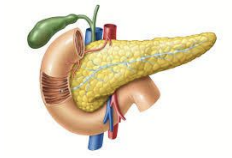
What does the pancreas do in response to low blood sugar?
secrete glucagon
What organ system has an insulin:glucagon ratio?
blood and circulatory system

Whhat does the insulin:glucagon ratio signal to all organs?
the energetic state of the organism

What do adipocytes perform in response to high sugar state?
fatty acid synthesis (FAS)

What do adipocytes perform in response to prolonged fasting state?
beta-oxidation

What does the liver respond to glucagon with?
glycogenolysis and gluconeogenesis
What does the liver respond to insulin with?
glycogenesis
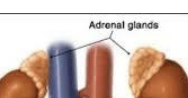
What do the adrenal glands respond to fear/alert signals from the brain with?
epinephrine
Where are the adrenal glands located?
the top of the kidneys

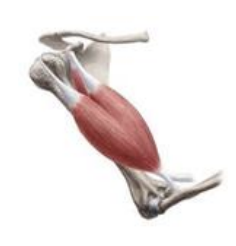
What do muscles respond to epinephrine with?
glycogenolysis

What do the muscles respond to insulin with?
glycogenesis and protein sysnthesis
Different reponses are mediated by…
Different receptors and glucose
The lower the KM the better the transporter is at..
grabbing glucose (binding and transporting glucose at low glucose concentrations (higher apparent affinity))
GLUT 2 is better or worse at grabbing glucose
Which 2 glucose transporters are basal?
GLUT 1+ 3
In which tissue, is GLUT 2 located?
liver and pancreatic beta cells
GLUT 2 has a high KM meaning?
insensitive to basal concentration of glucose
Which transporter only transports when glucose is high?
GLUT 2
What does GLUT 2 do in the pancreas?
helps regulate insulin
What does GLUT 2 do in the liver?
removes excess glucose from blood
Why does endurance training increase the expression of GLUT 4?
long and sustained effort requires maintaining glycolytic state for longer periods of time
What does GLUT 4 proritize?
delivery of glucose to muscle
The Body needs to maintain blood glucose at a… for optimal health
narrow range
normal BG range
80-115 mg/dL
What is a proxy readout for actual mg/100mL of glucose in the blood?
glycated hemoglobin proportion of glycated to non-glycated RBCs/erythrocytes
Which is a good, intended modification: glycosylation vs. glycation?
glycosylation
Which is a usually bad, unintended rxn: glycosylation vs. glycation
glycation
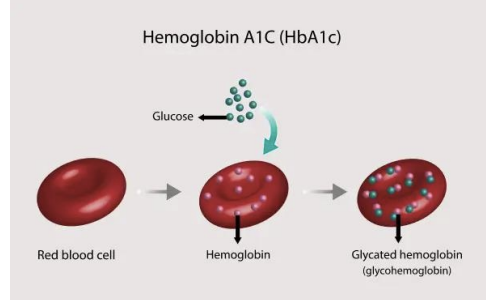
What can glycate things and cause problems?
glucose
The more glucose in the blood, the more hemoglobin becomes…
glycated
Higher blood glucose means more…
HbA1C
Pancreatic cells secrete hormones in respsonse to…
circulating glucose levels
What is A1C?
what’s actually getting decorated with glucose
What are the 2 pancreatic hormones?
insulin and glucagon
Acinar cells secrete…
digestive enzymes
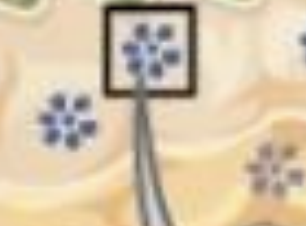
What structure is this?
a pancreatic islet
What organ does the pancreas connect to, and what does it secrete?
gallbladder; bile salts
What are pancreatic islets also referred to as ?
Islets of Langerhans
What are the 2 cells that exist in the pancreatic islet?
alpha and beta
What hormone do alpha cells secrete?
glucagon
What hormone do beta cells secrete?
insulin
Exocrine acinus
goes to the epithelial duct that leads to digestive tract
Endocrine →
to circulatory system (bloodstream)
Insulin and glucagon are released in a coordinated fashion to… over time
keep glucose levels stable
After a meal →
Glucose absorbed and rises
Pancreatic beta cells detect high glucose →
Beta cells release insulin
Insulin travels through the bloodstream and binds receptors →
Glucose moves from the bloodstream into cells
Insulin release promotes glycogenesis →
BG decreases
Time passes without another meal →
Pancreas reduces insulin secretion and increases glucagon secretion
Pancreatic alpha cells release glucagon →
Liver begins supplying glucose to blood
Glucagon promotes glycogenolysis →
BG increases toward normal
What is the difference between liver glycogen and muscle glycogen?
Liver: helps maintain BG
Muscle: provides energy for the muscle itself
Which organ maintains systemic BG through glycogenolysis?
Liver
What does insulin bind to on target cells?
insulin receptors
The response of insulin:glucagon homeostasis can be…
rapidly altered

What controls glycogenesis and glycogenolysis?
Insulin:glucagon ratio
What Step 1 of glucose entry?
glucose entry
What occurs after glucose entry?
increased ATP production
What occurs after increased ATP production?
closure of ATP-Sensitive K+ Channels
What are the two steps of the closure of ATP-Sensitive K+ Channels?
Inhibition (closure)
Promotion (opening)
What promotes the closure of the K-ATP channels?
the increase in ATP/ADP ratio
What promotes the opening of K-ATP channels?
ADP binding
What occurs after closure of K-ATP Channels through inhibition?
membrane depolarization caused by buildup of positive charge inside cell
What occurs after membrane depolarization?
opening of voltage-gated Ca2+ channels
What occurs after opening of voltage-gated Ca2+ channels?
calcium influx and insulin exocytosis
Where does insulin get processed from proinsulin to mature?
the GA

Proinsulin is…
a single polypeptide chain w/ 3 disulfide bridges
How is insulin packaged inside of mature granules and around what?
as a hexamer; 2 Zn 2+ atoms

Insulin is packed as a hexamer but works as…
a monomer once relesaed into bloodstream
What type of insulin has disulfide bridges and is proteolytically cleaved?
fully mature insulin
What triggers glycogen storage in liver muscle?
insulin signaling
What does receptor tyrosine kinase?
dimerizes and auto-phosphorylates in response to binding ligand
What kind of enzymes are insulin receptors?
receptor tyrosine kinases
What starts the signaling cascade for glycogen storage? (in liver and muscle)
phosphorylation of tyrosine residues
After the signaling cascade begins, BG is high and … (in liver and muscle)
GLUT 4 will bring glucose into the cell
After Glucose is in cell, what 2 processes will occur? (in liver and muscle)
glycogen storage
fatty acid synthesis
Insulin signaling triggers…
differential effects across tissues
Insulin signaling is generally…
anabolic effect (pro-storage and growth)
What does insulin signaling trigger in adipose tissue (upregulation)?
glucose uptake and triglyceride synthesis
What does insulin signaling trigger in adipose tissue (downregulation)?
triglyceride breakdown and fatty acid beta-oxidation
What does insulin signaling trigger in liver (upregulation)?
glycogenesis
What does insulin signaling trigger in liver (downregulation)?
glycogenolysis and gluconeogenesis
What two processes are tightly co-regulated?
glycogenesis and glycogenolysis
What does insulin signaling trigger in muscle (upregulation)?
glucose uptake
glycogenesis
protein synthesis
What does insulin signaling trigger in muscle (downregulation)?
proteolysis
What promotes the storage of glucose and glycogen?
insulin
What protein is at the core of the glycogen molecule?
glycogenin
What is glycogenin?
organizing center for growing chains of glycogen
What is on the outside of the glycogen molecule?
the non-reducing end

What cell is this?
hepatocyte

What is the black line pointing to?
glycogen granules
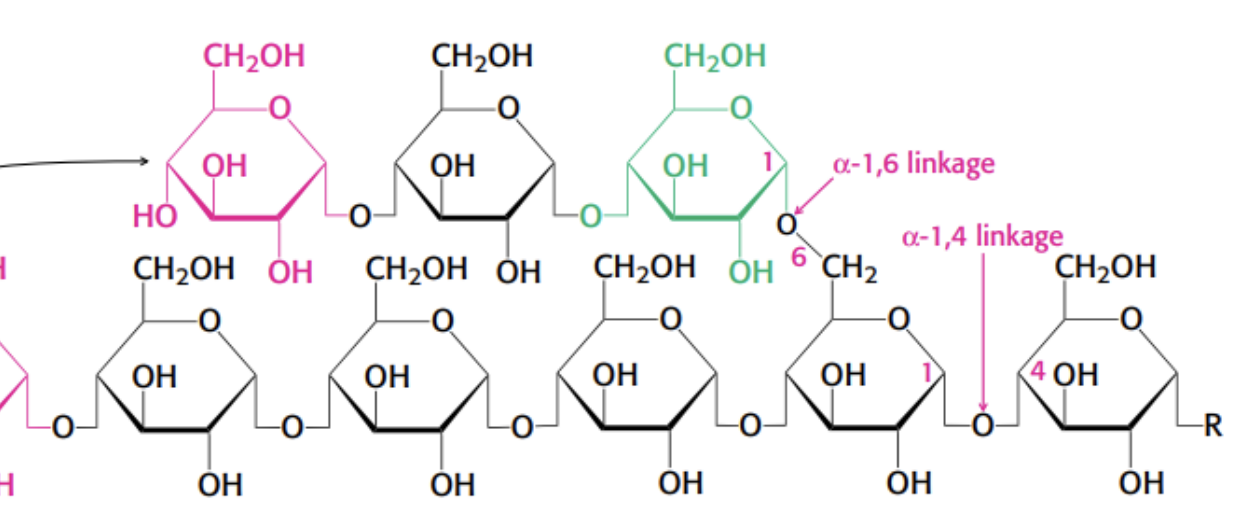
What is this arrow pointing to on a glycogen structure?
nonreducing ends