biology ffs

0.0(0)
Studied by 0 people
call kaiCall Kai
learnLearn
examPractice Test
spaced repetitionSpaced Repetition
heart puzzleMatch
flashcardsFlashcards
GameKnowt Play
Card Sorting

1/225

encourage image

There's no tags or description

Looks like no tags are added yet.

226 Terms
1
New cards
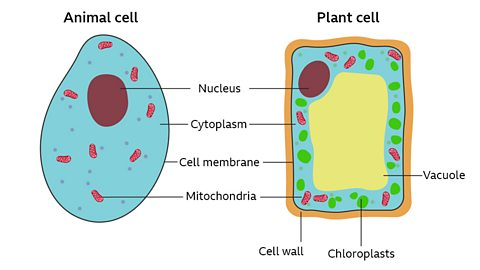
1. ⭐ What should you label on plant and animal cell diagrams
Plant cell labels: cell wall, cell membrane, cytoplasm, nucleus, mitochondria, ribosomes, chloroplasts and large permanent vacuole. Animal cell labels: cell membrane, cytoplasm, nucleus, mitochondria and ribosomes.
2
New cards

Label an Artery & Vein

Like this

<p>Like this</p>
3
New cards

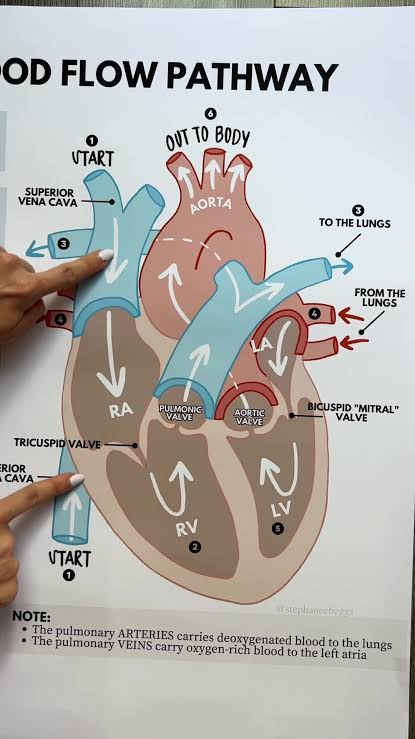
Label the Heart

knowt flashcard image
4
New cards
2. What is the function of each organelle in plant and animal cells
Nucleus contains DNA; membrane controls movement; mitochondria release energy in respiration; ribosomes make proteins. Cellulose wall supports; chloroplast chlorophyll absorbs light; vacuole contains cell sap and helps keep the cell firm.
5
New cards
3. How is a model cell similar to and different from a real cell
A model represents selected structures, but may not show true scale, complexity, movement, interactions or every organelle. Real cells are three-dimensional and their structures interact.
6
New cards
4. How do prokaryotic and eukaryotic cells differ
Prokaryotic cells are smaller and have no nucleus; their circular DNA is free in the cytoplasm and they may have plasmids. Eukaryotic cells have a nucleus and membrane-bound organelles.
7
New cards

Label A Bacterial Cell

Like this

<p>Like this</p>
8
New cards

Label a red blood cell.

Like this.

<p>Like this.</p>
9
New cards

Label a White Blood Cell.

knowt flashcard image
10
New cards

Label a Platelet.

Like this

<p>Like this</p>
11
New cards

Label a Plasma Cell.

Like this.

<p>Like this.</p>
12
New cards
6. How should you obtain results independently while noting major hazards
Follow the method, use apparatus correctly, identify hazards and precautions, control variables, measure carefully, record results clearly and repeat when appropriate.
13
New cards
7. ⭐ What parts of a light microscope should you label, and what are they for
Label the eyepiece lens, body tube, objective lenses, stage, light source, diaphragm, arm, base and coarse- and fine-focus knobs. Eyepiece/objectives magnify; the stage holds the slide; the light source illuminates; the diaphragm controls light; the focus knobs sharpen the image.
14
New cards

⭐ What parts of an electron microscope should you label, and what are they for

An electron microscope should be labeled with its electron gun, electromagnetic lenses (condenser, objective, projector), specimen stage, fluorescent screen, and vacuum system. These components generate a tightly focused electron beam, pass it through or across a sample in an air-free chamber, and project the magnified data onto a digital detector or viewing screen.

<p><span><strong>An electron microscope should be labeled with its electron gun, electromagnetic lenses (condenser, objective, projector), specimen stage, fluorescent screen, and vacuum system.</strong></span> These components generate a tightly focused electron beam, pass it through or across a sample in an air-free chamber, and project the magnified data onto a digital detector or viewing screen.</p>
15
New cards
8. Why are stains used to view cells
Many cell structures are transparent. A stain increases contrast so structures and their boundaries are easier to see.
16
New cards
9. ⭐ What rules should you follow when drawing a cell, and how do you calculate magnification
Draw with clear single lines, no shading, correct proportions and straight label lines. Magnification = image size ÷ actual size. Convert both measurements to the same units first.
17
New cards
10. How has electron microscopy improved understanding of cells
Its much higher resolution reveals smaller sub-cellular structures and finer detail that a light microscope cannot distinguish.
18
New cards
11. What advantages does an electron microscope have over a light microscope
It has higher magnification and resolution, so smaller structures can be seen as separate details. Electron microscopes require a vacuum and cannot observe living specimens.
19
New cards
12. How do you compare microscope resolution limits in standard form
Convert both values to the same units, divide the light-microscope resolution limit by the electron-microscope limit, then express the ratio in standard form.
20
New cards

How do temperature and pH affect enzyme activity?

Increasing temperature increases the rate until the optimum temperature is reached. Above the optimum, the enzyme’s active site changes shape, so the substrate no longer fits properly. Extreme pH can also denature an enzyme.

21
New cards
13. ⭐ What are the three parts you should label on a DNA nucleotide
Label the phosphate group, deoxyribose sugar and nitrogen-containing base (A, T, C or G).
22
New cards

How do you test food samples for biological molecules?

Reducing sugars: add Benedict’s solution and heat in a water bath. Blue changes to green, yellow, orange or brick-red. Starch: add iodine; orange-brown turns blue-black. Protein: add Biuret reagent; blue turns lilac or purple. Lipids: add ethanol, then water; a cloudy white emulsion indicates lipids.
23
New cards
14. What is the role of a gene
A gene is a section of DNA with a particular base sequence that provides instructions for a protein and can influence a characteristic.
24
New cards
15. How do you manipulate experimental apparatus appropriately and independently
Choose suitable apparatus, assemble and use it correctly, take measurements at suitable precision, control variables, follow the method and observe safety precautions.
25
New cards
16. What is the structure of an enzyme
An enzyme is a protein folded into a specific three-dimensional shape. Its active site has a shape complementary to its substrate.
26
New cards
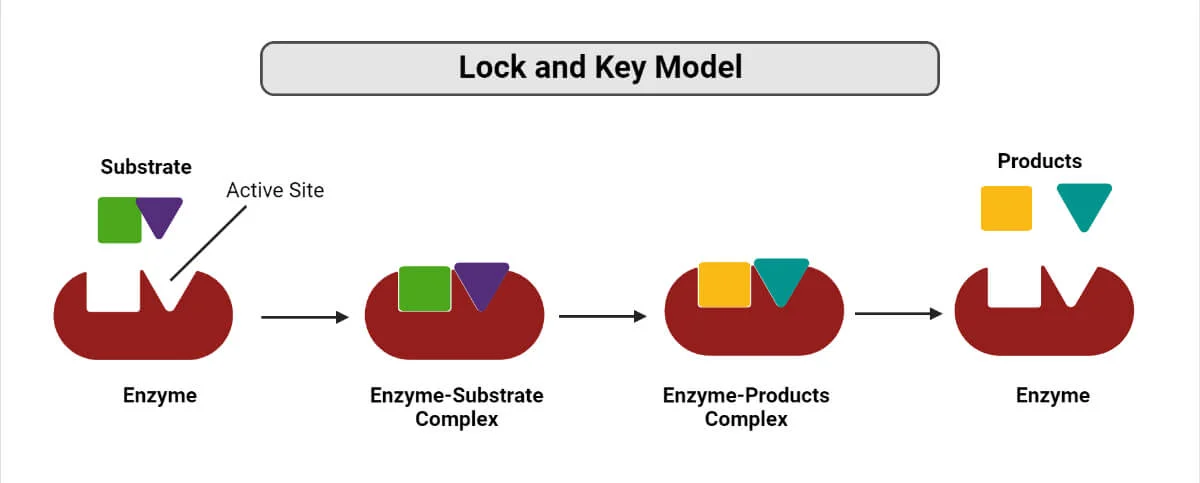
17. How does an enzyme work
Substrate binds to the active site → enzyme–substrate complex forms → reaction occurs → products leave; the enzyme remains unchanged and can be reused.
27
New cards
18. ⭐ What structures and stages should you label in a diagram of enzyme action
Know the stages: the substrate binds to the enzyme active site, an enzyme-substrate complex forms, the reaction occurs, and products leave. Label the enzyme, active site, substrate, complex and products. The enzyme remains unchanged.
28
New cards
19. How are carbohydrates, proteins and lipids built and broken down
Condensation joins smaller molecules and releases water; hydrolysis uses water to split molecules. Sugars build carbohydrates, amino acids build proteins, and glycerol plus fatty acids build many lipids.
29
New cards
20. How are metabolic rate, activity and food intake related
Activity usually raises energy demand and metabolic rate, so more energy-containing food may be required. Needs also vary with age, body size, growth and other factors.
30
New cards
21. How do you use scientific vocabulary and definitions accurately
Use precise biological terms, define them correctly, link each term to the process being explained, and write clear sentences with correct spelling and meaning.
31
New cards
22. What is the balanced chemical equation for aerobic respiration
Glucose + oxygen → carbon dioxide + water. Symbol equation: C₆H₁₂O₆ + 6O₂ → 6CO₂ + 6H₂O.
32
New cards
23. Why is aerobic respiration an exothermic reaction
It transfers energy from glucose to the cell for biological processes; some energy is released to the surroundings as heat.
33
New cards
24. How do you plot a suitable line graph from experimental data
Put the independent variable on the x-axis and dependent variable on the y-axis; label axes with units, choose an even sensible scale, plot points accurately and draw an appropriate line.
34
New cards
25. What is the word equation for anaerobic respiration in muscles
Glucose → lactic acid. It releases less energy per glucose molecule than aerobic respiration.
35
New cards
26. How does anaerobic respiration differ in muscles and yeast
Muscle cells produce lactic acid. Yeast produces ethanol and carbon dioxide (fermentation). Both release energy without oxygen.
36
New cards
27. How do you collect accurate measurements independently in an experiment
Use appropriate calibrated equipment, read scales consistently, keep control variables constant, repeat measurements, calculate a mean and identify anomalies.
37
New cards
28. What is the balanced equation for photosynthesis
Carbon dioxide + water → glucose + oxygen, using light energy. Symbol equation: 6CO₂ + 6H₂O → C₆H₁₂O₆ + 6O₂.
38
New cards
29. Why is photosynthesis an endothermic reaction
It absorbs light energy from the surroundings and transfers it into chemical energy stored in glucose.
39
New cards
30. ⭐ What should you label in a diagram of photosynthesis
Labels to know: leaf, chloroplasts/chlorophyll, light energy, carbon dioxide entering, water supplied from roots, glucose produced and oxygen released.
40
New cards
31. How do you use the starch test to investigate whether photosynthesis occurred
Destarch plant in darkness; expose it to the test condition; remove leaf; boil leaf in water; heat it in ethanol in a hot-water bath; rinse; add iodine. Blue-black shows starch; orange-brown shows no starch.
41
New cards
32. How do you carry out a photosynthesis practical safely
Follow the method and wear eye protection as directed. Take care with hot water and glassware. Heat ethanol in a water bath, away from a naked flame, because ethanol is flammable.
42
New cards
33. How do you draw a valid conclusion from photosynthesis observations
Describe the results, compare the relevant conditions and use evidence to decide whether starch was made, explaining what this suggests about photosynthesis.
43
New cards
34. How do light intensity, carbon dioxide concentration and temperature affect photosynthesis rate
Increasing light intensity or CO₂ increases rate until another factor limits it. Increasing temperature raises rate to an optimum; above it, enzymes lose function and the rate falls.
44
New cards
35. How do you calculate a class mean
Add all valid measurements together and divide by the number of valid measurements. Exclude a result only when there is a justified reason to treat it as anomalous.
45
New cards
36. How can practical difficulties affect repeatability
Changing light, temperature, timing, plant condition, leaks or inconsistent measurements can make repeated results differ. Standardise conditions and repeat trials.
46
New cards
37. What is a limiting factor in photosynthesis
A factor in shortest supply that restricts the rate, such as light intensity, carbon dioxide concentration or temperature.
47
New cards

How do you investigate the effect of solution concentration on potato mass?

Cut equal-sized potato pieces and measure their initial masses. Place them in different solution concentrations for the same time. Remove and blot them consistently, then measure their final masses. Calculate percentage change in mass: (change in mass ÷ initial mass) × 100.

48
New cards
38. How do you calculate relative light intensity using the inverse-square law
Relative light intensity ∝ 1 ÷ distance². If distance doubles, relative intensity becomes one quarter; if distance triples, it becomes one ninth.
49
New cards
39. How can light intensity, carbon dioxide and temperature be controlled in an experiment
Change one independent variable at a time. Keep the others constant, for example by fixing lamp distance, controlling CO₂ supply and using a monitored water bath.
50
New cards
40. What is diffusion
The net movement of particles from a region of higher concentration to a region of lower concentration, down a concentration gradient.
51
New cards
41. Which factors affect the rate of diffusion
A steeper concentration gradient, higher temperature, larger surface area and shorter diffusion distance generally increase the rate.
52
New cards
42. How would you explain diffusion in a structured scientific paragraph
Define diffusion, state that particles move down a concentration gradient, then explain how the relevant temperature, gradient, surface-area or distance factor affects the rate.
53
New cards
43. What is osmosis
The net movement of water molecules through a partially permeable membrane from a more dilute solution (higher water concentration) to a more concentrated solution (lower water concentration).
54
New cards
44. Why does osmosis occur
A difference in water concentration exists across a partially permeable membrane, so water moves down its concentration gradient until the difference is reduced.
55
New cards
45. Which key terms must appear in an accurate explanation of osmosis
Water molecules; partially permeable membrane; net movement; from higher water concentration to lower water concentration.
56
New cards
46. Give examples of active transport in plants and animals.
Root hair cells absorb mineral ions from dilute soil. Cells in the small intestine can absorb nutrients against a concentration gradient.

Root hair cells absorb mineral ions from dilute soil. Cells in the small intestine can absorb nutrients against a concentration gradient.

57
New cards
47. How does active transport move substances
Carrier proteins move substances against a concentration gradient, from lower to higher concentration, using energy released by respiration.
58
New cards
48. How do you calculate percentage change in mass
Percentage change = (change in mass ÷ starting mass) × 100. Change = final mass − starting mass. A negative answer means mass decreased.
59
New cards

Should you ignore this?

Yes

60
New cards
50. What happens during mitosis
The replicated chromosomes are separated into two nuclei, each receiving the same genetic information and chromosome number as the original nucleus.
61
New cards
51. How can a model represent the key events of the cell cycle
The cell cycle includes growth, DNA replication, chromosome separation during mitosis and cell division. It ends with two genetically identical daughter cells.
62
New cards
52. Why do cells become differentiated
They become specialised, developing structures that enable them to perform particular functions within an organism.
63
New cards
53. How are specialised cells adapted to their functions
Sperm: tail and many mitochondria. Root hair: large surface area. Red blood cell: haemoglobin, biconcave shape and no nucleus. Palisade cell: many chloroplasts.
64
New cards
54. How do you summarise information about a specialised cell accurately
Name the cell, identify a structural feature and link it directly to the function it helps the cell perform.
65
New cards

Describe the structure of an artery and explain how it is adapted to its function.

Arteries have thick walls containing muscle and elastic fibres, and a relatively narrow lumen. The thick walls withstand high blood pressure. Elastic fibres stretch and recoil, helping maintain blood flow.

66
New cards

Describe the structure of a vein and explain how it is adapted to its function.

Veins have thinner walls with less muscle and elastic tissue, a wider lumen and valves. Blood travels at relatively low pressure. The wide lumen reduces resistance, and valves prevent backflow.

67
New cards

Draw and label cross-sections of an artery, vein and capillary.

knowt flashcard image
68
New cards
55. What is the difference between a stem cell and a differentiated cell
A stem cell can divide and develop into different specialised cell types. A differentiated cell has a specialised structure and function.
69
New cards
56. What is the function of stem cells
They divide to make more cells and can differentiate into specialised cells for growth, development and tissue repair.
70
New cards
57. How should scientific sources support an opinion about stem cells
Use relevant, reliable scientific sources; distinguish established treatments from experimental research; compare benefits, risks and ethical concerns; support claims with evidence.
71
New cards
58. ⭐ What should you label on an alveolus, and what makes its exchange surface efficient
For an alveolus, label the thin wall, moist lining, large surface area and surrounding capillary. Efficient exchange surfaces have a large area, a thin barrier and good blood supply or ventilation to maintain a concentration gradient.
72
New cards
59. How do you calculate surface-area-to-volume ratio
Calculate surface area and volume, then divide surface area by volume. Example: SA = 24 cm² and volume = 8 cm³, so SA:V = 3:1.
73
New cards
60. How do you interpret observations and data from an exchange-surface experiment
Identify the pattern, quote supporting measurements, compare conditions and use biological ideas such as surface-area-to-volume ratio and diffusion distance to explain it.
74
New cards
61. ⭐ What should you label in a double-circulatory-system diagram
Know the structures and vessels: body, vena cava, right side of the heart, pulmonary artery, lungs, pulmonary vein, left side of the heart and aorta. Pulmonary circulation is heart to lungs and back; systemic circulation is heart to body and back.
75
New cards
62. What is the structure of the blood and the main blood vessels
Blood contains plasma, red blood cells, white blood cells and platelets. Arteries have thick muscular elastic walls; veins have thinner walls and valves; capillaries have walls one cell thick.
76
New cards
63. How would you describe the circulatory system using precise vocabulary
Use pulmonary circulation (heart to lungs and back) and systemic circulation (heart to body and back). Explain how the two circuits keep oxygenated and deoxygenated blood separate.
77
New cards
64. What are the functions of the main components of blood
Red blood cells carry oxygen using haemoglobin; white blood cells defend against pathogens; platelets help blood clot; plasma transports cells, nutrients, hormones, CO₂ and urea.
78
New cards
65. ⭐ What is the route of blood through the heart, and which parts should you label
Blood travels from the body through the vena cava to the right atrium, right ventricle and pulmonary artery, then to the lungs. It returns through the pulmonary vein to the left atrium and left ventricle, then leaves through the aorta. Valves prevent backflow; the left ventricle has a thicker wall.
79
New cards
66. What are the functions of the main heart structures
Atria receive blood; ventricles pump blood out; valves prevent backflow; the septum separates the two sides; coronary arteries supply the heart muscle with oxygenated blood.
80
New cards
67. What is the function and distribution of xylem
Xylem forms vessels distributed through roots, stems and leaves. It transports water and mineral ions mainly from roots to leaves and its lignified walls provide support.
81
New cards
68. What is the function and distribution of phloem
Phloem forms sieve tubes with companion cells in plant vascular tissue. It translocates dissolved sugars from sources, such as leaves, to sinks, such as roots, fruits and growing tissues.
82
New cards
69. ⭐ What should you label on a plant transport diagram
Label roots, stem, leaves, xylem and phloem. Xylem transports water and mineral ions mainly upwards from roots to leaves. Phloem translocates dissolved sugars from sources, such as leaves, to sinks, such as roots, fruits and growing tissues.
83
New cards
70. What is the transpiration stream
Water evaporates from leaf cells and diffuses out through stomata. This creates a pull that moves water up the xylem from roots to leaves.
84
New cards
71. ⭐ What parts should you label on a stoma
Label the two guard cells, stomatal pore and surrounding epidermal cells. Guard cells change shape to open or close the pore.
85
New cards
72. How do you explain observations from transpiration experiments
Relate changes in water uptake or bubble movement to transpiration rate. Explain the effects of light, temperature, humidity and air movement, while considering other possible causes.
86
New cards
73. How do environmental factors affect transpiration rate
More light, higher temperature and greater air movement usually increase transpiration. Higher humidity usually decreases it by reducing the water-vapour concentration gradient.
87
New cards
74. ⭐ What parts should you label on a potometer diagram
Label the leafy shoot, airtight seal/connector, water-filled capillary tube, air bubble, scale and water reservoir. Cut the shoot underwater, assemble the apparatus airtight and measure bubble movement over time. A potometer measures water uptake, not water loss directly.
88
New cards
75. What limitations of a potometer can affect results
It measures water uptake, not water loss directly. Leaks, air bubbles, changes in shoot condition and uncontrolled environmental factors affect accuracy; repeat trials and standardise conditions.
89
New cards

How does the skin control body temperature?

When too hot, sweating increases heat loss and skin blood vessels widen (vasodilation). When too cold, sweating decreases, skin blood vessels narrow (vasoconstriction), and muscles shiver to generate heat.

90
New cards
76. ⭐ What structures should you label along a nervous response pathway
Know the pathway: a stimulus is detected by a receptor; a sensory neurone carries the impulse to the central nervous system (CNS); a relay neurone passes it on; a motor neurone carries it to an effector (muscle or gland); the effector produces a response.
91
New cards

How do the kidneys help maintain water balance?

The kidneys adjust how much water is reabsorbed into the blood, changing urine volume and concentration. Dehydration generally produces a smaller volume of more concentrated urine.

92
New cards
77. ⭐ How do you identify the three neurone types and their labelled structures
Sensory neurone: carries impulses from receptor to CNS. Relay neurone: connects neurones within the CNS. Motor neurone: carries impulses from CNS to an effector. Where shown, label the cell body, nucleus, dendrites, axon, myelin sheath and nerve endings.
93
New cards

What is the role of ADH in controlling water balance?

ADH increases the permeability of kidney collecting ducts to water, causing more water to be reabsorbed into the blood. More ADH produces less, more concentrated urine; less ADH produces more, dilute urine.

94
New cards
78. Why can measured reaction times differ
Reaction time varies with attention, anticipation, fatigue, practice, distractions and individual differences. The impulse travels from receptor through neurones and CNS to an effector; measurement method also affects results.
95
New cards
79. ⭐ What parts should you label in a reflex arc
Know the order: stimulus, receptor, sensory neurone, relay neurone in the spinal cord/CNS, motor neurone, effector and rapid response. Label each part and the direction of the nerve impulse.
96
New cards
80. How does a reflex action differ from a voluntary action
A reflex is rapid, automatic and reduces harm; it is coordinated through a reflex pathway. A voluntary action is consciously chosen and involves conscious processing by the brain.
97
New cards
81. How could you investigate the iris reflex safely
Compare pupil size in bright and dim light, changing one condition at a time. Do not shine intense light into eyes. Use consistent distances and timing, record observations and repeat.
98
New cards
82. How does a hormone reach its target organ
An endocrine gland releases a hormone into the bloodstream. It travels in blood and affects target cells with receptors for that hormone.
99
New cards
83. What are the roles of insulin, glucagon, adrenaline and thyroxine
Insulin lowers blood glucose; glucagon raises it. Adrenaline prepares the body for fight or flight. Thyroxine helps control metabolic rate and supports growth and development.
100
New cards
84. How should you describe hormone action accurately
Name the gland, hormone, target organ or cells, and effect. Explain the sequence clearly and use terms such as bloodstream, receptor and target cell.