Evolution Review
 Call Kai
 Learn
 Practice Test
 Spaced Repetition
 Match
 Flashcards
 Knowt Play
1/47

Earn XP
Description and Tags
idk..
48 Terms
evolution
the process by which species change over time through genetic variation and natural selection
most recent common ancestor
the most recent individual from which all species in a particular group are directly descended.
Fossils (Evolution)
preserved remains or traces of organisms from the past, providing evidence of historical life forms and their evolution.
Biogeography (Evolution)
the study of the distribution of species and ecosystems across geographic locations, providing insight into the effects of evolution and environmental factors on biodiversity.
Homology: Comparative Anatomy (Evolution)
the study of similarities in structure and anatomy among different species, indicating common ancestry and evolutionary relationships.
Homology: Embryology (Evolution)
the study of similarities in embryonic development among different species, revealing insights into common descent and evolutionary processes.
Homology: Molecular Genetics
the study of similarities in DNA sequences and molecular structures across different species, providing evidence for shared ancestry and evolutionary relationships.
Lamarckianism
an evolutionary theory suggesting that organisms can pass on traits acquired during their lifetime to their offspring, leading to gradual evolutionary change
Why is Lamarckianism wrong?
B/c implies that organisms change within a lifetime, not generations
Artificial selection
human-driven process in which humans identify traits in animals, and choose which animals with said traits will reproduce to pass said traits onto offspring
Overproduction (Natural Selection)
Species producing more offspring than the environment can support
Variation (Natural Selection)
Differences in physical traits, behaviors, or genes among individuals within a population
Heritability (Natural Selection)
Dictates how well advantageous traits pass from parents to offspring
Selective Pressure (Natural Selection)
external environmental factors that make certain physical traits or behavioral traits more factorable for survival and reproduction
Differential reproductive success
some individuals in a population produce more surviving offspring than others
Adaptation
any heritable trait or behavior that helps an organism survive or reproduce in its environment
Evolutionary Fitness
an organism’s ability to pass its genetic material on to the next generation
Role of randomness (Natural Selection)
genetic mutations (changes in DNA), genetic drift (natural disasters, bottlenecks, or a chance with a predator)
Individuals….
don’t evolve or adapt; populations
Adaptations…
aren’t perfect solutions
Genes (Evolution)
Evolution in genetic level —> change in allele frequencies within a population
Gene Pool
Complete set of all alleles for all genes in an given population
Allele
Specific variant of a gene
Gene
basic unit of DNA
Allele frequency
The proportion or rate at which alleles appear in a gene pool
Microevolution
Evolutionary change measured by tracking shifts in allele frequencies
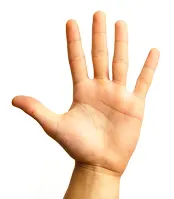
Pinky (Microevolution)
Genetic Drift — (Small populations allow chance events to drastically alter gene pools)
Bottleneck (Genetic Drift)
sharp reduction in a population’s size caused by natural disasters, disease, or human actions
Founder effect (Genetic Drift)
a small group of individuals break away from a larger parent population to establish a new, isolated colony

Middle Finger (Microevolution)
Mutation — change in an organism’s DNA sequence that serves as the ultimate source of new genetic variation in a population

Ring Finger (Microevolution)
Nonrandom mating — individuals (more or less likely) to mate based on genotypes or geographic proximity

Pointer Finger (Microevolution)
Gene flow — transfer of genetic material from one population to another (animals migrate from one area to another w/ introducing new alleles and traits into the receiving population)

Thumb (microevolution)
Natural selection — the process where organisms with traits better suited to their environment tend to survive, reproduce, and pass those advantageous genetic characteristics on to future generations
Convergent Evolution
the independent evolution of similar traits or structures in unrelated lineages as an adaptation to similar environmental pressures
Speciation
evolutionary process by which ancestral population splits into two or more genetically distinct, reproductively isolated descendant species
Bacteria
Single-celled prokaryotes —> cell nucleus
Archaea
Single-celled prokaryotes lacking peptidoglycan (rigid mesh-like polymer made of sugars) —> no cell nucleus
Eukarya
Organisms with complex cells containing a true nucleus and membrane-bound organelles (animals, plants, fungi)
Prokaryotes
Microscopic, single-celled organisms that do not have a cell nucleus
Cell nucleus
organelle found in eukaryotic cells that stores DNA
Eukaryotes
organisms whose cells contain a distinct nucleus and other compartments called organelles
Animals
sits within the Eukaryota domain (lack cell walls and reproduce sexually)
Plants
sits within the Eukaryota domain (containing cells walls and use the process of photosynthesis to make their own food)
Fungi
sits within the Eukaryota domain (rigid cell walls and use digestion and absorption to get food)
vitamin D-folate hypothesis
human skin color (evolution) —> balancing act to protect circulating folate from destruction while allowing enough ultraviolet radiation to synthesize vitamin D3
Skin Color (Evolution)
Early human ancestors (developed dark skin —> natural sunscreen)
High levels of UV radiation break down folate (less folate —> severe health outcomes)
Human populations went out of Africa (heavy pigmentation blocked radiation)
Lighter skin —> let UV come into to synthesize vitamin D3
Folate (Trade-off)
Fragile & light-sensitive (degrades rapidly under intense UVA & UVB exposure -—> darker skin shields it)
Vitamin D3 (Trade-off)
Requires absorption of UV rays, with lighter skin reducing the barrier in low-light environments