Defence mechanisms, phagocytosis
 Call Kai
 Learn
Learn Practice Test
 Spaced Repetition
 Match
Match Flashcards
 Knowt Play
1/7

There's no tags or description
Looks like no tags are added yet.
Name | Mastery | Learn | Test | Matching | Spaced | Call with Kai | Chat |
|---|
No analytics yet
Send a link to your students to track their progress
8 Terms
What are the two types of defence mechanism?
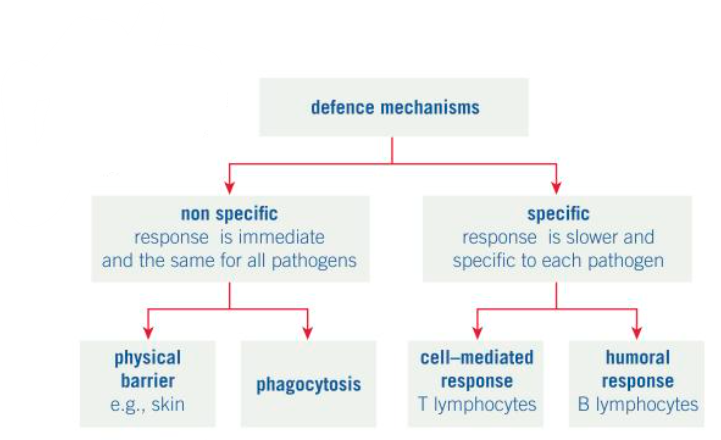
What are the two types of defense mechanisms including white blood cells?
cell mediated responses involving T lymphocytes
humoral responses involving B lymphocytes
What can the immune system identify?
Each type of cell has specific molecules on its surface that identify it. These molecules include proteins and enable the immune system to identify:
pathogens
non-self materials e.g. cells from other organisms of the same species
toxins
abnormal body cells e.g. cancer cells
Why is there a time lag between exposure to the pathogen and the body defending itself?
lots of types of lymphocyte so not many of each
when infection occurs, lymphocyte with complementory proteins is stimulated to divide to build up numbers
takes time for number of lymphocytes to be enough to destroy infection
How do lymphocytes recognise self body cells?
in fetus, lymphocytes constantly colliding with other body cells pretty exclusively
some lymphocytes will have receptors that fit the body’s own cells
these lymphocytes either die or are suppressed
only remaining lymphocytes are those that might fit foreign material
in adults, lymphocytes in bone marrow initially only encounter self-antigens
any lymphocytes showing an immune response to self-antigens undergo cell death (apoptosis)
only lymphocytes left will respond to non-self antigens
What is the definition of an antigen?
a toxin or other foreign substance which indices an immune response in the body, especially the production of antibodies
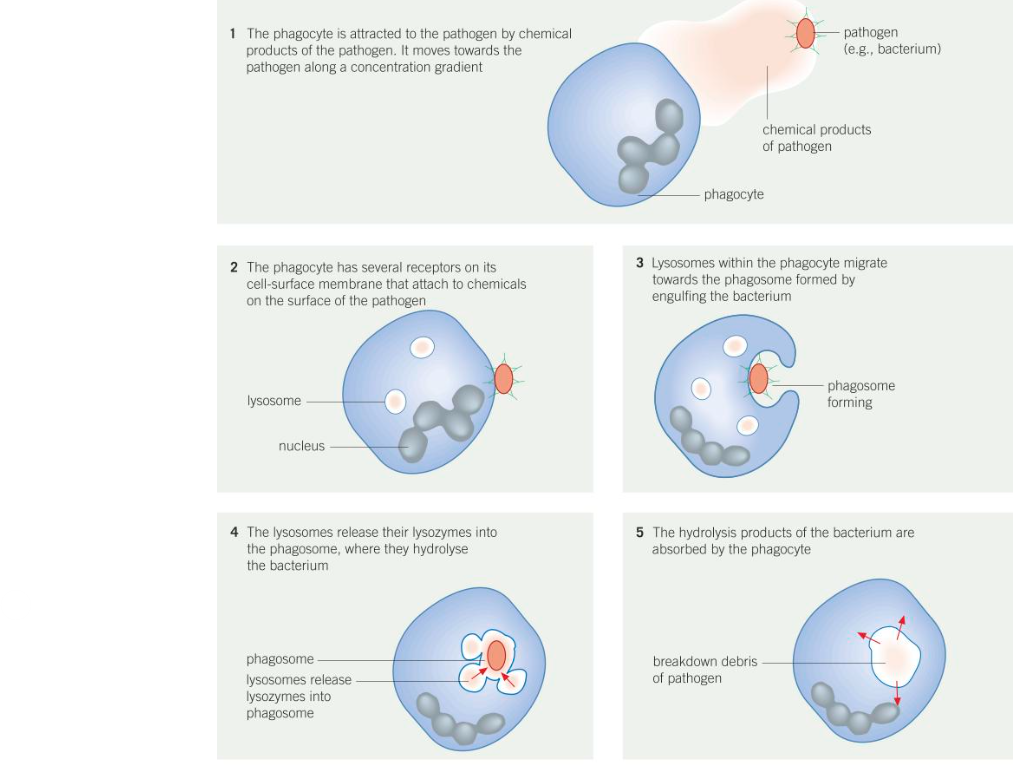
What is phagocytosis?
The process in which bacteria is engulfed by white blood cells to defend against pathogens entering the body
What is the process of phagosytosis
pathogen moves towards phagocyte down chemical concentration gradient
phagocyte receptors on cell-surface membrane attach to chemicals on the surface of the pathogen
pathogen is engulfed into a phagosome
lysosomes move towards phagosome and fuse with it
lysosomes release hydrolytic enzymes lysozymes which destroy bacteria by hydrolysis