Chapter 5 : Raw Material; Heritable Variation Among individuals (Ecology)
 Call Kai
 Learn
 Practice Test
 Spaced Repetition
 Match
 Flashcards
 Knowt Play
1/59

There's no tags or description
Looks like no tags are added yet.
Name | Mastery | Learn | Test | Matching | Spaced | Call with Kai | Chat |
|---|
No analytics yet
Send a link to your students to track their progress
60 Terms
Mitosis and meiosis
Asexual reproduction for cells ; Sexual reproduction for producing gametes and sperm and egg
Gene expression
the process by which genetic instructions stored in DNA are converted into functional products (proteins). Transcription-Translation-Protein
Genome
the complete set of genetic material-consisting of DNA or RNA in an organism
Genotype
the genetic makeup of an individual
Phenotype
an observable, measurable characteristic as the manifestation of the genotype of an organism. cumulative product of an inherited genotype and multitude of environmental influences —-evolutionary biologists study variation in expression of phenotypic traits
Evolution Molecules
Human body is made up of 30 trillion cells; each made up with millions of molecules.
3 types of molecules that are important
Proteins
DNA
RNA
Backgrounds tips - Genetic information
-genetic change can be random or selective
-evolution is based on genetic change in pop.
-rate of evolution depends on genetic variation
-pop. w/higher genetic diversity and larger effective sizes have greater evolutionary capacity to respond to ecological stressors.
Background - proteins
-Since 1965, w/ discovery of protein isozymes; we have known that there is a very high amount of genetic variation in nature w/in populations
-Since 1985-1990 we have known that evolution can be very fast when strong selection acts on large populations with lots of genetic variation
“Where does the genetic change come from?”
DNA replication errors (Cell replication/Failed repair), environmental mutations (Radiation/Chemicals), inherited or new transmission (Recombination/ Somatic/ De Novo/ Inherited)
“What maintains genetic variation”
-Mutation
-Gene flow (Migration)
-Temporally or Spatially Varying Selection
-Selection
Gene
a segment of DNA that code particular proteins which in turn affect particular traits
Gene pool
consists of alleles from all of the genes of every individual in a population
-most sexually reproducing population contain a lot of genetic variation
Quantitative characters
those that vary along a continuum within a population; due to polygenic inheritance in which the additive effects of two or more genes influence a single phenotypic character.
EX) height of wildflower population includes short/tall plants and everything in between.
Discrete characters
determined by a single locus w/different alleles w/ distinct impacts on the phenotype. EX) flower
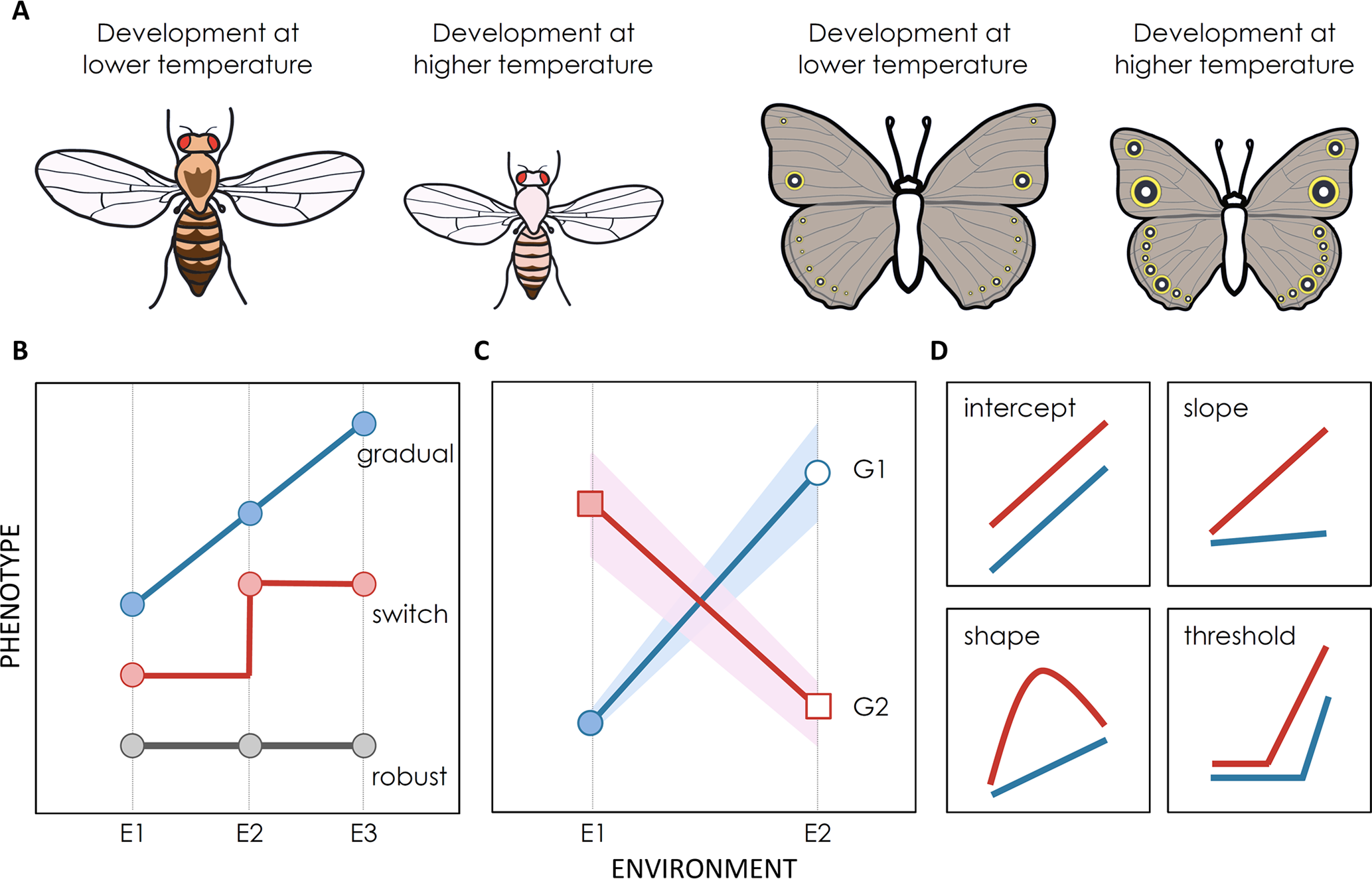
Polyphenic trait
single genotype produces multiple phenotypes depending on environment
Quantitative traits have continuous distribution of phenotypic variation
Francis Galton (1822-1911) Quantitative traits are influenced by multiple genes; generate a normal distribution
(3) Primary sources of genetic variation
Mutation
Geneflow
Sexual Reproduction
DNA
-polymer sugar and phosphate backbone
replication allows genetic information to be copied so that cells can divided into 2 genetically identical cells.
-an organisms DNA affects how it looks, behaves, physiology— all aspects of its life.
—> a change in an organisms DNA can cause changes in all its aspects of life
mutation
-change in DNA sequence
-esentially a change in the order of nucleotides (A,C,G,T) that makeup DNA
-Mutations occur during replication (DNA) in forms of errors or exposure to damaging agents.
-Every mitosis event is a potential mutation event; rare occasion
-about 120,000 mistakes every time cell divides
-some are repaired during replication (proofreading)
-some are repaired after replication (mismatch repair)
Somatic Mutation
Mutation that affects the daughter cells in the body of organisms; produced by affected cells and affect the phenotype of the individual .
-Somatic mutation are not passed down to offspring
-Not all mutations are important to evolution
EX) Skin Cancer (humans), Flower petal color (in flowers)
Mutation - Germline Mutation
the only mutations that matter for the evolution of life’s diversity—- are passed to offspring.
These occur in reproductive cells like eggs and sperm and are called Germaine mutations; are uncommon
-the effects of a deleterious mutation on one chromosome can be masked by the homologous chromosome..
-mutations in genes other than those coding for proteins may affect gene expression; can also affect the direction of evolution
Exception — vegetative reproduction
somatic mutations can be directly inherited by offspring.
Mutation Rates - # of mutations per cell division
-”Too low”: cannot adapt to the changes in the environment
-”Too high”: all the good information (things that have worked well in the past) will be destroyed
-Intermediate rate: optimal
—tend to evolve faster in asexual organisms
Benefits:
-increase in genetic variation (primary source of new traits)
-increase in acquiring beneficial mutations that can lead to adaptation in changing environment
Costs:
-high mutation rates may increase the accumulation of harmful mutations
—→ even mutation rates 10-10 can accumulate quickly ; particularly bacteria. Antibiotic resistance is important public health problem.
—> mutations in pop. of bacteria provide ample genetic variation which adapt (or respond) to natural selection pressured imposed by antibacterial drugs.
Sexual reproduction : genetic change
Sex: can introduce new gene combinations into a pop. Genetic shuffling is another important source is genetic variation
-Recombination has a huge impact on variation.
-Sexual pop. have a much higher potential to be variable than asexual reproductions
Recombination
-generates variation
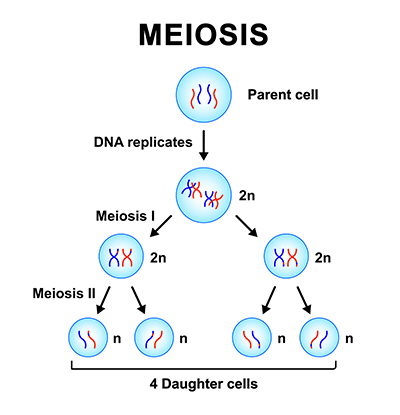
Independent assortment
ensures novel combinations of alleles.

Ploidy
# of copies of unique chromosomes in a cell
-chromosomes can occur alone in duplicates or even higher combinations , triploid and tetraploid
Diploid
chromosomes come in homologous pairs; contain 2 completes sets of chromosomes (2n). Haploid- only one (n)
Human genome
split into 23 chromosomes. Female (XX) Male (XY)
Gene flow
-genetic variations also come from movement of genetic material from one population to another. (migration).
Chromosomes
thread like structure made of protein and a single molecule of DNA that carries in an organisms genetic information.
Spontaneous mutations
depurination- where a purine base is lost from a nucleotide through hydrolysis even though the sugar phosphate backbone is unaltered, can occur w/o an explicit insult from the environment
—>if uncorrected by DNA repair enzymes. depuration may result in the incorporation of incorrect base during the next round of replication
Mutations caused by environment
DNA interacting with/environment causing detrimental mutations.
—EX) UV light can induce mutations in skin cells. Cytosine base hydrated causing it to mispair with adenine during the next round of replication. Researchers found high rate of C-T fingerprint type mutation in genes associated with/ basal cell carcinoma; form of skin cancer.
Mutations caused by chemicals
Oxidizing agents, known as free radicals, can chemically modify nucleotides in ways that alter base-pairing
EX) Benzo(a)pyrene, aka carcinogen, and a component of cigarette smoke, demonstrates induced lesions at guanine bases in the tumor suppressor gene P53 at codons 157,248,273
—These codons are the major mutational hot spots seen in clinical studies of human lung cancers
Point mutation
a single base changes from one nucleotide to another
EX) on any average day; 37 trillion cells in your body will acquire trillions of point mutations.

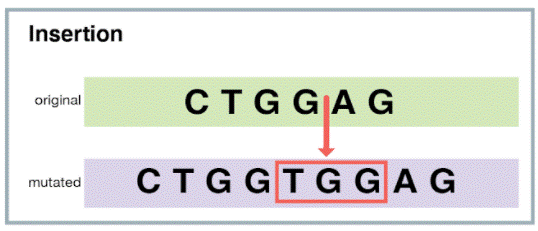
Insertion mutation
a segment of DNA is inserted into the middle of an existing sequence
Deletion mutation
a segment of DNA maybe deleted accidentally

Duplication mutation
A segment of DNA is copied a second time

Inversion mutation
a segment of DNA is flipped around and inserted back

Frameshift mutation
deletion or insertion in a DNA sequence that shifts the way the sequence is read ( amino acids)

Chromosome fusion
Two chromosomes are joined together as one.

Genome duplication
entire genome is duplicated leading to increased ploidy
The rates of mutation types and the # of affected bases per type are variable
A) Number of mutations per birth (# of mutations per birth)
—point mutations, small inserts are the most common
—large mutations rarely occur/ gain or loss of chromosomes
TAKEAWAY: small mutations generally happen more frequently than large mutations
B) Number of base pairs of mutations per birth contributed by each category (# of mutations per bases)
—Large duplications/ gain or loss of chromosomes is more common
—point mutations and small insertions rarely occur
TAKEAWAY: large mutations are less common. but can affect much more DNA
Recombination generates variation
exchange of genetic material between paired chromosomes during meiosis
—meiosis generates considerable genetic variation.
-Recombination- SWAPPING DNA pieces (prophase 1) / Independent assortment SHUFFLING whole chromosomes (metaphase 1)
Independent assortment
ensure novel combination of alleles/ shuffling whole chromosomes.
Genetic polymorphism = genetic differences w/in a population
the presence of 2 or more genetically determined forms (alleles/ traits) within a population
-individuals have different genetic variations
-These variations are inherited
-Helps maintain genetic diversity / Phenotypic variation
-may be susceptible to disease thru gene expression and function
EX) Human ABO blood types. (A,B,AB,and O)
Polyphenism
when organisms w/in the same genotype develop different phenotypes because of environmental conditions
environment causes different forms from the same genotype
EX) seasonal butterfly wing patterns
Quantitative trait
continuous, measurable variation EX) heightQ
Qualitative trait
distinct categories EX) blood type
Gregor medel and Peas
-Mendel noticed Heterozygote peas produced offspring w/in a 3:1 ratio.
-wrinkled texture of peas are determined by 1 gene- wrinkled or not
-more genes that influence a trait, the more possible genotypes exist, and thus more possible phenotypes
Polyphenic trait
single genotype produces multiple phenotypes depending on environment
EX) seasonal polypheniesm of Araschnia levant wing colouration

Polyphenism
The capacity of a single genotype to exhibit a variety of phenotypes and the responsiveness of the underlying development process to the environment (temp, nutrition,pop.density)
Environmental influences on gene expression— Phenotypic plasticity
changes in phenotype produced by a single genotype in different environments
-tailors organism to environment.
EX) Low light— small roots/large leaves High light — Large roots/small leaves
Francis Galton (1822-1911)
Quantitive traits are influenced by multiple genes; generate a normal distribution—- have continuous distribution of phenotypic variation
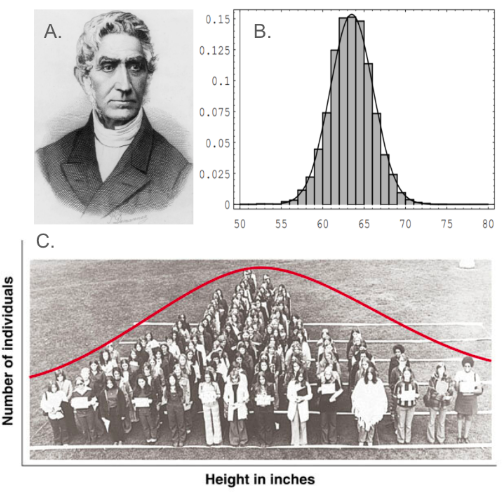
Human height has a strong GENETIC component
Monozygotic twins- tend to be similar in height
Dizygotic twins- do not show strong tendency of height
What maintains genetic
-Mutation
introduce new traits
natural selection eliminates most of the reproductively unsuccessful traits -Reproduction
sexual recombination of alleles can also account for much of the genetic diversity in sexual species
Coding region mutations
substitution
Insertion
Deletion
Duplication
-alter the product of the gene and its function/activity
Cis-regulatory region mutations
1.substitution
deletion
Insertion
Duplication alters the binding affinity of promoters, activators, repressors
-alters the timing/location/level of expression of a gene and developmental/environmental context in which a gene is expressed
Trans-regulatory region mutation
1.Mutation to coding regions of trans-acting factor
2.Mutation to cis- or tans-regulatory regions of trans acting factors
Alters the binding affinity and thus activity of a promoter,activator,suppressor. Where, when, or to what extent inhibitory,activating,or other trans acting regulatory factors are expressed
Physiological pathways (ex) hormones)
Mutations altering where, when, or how much an endocrine signal is produced
—alters the timing, location, or level of expression of the gene and the developmental, environmental contact in which the gene is expressed