Unit 1 Part 1 Exam
 Call Kai
 Learn
 Practice Test
 Spaced Repetition
 Match
 Flashcards
 Knowt Play
1/76

There's no tags or description
Looks like no tags are added yet.
77 Terms
[Unit 1.1] Nature v.s Nurture
Nature: How you were born; genetics & biology
Nurture: How are you raised; your environment

[Unit 1.1] Natural Selection
Inherited traits needed for survival and reproduction in a particular environment will most likely be passed on to succeeding generations.
OR “survival of the fittest”

[Unit 1.1] Evolutionary Perspective
Studying evolution of behavior and the mind, musing principles from natural selection.
[Unit 1.2] Central Nervous System
Location: Spine & Brain
Function: The Body’s decision maker
[Unit 1.2] Peripheral Nervous System
Function: The sensory and motor neurons that connect to the central nervous system (CNS) to the rest of the body

[Unit 1.2] Sensory (Afferent) Neurons function
Function: Carry INCOMING information from body’s tissues and sensory receptors to the brain and spinal cord.
[Unit 1.2] Motor Efferent Neurons function
Function: Carry OUTCOMING information from the brain and spinal cord to the muscles and glands.
[Unit 1.2] Motor Efferent Neurons function
Function: Carry OUTCOMING information from the brain and spinal cord to the muscles and glands.
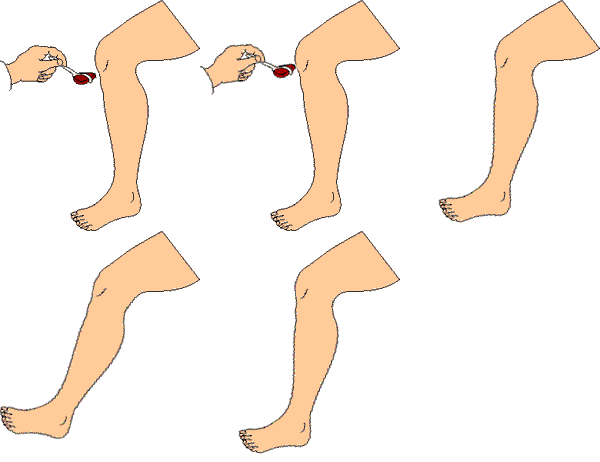
[Unit 1.2] Reflex
A simple, automatic response to a sensory stimulus.
Example: Knee-Jerk reflex in a DR office
[Unit 1.2] Sympathetic Nervous System’s function
Function: Arouses and expends energy (“fight or flight”)
[Unit 1.2] Parasympathetic Nervous Systems Function
Function: Calms the body and conserves its energy
[Unit 1.2] Somatic Nervous Systems functions
Function: Enables voluntary control of our muscles
[Unit 1.2] Autonomic Nervous Systems Functions
Functions: Controls glands and internal organs muscles
[Unit 1.3a] Neurons vs. Glial Cells
Neurons: Send messages
Glial Cells: SUPPORT neurons. Give them nutrition and remove waste.
[Unit 1.3a] Neurotransmission; Action Potential
Messages that travel across the synapse and bind to receptor sites on receiving neurons.

[Unit 1.3a] Resting Potential
Definition: Neuron at rest has slightly negative charge
Charge: -70mV
[Unit 1.3a] All Or Nothing Principle
Neuron will fire 100% or not at all, 0%
[Unit 1.3a] Threshold
Definition: The level of stimulation required to trigger a neural impulse
Charge: -55mV
[Unit 1.3a] Refractory Period
Short resting period in between neural firings
[Unit 1.3a] Depolarization
The loss of inside/ outside charge
[Unit 1.3a] Reuptake
A neurotransmitters reabsorption by sending neuron

[Unit 1.3a]

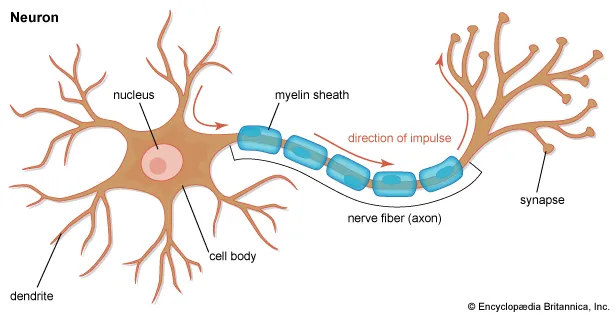
[Unit 1.3a] Dendrites
Function: Receive messages and send it to the Cell Body

[Unit 1.3a] Cell Body
Function: Contains the nucleus; cells life-support center

[Unit 1.3a] Axon
Function: Passes messages away from cell body to other neurons

[Unit 1.3a] Myelin Sheath
[Unit 1.3a] Encase the axon; helps speed up process

[Unit 1.3a] Excitatory Neurons vs. Inhibitory Neurons
Excitatory Neurons: DEPOLARIZE neurons and are MORE likely to fire
Inhibitory Neurons: HYPERPOLARIZE neurons and are LESS likely to fire
[Unit 1.3a] Acetylcholine
Neurotransmitter
Function: Enables muscle action, learning and memory.
Oversupply = Alzheimer’s Disease
[Unit 1.3a] Dopamine
Neurotransmitter
Function: Influence movement, attention, emotion, and mood.
Oversupply = schizophrenia
Undersupply = Parkinson’s Disease
[Unit 1.3a] Serotonin
Neurotransmitter
Function: Affects mood, hunger, sleep and awake cycles.
Undersupply = Depression
[Unit 1.3a] Norepinephrine
Neurotransmitter
Function: Help control alertness and arousal
Undersupply = Depress mood
[Unit 1.3a] GABA
Major inhibitory neurotransmitter
Undersupply = Seziure’s, tremors, and insomnia
[Unit 1.3a] Glutamate
Major excitatory neurotransmitter
Functions: Memory
Oversupply = migraines or seizures
[Unit 1.3a] Endorphins
Neurotransmitter
Function: Influence perception of pain and pleasure
[Unit 1.3a] Substance P
Neurotransmitter
Function: Involved in perception of pain
Oversupply = chronic pain
[Unit 1.3a] Multiple Sclerosis
Nerve Disorder: Immune system attacking myelin
Symptoms: Impaired vision and muscle movement.

[Unit 1.3a] Myasthenia Gravis
Nerve disorder: Antibodies block communication between nerves and voluntary muscles
Symptoms: Muscle weakness and fatigue
[Unit 1.3a] Adrenal Glands
Location: Organ that sits on top of each kidney
Function: Release hormones to control stress blood pressure and metabolism
Releases adrenaline

[Unit 1.3a] Hormones; Adrenaline
Hormones: Cheminxal messages from the endocrine glands
Adrenaline is produced by the adrenal glands
[Unit 1.3a] Endocrine System
Help you grow and develop
Sends hormones through the blood stream
[Unit 1.3b] Substance Use Disorder
A Psychological Disorder
Symptoms: Diminished control, social functioning, hazardous use, and drug action.
[Unit 1.3b] Agonists vs. Antagonists
Agonist: Icreases a neurotransmitters action
Antagonist: Blocks a neurotransmitters action
[Unit 1.3b] Depressants
Drugs that decrease neuron activity and slow body functions
Examples: Alcohol and Heroin

[Unit 1.3b] Stimulants
Drugs that increase neural activity and speed up body functions
Examples: Cocaine, caffeine, and nicotine

[Unit 1.3b] Hallucinogens
Drugs that distorts perceptions in the absence of sensory input
Example: Marijuana/ THC

[Unit 1.3b] Opioids
Depress neural activity and temporarily lessen pain and anxiety
[Unit 1.3b] Addiction, tolerance, and withdrawal
Addiction: Compulsive substance use (body becomes dependent)
Tolerance: Diminishing effect of drug use after repeated use
Withdrawal: Discomfort that comes with quitting a drugs. Cravings and pain.
[Unit 1.4a] Neuroplasticity
Brains ability to change and form new connections after neurons are damaged
[Unit 1.4a] EEG scan
What it is: Electrodes & wires placed on scalp. Record brains electric activity
What they show: Function of brain
When would you use it: Epilepsy and sleep disorders

[Unit 1.4a] PET scan
What it is: Tracks where a radioactive tracer goes while a person performs a task
What it shows: How the brain functions
When you would use it: To detect cancer or tumors

[Unit 1.4a] MRI
What is it: Person lies in a chamber with magnetic fields and radio waves.
What it shows: Brains structure
When you would use it: Find abnormalities in brain structure

[Unit 1.4a] fMRI
What it is: Measure blood flow to brain parts
What it shows: Brains structure
When you would use it: stroke disease patients
[Unit 1.4b] Corpus Callosum
Location: Between right and left side of the brain
Function: Connects left and right hemispheres so they can communicate

[Unit 1.4b] Brocas Area
Location: Left side of frontal lobe
Function: Help produce speech

[Unit 1.4b] Wernickes Area; Wernickes Aphasia
Location: Left side of temporal lobe
Function: Help make speech and written language understandable
Aphasia: Words are correct, but their structure does not.

[Unit 1.4b] Motor Cortex
Location: Frontal Lobe
Function: Control voluntary movements

[Unit 1.4b] Somatosensory Cortex
Location:Parietal lobes
Function: Proceds touch, temperature, pressure and pain.

[Unit 1.4b] Prefrontal Cortex
Location: Frontal lobe
Function: Planning, decision making, judgment, impulse control

[Unit 1.4b] Visual Cortex
Location: Occipital lobes
Function: Help process visual information

[Unit 1.4b] Auditory Cortex
Location: Temporal lobes
Function: Help process auditory information (pitch and loudness)
[Unit 1.4b] Frontal Lobes
Location: Front of the brain, behind forehead
Function: planning, decision making, voluntary movements, and personality

[Unit 1.4b] Parietal Lobes
Location: Top of brain
Function: Process sensory information

[Unit 1.4b] Occipital Lobes
Location: Back of head
Function: Process visual information

[Unit 1.4b] Temporal Lobes
Location: Side of brain, by temples
Function: Process auditory informstion

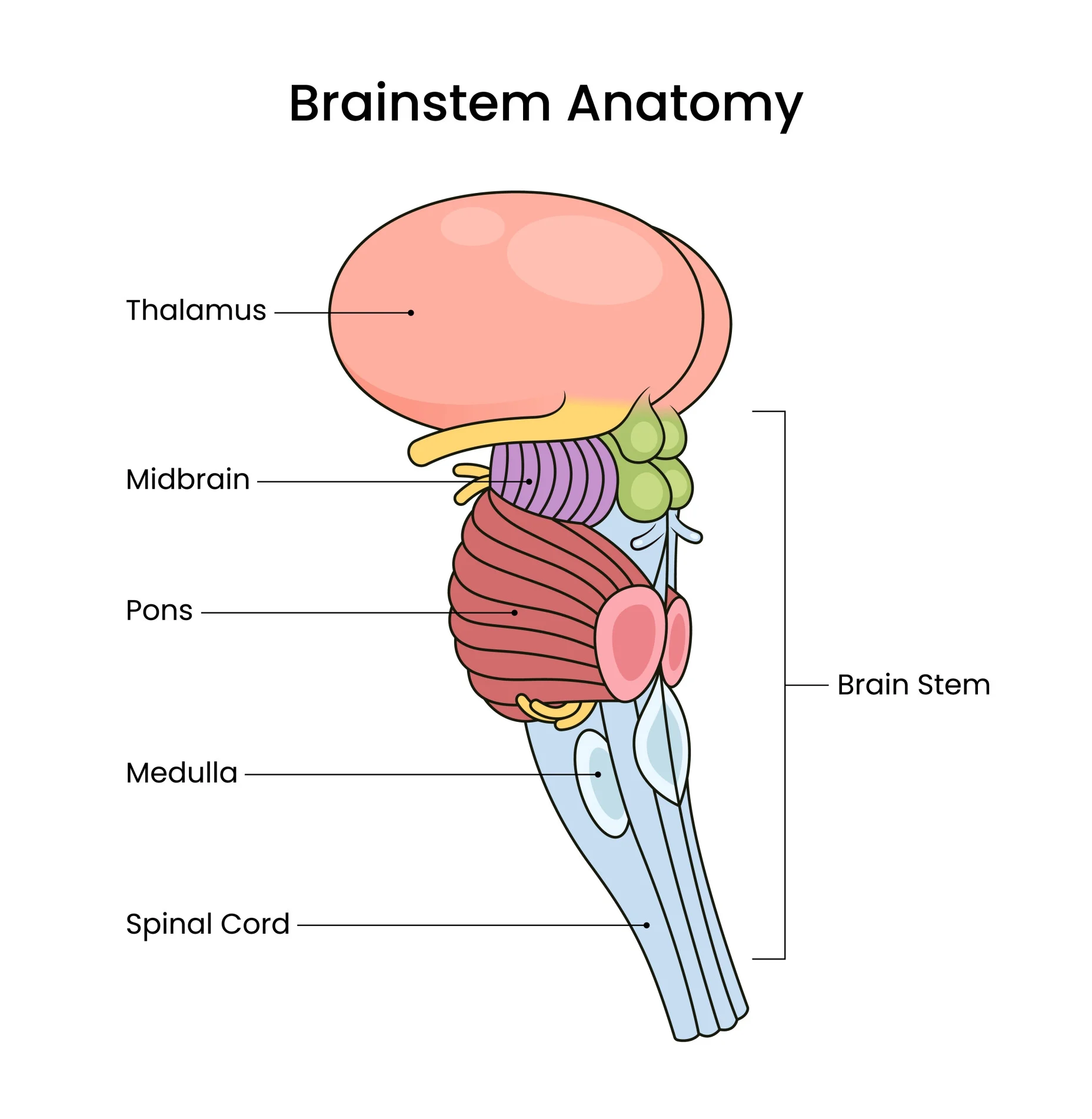
[Unit 1.4b] Medulla
Location: Brain Stem
Function: Heart rate and breathing

[Unit 1.4b] What does the brain stem contain?
Contains: Medulla and Pons
[Unit 1.4b] Pons
Location: Brain Stem
Function: Regulate sleep/ wake cycles also support breathing

[Unit 1.4b] What does the Limbic System contain?
Contains: Hypothalamus, Hippocampus, Amygdala, Thalamus and the Pituitary Gland
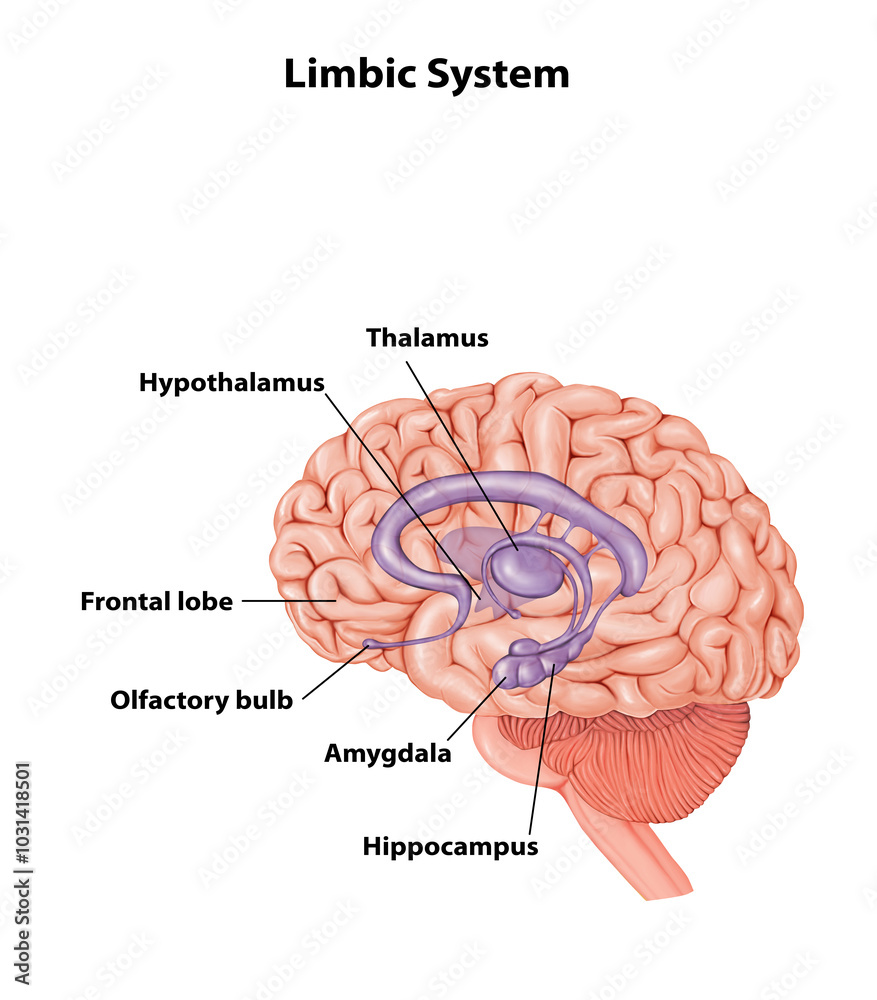
[Unit 1.4b] Hypothalamus
Location: Limbic System
Function: Make you feel hungry, thirsty and body temperature

[Unit 1.4b] Hippocampus
Location: Limbic System
Function: Form new memories

[Unit 1.4b] Amygdala
Location: Limbic System
Function: Process fear and aggression emotions

[Unit 1.4b] Thalamus
Location: Limbic System
Function: Relay sensory information to cerebral cortex (NOT SMELL)

[Unit 1.4b] Pituitary Gland
Location: Limbic System
Function: Release hormones to help you grow and develop and reproduce

[Unit 1.4b] Reticular Formation vs. Reticular Activating System
RF: Regulate alertness
RAS: Maintain wakefulness and attention
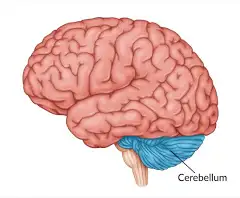
[Unit 1.4b] Cerebellum
Location: Beneath occipital lobes
Function: Coordinate balance, posture, and motor learning
[Unit 1.4c] Neurogenesis
process when new neurons are generated
[Unit 1.4c] Split Brain Research. Left vs. Right brain specializations
Left: Language, speech, math & control right body movements
Right: Face recognition, emotions & control left side of body