Acids and Bases Topic Skills
 Call Kai
 Learn
 Practice Test
 Spaced Repetition
 Match
 Flashcards
 Knowt Play
1/6

Earn XP
Description and Tags
Characteristics, pH scale, Indicators
7 Terms
Acid
A chemical compound containing hydrogen ions (H+) that donates H+ ions to the solution when dissolved in water, thus increasing the number of H+ ions in the solution. They have a pH less than 7, and the more H+, the more acidic the solution.
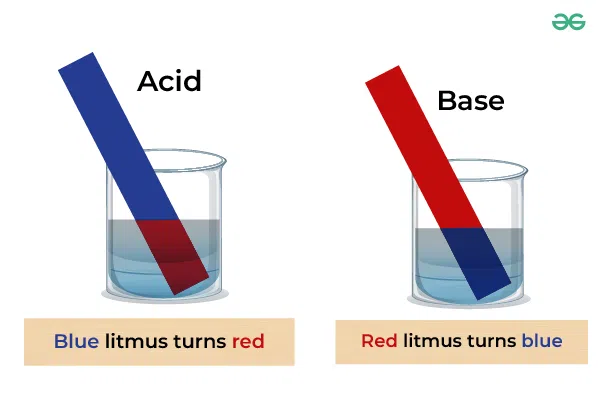
Properties: Soluble in water, tastes sour, feels rough on skin, corrosive, neutralizes bases, turns blue litmus paper red.
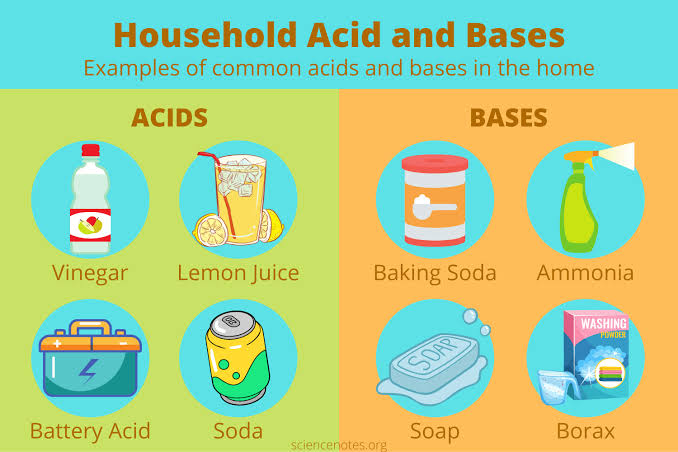
Examples: Hydrochloric acid (swimming pool acid), sulphuric acid, tartaric acid, lemon juice, vinegar, apple, tomato, and gastric acid.

Base
A chemical compound containing hydroxide ions (OH-)that accepts hydrogen ions (H+) when dissolved in water.
Properties: Neutralizes acids, feels slippery/soapy, turns red litmus paper blue. A soluble base is called an alkali.
Examples: Sodium hydroxide, magnesium hydroxide, bicarbonate of soda, washing powder, most soaps, bleach, ammonia, and drain cleaner / oven cleaner.
Neutral Substance
A substance with a pH of exactly 7 (e.g., pure water) that is neither acidic nor basic.
Test for Neutrality: Must show no colour change on both types of litmus paper (red stays red, blue stays blue).
Neutralisation
A chemical reaction between an acid and a base (or alkali) that cancel each other out to produce a neutral solution (pH 7), forming a salt and water.
the properties of each are canceled out by the other.
Word equation:
Acid+Base→Salt+Water
What happens chemically:
The hydrogen ions (H+) from the acid combine with the hydroxide ions (OH-) from the base to form neutral water (H2O).
The remaining ions combine to form a salt.

pH Scale
A numeric scale (from 0 to 14) that measures the relative acidity or alkalinity (strength of an acid or base) of a substance.
The pH scale measures the presence of hydrogen ions in a solution / how strong an acid or base is. pH stands for the "potential for hydrogen".
Acids have a pH of less than 7.
Strong acids have a pH range of 0–4.
Pure neutral water is pH 7.
Bases / Alkalis have a pH greater than 7 (above 7 to 14).
The lower the pH number, the more acidic; the higher the pH number, the more basic.

Universal Indicator
Paper strips or solution calibrated to a colour-coded chart linked to the pH scale, showing not only if a solution is an acid or base, but its relative strength.

Litmus Paper
An indicator strip that indicates acidity or alkalinity via a binary colour change (Red litmus turns blue in a base; Blue litmus turns red in an acid)