Chapter 10.3: Molecular Shape and Molecular Polarity
 Call Kai
 Learn
 Practice Test
 Spaced Repetition
 Match
 Flashcards
 Knowt Play
1/5

6 Terms
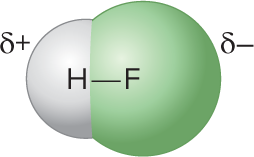
Bond polarity
This is created through an electronegativity difference between two specific atoms

Molecular polarity
This is affected by atom pair bond polarities and molecular shapes, creating an overall charge denoted by δ+ and δ- signs
Dipole moment (μ)
A measure of molecular polarity measured in debyes (D), equal to 3.34 × 10⁻³⁰ coulomb meters
Measures the overall charge over the distance present

Through the presence of similar, symmetrically arranged atoms with no lone pairs, or the presence of lone pair forces that cancel out.
How can a nonpolar molecule form with polar bonds?

When the atoms surrounding the central atom are nonuniform, or a lone pair is present.
When is a polar molecule formed?

Determine the electronegativity differences present in each bond and determine the forces that remain after canceling each bond out. Make sure to account for arrangement in isomers.
How do I determine molecular polarity?