Art History Exam 1
 Call Kai
 Learn
 Practice Test
 Spaced Repetition
 Match
 Flashcards
 Knowt Play
1/47

There's no tags or description
Looks like no tags are added yet.
48 Terms

Jan van Eyck, Double Portrait (Arnolfini Wedding) 1434

Jan van Eyck, Man in Red Turban (Self Portrait), 1433
Renaissance
founded by Giorgio Vasari; “rinascita”; “rebirth”
Maniera greca
flat, stylized paintings; the greek style

Cimabue, Virgin and Child Enthroned, c. 1280. exaugurated hieratic scale

Giotto, Virgin and Child Enthroned, 1305-10; characters point to mary. pale skin in comparison to Cimabue

Giotto, Lamentation in the Arena Chapel (Scrovengi Chapel) 1305-06; good sense of perspective, features putti (the little cherubs)
Buon Fresco
wet fresco
Fresco Secco
dry fresco

Perugino, The Delivery of Keys to Saint Peter, 1481
One Point Perspective (Linear Perspective)
orthogonal lines expand from the horizon line; first done by Filippo Brunelleschi

Filippo Brunelleschi, The Florence Cathedral, 1417-36; internal rib structure, 8-sided, likely inspired by middle eastern domes

Donatello, David, c. 1446-60; commissioned by the Medici family, made of bronze
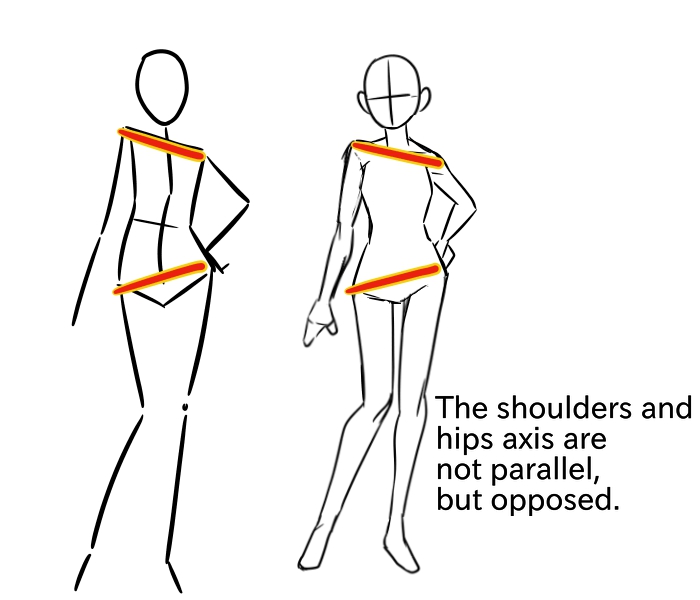
Contrapposto
the natural balance of body weight; the weight shift with one leg straightened while the other bends
Trompe L’oeil
to fool the eye
book of hours
a prayer book with the months of the year with illuminated manuscripts

Limbourg Brothers, February, Tres Riches Heures, 1411-16; shifting perspective, unelegant figures

Unicorn Tapestries, The Unicorn in Captivity, 1495-1505; thought to be a metaphor for someone willing to be captive, or maybe a Christ metaphor; identifiable flower that represent fertility and procreation

Robert Campin, Merode Altarpiece, 1425-28; home altarpiece, heavy fabric, insane attention to detail with tiny baby Christ, Joseph’s shop
Triptych
a piece that has three components
diptych
a piece that has two components
polyptych
a piece that has multiple components
intuitive perspective
a natural approximation of the perspective in the artists own perspective
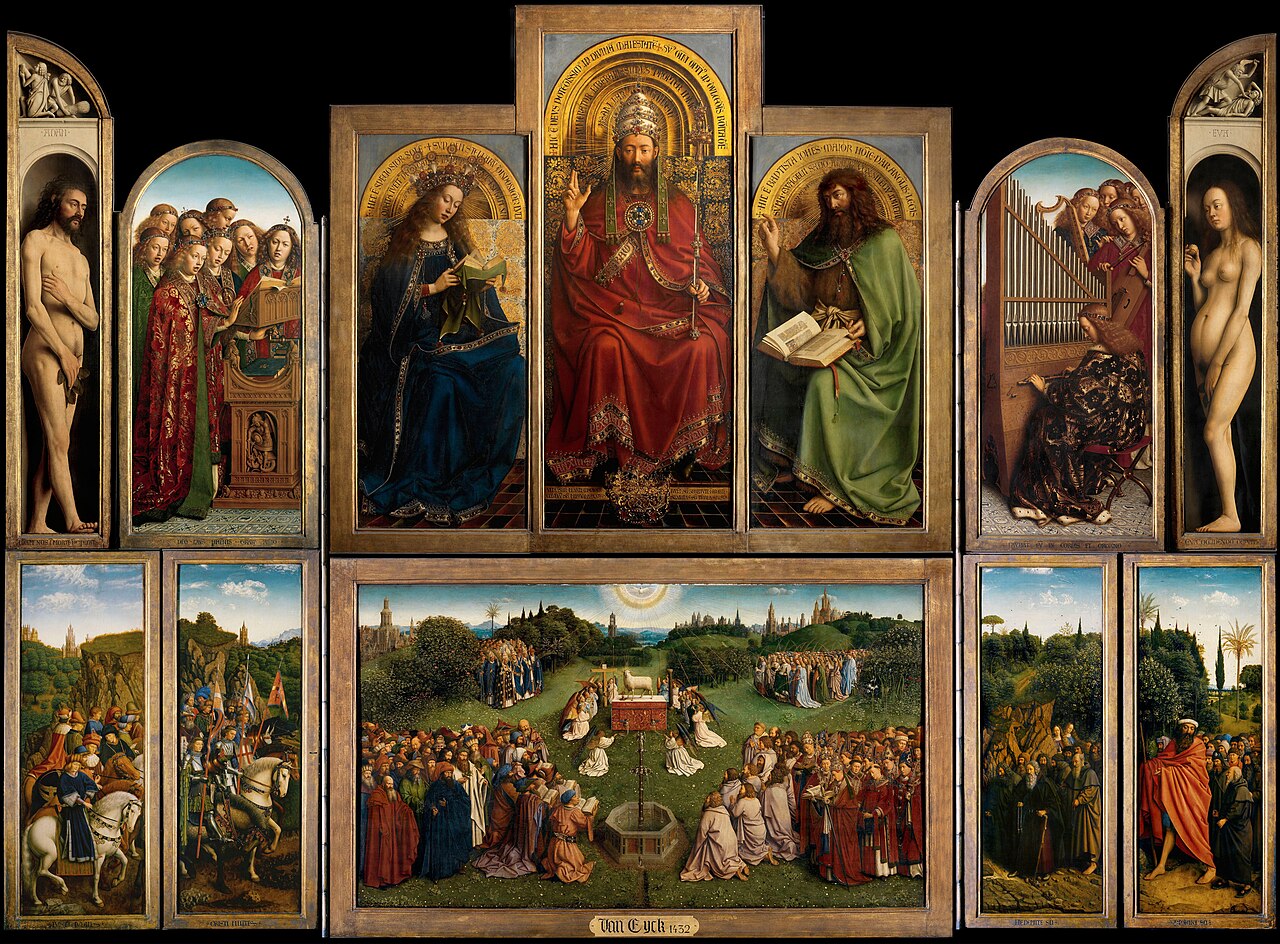
Jan and Hubert van Eyck, Ghent Altarpiece, 1432; god is painted in the center with oil paint
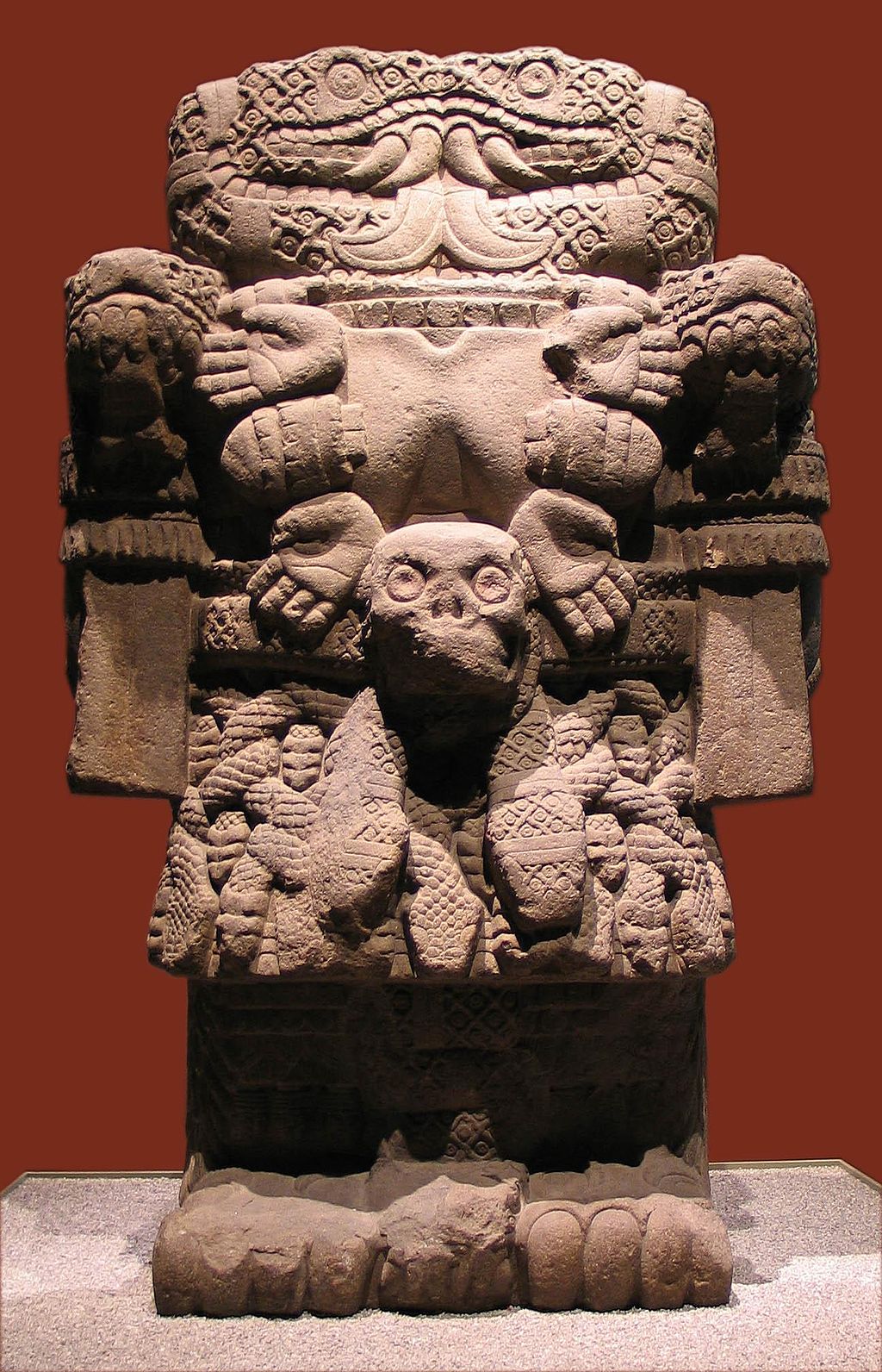
Coatlicue “She of the Serpent Skirt” 15th to early 16th century; diety of mexica, buried in Templo Mayor by the Spanish

Coyolxauhqui Stone, “Bells for Ears/ Earrings” c. 1469; previously brightly colored, thought that this was the resting place once bodies rolled down the Templo Mayor

Wampun Belt (1680s); made to have movement, not sit in a museum, made of quills, shells, and slowly glass beads

Bandolier or Shoulder Bag, Lenape People (Delaware) c. 1850; made to be worn and make noise, worn by men or horses

Hostseen Klah, Whirling Log Ceremony, c. 1925 (1867-1937); medicine man but also weaver, wanted to eternalize the patterns of sandpainting

Jeong Seon, Panoramic View of the Diamond Mountains, 1734; Korea, shows a shift from the ethereal to the more natural
Genre Scene
recurring figures, not anyone specific, but someone you would traditionally see
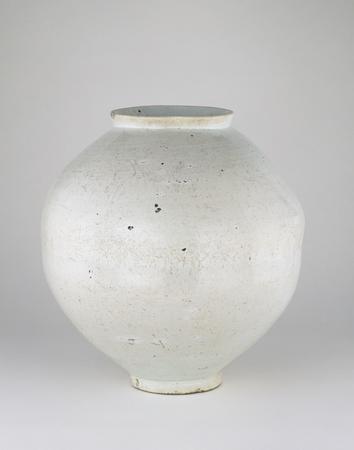
Glazed white porcelain “full moon” jar, 18th c.; mostly for aristocracy, represents restraint, order, simplicity, modesty

Katsushika Hokusai, Under the Wave of Kanagawa, c. 1830-32; wood block print, like a poster, from a collection of different views of Mt Fuji
Ukiyo-E
“Pictures of the floating world” became very popular in Japan, taking pleasure in the material world.

Utagawa Hiroshige, Mannen Bridge, Fukagawa (from One Hundred Famous Views of Edo), 1858

Pieter Bruegel the Elder, Return of the Hunters, 1565; note the lack of warm colors in the background
Ciaroscuro
“from clear to obscure”; from light to dark, intense shading, not lines, but shading creates volume

Leonardo da Vinci, Mona Lisa (Lisa del Giocondo), 1503; never published; fantastical backdrop; good example of chiaroscuro and sfumato
sfumato
smokiness, hazyness

Leonardo da Vinci, Vitruvian Man, c. 1490; Golden ratio of 1:.618 proportions; ideal proportions of architecture reflect ideal proportions in humans; perfection = beauty
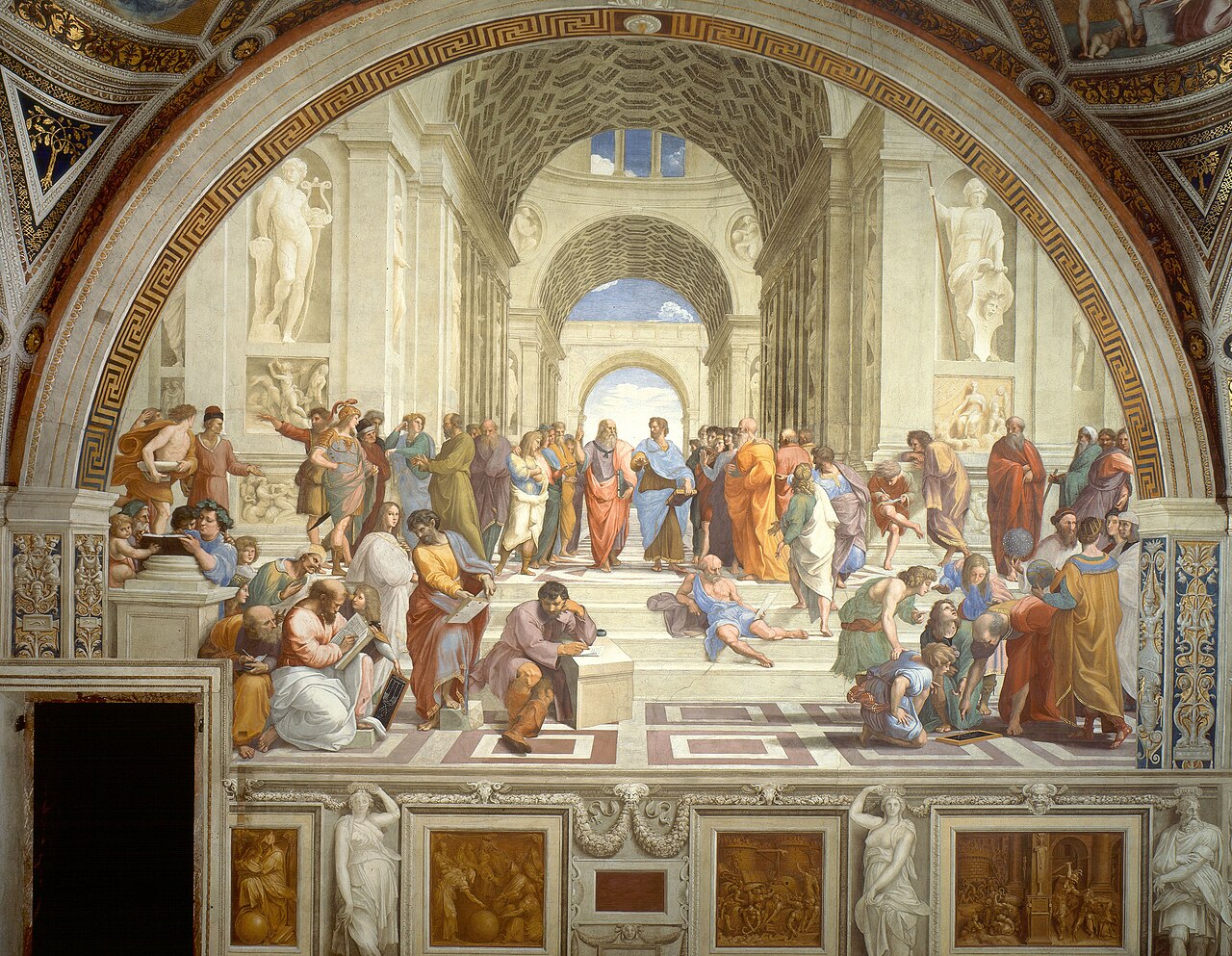
Raphael, School of Athens, c. 1510-11; strong linear perspective, Plato and Aristotle stand in the center; many other historical figures convers around them

Michelangelo, David, 1501-04; 17ft tall; built to sit outside the Florence cathedral, moved to a public space; classical and unclassical: unproportioned head and hands

Michelangelo, Sistine Chapel frescoes, 1508-1512; took up the rest of Michelangelo’s time; the voting for the new pope happens in this room; named after pope sixtis

Donato, Tempietto “little temple” 1502-10; technically a church, but more of a marker for where St Peter was thought to be crucified; borrows from Antiquity, Vitruvius, and ancient Greece
mannerism
artificialness
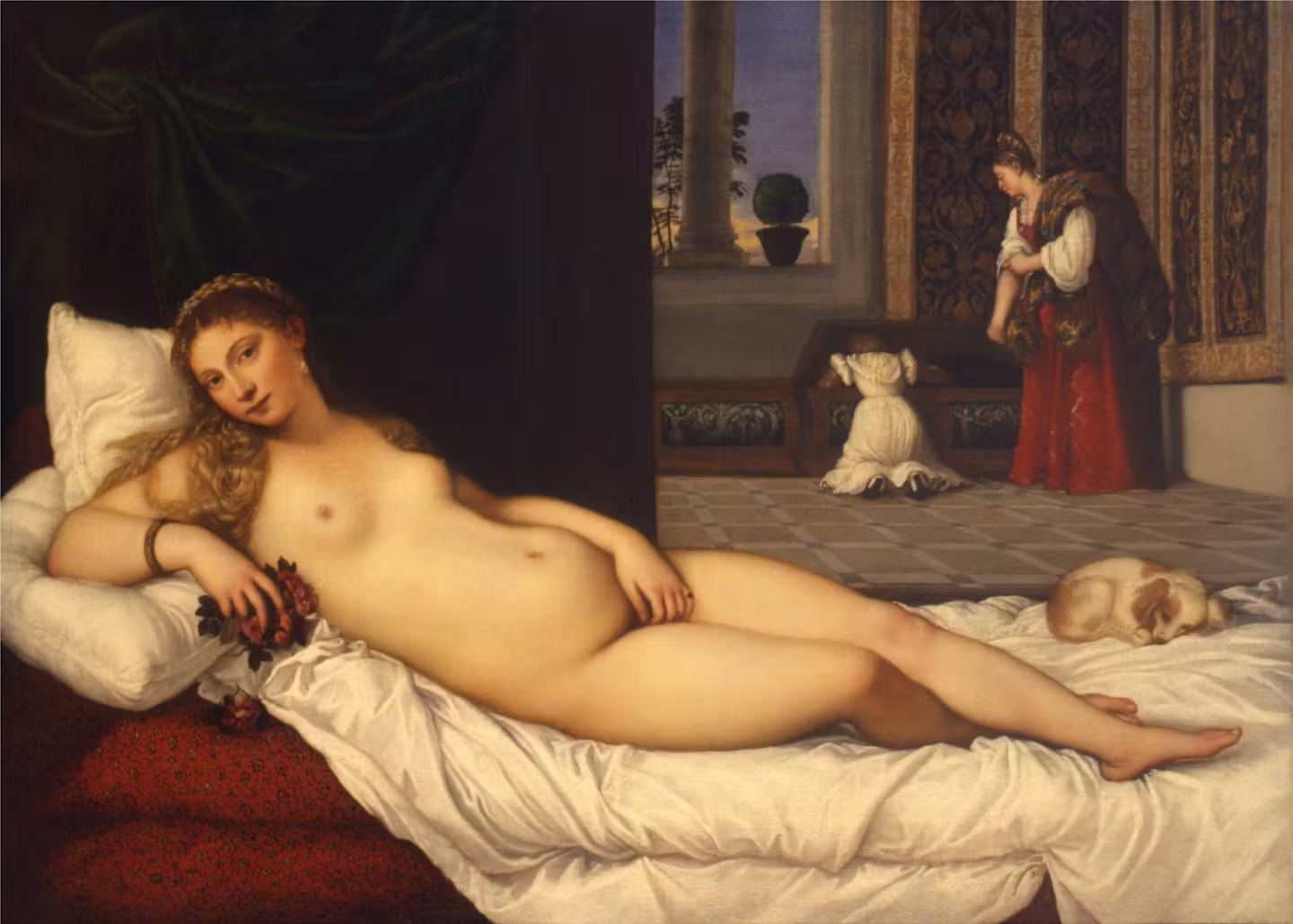
Titian, Venus of Urbino, c. 1538; part of a private collection; dog is there to represent status, trainability, softness; servants in the background to show status; replicating the stance of venus

Hieronymus Bosch, Garden of Earthly Delights, c. 1505-15

Matthais Grunewald, Issenheim Altarpiece, c. 1510-15; commissioned for St. Anthony’s Monastery in Isenheim, Germany; imitates Grotesque