Thoracic Limb Muscles OIA + Images
 Call Kai
 Learn
Learn Practice Test
 Spaced Repetition
 Match
Match Flashcards
 Knowt Play
1/92

There's no tags or description
Looks like no tags are added yet.
Name | Mastery | Learn | Test | Matching | Spaced | Call with Kai | Chat |
|---|
No analytics yet
Send a link to your students to track their progress
93 Terms
Superficial pectoral m.
• Red = descending pectoral m
• Green = transverse pectoral m
Origin: sternum
Insertion: crest of greater tubercle & cranial humeral border Action: adduct the thoracic limb

Deep (ascending) pectoral m.
Origin: sternum
Insertion: greater and lesser tubercles of humerus
Action: adduct thoracic limb and pull it caudally

Cutaneous Trunci m

Platysma M. (Cutaneous muscle of face and neck)
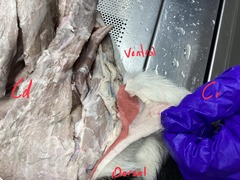
Brachiocephalicus m.
Origin: clavicular intersection
Insertion:
Green = cleidobrachialis: distal cranial humerus
Yellow/orange = cleidocephalicus:
• Pars mastoideus (Orange): mastoid process of temporal bone
• Pars cervicalis (Yellow): dorsal midline of neck
Action: pull thoracic limb cranially (and/or) depress and pull head and neck laterally

Clavicular Intersection
Highlighted Blue

Omotransversarius m.
Cranial-most attachment: wing of the atlas
Caudal-most attachment: distal spine of the scapula
Action: pull thoracic limb cranially (and/or) depress and pull head and neck laterally

Superficial Cervical Lymph Node (deep to omotransversarius m.)

Trapezius m.
Origin:
Red = cervical part: dorsal neck
Green = thoracic part: dorsal thorax
Insertion: spine of the scapula
Action: elevate the thoracic limb

Rhomboideus m.
Origin:
Green = rhomboideus thoracis: dorsal thorax
Yellow = rhomboideus cervicis: dorsal neck
Red = rhomboideus capitis: nuchal crest of occipital bone
Insertion: dorsal border of scapula and/or scapular cartilage
Action: elevate the thoracic limb

Serratus ventralis m.
Origin:
Red = serratus ventralis cervicis: cervical vertebrae
Green = serratus ventralis thoracis: thoracic wall (ribs)
Insertion: serrated face of scapula
Action: support and/or elevate the trunk

Latissimus dorsi m.
Origin: thoracolumbar fascia
Insertion: teres major tuberosity
Action: draw the thoracic limb caudally, flex or extend the humeral joint

Sternocephalicus m.
Origin: sternum
Insertion:
Green = mastoid part: mastoid process of temporal bone
Red = occipital part: occipital bone
Action: depress head and neck; draw head and neck laterally

Sternohyoideus m.
Origin: sternum
Insertion: basihyoid bone
Action: pull tongue and larynx caudally

Sternothyroideus m.
Origin: cranial aspect of sternum or ribcage
Insertion: thyroid cartilage
Action: pull tongue and larynx caudally

Deltoideus m.
Origin:
Green = Scapular Part: spine of scapula
Red = Acromial Part: acromion
Insertion: deltoid tuberosity of humerus
Action: flex the humeral joint

Supraspinatus m.
Origin: supraspinous fossa of the scapula
Insertion: greater tubercle of the humerus
Action: extend the humeral joint

Infraspinatus m.
Origin: infraspinous fossa of the scapula
Insertion: greater tubercle of the humerus
Action: flex humeral joint (varies); abduct limb at humeral joint

Teres minor m.
Origin: caudal border of scapula
Insertion: teres minor tuberosity of the humerus
Action: flex the humeral joint

Subscapularis m.
Origin: subscapular fossa of scapula
Insertion: lesser tubercle of humerus
Action: adduct limb at humeral joint, extend humeral joint

Teres major m. (parallels the caudal border of the scapula)
Origin: caudal border of scapula
Insertion: teres major tuberosity of humerus
Action: flex the humeral joint

Coracobrachialis m.
Origin: coracoid process of scapula
Insertion: crest of the lesser tubercle of the humerus
Action: adduct limb at shoulder, extend humeral joint

Biceps brachii m. (only one head in domestic mammals)
Origin: supraglenoid tubercle
Insertion: radial and ulnar tuberosities
Action: flex the cubital joint and extend the humeral joint

Brachialis m.
Origin: brachial groove of humerus
Insertion: ulnar and radial tuberosities
Action: flex the cubital joint

Triceps brachii m.
• long head = Green
• medial head = Red
• lateral head (not pictured)
• accessory head (not pictured)
Origin:
Long head: caudal border of scapula
Medial head: crest of the lesser tubercle
Lateral head: Tricipital line of humerus
Accessory head: neck of the humerus
Insertion: Olecranon tuber
Action:
extend the cubital joint (all heads);
flex the humeral joint (long head)

Triceps brachii m.
• long head = Green
• medial head (not pictured)
• lateral head = Yellow
• accessory head (not pictured)
Origin:
Long head: caudal border of scapula
Medial head: crest of the lesser tubercle
Lateral head: Tricipital line of humerus
Accessory head: neck of the humerus
Insertion: Olecranon tuber
Action:
extend the cubital joint (all heads);
flex the humeral joint (long head)

Triceps brachii m.
• long head = Green
• medial head (not pictured)
• lateral head = Yellow
• accessory head = Blue
Origin:
Long head: caudal border of scapula
Medial head: crest of the lesser tubercle
Lateral head: Tricipital line of humerus
Accessory head: neck of the humerus
Insertion: Olecranon tuber
Action:
extend the cubital joint (all heads);
flex the humeral joint (long head)

Tensor fasciae antebrachii m.
Origin: latissimus dorsi and associated fascia
Insertion: tuber olecrani
Action: extend the cubital joint (and tense the deep antebrachial fascia)

Anconeus m.
Origin: caudal aspect of distal humerus
Insertion: tuber olecrani
Action: extend the cubital joint

Extensor carpi radialis m.
Origin: lateral epicondyle of the humerus (and its crest)
Insertion: dorsal base of second and third metacarpal bones
Action: extend the carpal joints

Common digital extensor m.
Origin: lateral epicondyle of the humerus
Insertion: extensor processes of the distal phalanges
Action: extend the carpal and digital joints

Lateral digital extensor m.
Origin: lateral epicondyle of the humerus
Insertion: distal phalanges (also the proximal and/or middle phalanges) of lateral digit(s)
Action: extend the carpal and digital joints of the lateral-most digits

Ulnaris lateralis m.
Origin: lateral epicondyle of the humerus
Insertion: accessory carpal bone and lateral base of fifth metacarpal bone
Action: flex the carpal joints; abduct the manus

Supinator m.
Origin: lateral epicondyle of the humerus
Insertion: body of radius
Action: supination of the manus

Abductor digiti I longus m.
Origin: body of the ulna (in the carnivore)
Insertion: proximal end of metacarpal I
Action: abduct the first digit

Brachioradialis m.
Origin: lateral epicondyle of the humerus
Insertion: fascia near the carpus
Action: flexes the cubital joint and supinates the manus

Flexor carpi radialis m.
Origin: medial epicondyle of the humerus
Insertion: palmar base of metacarpal bones 2 and 3
Action: flex the carpal joints

Flexor carpi ulnaris m.
Origin:
• Green = humeral head: medial epicondyle
• Red = ulnar head: olecranon
Insertion: accessory carpal bone
Action: flex the carpal joints
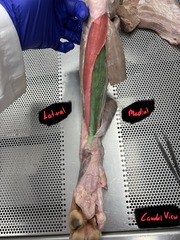
Superficial digital flexor m.
Origin: medial epicondyle of the humerus
Insertion: middle phalanges of the digits (palmar aspects)
Action: flex the carpal joints, metacarpophalangeal and proximal interphalangeal joints

Deep digital flexor m.
Origin:
• Red = humeral head: medial epicondyle
• Yellow = radial head: radius
• Green = ulnar head: ulna
Insertion: flexor tubercles of distal phalanges
Action: flex the carpal and digital joints

Pronator teres m.
Origin: medial epicondyle of the humerus
Insertion: medial body of radius
Action: weak elbow flexion and weak pronation of the manus

Pronator quadratus m.
Attachments: apposed surfaces of the radius and the ulna
Action: pronation of the manus

Interossei muscles (associated with proximal sesamoid bones)
Origin: palmar base of respective metacarpal bone
Insertion: palmar base of respective proximal phalanx (& tendon of common digital extensor dorsally)
Action: flexes and supports metacarpophalangeal joint
Located under the tendons.

Carpal pads: Green
Metacarpal pads: Blue
Digital pads: Red
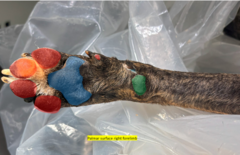
Dorsal ligament

Annular ligaments
Green = palmar annular ligament
Blue = Proximal digital annular ligament
Red = Distal digital annular ligament

Carpal Canal

Extensor retinaculum

Flexor retinaculum
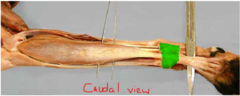
Transverse humeral retinaculum

Lateral collateral ligament of cubital joint

Interosseous ligament
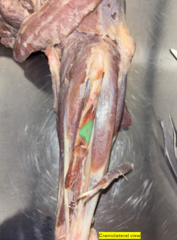
Medial Collateral Ligament of cubital joint

Palmar carpal ligament
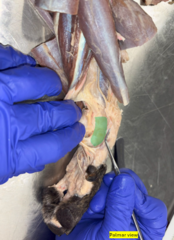
Infraspinatus bursa

Intertubercular bursa
Lies under biceps brachii

Superficial pectoral m. (descending and transverse pectoral mm.)
Origin: sternum
Insertion: crest of greater tubercle & cranial humeral border
Action: adduct the thoracic limb
Deep (ascending) pectoral m.
Origin: sternum
Insertion: greater and lesser tubercles of humerus
Action: adduct thoracic limb and pull it caudally
Brachiocephalicus m.
Origin: clavicular intersection
Insertion:
cleidobrachialis: distal cranial humerus
cleidocephalicus: mastoid part: mastoid process of temporal bone cervical part: dorsal midline of neck
Action: pull thoracic limb cranially (and/or) depress and pull head and neck laterally
Omotransversarius m.
Cranial-most attachment: wing of the atlas
Caudal-most attachment: distal spine of the scapula
Action: pull thoracic limb cranially (and/or) depress and pull head and neck laterally
Trapezius m.
Origin: cervical part: dorsal neck
thoracic part: dorsal thorax
Insertion: spine of the scapula
Action: elevate the thoracic limb
Rhomboideus m.
Origin: rhomboideus thoracis: dorsal thorax
rhomboideus cervicis: dorsal neck
rhomboideus capitis: nuchal crest of occipital bone
Insertion: dorsal border of scapula and/or scapular cartilage
Action: elevate the thoracic limb
Serratus ventralis m.
Origin: serratus ventralis cervicis: cervical vertebrae
serratus ventralis thoracis: thoracic wall (ribs)
Insertion: serrated face of scapula
Action: support and/or elevate the trunk
Latissimus dorsi m.
Origin: thoracolumbar fascia
Insertion: teres major tuberosity
Action: draw the thoracic limb caudally, flex or extend the humeral joint
Sternocephalicus m.
Origin: sternum
Insertion: mastoid part: mastoid process of temporal bone
occipital part: occipital bone
Action: depress head and neck; draw head and neck laterally
Sternohyoideus m.
Origin: sternum
Insertion: basihyoid bone
Action: pull tongue and larynx caudally
Sternothyroideus m.
Origin: cranial aspect of sternum or ribcage
Insertion: thyroid cartilage
Action: pull tongue and larynx caudally
Deltoideus m.
Origin: spine of scapula and acromion
Insertion: deltoid tuberosity of humerus
Action: flex the humeral joint
Supraspinatus m.
Origin: supraspinous fossa of the scapula
Insertion: greater tubercle of the humerus
Action: extend the humeral joint
Infraspinatus m.
Origin: infraspinous fossa of the scapula
Insertion: greater tubercle of the humerus
Action: flex humeral joint (varies); abduct limb at humeral joint
Teres minor m.
Origin: caudal border of scapula
Insertion: teres minor tuberosity of the humerus
Action: flex the humeral joint
Subscapularis m.
Origin: subscapular fossa of scapula
Insertion: lesser tubercle of humerus
Action: adduct limb at humeral joint
Teres major m. (parallels the caudal border of the scapula)
Origin: caudal border of scapula
Insertion: teres major tuberosity of humerus
Action: flex the humeral joint
Coracobrachialis m
Origin: coracoid process of scapula
Insertion: crest of the lesser tubercle of the humerus
Action: adduct limb at shoulder
Biceps brachii m. (only one head in domestic mammals)
Origin: supraglenoid tubercle
Insertion: radial and ulnar tuberosities
Action: flex the cubital joint and extend the humeral joint
Brachialis m.
Origin: brachial groove of humerus
Insertion: proximal radius and/or ulna
Action: flex the cubital joint
Triceps brachii m. (long, medial, and lateral heads in all species carnivores also have an accessory head)
Origin: caudal border of scapula (long head); proximal humerus (other heads)
Insertion: tuber olecrani
Action: extend the cubital joint (all heads); flex the humeral joint (long head)
Tensor fasciae antebrachii m.
Origin: latissimus dorsi and associated fascia
Insertion: tuber olecrani
Action: extend the cubital joint (and tense the deep antebrachial fascia)
Anconeus m.
Origin: caudal aspect of distal humerus
Insertion: tuber olecrani
Action: extend the cubital joint
Extensor carpi radialis m.
Origin: lateral epicondyle of the humerus (and its crest)
Insertion: dorsal base of second and third metacarpal bones
Action: extend the carpal joints
Common digital extensor m.
Origin: lateral epicondyle of the humerus
Insertion: extensor processes of the distal phalanges
Action: extend the carpal and digital joints
Lateral digital extensor m.
Origin: lateral epicondyle of the humerus
Insertion: distal phalanges (also the proximal and/or middle phalanges) of lateral digit(s)
Action: extend the carpal and digital joints of the lateral-most digits
Ulnaris lateralis m
Origin: lateral epicondyle of the humerus
Insertion: accessory carpal bone and lateral base of fifth metacarpal bone
Action: flex the carpal joints; abduct the manus
Supinator m
Origin: lateral epicondyle of the humerus
Insertion: body of radius
Action: supination of the manus
Abductor pollicis longus m
Origin: body of the ulna (in the carnivore)
Insertion: medial metacarpus
Action: abduct the first digit
Brachioradialis m
Origin: lateral epicondyle of the humerus
Insertion: fascia near the carpus
Action: flexes the cubital joint and supinates the manus
Flexor carpi radialis m
Origin: medial epicondyle of the humerus
Insertion: palmar base of metacarpal bones 2 and 3
Action: flex the carpal joints
Flexor carpi ulnaris m. (2 heads: humeral and ulnar)
Origin: medial epicondyle and olecranon
Insertion: accessory carpal bone
Action: flex the carpal joints
Superficial digital flexor m.
Origin: medial epicondyle of the humerus
Insertion: middle phalanges of the digits (palmar aspects)
Action: flex the carpal joints, metacarpophalangeal and proximal interphalangeal joints
Deep digital flexor m. (3 heads: humeral, radial, ulnar)
Origin: humerus (medial epicondyle), radius, ulna
Insertion: flexor tubercles of distal phalanges
Action: flex the carpal and digital joints
Pronator teres m
Origin: medial epicondyle of the humerus
Insertion: medial body of radius
Action: weak elbow flexion and weak pronation of the manus
Pronator quadratus m
Attachments: apposed surfaces of the radius and the ulna
Action: pronation of the manus
Interossei muscles (associated with proximal sesamoid bones)
Origin: palmar base of respective metacarpal bone
Insertion: palmar base of respective proximal phalanx (& tendon of common digital extensor dorsally)
Action: flexes and supports metacarpophalangeal joint