Russia: Military History and Notable Events
 Call Kai
 Learn
Learn Practice Test
 Spaced Repetition
 Match
Match Flashcards
 Knowt Play
1/27

There's no tags or description
Looks like no tags are added yet.
Name | Mastery | Learn | Test | Matching | Spaced | Call with Kai | Chat |
|---|
No analytics yet
Send a link to your students to track their progress
28 Terms

1223 - 1241 - Mongol Invasion of Kievan-Rus (All Facts)
Conflict in which Batu Khan and the Mongols defeated and conquered the many fragmenting principalities of the namesake state
They took Vladimir, Yaroslavl, and Rostov
War and conquest which ended with the Siege of Kiev, completing the destruction of the Kievan Rus and its fragmented principalities
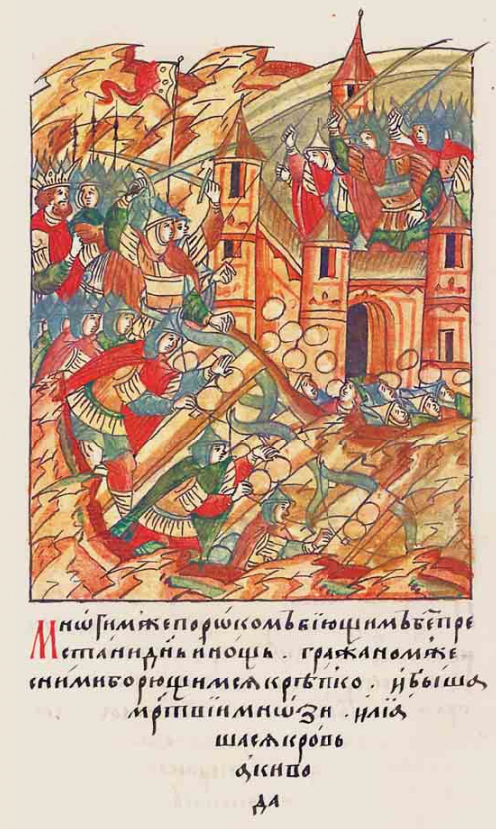
1240 - Siege of Kiev (All Facts)
Battle in which Batu Khan and the Mongols defeated the Kievan Rus Kingdom of Galicia–Volhynia
1245 - 1618 - Lithuanian-Muscovite Wars (All Facts)

1380 - Battle of Kulikovo (All Facts)
Battle in which Grand Duke Dmitri Donskoy and his Russian forces defeated Mamai and his Mongolian forces
Battle that took place on Curlew Field in Tula Province
Battle in which exhausted Russian soldiers were treated to the novel sight of an entire “unbeatable” Mongol army galloping at speed away from them
Battle in which Grand Duke Dmitri Donskoy missed the great moment, lying under a tree concussed
Battle in which Mamai rode against Russia with 30K warriors, including Genoese mercenaries
Battle during which Mamai forged an alliance with Lithuania, whose armies had been coming the opposite way
Battle in which Grand Duke Dmitri Donskoy made a forced march to intercept Mamai, then staked everything on an opposed crossing of the Don River, straight into action
Battle during which Grand Duke Dmitri Donskoy’s secret cavalry reserve swept onto the field to secure victory
Battle after which Moscow emerged as the focus of Russian opposition to the Mongols after the Tatars were defeated in it

1425 - 1453 - Muscovite War of Succession (All Facts)
Conflict over the Russian throne and position of the Grand Prince of Moscow
Conflict of rivalry between Vasily II and Dmitri Shemyaka
After Vasily II was captured by Khan Ulag-Mahmed of the Mongolian Empire, he was freed on payment of a huge ransom, and Shemyaka began plotting in earnest
Vasily II was arrested and blinded, but again freed
This was Shemyaka’s biggest mistake because his cousin raised an army and one year and one day after being blinded returned to Moscow in triumph over Shemyaka, thereafter planning to expand Muscovite territory
Conflict which ended with the exiling and poisoning of Dmitri Shemyaka

1512 - 1522 - Fourth Lithuanian–Muscovite War / Ten Years’ War (All Facts)
War in which Vasily III and his Muscovite forces, with the help of Mikhail Glinsky and Lithuanian rebels, defeated Sigismund and his Polish-Lithuanian forces
War in which Vasily III and his Muscovite forces gained control of Smolensk after two bloody but abortive previous attempts to take it
War which ended with an armistice conceding control of Smolensk to Vasily III
War whose armistice treaty was also a diplomatic coup for Vasily III

1534 - 1537 - Fifth Lithuanian-Muscovite War / War of Starodub (All Facts)
War in which King Sigismund of Poland and Grand Duke of Lithuania and his Lithuanian-Polish forces failed to regain Smolensk and lost it to Russia
War after which Prussia still remained a fief of Poland
1552 - Siege of Kazan / Conquest of Kazan Khanate (All Facts)
Battle in which Tsar Ivan IV and his Russian forces defeated and conquered the Kazan Khanate and its Tartar forces
Battle in which Tsar Ivan IV, with a force of 150K men, captured Kazan, the Tartar capital on the Volga River, after using gunpowder to breach the walls
1552 - 1556 - Kazan Rebellion (All Facts)
(Failed) Revolt of the Kazan Khanate against Ivan IV and the Tsardom of Russia after it had conquered it
1554 - 1556 - Conquest of Astrakhan Khanate (All Facts)
Battle in which Tsar Ivan IV and his Russian forces defeated and conquered the Astrakhan Khanate and its Tartar forces

1558 - 1583 - Livonian War (All Facts)
War in which Tsar Ivan IV and his Russian forces were defeated by Poland, Lithuania, Denmark, Norway, Sweden, Transylvania, and the namesake confederation
War which Tsar Ivan IV began due to
his ambition to transform Russia, which, at the time, had a rudimentary agriculture and little industry; by taking control of the Baltic and its ports, as they had already become, at the time, important centers of international trade and offered the prospect of benefit from the more advanced western countries of the time
War in which Tsar Ivan IV
sent his troops into the namesake kingdom / confederation in a lightning strike designed to secure the Baltic region for Muscovy (Russia) and give it an outlet to the west
War in which Tsar IV and his Russian forces
seized several large towns and fortresses
disputed with one another in Moscow and ultimately destroyed their momentum
may have overreached themselves during that period of the Tsar’s imperial expansion, but the Baltic region would have been a considerable prize nonetheless
War which saw
The Siege of Narva
The Siege of Pskov
War during which
the namesake Order of Knights managed to improve its military and diplomatic posture, still being the area’s main defense force
Riga (modern-day Latvia; of the namesake confederation / order) put itself under the protection of Poland
the namesake confederation was partitioned as Sweden and Denmark were poised to take over (modern-day) Estonia and Courland
War which ended when Russia made peace with Poland gave up its claims to the Baltic state of Livonia

1558 - Siege of Narva (All Facts)
Battle in which Tsar Ivan IV and his Russian forces defeated the Livonian Confederation and captured the namesake Livonian city (modern-day Estonia) during the Livonian War

1581 - 1582 - Siege of Pskov (All Facts)
Battle in which the Russian forces defeated the Polish-Lithuanian forces during the Livonian War
1568 - 1570 - First Russo-Ottoman War (All Facts)
War in which Tsar Ivan IV and his Russian forces defeated Sultan Selim II and his Ottoman forces
War in which the Ottoman Empire tried but failed to take control of the Astrakhan Khanate region previously controlled, and controlled thereafter, by Russia
War in which the Ottoman forces failed to take Astrakhan despite hauling their ships over land from the Don River to the Volga River
War in which the Ottoman forces retreated taking heavy losses and thus allowing the Astrakhan region to remain under the control of Russia

1570 - Massacre of Novgorod (All Facts)
Incident in which Tsar Ivan IV ordered his Oprichniki of his Oprichnina to sack and destroy the namesake town because he suspected it of betraying Russia (via paranoid claims of treason) and seeking union with Poland
Incident in which Tsar Ivan IV’s Oprichniki reached the peak of their atrocities as they devastated the namesake town and killed 60K (of their own, Russian) people, many of which were pushed through holes in the ice

1580 - 1778 - Russian Conquest of Siberia (All Facts)
Series of conflicts in which
Yermak Timofeyevich and his 1,500 Cossack mercenaries (hired by the Stroganov family) of Muscovy (Russia) defeated the Kuchum Khan and the Sibir Khanate and the Siberian Tartars and captured the Khanate’s capital of Kashlyk

1598 - 1613 - Time of Troubles (All Facts)
Period of political instability in Russia following the death of Feodor, the last of the House of Rurik until the transition was complete with the accession of Michael, the first of the House of Romanov
Period of political instability in Russia which included
intrigue involving pretenders to the throne and their revolting (under and after the reign of Boris Godunov)
the “Great Famine of 1601”
the “Bolotnikov Uprising”
the Russo-Polish War of 1609
the Siege of Smolensk
Period of political instability in Russia which saw the short reigns of
Boris Godunov
Feodor II
False Dmitry
Vasily IV
False Dmitry II

1591 / 1593 - 1606 - Long Turkish War / Thirteen Years’ War / Fifteen Years’ War / Sixth Habsburg-Ottoman War (All Facts)
War in which Murad III, Mehmed III, and Ahmed and their Ottoman forces fought against Holy Roman Emperor Rudolf II and the Habsburgs (Holy Roman Empire and Spain) and their allies; which ended in a stalemate
War during which Ottoman forces captured the fortress of Raab in Hungary
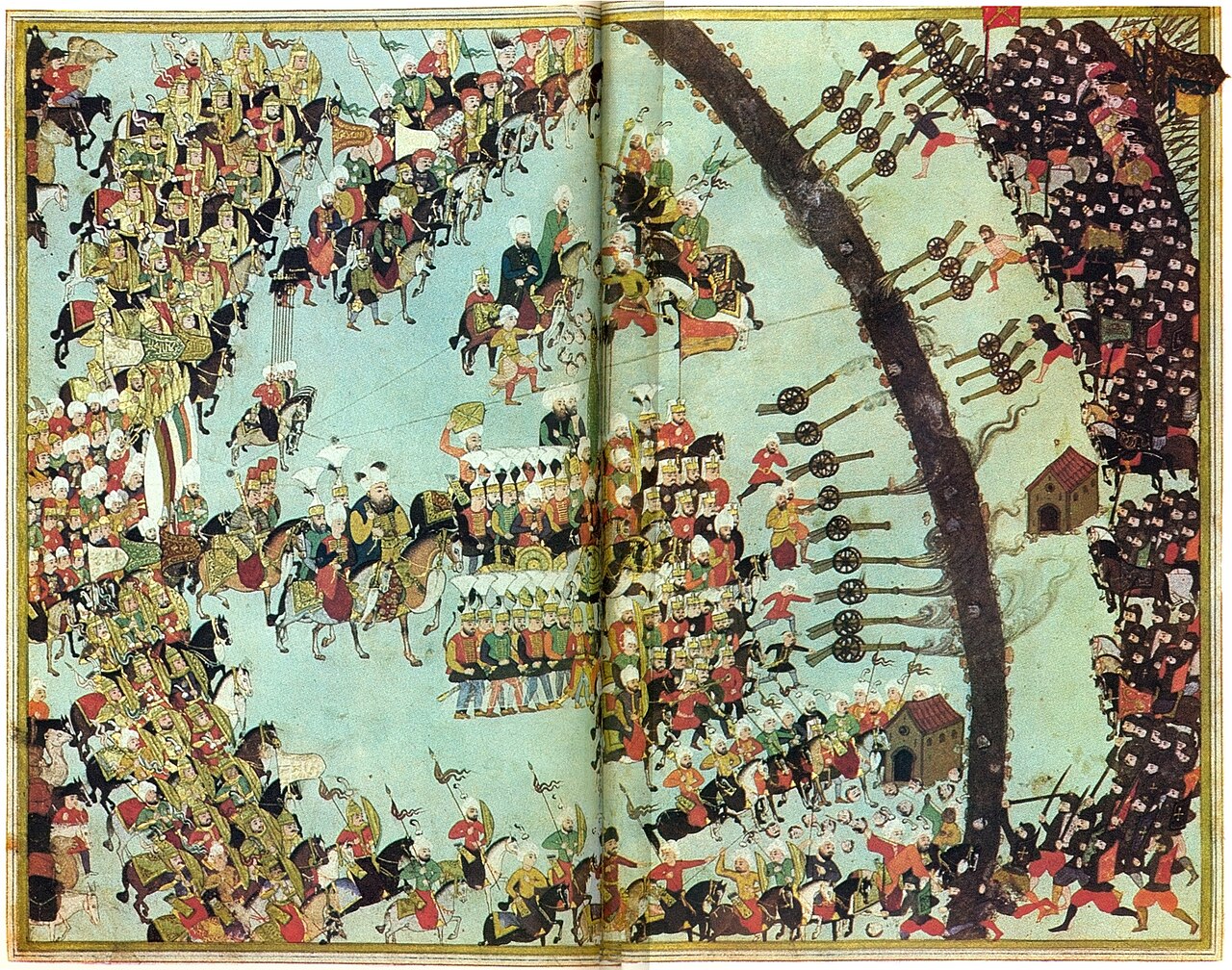
1596 - Battle of Mezőkeresztes (All Facts)
Battle in which Mehmed III and his Ottoman forces defeated Sigismund Bathory and his Habsburg forces and allies during the Long Turkish War / Thirteen Years’ War / Fifteen Years’ War / Sixth Habsburg-Ottoman War
Battle in which Mehmed III
was personally responsible for turning the tide of battle, despite a mass desertion by the Ottoman Turkish infantry
in one fell swoop, saved a huge swathe of territory for the Ottoman Empire, saving its possessions in Macedonia, Bulgaria, and Hungary despite a string of previous Hungarian military victories
tried to follow the “siphahis” when they walked off the battlefield, but his generals held a council of war to persuade him to stay with the rest of his army
Battle which
began badly for the Ottoman forces, when early reverses caused the “sipahis,” the fief-holding backbone of the Ottoman forces, to simply walk off the battlefield
Battle in which the overconfident Christian Habsburg forces broke rank to plunder the Ottoman Turkish camp, only for the Ottoman cavalry to kill them and take enormous booty including a hundred cannons
Battle in which 30K Hungarians and Germans died
1596 - Union of Brest / Union of Brest-Litovsk (All Facts)
Synod which was responsible for the creation of the Ruthenian Uniate Church
Synod in which the Jesuit Order managed to unite the Roman Catholic and Orthodox Churches in modern-day Ukraine, a region of the Polish-Lithuanian commonwealth at the time, after only a year of negotiation

1601 - 1603 - Russian Famine (All Facts)
Famine which
occurred
under the regime of Tsar Boris Godunov
was the result of
a series of disastrously poor harvests
reduced men to
eating grass
eating birch bark
cannibalism
caused
widespread profiteering
a sharp increase in the price of bread
many landowners to have drove their peasant populations from their estates, unable to feed them
the formation of marauding bands of homeless peasants who attacked the granaries of the merchants
Famine in which
125K people starved to death in Moscow alone
whole village populations disappeared
government decrees did little to ameliorate the problem

1607 - Bolotnikov Uprising (All Facts)
Suppressed Peasant Revolt led by the namesake during the Time of Troubles
Revolt in which the nobles initially supported “False Dmitry” before he was ousted by Tsar Vasily IV, and initially joined the peasants; until, they were alarmed by the size of the movement and betrayed the namesake rebellion leader and had him imprisoned

1609 - 1618 - Russo-Polish War (All Facts)
War in which King Sigismund III and his Polish-Lithuanian forces defeated Tsar Vasily IV and his Russian and Swedish forces
War in which King Sigismund III proclaimed that his own son, Ladislaus IV, be the new Tsar of Russia
War during which the Poles pressed home their advantage by occupying Moscow while the Swedes entered Russia
War during which the Russians forced the invading Poles to capitulate and, incensed by Polish and Swedish advances into their lands, the Russian people organized against them
This operation was undertaken by Kuzma Minin and Dmitry Pozharsky
War during which Poland had Smolensk in its possession by the end of the “Time of Troubles” and used it as the base for the offensive
At one point during the war, this caused serious concern to Tsar Michael, who had been grappling with a host of domestic problems which he inherited when he assumed the throne
Somehow, in response to this development, Moscow withstood the assault by the Polish forces
War which ended with the Truce of Deulino, which was signed after the failure of the offensive which brought Polish troops near Moscow after they ran short of ammunition and provisions and withdrew

1609 - 1611 - Siege of Smolensk (All Facts)
Battle in which King Sigismund III of Poland-Lithuania and his Polish-Lithuanian and Cossack forces defeated Russia and their combined Russian and Swedish forces in the Russo-Polish War

1610 - 1617 - Ingrian War (All Facts)
War in which Gustavus Adolphus and his Swedish forces defeated Russia and its forces
War which ended with the Treaty of Stolbovo
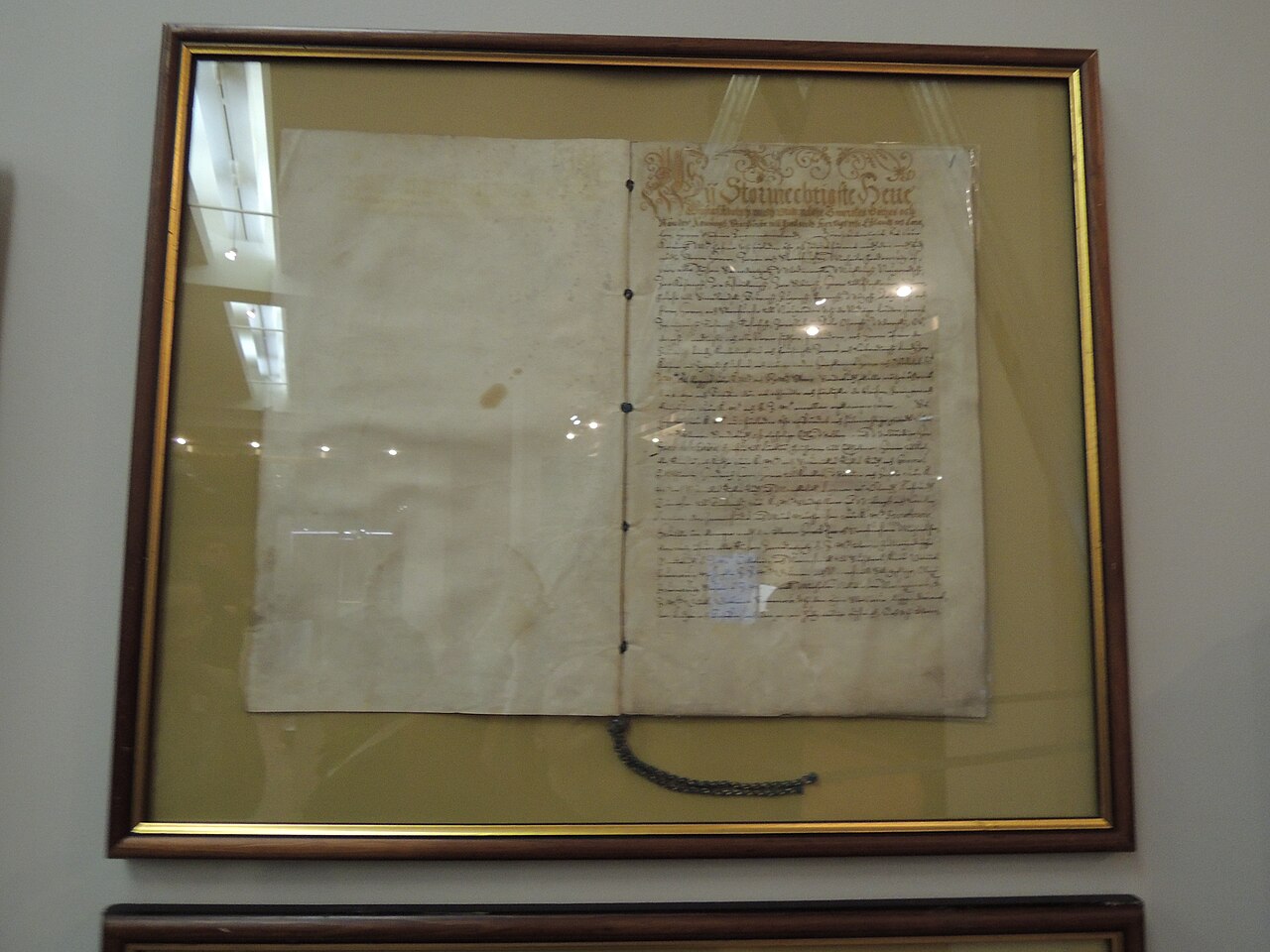
1617 - Treaty of Stolbovo (All Facts)
Peace Treaty between Russia and Sweden, ending the Ingrian War
Peace Treaty which effectively ended the occupation of northern Russia by Gustavus Adolphus and his Swedish forces
Peace Treaty in which
Sweden agreed to evacuate Novgorod and other areas of northern Russia
Sweden agreed to renounce its claim to the Russian throne
Sweden agreed to renounce plans for expansion towards the Whit Sea
Russia had to pay an indemnity of 20K silver roubles to Sweden in exchange
Sweden retained the southern coast of Finland
Sweden retained its contact with its Estonian possessions
Russia (Muscovy) was cut off from the Baltic
Russia did not get back the towns conquered by Boris Godunov prior to the “Time of Troubles”
1618 - Truce of Deulino (All Facts)
Peace Treaty signed between Russia and Poland-Lithuania, which ended the Russo-Polish War of 1609
Peace Treaty in which
Poland retained the provinces of Smolensk and Seversk
recognized the “election” of Michael Romanov to the throne of the Tsardom of Russia, in succession to Poland-Lithuania’s Ladislaus IV (despite not having yet renounced a claim to that throne which stemmed originally from the “Time of Troubles")