Physics Equations Units 1-3
 Call Kai
 Learn
Learn Practice Test
 Spaced Repetition
 Match
Match Flashcards
 Knowt Play
1/30

There's no tags or description
Looks like no tags are added yet.
Name | Mastery | Learn | Test | Matching | Spaced | Call with Kai | Chat |
|---|
No analytics yet
Send a link to your students to track their progress
31 Terms
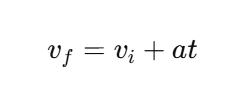
Velocity as a Function of Time
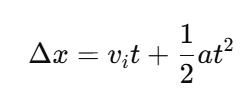
Position as a function of time
Velocity as a function of displacement (time-independent

Displacement using average velocity

Initial velocity components

Horizontal motion (constant velocity ax = 0)

Vertical motion (free fall, ay = -g)

Newtons Second Law

Newtons Second Law broken down into components

Static friction (preventing motion)

Kinetic friction (sliding motion)

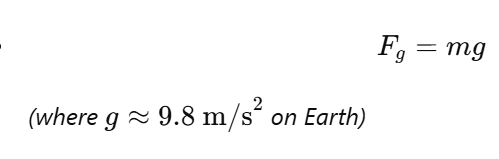
Weight / Gravitational Force Near a Surface
Hooke’s Law (Spring Force)

Inclined Planes (Standard Decomposition)

Centripetal acceleration (directed toward the center)

Centripetal force (net force causing circular motion)

Speed in terms of period (T) or frequency (F)

Newton’s Law of Universal Gravitation

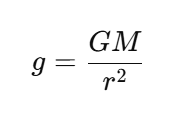
Gravitational Field / Surface Acceleration
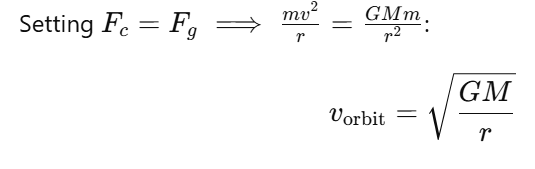
Orbital Speed
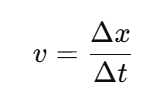
Velocity is the rate at which position changes
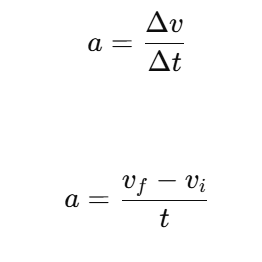
Acceleration is the rate at which velocity changes
Weight is a gravitational force measure in N

Work is done when a force causes an object to move through a displacement

Force at an angle
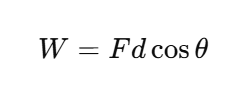
Important Cases

Kinetic Energy

Gravitational Potential Energy

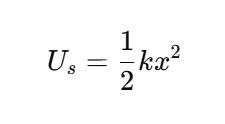
Spring Potential Energy
Work Energy Theorem

Power
