AP12 Unit 3

0.0(0)
Studied by 0 people
call kaiCall Kai
learnLearn
examPractice Test
spaced repetitionSpaced Repetition
heart puzzleMatch
flashcardsFlashcards
GameKnowt Play
Card Sorting

1/38

flashcard set

Earn XP

Description and Tags

For Us

39 Terms

1
New cards

The Role of the Digestive System (3 Points)

  1. Ingestion (Ingests Food)

  2. Separates food into chemical nutrients that cells can use.

  3. Eliminates Indigestible Remains.


<ol><li><p>Ingestion (Ingests Food)</p></li><li><p>Separates food into chemical nutrients that cells can use.</p></li><li><p>Eliminates Indigestible Remains. </p></li></ol><p></p>
2
New cards

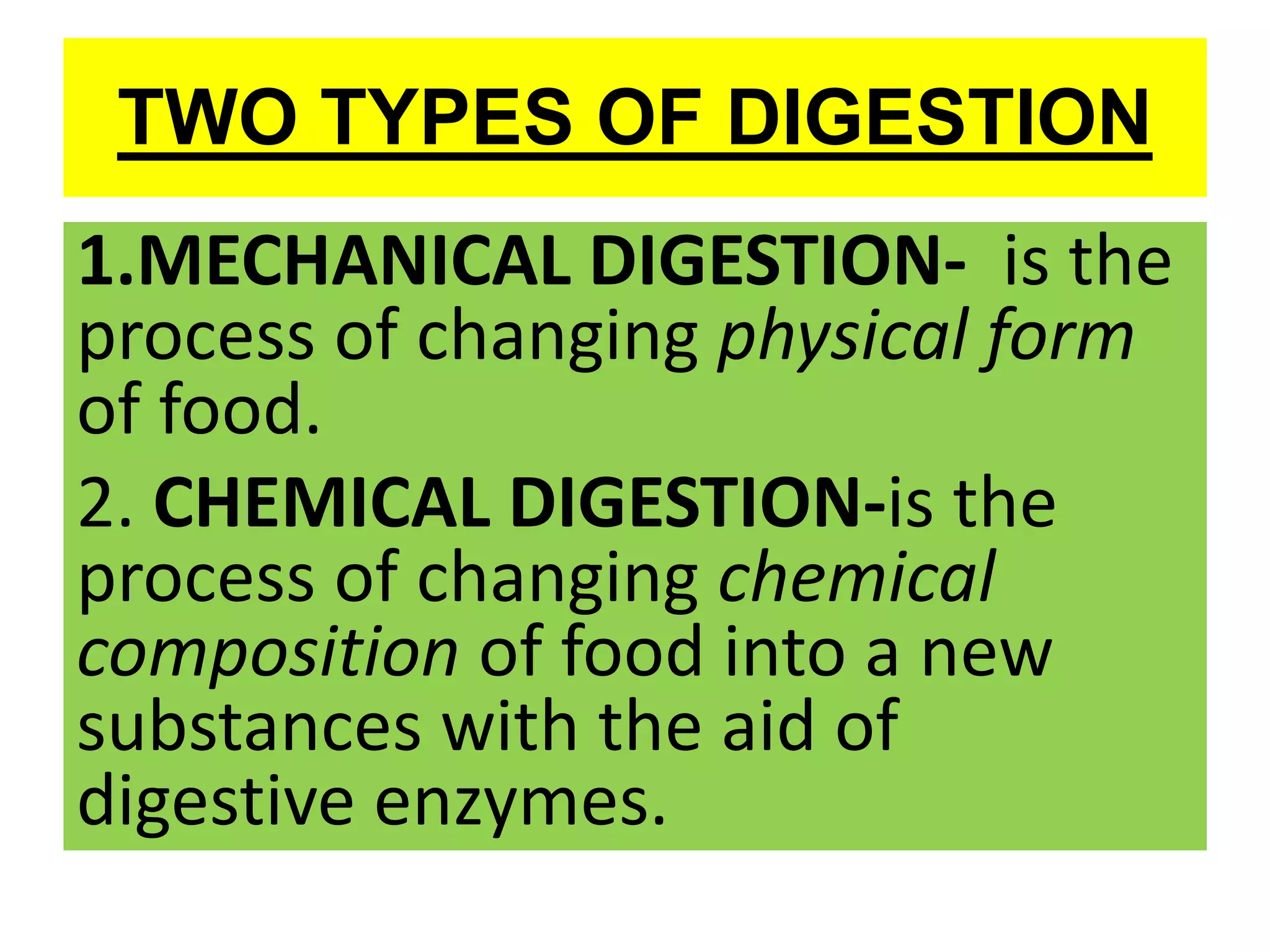
What are the 2 Types of Digestion?

  1. Mechanical Digestion

  2. Chemical Digestion


<ol><li><p>Mechanical Digestion</p></li><li><p>Chemical Digestion</p></li></ol><p></p>
3
New cards

What is Mechanical Digestion?

Mechanical Digestion is breaking food into smaller bits.

  • Chewing, Churning, Emulsifying.


Chewing: Using our teeth to break up food.

Churning: Our stomach contracts to mix the stomach acid with the food whilst also breaking it up more.

Emulsifying: Breaking fat into smaller droplets without breaking any chemical bonds.

<p>Mechanical Digestion is breaking food into smaller bits.</p><ul><li><p>Chewing, Churning, Emulsifying.</p></li></ul><p></p><p>Chewing: Using our teeth to break up food.</p><p>Churning: Our stomach contracts to mix the stomach acid with the food whilst also breaking it up more.</p><p>Emulsifying: Breaking fat into smaller droplets without breaking any chemical bonds.</p>
4
New cards

What is Chemical Digestion?

Chemical Digestion is the process where enzymes help break polymers into monomers that can be absorbed by the body.

  • Chemical Bonds are broken.


<p>Chemical Digestion is the process where enzymes help break polymers into monomers that can be absorbed by the body.</p><ul><li><p>Chemical Bonds are broken.</p></li></ul><p></p>
5
New cards

Food Pathway (Where does food travel)?

Food travels through the oral cavity, pharynx, esophagus, stomach, small intestine, and the large intestine.

<p>Food travels through the oral cavity, pharynx, esophagus, stomach, small intestine, and the large intestine.</p>
6
New cards

Parts of the Mouth (Oral Cavity) (3 Parts)

  1. Teeth

  2. Tongue

  3. Palates


<ol><li><p>Teeth</p></li><li><p>Tongue</p></li><li><p>Palates</p></li></ol><p></p>
7
New cards

Teeth

Mechanically breaks food into smaller pieces to maximize surface area.

<p>Mechanically breaks food into smaller pieces to maximize surface area. </p>
8
New cards

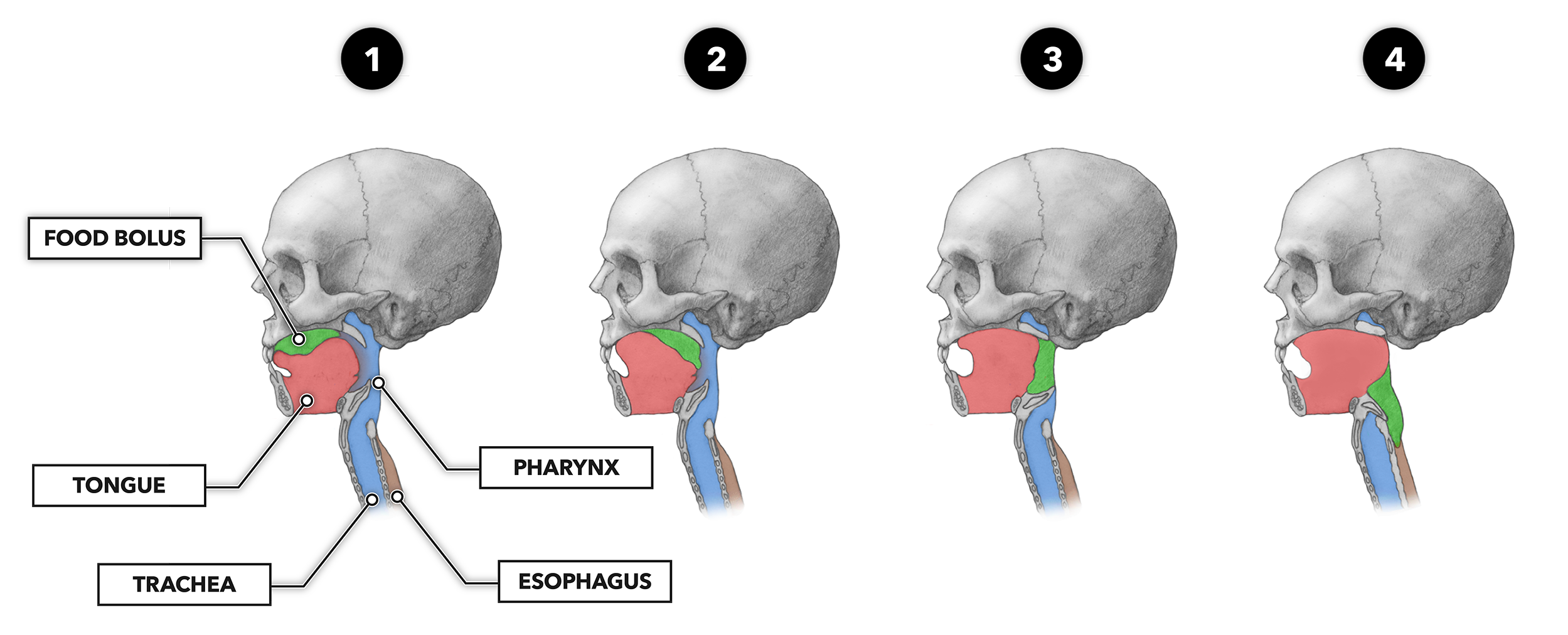
Tongue

Helps mix food with saliva to form a bolus.
<p>Helps mix food with saliva to form a bolus.</p>
9
New cards

Palates (2 Types)

Hard Palate

-Helps with breaking down food.

Soft Palate

-Separates the nasal cavity from the mouth.

<p>Hard Palate</p><p>-Helps with breaking down food. </p><p>Soft Palate</p><p>-Separates the nasal cavity from the mouth.</p>
10
New cards

Parts of the Throat (2 Parts)

  1. Pharynx

  2. Epiglottis


<ol><li><p>Pharynx</p></li><li><p>Epiglottis</p></li></ol><p></p>
11
New cards

Pharynx

Directs air to the trachea and food/liquid to the esophagus. When the bolus presses against it, swallowing occurs, and it sends a signal to the brain to move the epiglottis.

<p>Directs air to the trachea and food/liquid to the esophagus. When the bolus presses against it, swallowing occurs, and it sends a signal to the brain to move the epiglottis.</p>
12
New cards

Epiglottis

Covers the opening to the trachea so that food does not enter the lungs.

<p>Covers the opening to the trachea so that food does not enter the lungs. </p>
13
New cards

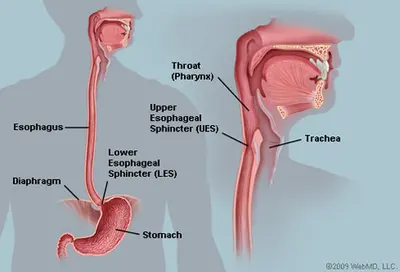
Esophagus

A long muscular tube that connects the Pharynx to the Stomach.

-It performs smooth muscle contractions called Peristalsis to move the bolus down the esophagus, past the esophageal sphincter, and into the stomach.

<p>A long muscular tube that connects the Pharynx to the Stomach. </p><p>-It performs smooth muscle contractions called Peristalsis to move the bolus down the esophagus, past the esophageal sphincter, and into the stomach. </p>
14
New cards

Esophageal (Cardiac) Sphincter

The sphincter that is at the entrance of the stomach. It seals the stomach so that its acid won’t splash up into the esophagus.
<p>The sphincter that is at the entrance of the stomach. It seals the stomach so that its acid won’t splash up into the esophagus. </p>
15
New cards

Sphincter

A circular ring-like muscle that normally stays constricted to close a natural body passage or opening, and relaxes to let substances pass through.

<p>A circular ring-like muscle that normally stays constricted to close a natural body passage or opening, and relaxes to let substances pass through.</p>
16
New cards

Rugae

Folds in the stomach walls that can expand as the stomach fills.

<p>Folds in the stomach walls that can expand as the stomach fills.</p>
17
New cards

Stomach & Alcohol

A small percentage of alcohol is absorbed into the blood through the stomach.

<p>A small percentage of alcohol is absorbed into the blood through the stomach. </p>
18
New cards
19
New cards
20
New cards

3 Products of the Gastric Glands in our Stomach

  1. Hydrochloric Acid

Denatures proteins and gives the stomach its acidic properties.

  1. Pepsinogen & Pepsin

Pepsinogen is a proenzyme (inactive enzyme) that turns into pepsin in acidic conditions. Pepsin is an enzyme in the stomach that breaks down proteins.

  1. Mucus

Protective substance that stops our stomach from getting digested.
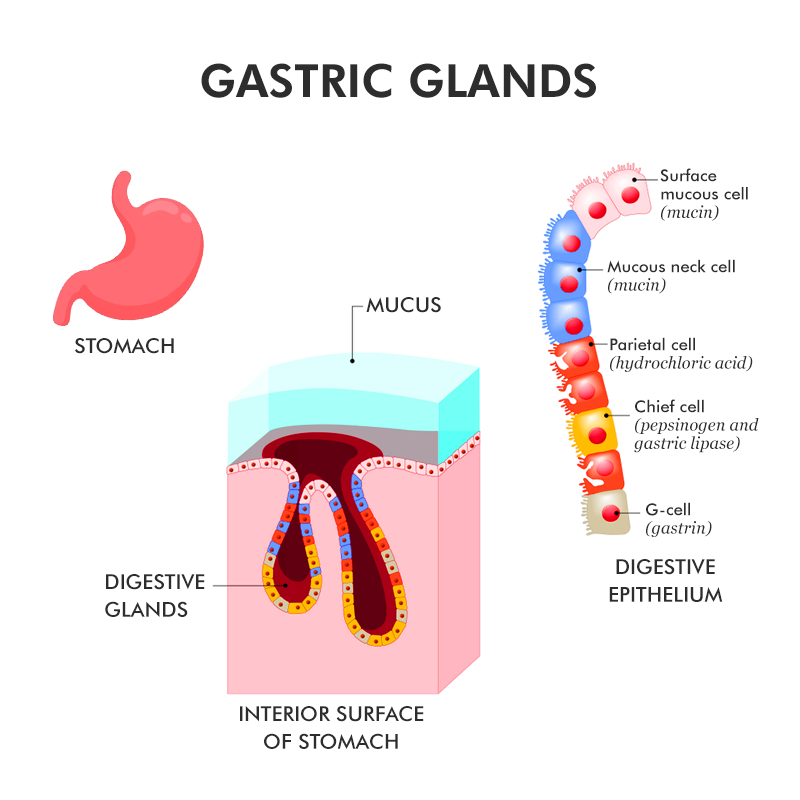
<ol><li><p>Hydrochloric Acid</p></li></ol><p>Denatures proteins and gives the stomach its acidic properties.</p><ol start="2"><li><p>Pepsinogen &amp; Pepsin</p></li></ol><p>Pepsinogen is a proenzyme (inactive enzyme) that turns into pepsin in acidic conditions. Pepsin is an enzyme in the stomach that breaks down proteins. </p><ol start="3"><li><p>Mucus </p></li></ol><p>Protective substance that stops our stomach from getting digested. </p>
21
New cards

Chyme

Thick, soupy liquid composed of the food our stomach just mechanically digested. When food leaves our stomach, it is chyme.

<p>Thick, soupy liquid composed of the food our stomach just mechanically digested. When food leaves our stomach, it is chyme.</p>
22
New cards

Pyloric Sphincter

The sphincter at the bottom of the stomach. It regulates food (chyme) leaving the stomach.

<p>The sphincter at the bottom of the stomach. It regulates food (chyme) leaving the stomach. </p>
23
New cards

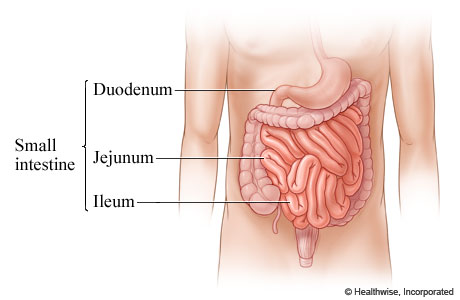
3 Parts of the Small Intestine

  1. First is Duodenum

  2. Second is Jejunum

  3. Lastly is Ileum


<ol><li><p>First is Duodenum</p></li><li><p>Second is Jejunum</p></li><li><p>Lastly is Ileum</p></li></ol><p></p>
24
New cards

Where does most of the Chemical Digestion and Nutrients Absorption occur?

Small Intestine
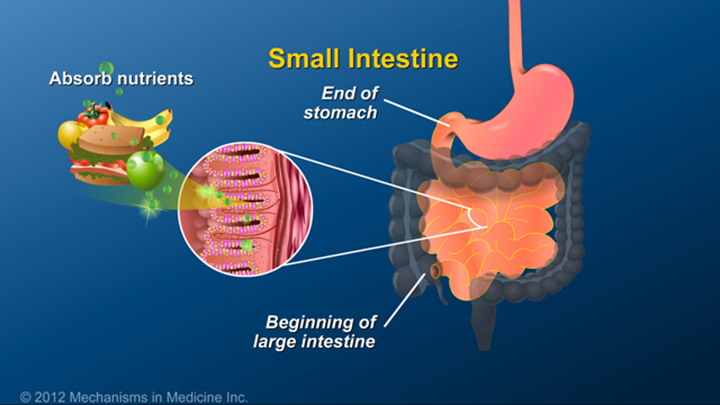
<p>Small Intestine</p>
25
New cards

Where is Bile made and stored?

Bile is made in the Liver and stored in the Gall Bladder.

<p>Bile is made in the Liver and stored in the Gall Bladder. </p>
26
New cards

What are the two substances secreted into the duodenum?

Pancreatic Juice and bile are secreted into the Duodenum through the common bile duct.
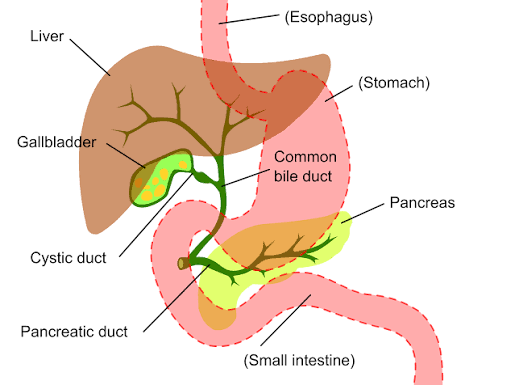
<p>Pancreatic Juice and bile are secreted into the Duodenum through the common bile duct.</p>
27
New cards

What does Pancreatic Juice contain to neutralize chyme and make it slightly basic (pH ~ 8) ?

Bicarbonate Ions (HCO3-)

<p>Bicarbonate Ions (HCO<sub>3</sub><sup>-</sup>)</p>
28
New cards

Villi

Tiny projections that act like a filter to catch & absorb nutrients. They are covered by even smaller microvilli.

<p>Tiny projections that act like a filter to catch &amp; absorb nutrients. They are covered by even smaller microvilli. </p>
29
New cards

What are inside each Villus (Single Term for Villi)? ( 2 Things)

  • Capillaries

Transport water-soluble nutrients (sugar, amino acids, nucleic acids) into the bloodstream.

  • Lacteals

Brings lipids to the lymphatic system to be processed and broken down more.


<ul><li><p>Capillaries</p></li></ul><p>Transport water-soluble nutrients (sugar, amino acids, nucleic acids) into the bloodstream.</p><ul><li><p>Lacteals</p></li></ul><p>Brings lipids to the lymphatic system to be processed and broken down more. </p><p></p>
30
New cards

3 Primary Functions of Large Intestine

  1. Absorbing water and electrolytes from the chyme passing through.

  2. Produces and absorbs vitamins.

  3. Stores the indigestible material until it is removed as feces (poop).


<ol><li><p>Absorbing water and electrolytes from the chyme passing through.</p></li><li><p>Produces and absorbs vitamins.</p></li><li><p>Stores the indigestible material until it is removed as feces (poop).</p></li></ol><p></p>
31
New cards

4 Parts of the Large Intestine

  1. Cecum

  2. Colon

  3. Rectum

  4. Anus


<ol><li><p>Cecum</p></li><li><p>Colon</p></li><li><p>Rectum</p></li><li><p>Anus</p></li></ol><p></p>
32
New cards
<p>Cecum</p>

Cecum

Small pouch of the Large Intestine. It includes the appendix.

33
New cards
<p>Colon</p>

Colon

Where electrolytes and water are absorbed. Gut bacteria ferment indigestible material and produce vitamins (Such as Vitamin K and Vitamin B), which our colon also absorbs.

34
New cards

4 Parts of the Colon

  1. Ascending

  2. Transverse

  3. Descending

  4. Sigmoid


<ol><li><p>Ascending</p></li><li><p>Transverse</p></li><li><p>Descending</p></li><li><p>Sigmoid</p></li></ol><p></p>
35
New cards

Rectum

Where feces are collected, compacted, and stored before elimination.

<p>Where feces are collected, compacted, and stored before elimination.</p>
36
New cards

Anus

Made up of two Sphincters that hold in the feces.

  • Internal Sphincter: we can’t control it.

  • External sphincter: we can control it.


When both relax, we start a bowel movement (we poop).


<p>Made up of two Sphincters that hold in the feces.</p><ul><li><p>Internal Sphincter: we can’t control it.</p></li><li><p>External sphincter: we can control it.</p></li></ul><p></p><p>When both relax, we start a bowel movement (we poop).</p><p></p>
37
New cards
38
New cards
39
New cards