Bryophyte Slides
 Call Kai
 Learn
 Practice Test
 Spaced Repetition
 Match
 Flashcards
 Knowt Play
1/70

There's no tags or description
Looks like no tags are added yet.
71 Terms

What is this? and label the two parts
Moss Protenoma.
Chloronema (or general protonema filament): Points to one of the younger, more green, and horizontally growing filaments.
Protonema bud (Gametophore bud): This structure is starting to look less like a simple thread and more like a mass. It will eventually grow into the upright, leafy gametophore (the adult moss plant).
Protonema initial / young filament: Points to a base point for the development, possibly a point where the complex bud is forming or a germinating cell itself. In general, all these green threads are part of the protonema.

What is this?
Moss Protenoma.
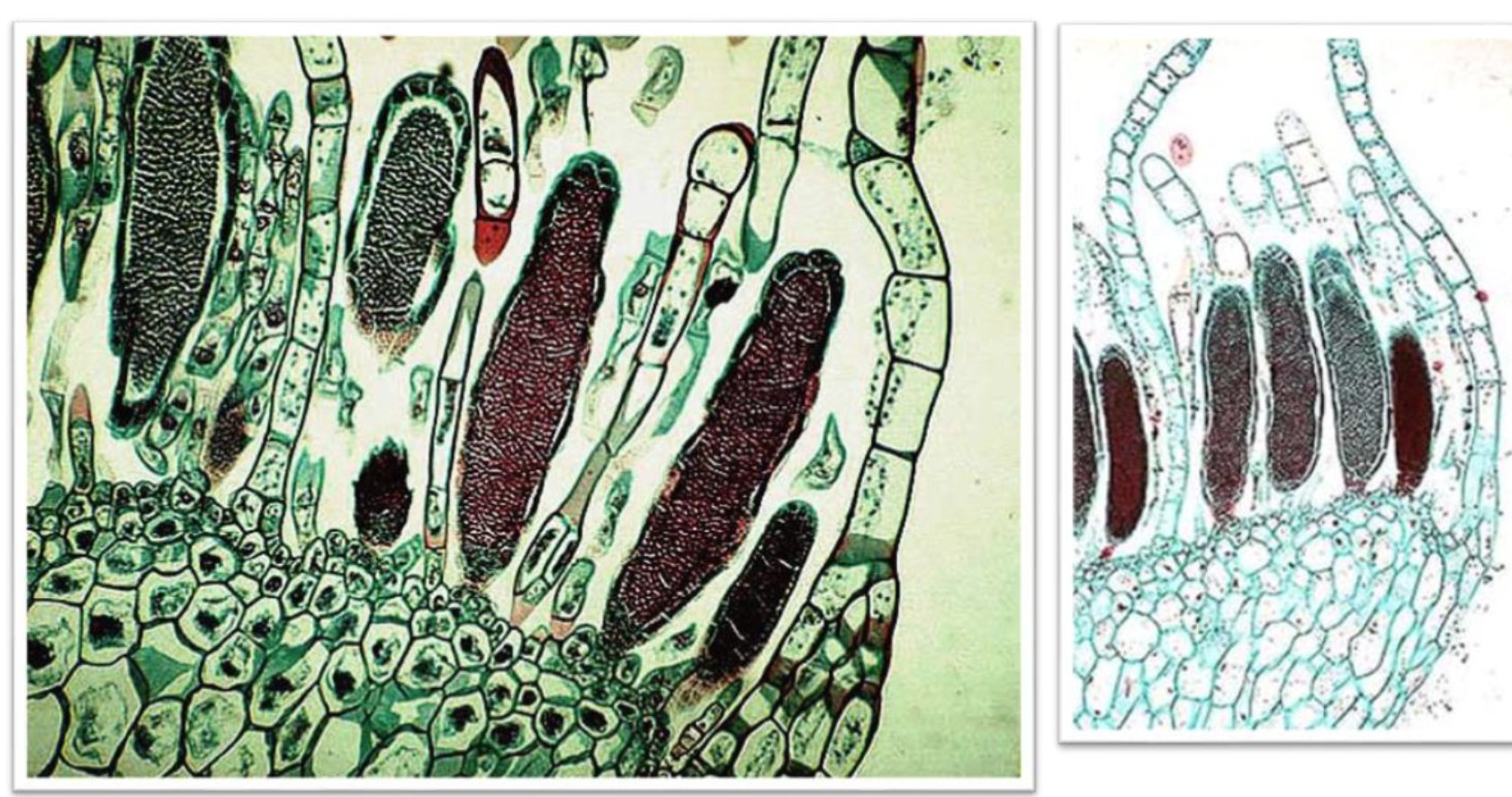
What is this?
Moss Antheridium

What is this and label the different parts:
Moss Capsule(sporangia, with spores.)

What is this and label the different parts:
Female Gametophyte of moss, with archegonium.

What is this and label the different parts:
Male Gametophyte of mosses, with antheridium in the middle.

What are these? where do they exist? purpose?
Gemma Cups, exist in liverworts, purpose 🇦
Location: They sit directly on the flat, green, leaf-like body (the thallus). They do not grow on the upright umbrella stalks (gametophores).
Appearance: They look like tiny, cup-shaped or bowl-shaped miniature structures scattered across the top surface of the thallus. Inside the cup, you can see small green tissue discs called gemmae.
Function: When raindrops splash into these cups, the gemmae are knocked out and spread onto nearby damp soil to grow into new, identical clone gametophytes (asexual reproductio
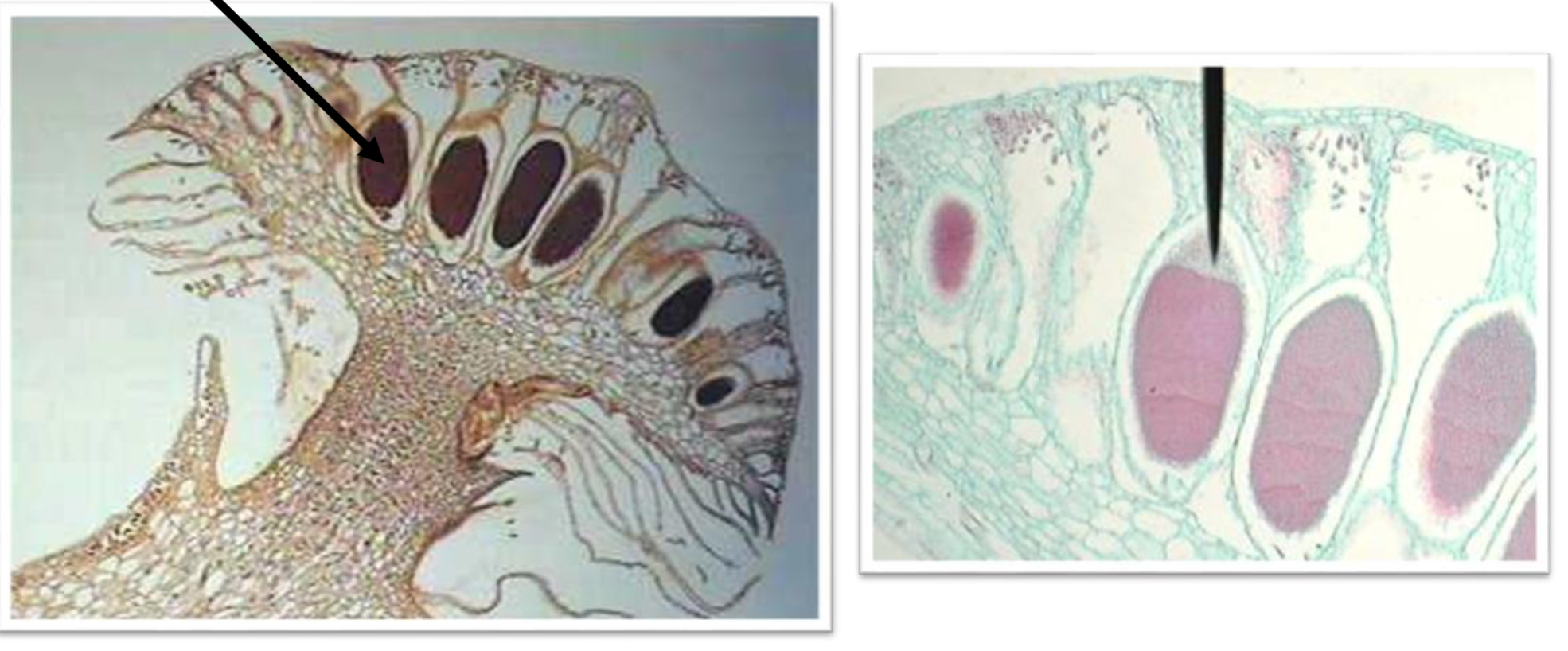
What is this showing and describe everything you know
Liverwort antheridiophor, with antheridium.

What is this showing and describe everything you know
Liverwort antheridiophor, with antheridium.

What is this showing and describe everything you know
Liverwort Archegoniophor, with archegoium.

What is this showing and describe everything you know
Liverwort Archegoniophor, with archegoium. With single egg.

What is this and lable it, tell me what its found on and its function
Gemmae Cups, found on liverworts, asexual reproduction. With gemmae inside that jump out when water falls into this cups. allows for a clone of the gametophyte to be made.

Describe and label
Gemmae Cups, found on liverworts, asexual reproduction. With gemmae inside that jump out when water falls into this cups. allows for a clone of the gametophyte to be made.

What are these? Class/ Phyla?
Phyla Monilophyta, True Ferns, Class polypodiopsida

What are these? Class/ Phyla?
Monilophyta —→ Class Psilotopsida —→ Whisk Ferns,

What is this and label the different parts:


What is this showing exactly?
Fern Antheridia.
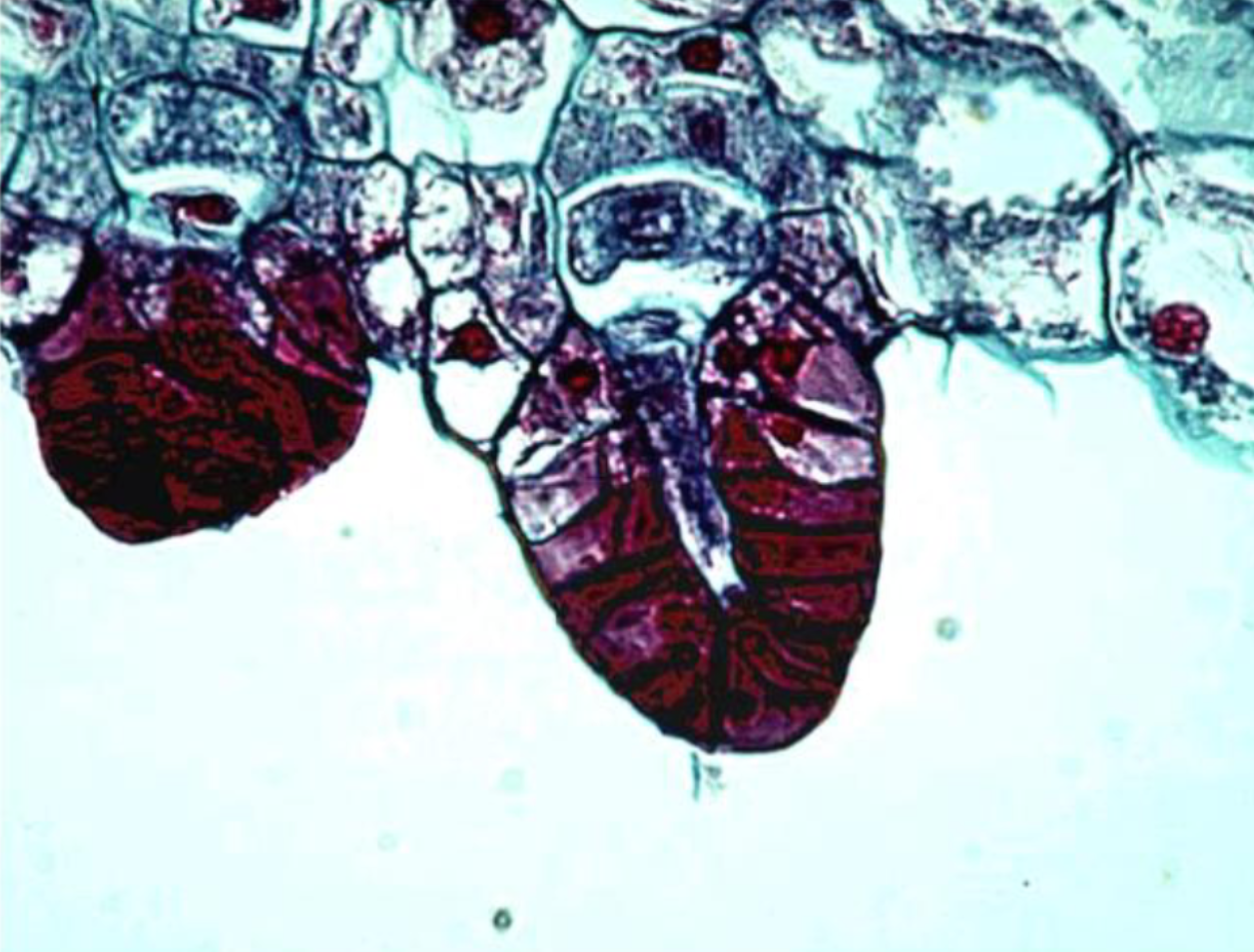
What is this showing exactly?
Fern Archegonia.

What does this show? and label the right parts.
Fern Sporophyte growing out of the the fern gametophyte


What does this show? and what is it?
Fern Sorus, Clustered sporangia.

What does this show?
Fern Sori, with indusium, indusium is the outer covering or “tunic

What is this, and label the different parts of it.
Fern Sori, with annulus.

What is this, and label the different parts.
this is Equisetum species, under class equisetopisida, under Seedless Vascular Plants.

What does this show? And what class family and description.
This shows Phylum Lycophyta in SVP
Strobolus on Selaginella sp.(AKA SPIKE MOSSES)
WHat did Gymnosperms evolve from?
A group called as progymnosperms, which included a group of heterosporoud woody plants.
How did gymnosperms become free from dependance on water for reproduction?
Through the development of a process of internal fertilization via the opllen grain and development of a seed.
Ginko Biloba are common street trees, for what reason?
Because they are resistant to smog, they are common street trees.
Ginko Biloba and longivity
they are completely extinct in the wild, surviving today only through human cultivation, with some individual trees living up to 1,500 years! ONLY living species of Ginkophyta.
Evolutionary Twist for Ginko Biloba.
Although we discussed that Gymnosperms no longer have flagellated sperm, ginko biloba are the exception,
sperm inside the pollen tube to fertilize the egg. This primitive trait—shared only with cycads among gymnosperms—shows that Ginkgo is an evolutionary bridge holding onto a relic of its fern-like ancestry while embracing the advanced technology of seeds

What is this?
Ginko Biloba

What are these?
Cycads from Cycadophyta.
Cycads re pollinated how?
THrough insect, even though gymnosperms are genrally wind pollinated, cycyads are strictly INSECT pollinated.

What are these?
They are Ephedra from Phylum Gnetophyta.

What does this show us?
Ovulate cones Vs Staminate cones in Ephedra.
Tell me about pollination droplets:
The female ovule secretes this sticky, sugary fluid out through its micropylar tube right when it is ready to be pollinated.
Wind or foraging insects carry airborne pollen grains to the female cone. When pollen touches the sticky droplet, it gets trapped on the surface.
Reabsorption / Shrinking: As night approaches or liquid evaporates/is reabsorbed by the ovule, the droplet shrinks backward down into the tube.
Internal Delivery: This shrinking action acts like a tiny vacuum, pulling the trapped pollen grain directly into the pollen chamber inside the ovule.
Germination: Once safely inside the chamber, the pollen grain germinates and extends its pollen tube to begin the process of fertilizing the egg cell!
Gnetophyta relationship with Angiosperms:
Gnetophytes are the gymnosperms most closely related to angiosperms (flowering plants).
On this cladogram, Gnetales (Ephedra, Welwitschia, Gnetum) shares a more recent common ancestor with flowering plants than any other gymnosperm group (conifers, cycads, or ginkgos)
What is the largest gymnosperm phyla? and what are they mostly
Confierophyta, they are mostly evergreen trees.

What is this identify phyla and all.
Gymnosperms, coniferophyta.
What is unique about coniferophyta?
They have thick, needle shaped leaves with a thick cuticle layer. the needles group in bundles called as? Fascicles.
Angiosperm Vs. Gymnosperm pollination!
While gymnosperms rely heavily on the open air (wind) to blindly scatter pollen, angiosperms use flowers and fruits to form targeted partnerships with animals and provide superior protection for their developing seeds.
What do whorls describe? and what is the order of whorls in angiosperms?
The vertical placement of parts of a flower.
1st Whorl: Sepal,
2nd Whorl: Petals
3rd Whorl: Stamens
4th Whorl: Carpels

What does this show, and label the different parts.
Lily anther, label the microsporangias

What is this, and label the different parts
Germinating Pollen

What is this showing
Lilly cross section, more specifically the carpel, with the embryo sac with megasporocyte in it.

This is a Emrbyo sac, is this prophase or metaphase?
Prophase

This is a Emrbyo sac, is this prophase or metaphase?
Metaphase

What does this show? what does this phase signify?
Anaphase: two distinct clusters of chromosomes being pulled toward opposite ends (poles) of the cell.
This represents the homologous chromosome pairs being separated during Meiosis I before the cell divides to reduce the chromosome number.
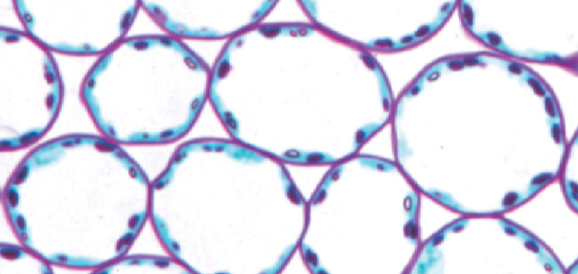
What type of cells are these?
Parenchyma cells

What type of cells are these?
Collenchyma

What type of cells are these?
Sclerenchyma. specilaized dead sell, with lignin for structural support.

What does this show, and what is its purpose?
Tilia Lenticil, purpose is to allow for gas exchange, since suberin blocks gas exhnage, these allow for o2 to enter for internal cell respiration.

Whats is this?
Sambucus Lenticil.

Label the different part sof this twig:


describe what you see here!


WHat types of roots are these?
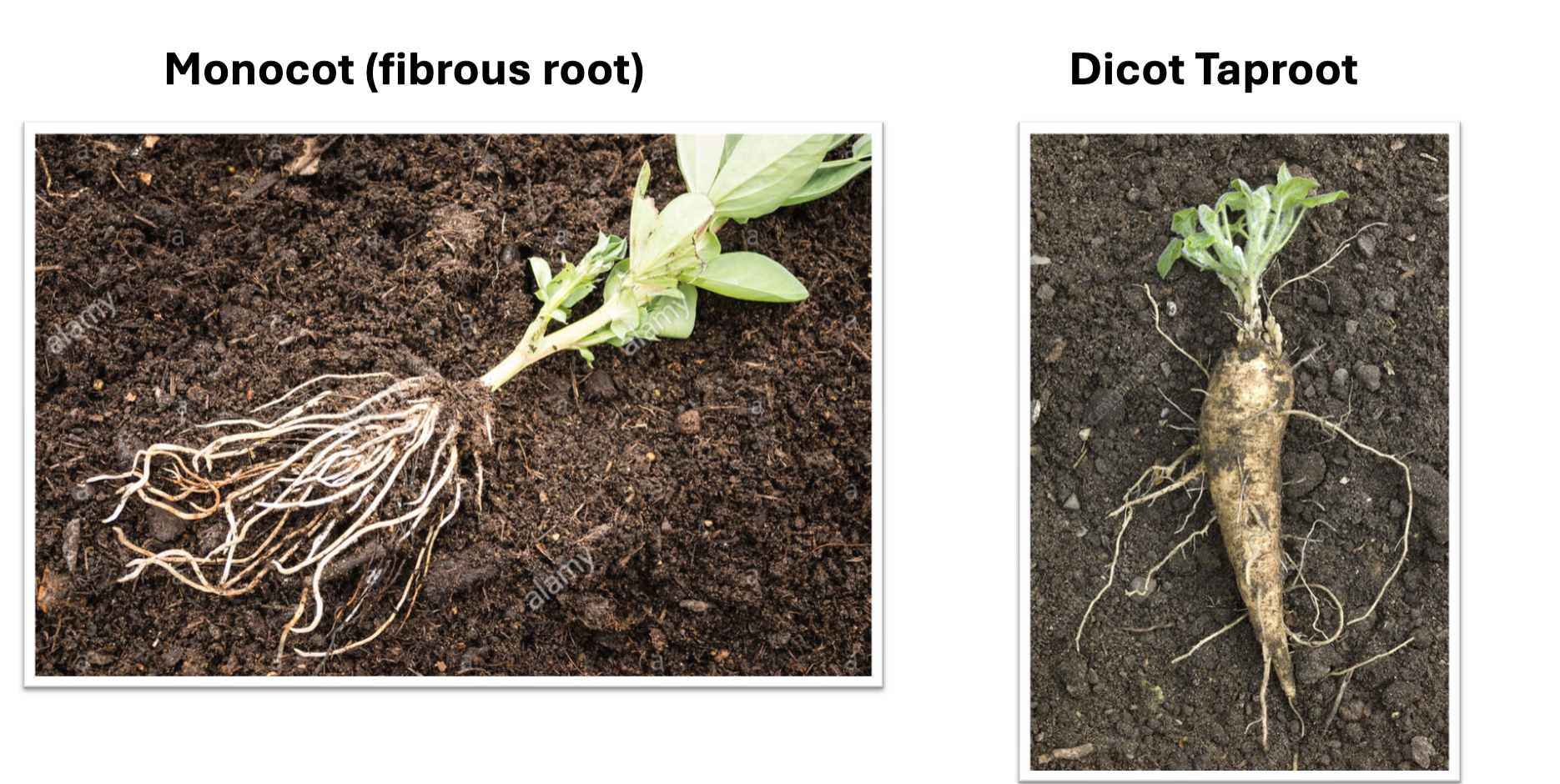

Which one is a monocot root, and which one is a Dicot root?

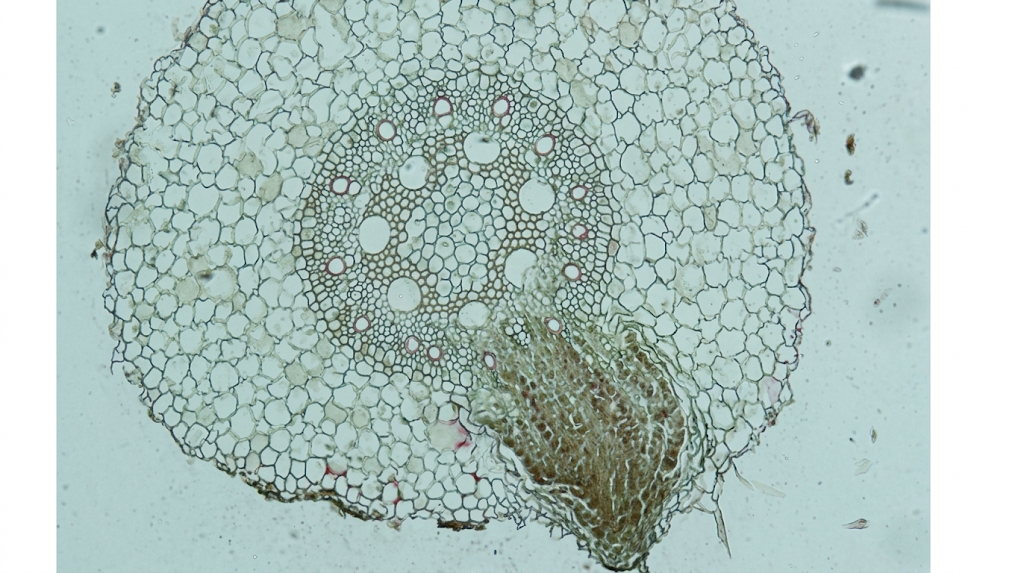
what does this show us?
Branch root/ lateral root orginiating from a monocot stem!
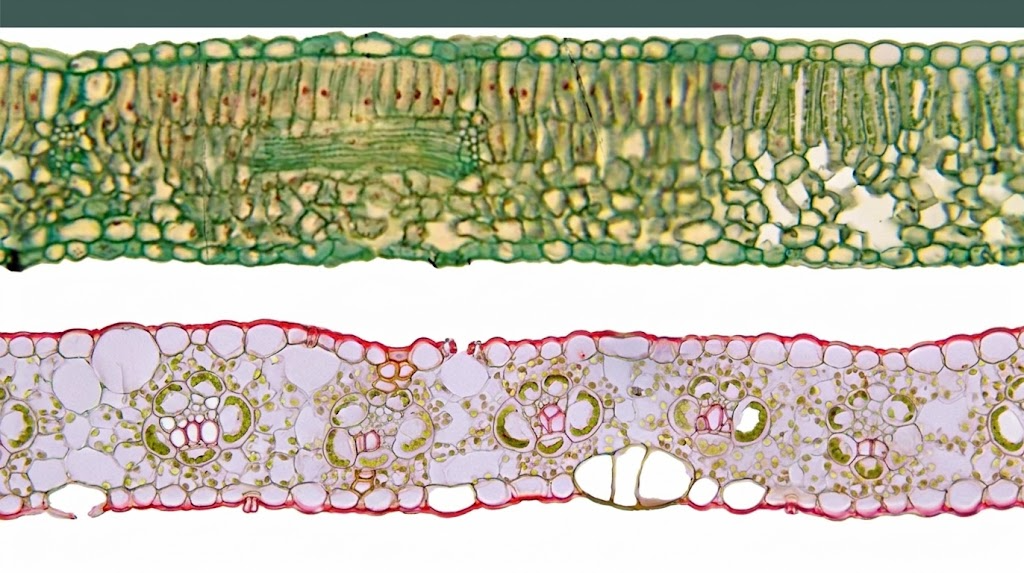
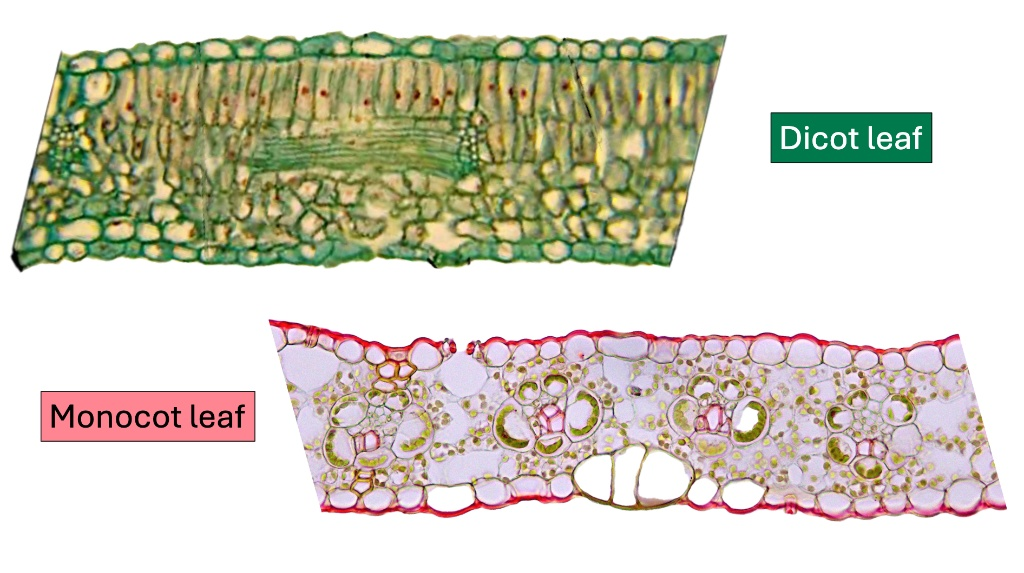
Recognize which is a docot leaf, and which is a monocot leaf
Idenitfy simple, compound, and double conpound leaves: and draw them out.


Identify the venetion of this leaf.
Palmate
Tuber are….
Underground stem for storage, has “eyes” really nodes that
makes branches, e.g., potato
Petiole is:
Stalk that connects a leaf blade to the stem, e.g., celery
Explain how flowers with each of the following would look like;
Radial symmetry
Irregular symmetry
Bilabiate symmetry:
Radial:
Irregular: The petals, sepals, or other floral parts within the same whorl differ in shape, size, or spacing. [1, 2]
Bilabiate symmetry: An irregular “two-lipped” flower in which the
calyx and/or the corolla appears to be in two parts with
one part facing upward as a flag or banner. The second
faces forward and down, serving as a landing platform
All sepals collectively are called as?
Calyx
Corolla
all the petals, collectively
Perianth:
the calyx and corolla combine

What is this?
Dicot Stomata
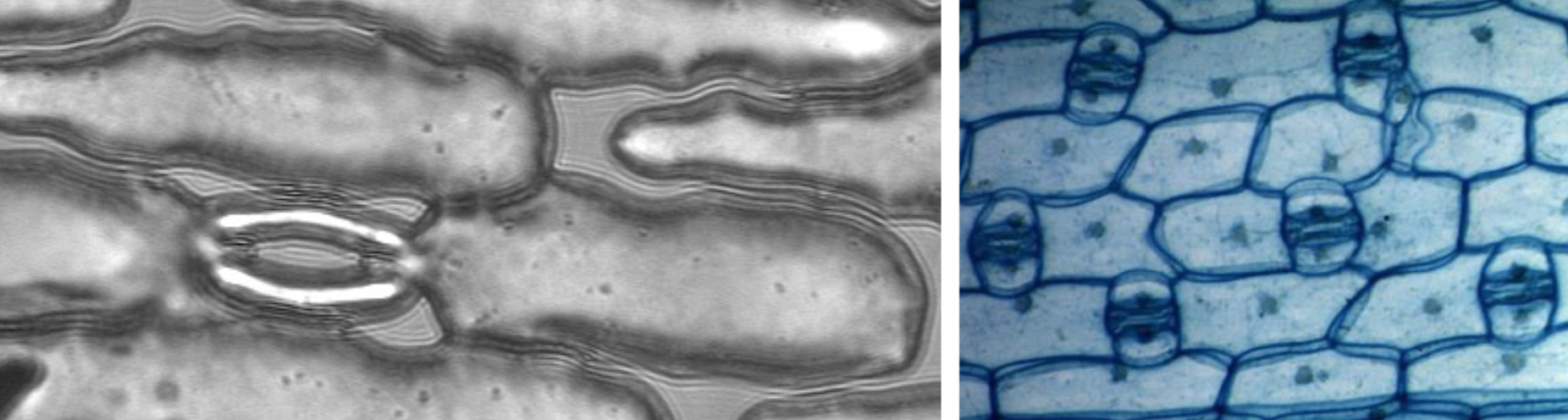
What are these?
Monocot Stoma, they are more or less rectangular in shape.
Primary growth gets all cells from?
Apical Meristem!
Wha are the supporting tissue for primary growth?
Sclerenchyma and collenchyma
Common ground tissue cell types:
Parenchyma sclerenchyma, collenchyma.