anfs 421 exam 2
 Call Kai
 Learn
 Practice Test
 Spaced Repetition
 Match
 Flashcards
 Knowt Play
1/92

There's no tags or description
Looks like no tags are added yet.
93 Terms
chick counter
conveyor belt system, chicks go through and get counted as they pass
vaccinator
spray chicks with coarse spray vaccines as they travel underneath on conveyor belt
chick separator
separates newly hatched chicks from eggshells and other egg remnants
in-ovo vaccine
given directly into egg, done pre-hatch
coarse spray vaccine
chicks are directly sprayed with vaccine
subcutaneous (SQ) vaccine
chicks are directly injected with vaccine under the skin
temperature for egg storage conditions
55-65 degrees F
relative humidity for egg storage
70-80%
threshold temperature for embryonic development
around 99-100 degrees F
how often do setters turn eggs during embryonic development?
every 1-2 hours
when are eggs transferred to hatcher?
day 18
when do chicken eggs hatch?
day 21
what is the timing for giving a booster vaccine?
10-14 days, typically via water addition or coarse spray
vent sexing
requires a trained eye, checking for a bump (males) or no bump (females)
female feather sexing
at hatch, all feathers are short but coverts only extend ½ to ¾ length of primaries
after several hours feathers are longer, but coverts still shorter
male feather sexing
at hatch, coverts and primaries are the same length
eventually coverts grow greatly past primaries
chicken incubation period
21 days
duck incubation period
28 days
turkey incubation period
28 days
pigeon incubation period
18 days
quail incubation period
18 days

what layer housing style is this?
single-tier cage system

what layer housing style is this?
single-tier back to back cage system

what layer housing style is this?
full double stair-step cage system

what layer housing style is this?
modified double stair-step cage system with dropping boards
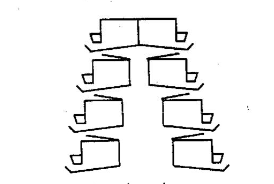
what layer housing style is this?
a-frame four-tier cages with scrapers for a high-rise house
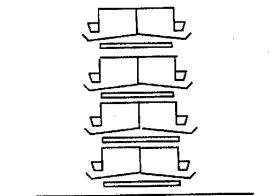
what layer housing style is this?
stack cages with manure belts

what layer housing is this?
aviary housing
what is the number of birds per aviary house?
50K max
what is the lighting period for aviary housing?
05:30-21:45
what is the litter access period for aviary houses?
11:30-21:30
what are the feeding times for aviary housing?
5:30, 11:15, 15:30, 19:15
free range layer houses
birds have free access to roam
single bird cages
first cages made, too expensive
small, multi bird cages
2-4 birds, popular in 1950s-1980s
large, multi-bird cages
most common today, 5-10 birds
colony cages
20-30 birds, popular at one time due to low costs but few exist today
modified/enriched cages
include nests, dusting boxes, and perches
primary breeders
develop genetic lines (pedigree stock), sell parent stock to integrators
broiler breeders (multipliers)
produce fertile hatching egg for broiler production, product of chicks from primary breeder company
most privately owned but under contract with integrator
reach sexual maturity at 6mos
produce eggs for 65-75 weeks
start with one male to 10-12 females
flocks at broiler breeders/multipliers
hatched or purchased as day-old chicks, raised on pullet farms and moved to broiler farm at approx 20 weeks
four way cross
pure lines are crossed over multiple generations to produce comercial poultry
requirements
to provide best broiler traits in broiler offspring
preserve reproductive traits
four way cross process
4 pedigree lines crossed (A, B, C, and D), four great grandparent lines crossed (A, B, C, D offspring), A x B grandparents crossed and C x D grandparents crossed to make parents, parents crossed (AB x CD) and make broilers and roasters
production onset
laying hens start producing eggs at 18-22 weeks
broilers sent to processing around 5-8 weeks
economic output of pedigree line
$1,500 per chick, 1 male and 10 female
economic output of great grandparent generation
$150 per chick, 150 chicks
economic output of grandparent generation
$15 per chick, 6,000 chicks
economic output of parent generation
$1.50 per chick, 240,000 chicks
economic output of commercial broiler
$0.15 per chick, 28.8M chicks
passive immunity
maternal antibodies
humoral immunity passed from mother to chick via the egg (fluids, albumen, and yolk)
IgY antibodies
active immunity
developed after vaccination or infection
path of immunity
lymphocyte goes to either the bursa or the thymus
if going to thymus
T-cells produced (helper Th1 (to cyotoxic) and Th2 (to B-cells)
if going to bursa
macrophage enters
memory cells created, plasma cells created (and create Abs)
what are the key lymphoid organs?
harderian gland, thymus, adrenal glands, bursa of fabricus
amnestic response after 1st vaccination
primarily causes IgM production with some IgG antibodies produced
priming, usually a live vax
amnestic response after 2nd vaccination
memory b-cells → respond faster and longer
primarily stimulates IgG antibody production with some IgM
response produces much higher Ab levels
immunosuppressive factors
stress
infectious agents
stress-induced immunosuppression
any source of stress
weather, poor air quality, etc
onset of egg production, etc
corticosteroids → general immune system supressor
infectious agents induced immunosuppression
bacterial
viral → IBDV, CIAV, Marek’s, Avian Leukosis: Subgroup J
common hatchery vaccines
Marek’s Disease (MDV)
Newcastle Disease (NDV)
Infectious Bronchitis (IBV)
Cocci
sometimes Infectious Bursal Disease (IBDV)
steps of processing
arrival and hanging
stunning
bleeding
scalding
picking
evisceration and inspection
chilling
deboning/cut-up
packaging and shipping
arrival and hanging
arrival to plant and hanging on shackles
stunning
electrical bath (and water spray) and CO2
scalding
feather release, 125-130 degrees F
picking
pickers (approx 30s)
pinning (manual removal of remaining feathers and pinfeathers)
singeing (burns hair off carcasses)
washing
evisceration and inspection
removal of organs
chilling
less than 40 degrees F, major bacterial reduction point
deboning/cut-up
futher processing, carcasses missing parts go
scalding vs. chilling
scalding is done to help remove feathers, chilling is done to remove bacteria
chilling can be done either with immersion chilling (using moving water) or air chilling
USDA inspection
all commercial poultry products are inspected by the USDA
7 principles of HACCP
conduct hazard analysis (biological, chemical, or physical)
identify CCPs
establish critical limits
monitor CCPs
establish corrective action
verify system
record keeping and documentation
purpose of HACCP
prevent, eliminate, or reduce hazards to acceptable levels
safety interventions
pre-harvest → biosecurity and vaccination
post-harvest → chilling and sanitation
poultry by-products meal
rendered offal and parts from processing
USDA organic requirements
outdoor acces
organic, non GMO feed
no antibiotics or synthetic pesticides
certified record system
major reservoirs of AI
migratory waterfowl and shorebirds
high pathogenic AI subtypes
H5 and H7
response plan for AI
immediate notification of authorities → state vet/APHIS
quarrantine and movement control
depopulation and safe disposal
cleaning and disinfection
surveillance and zoning
restocking only after negative testing
pathway of feed in digestive system
mouth → esophagus → crop → proventriculus → gizzard → small intestine (duodenum, jejunum, ileum) → ceca → large intestine → cloaca
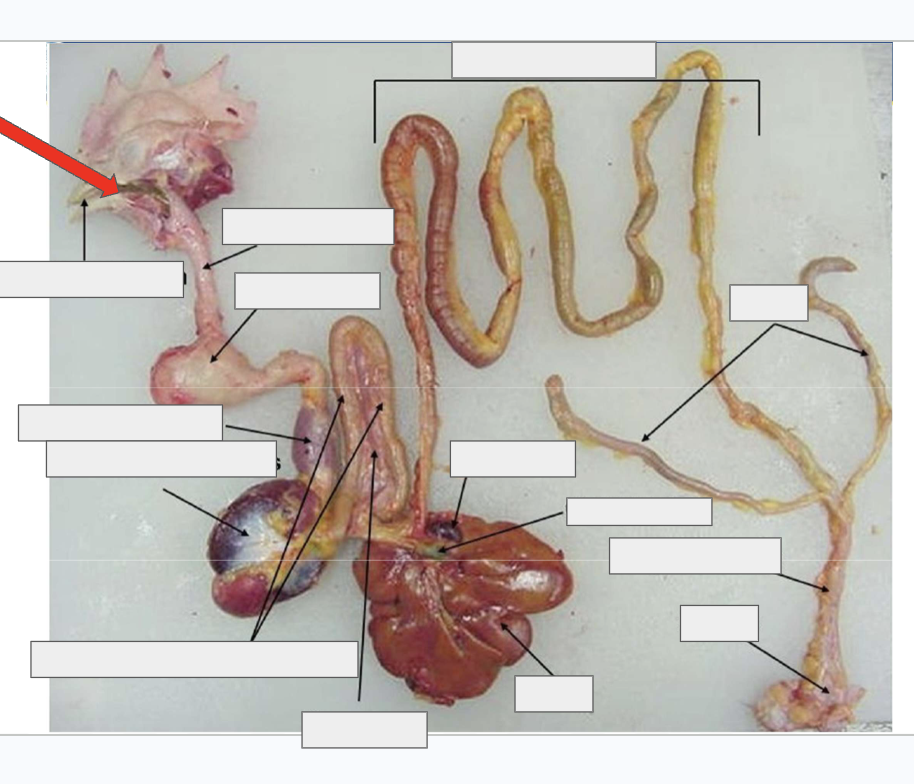
what is this?
beak/mouth

what is this?
esophagus

what is this?
crop

what is this?
proventriculus

what is this?
gizzard/ventriculus

what is this?
duodenal loop

what is this?
pancreas

what is this?
liver

what is this?
gall bladder
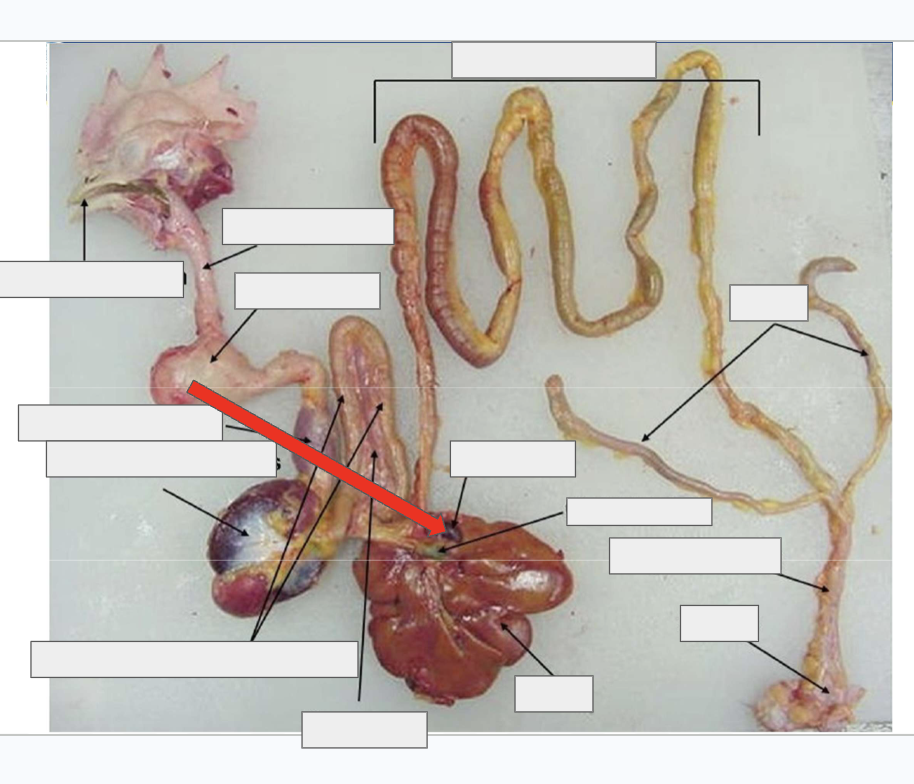
what is this?
spleen

what is this?
jejunum
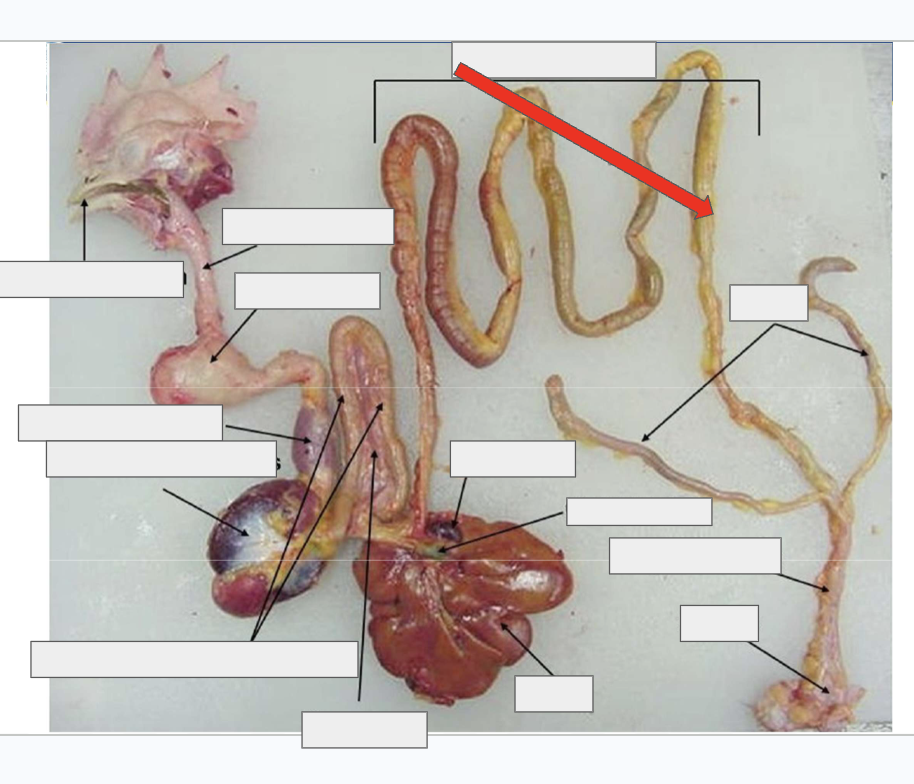
what is this?
ileum
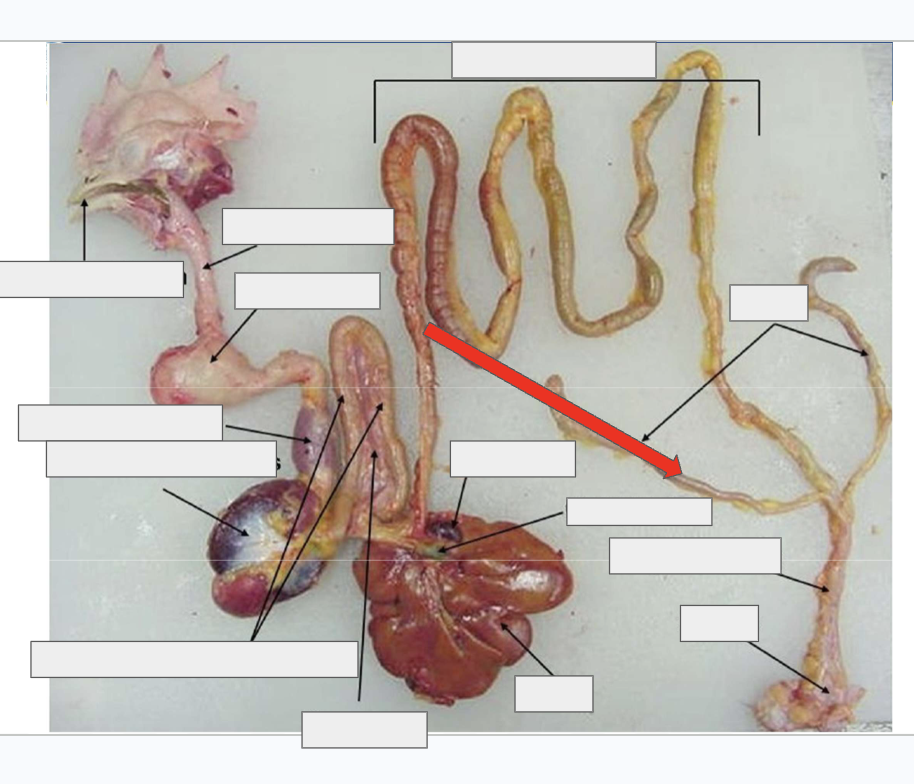
what is this?
ceca

what is this?
large intestine

what is this?
cloaca