paintings for impressionism midterm
 Call Kai
 Learn
 Practice Test
 Spaced Repetition
 Match
 Flashcards
 Knowt Play
1/33

There's no tags or description
Looks like no tags are added yet.
34 Terms
L'enlèvement des Sabines, 1640 by Nicolas Poussin - under louis the 16th
Center of city, moment of captains signal (red raised arm) - trap
Visual pairs, men with women, old women on knees, compositional harmony and organization, posed, linear perspective, anatomical perfection/idealization
initial violent abduction, contratrary to David’s painted in 1799 which shows the women stopping the war between the men - men of the city fighting to get the women back
Primary colors
Classical theme from antiquity- roman and greek history
classisism

David (Neo-classicism) - L’enlèvement des Sabines 1799 - Louis 16th
painted a different side to the Sabine’s story than Poussin
scene is outside of the city - battefield where men of the city are fighting to get the women back - years after the initial abduction - babies in the foreground
hersilia stopping the fight between men - female hysteria
n*dity as the motif of the perfect body - soldiers would not typically be naked - intellectual concept instead of realistic depiction
sign of rome on the man’s shield
neo-classicism - still painting themes from antiquity with new connotations

David(Neo-classicism), Le Serment Des horaces, 1784- Louis 16th
composition is divided in thirds, strength and rigidity is depicted through lines in the body - the difference in strength of the stance in the men also depicts their fate
contrasts to the softness of the women with their curved bodies
woman is crying because her husband does not return - message to say one should be ready to lose the closest people to you in war - man in front is a symbol of french nationalism?
Horatii brothers and father, one standing closest to us survives is cursed by woman because he killed her husband
three brothers swear an oath to their father to conquer or die for rome

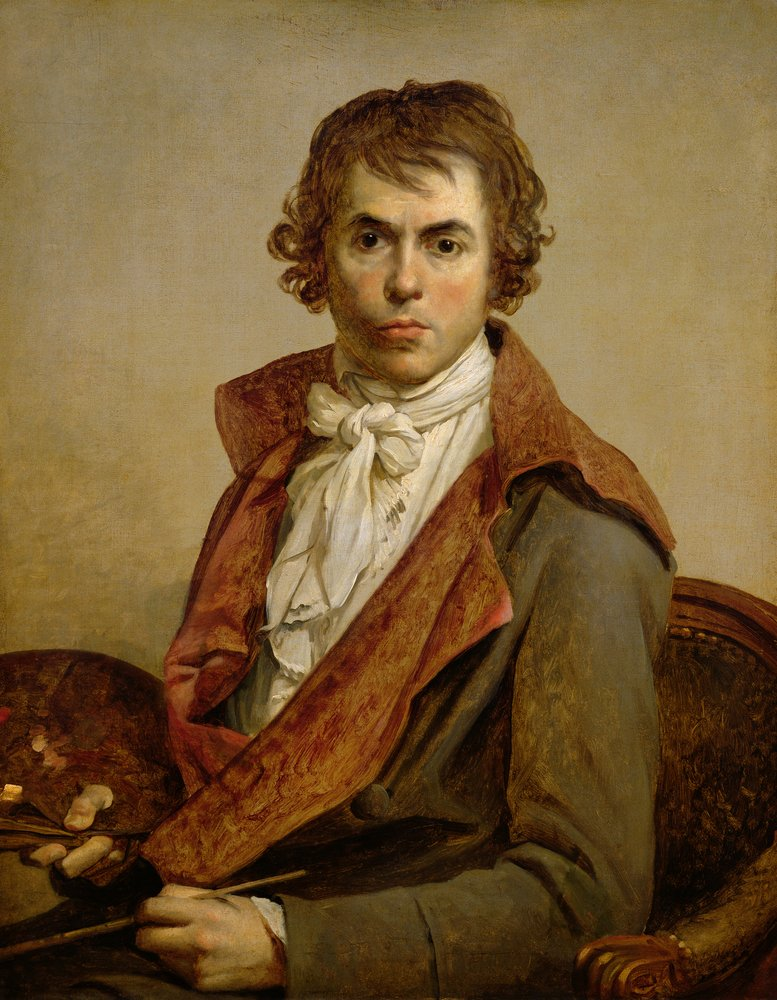
Jaques- Louis David - Autoportrait au luxembourg, 1794
depicting himself with his palette to say that all he is is a painter, an intentional choice as political tensions rise, he is saying he should not be held in a political regard
during reign od terror - political purges and violent executions
David - Le couronnement de l’empereur 1805-07
propoganda painting commissioned by Napolean 1st, napolean took the crown and declared himseld monarch, pope is there because it was held in notre dame but napolean doesn’t even let the pope crown him
national, political, and military figures to show shupport that was not entirely universal, but central to powerful figures
Napoleon stages crown above the pope

Jean- Dominique Ingres- Oedipe et les sphinx 1808
scandalized because of breasts on the sphinx
retells the story of oedipus confronting the sphinx and answering the riddles correctly
ingres - perfect idealizations - the way oedipis is hunched over feels unnatural and rejects the standard perfect idealization
severed human foot and bones to display power of the sphinx - its capabilities

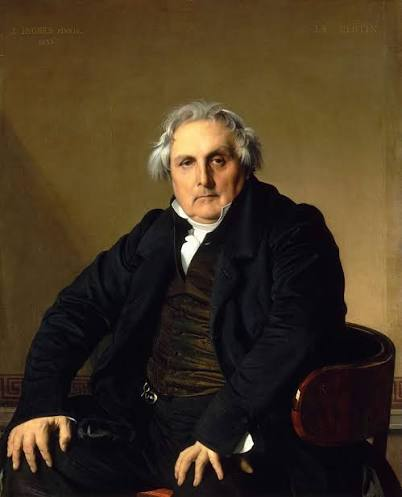
Jean- Auguste- dominique Ingres - Louis-Francois Bertin, 1832
Classical portraiture, mimesis, glowing skin
Oil painting mastery and perfection
Ingres - La grande Odalisque - 1814
Anatomical inaccuracy with back and legs, altered for stylistic grace - criticized in salon for lack of classical realism
Perfection of skin and again no trace of brushstroke
Orientalism painting, western lens of east
Bridge in some ways between neo-claccism and romanticism

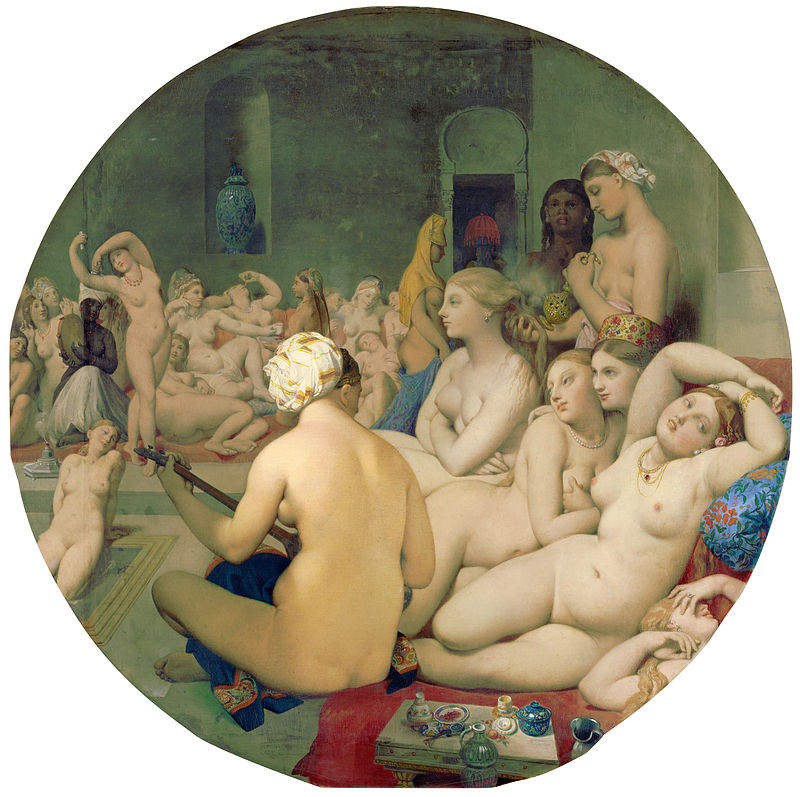
Ingres - Le Bain Turc, 1848-1863
Scene of turkish bathhouse
Scandalized bc of lesbians in foreground, commissioned by napoleon 1st but then rejected bc of scandal
Transformed into circular frame in 1860
Delacroix - Femmes d’Alger dans leur appartement -1834
Seeing stylistic shift towards romanticism, women's faces, lighting of apartment - complementary colors
More dignified depictions of women in northern africa

Gericault - the Raft of Medusa -1818
seen as the first romanticist painting in france
question of cannibalism tied to the story of men abroad ship who died, bring in an empathetic aspect to what the men went through, first peron encounter with experience of being on the shipwreck
line of death to life in the triangular composition of image, Gericault utilized body parts of the morgues to paint
Black man is at the top of the triangular compositions, denouncing slavery, uplifting black man as flag waver, anti-slavery sentiment
philsopher in the foreground, father holding dead son

Delacroix- the death of Sarandapalus - 1827
foot in foreground and women’s slipper/heel disrespect the linar perspective
romanticist for the effect of chaos in the painting
intensity and vividness of color to heighten mood - pull of lightness and darkness
horse coming out of nowhere - impossible
doesn’t paint chaos exactly as it is but paints to create the sensation of chaos

Delacroix - Liberty Leading the People - 1830
Again painting for sensation over mimesis, light and dark
Nudity to reveal liberty as a metaphor not real woman
Scale of painting used to merge present with historical - unifying freedom of current moment with historical past
Unity amongst different members of society, tophat, worker
different hats = different social classes
romanticism
feeling of revolution
revolution july 1830, overthrowing king charles X

Corot - a pond in picardie - 1867
plein air paniting, immersed in the environment that you are depicted
tubes of paint invented in 1850 which allowed for art to be done outside instead of just in the studio
outdoor easel also invented 1850
mundane and unidealized versions of nature compared to classicism and romanticism, nature not just as a picture but a sensorium, nature itself as the scene
NATURALISM
Barbizon school - group of paintins (corot, millet, rousseau) who worked outdoors, inspired by monet and renoir

Barbizon school
1830s-1870s - Group of painters consisting of corot, millet, and rousseau who painted outside and were inspired by painters like Monet and Renoir. Naturalists
Industrialization
1830s-50s
creation of social classes - capitalism moves into cities
Poorer peasants out of money and massive landowners privileged by gov
Idealization of progress and the increase in pacing of history
Bourgeois as a fad- depicted as natural, innocent and simple