EX. 32 PT. 2- Veins, Circulations
 Call Kai
 Learn
 Practice Test
 Spaced Repetition
 Match
 Flashcards
 Knowt Play
1/64

There's no tags or description
Looks like no tags are added yet.
65 Terms

common iliac vein

internal iliac vein

external iliac vein
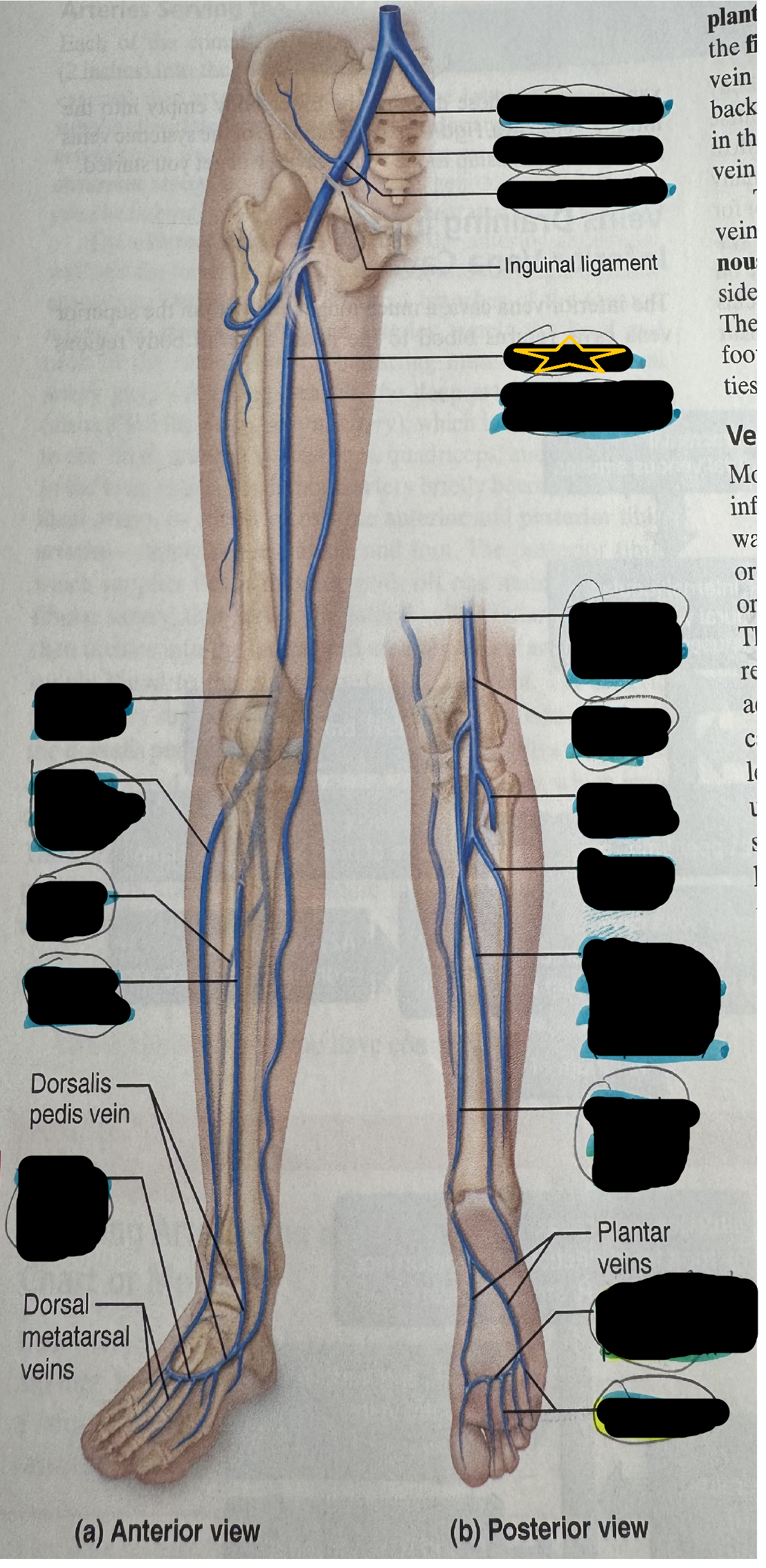
femoral vein

great saphenous vein

popliteal vein

small saphenous vein

anterior tibial vein

fibular vein
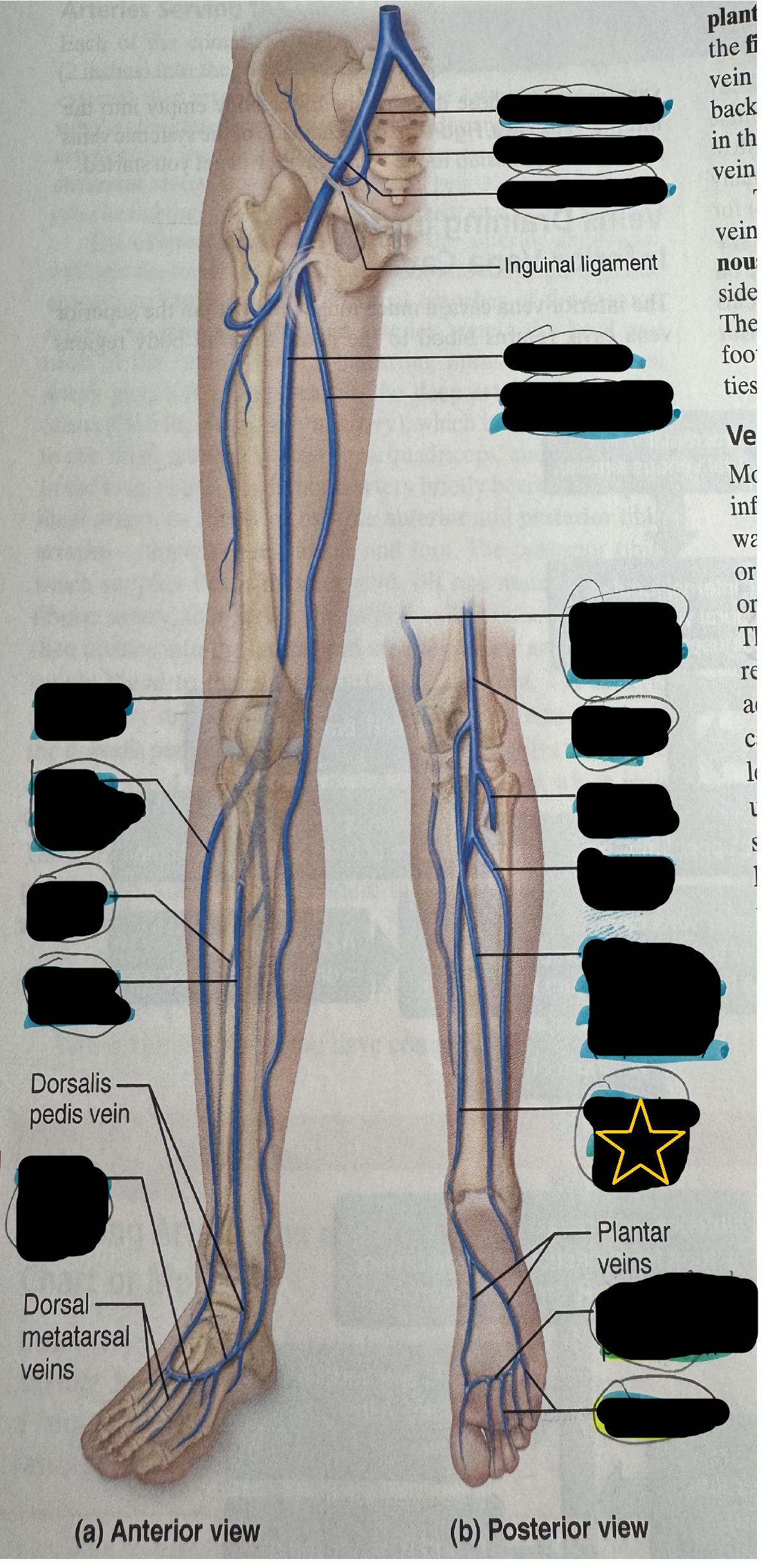
posterior tibial vein

dorsal venous arch

deep plantar arch (plantar venous arch)
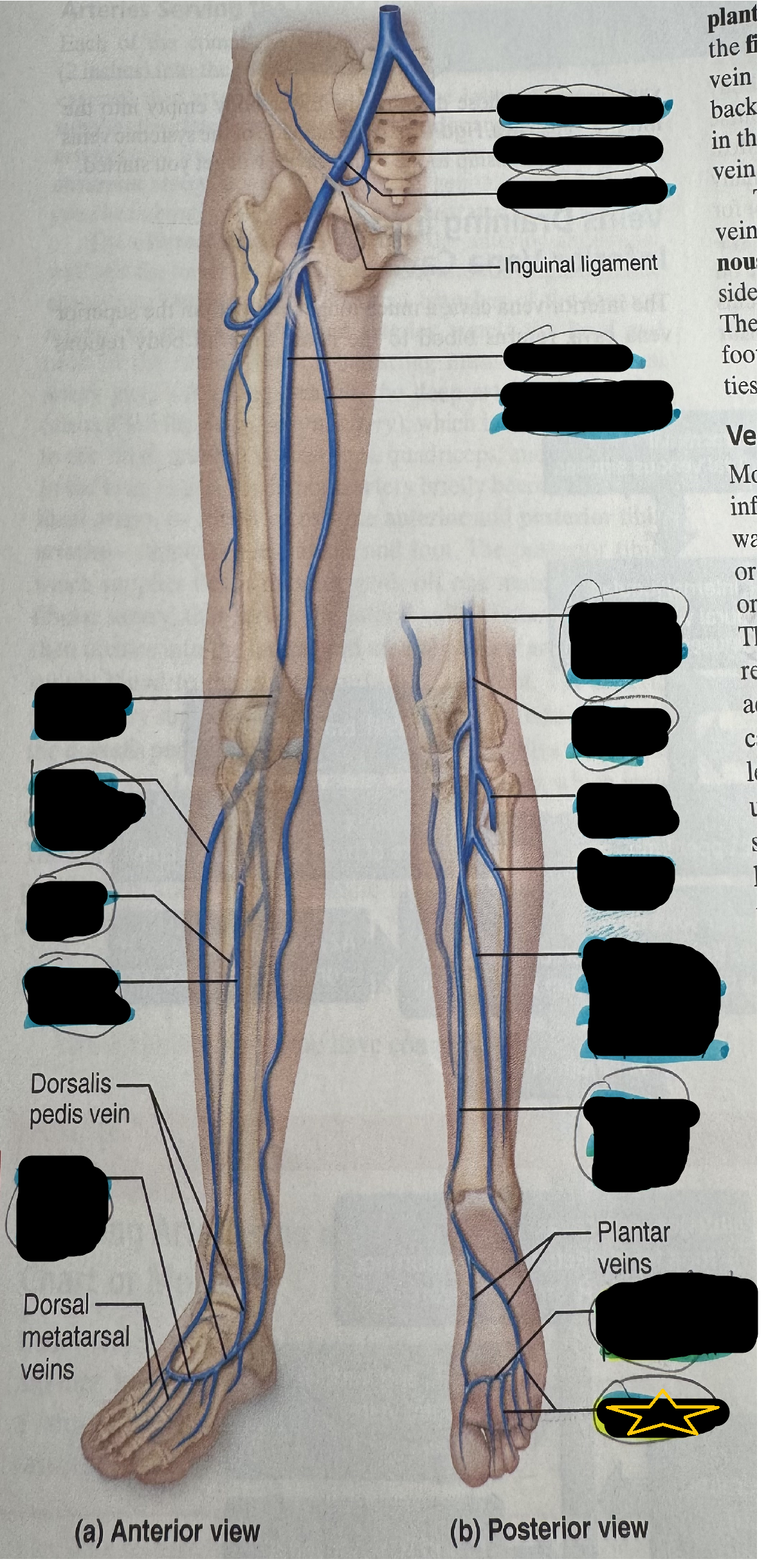
digital veins

hepatic veins
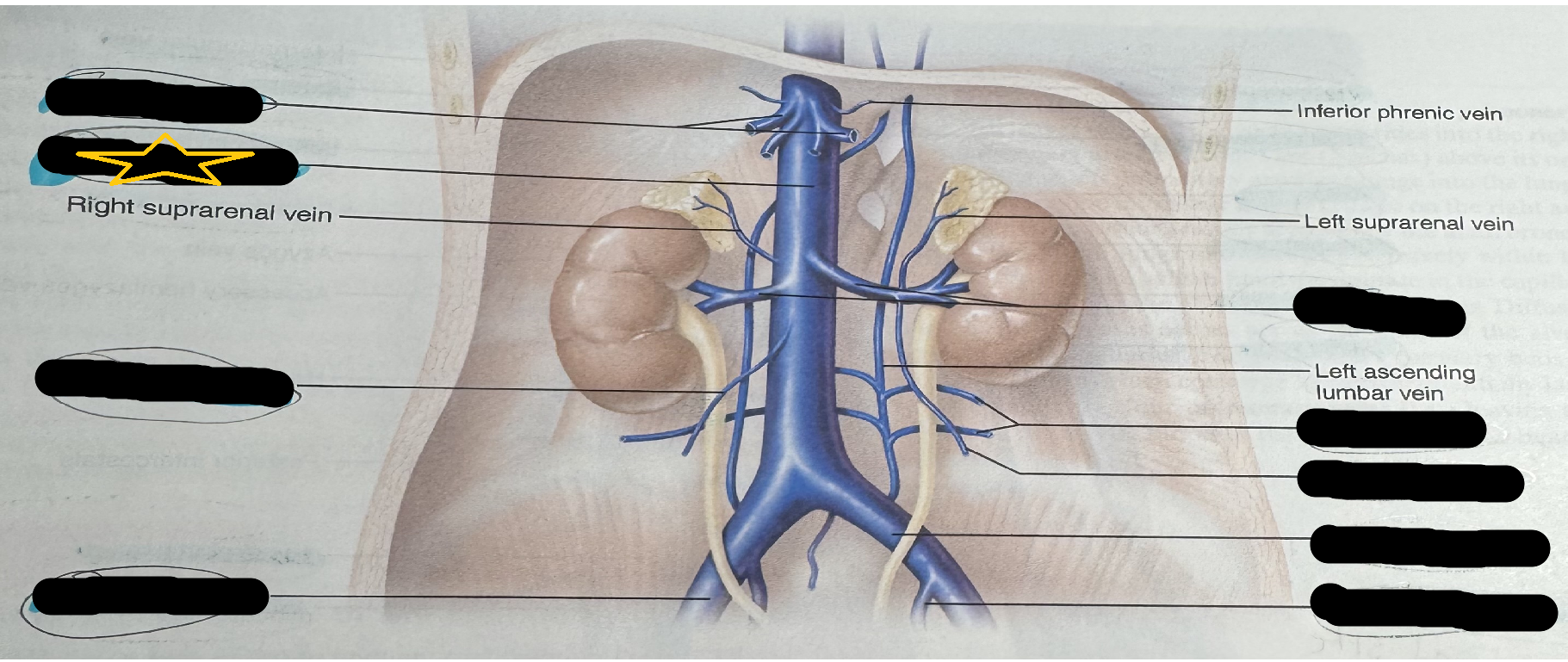
inferior vena cava

right gonadal vein
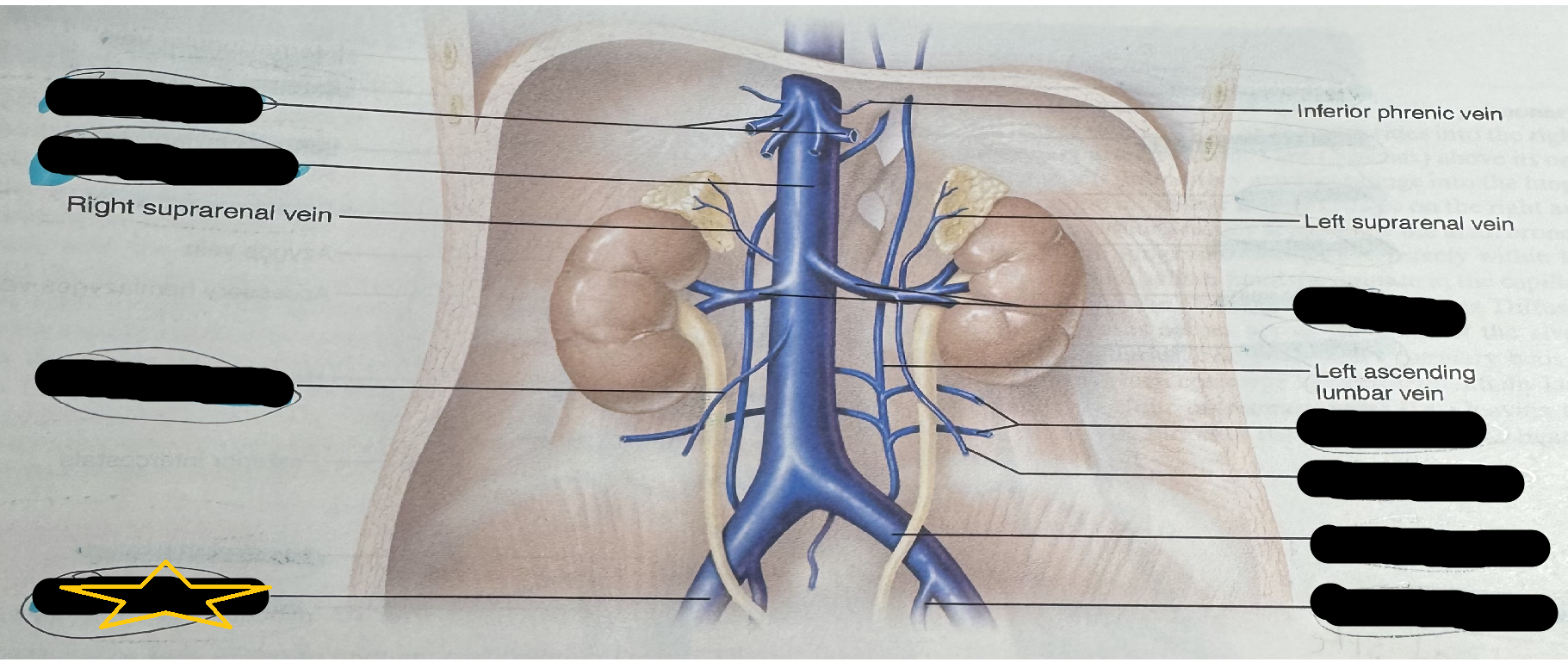
external iliac vein

renal veins

lumbar veins

left gonadal vein

common iliac vein

internal iliac vein

external jugular vein

vertebral vein

internal jugular vein

brachiocephalic vein

subclavian vein
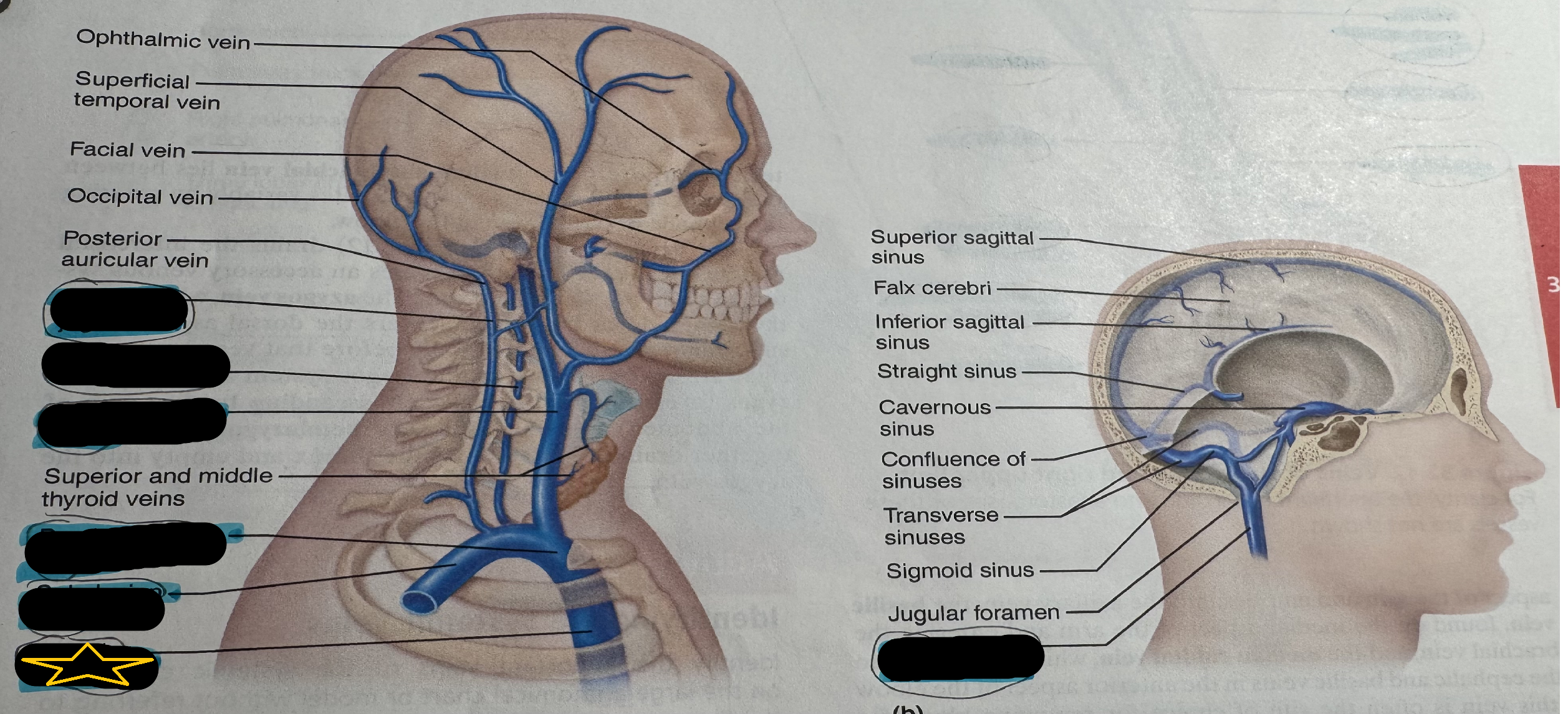
superior vena cava

right internal jugular vein

brachiocephalic veins

right subclavian vein

axillary vein

brachial vein

cephalic vein

basilic vein

internal jugular vein

external jugular vein

left subclavian vein

superior vena cava

inferior vena cava

ascending lumbar vein

median cubital vein

median antebrachial vein
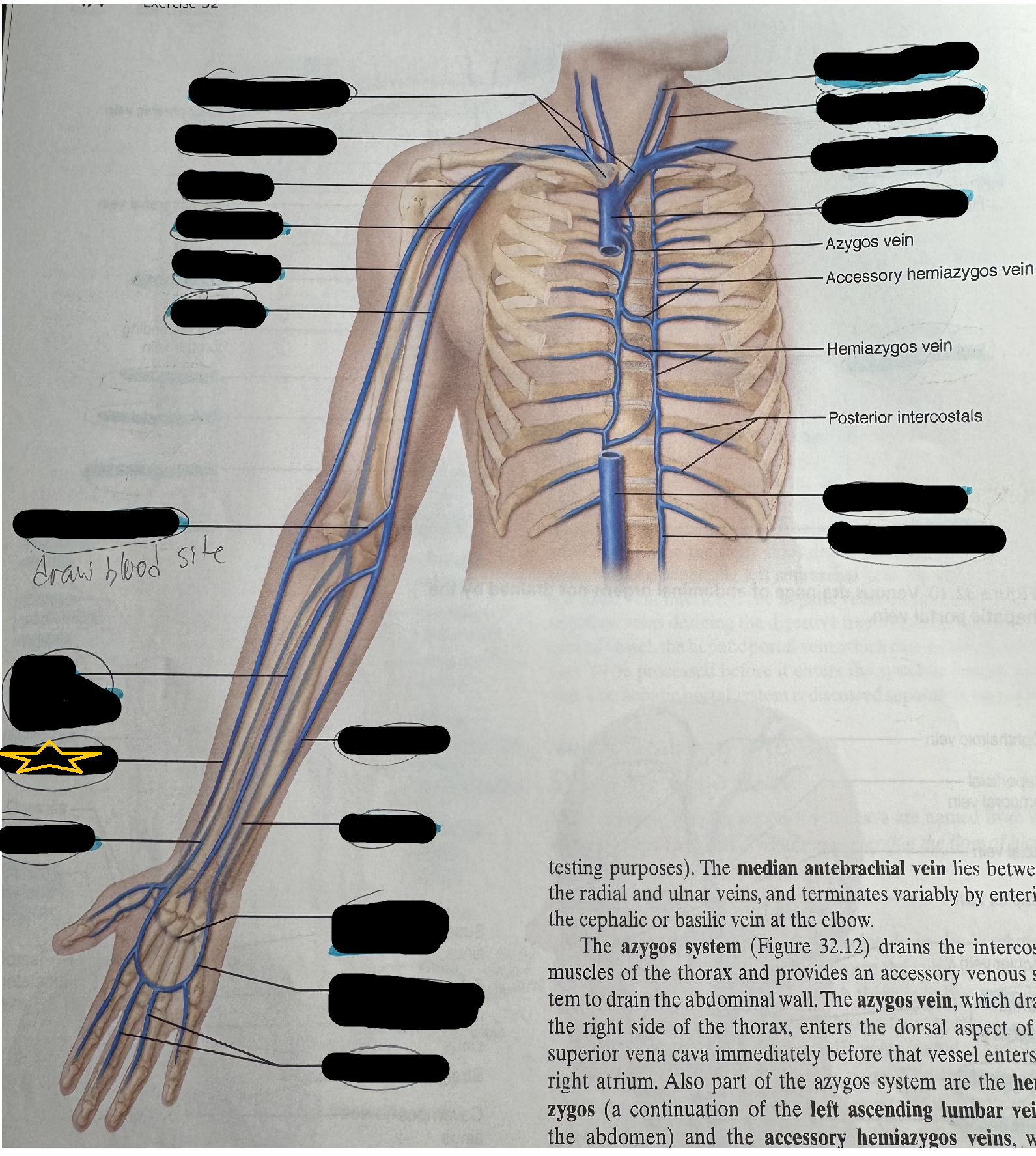
cephalic vein

radial vein

basilic vein

ulnar vein

deep venous palmar arch

superficial venous palmar arch
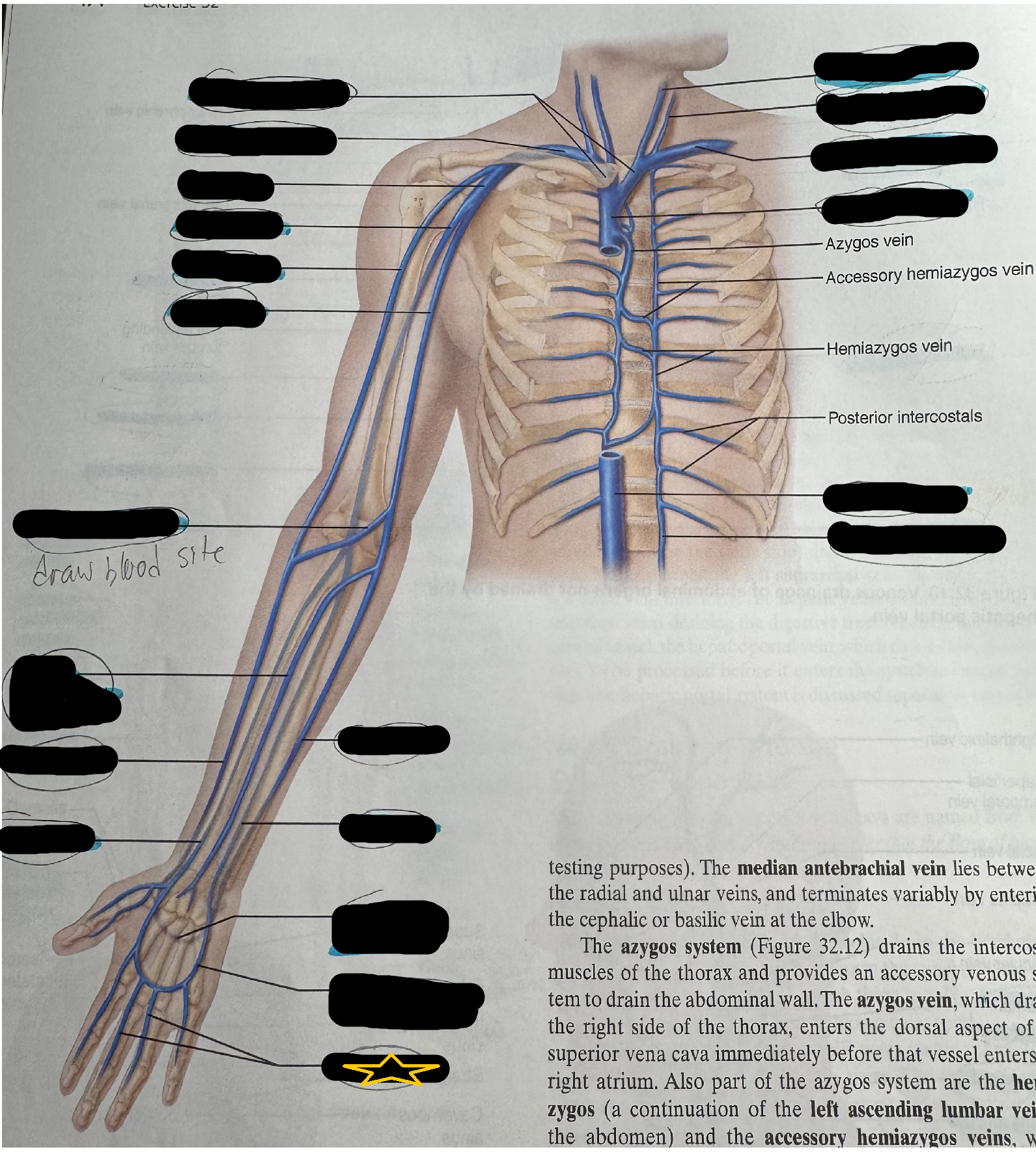
digital veins

pulmonary trunk

right and left pulmonary arteries

three lobar arteries to right lung, and two lobar to left lung
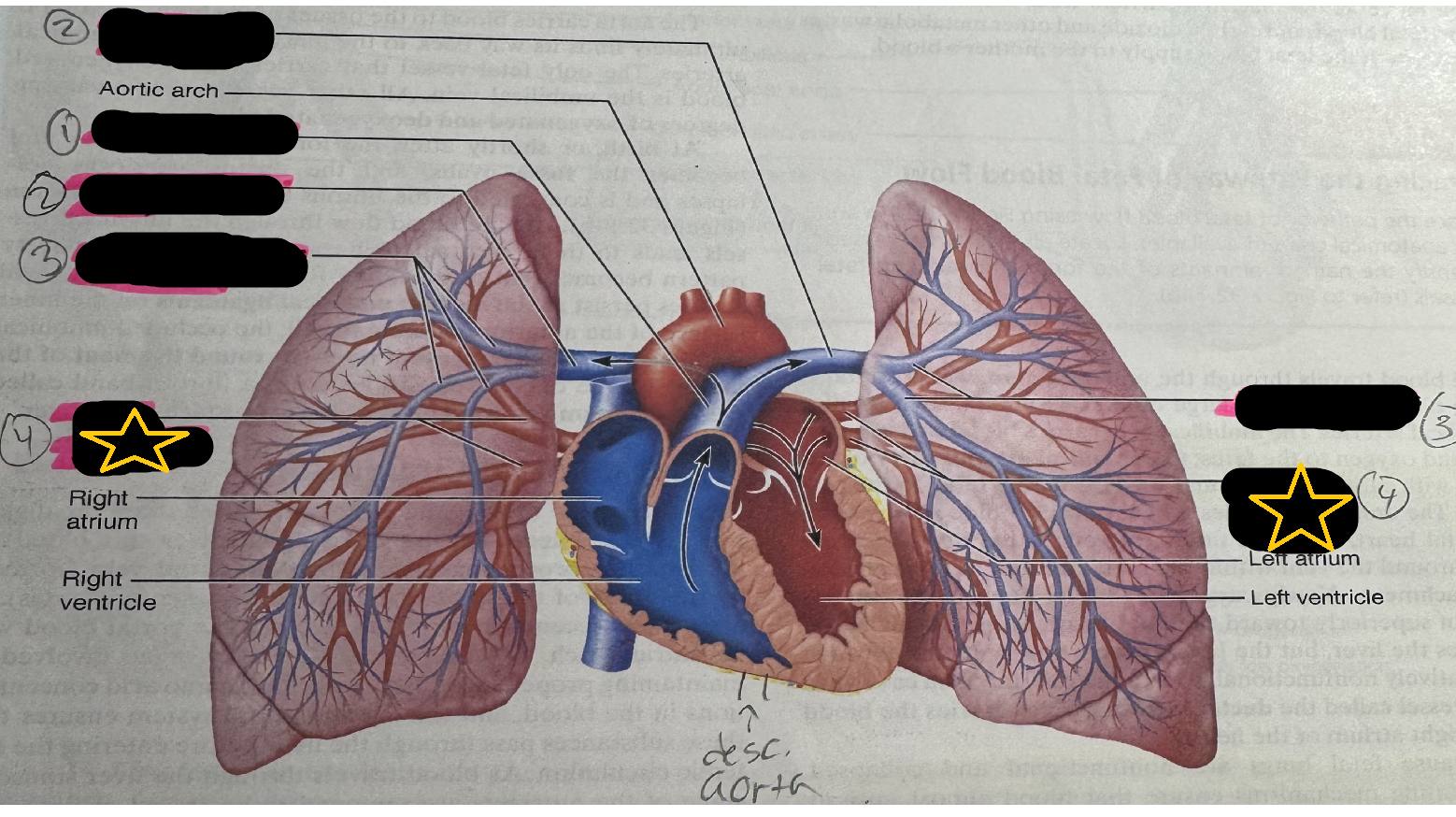
right and left pulmonary veins
the functional blood supply of the lungs is provided by the
bronchial arteries,which diverge from the thoracic portion of the descending aorta (similar to coronary arteries)
pulmonary circulation
doesn’t serve lung tissue, thats the bronchial arteries from descending aorta
arteries carry deoxygenated blood
pulmonary veins carry oxygenated blood
BP in pulm circulation is about 24/8
umbilical vein
carries blood rich in nutrients and oxygen to the fetus
red in color
umbilical arteries
carry blood with carbon dioxide and waste from the fetus to the placenta
blue in color
two shunting mechanisms of fetal circulation
much of the blood entering thru the right atrium is shunted into the left atrium thru the foramen ovale, a flaplike opening in interartrial septum, then left ventricle pumps blood thru aorta to systemic circulation.
blood that enters right ventricle and is pumped out of pulmonary trunk encounters 2nd shunt, the ductus arteriosis, a short vessel connecting the pulmonary trunk and aorta (more blood enters systemic circulation this way)

ductus arteriosis > ligamentum arteriosum
shunt btn pulmonary trunk and aorta
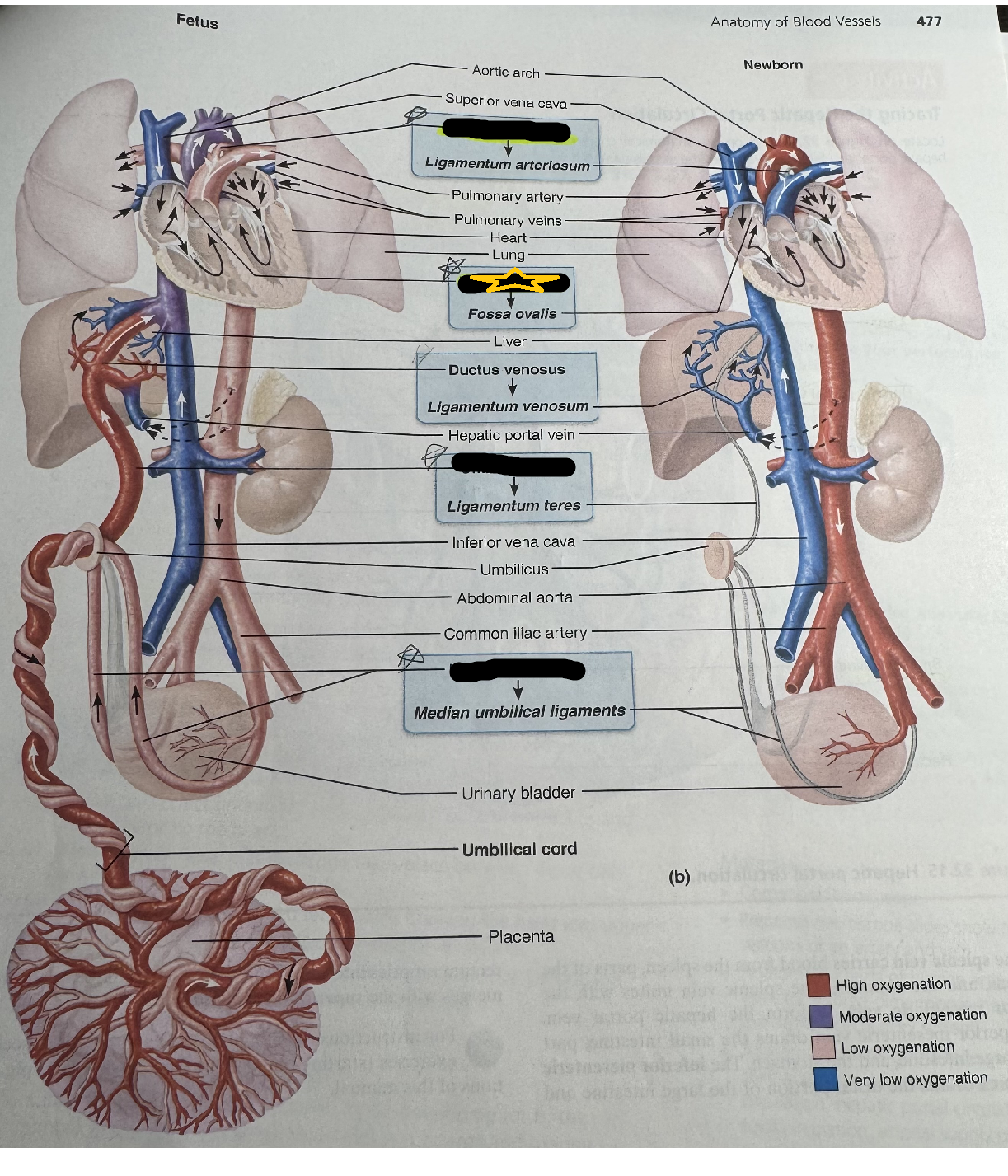
foramen ovale > fossa ovalis
shunt btn atria

umbilical vein > ligmentum teres
carries oxygenated blood to fetus (red)

umbilical arteries > median umbilical ligaments
carry blood away from heart (blue)
hepatic portal system
portal btn lower organs and liver. funnels splenic vein, and superior and inferior mesenteric veins
liver processes blood (determines glucose > glycogen storage, rearrange amino acids, store as fat or send out)
after processing, liver releases contents into hepatic veins

hepatic veins
leaves liver after processing, goes to inferior vena cava
