IB Chemistry SL - Classification of Organic Compounds (S3.2)
 Call Kai
 Learn
 Practice Test
 Spaced Repetition
 Match
 Flashcards
 Knowt Play
1/26

There's no tags or description
Looks like no tags are added yet.
27 Terms
organic chemistry
the study of all chemicals containing carbon
homologous series
a series of organic compounds with the same functional group, but with each successive member differing by CH2
properties of hydrocarbons
hydrophobic, nonpolar, good source of stored energy.
melting and boiling points increase as the carbon length increases because the atomic weight of the molecule increases.
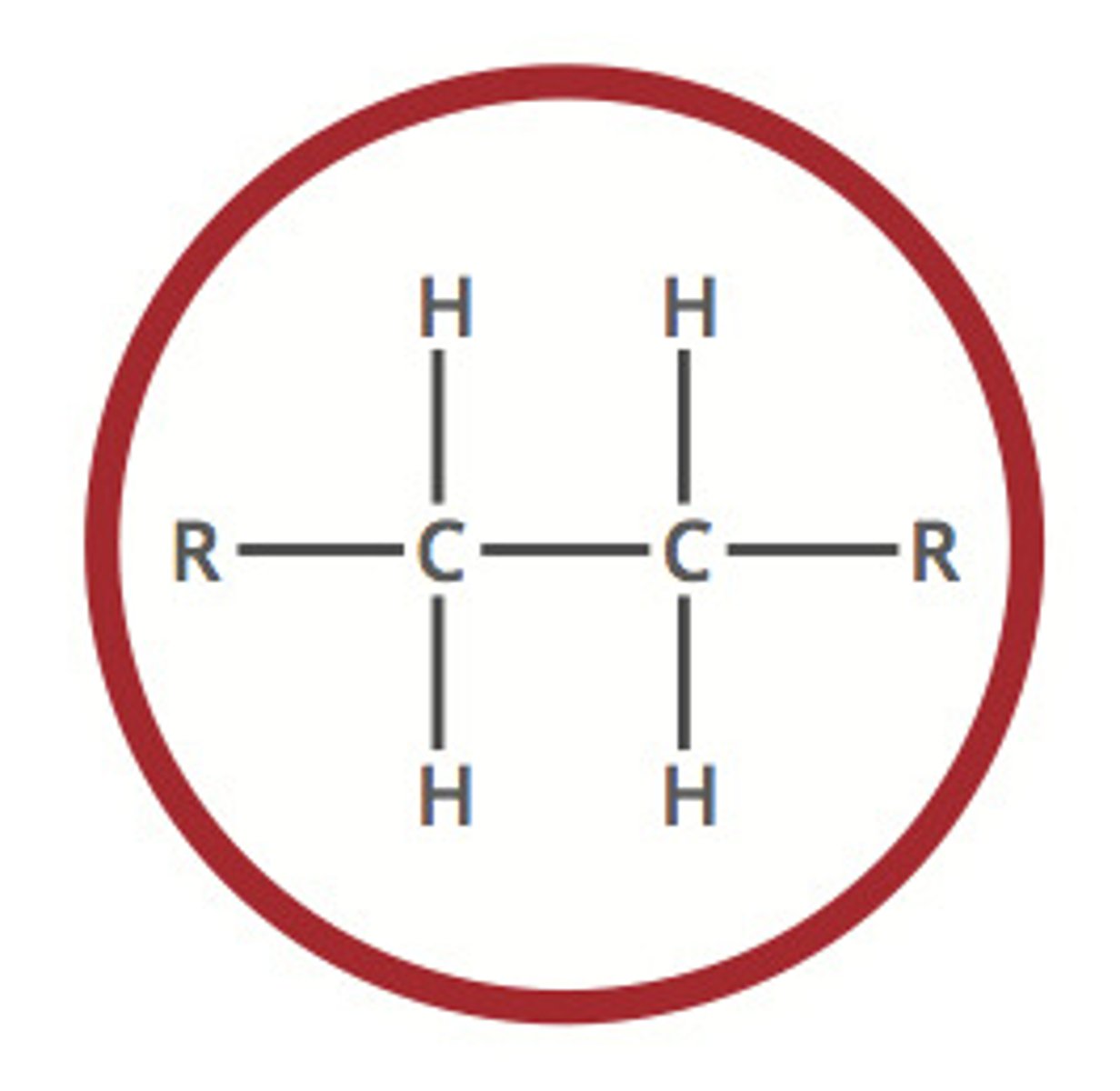
alkanes
a hydrocarbon containing only single covalent bonds. with suffix -ane. general formula CnH2n+2
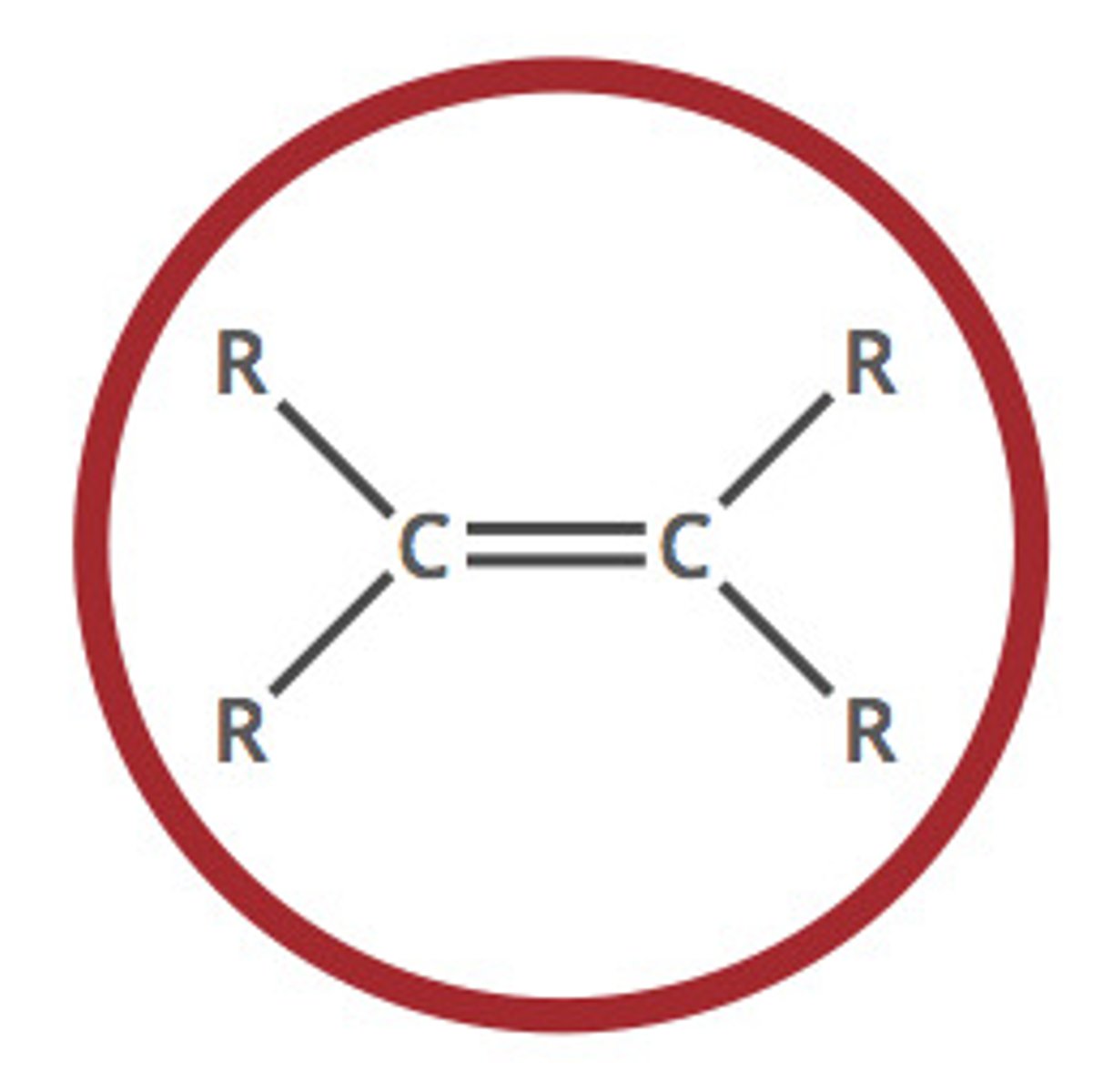
alkene
hydrocarbon containing >1 double C=C bond. suffix -ene, general formula CnH2n
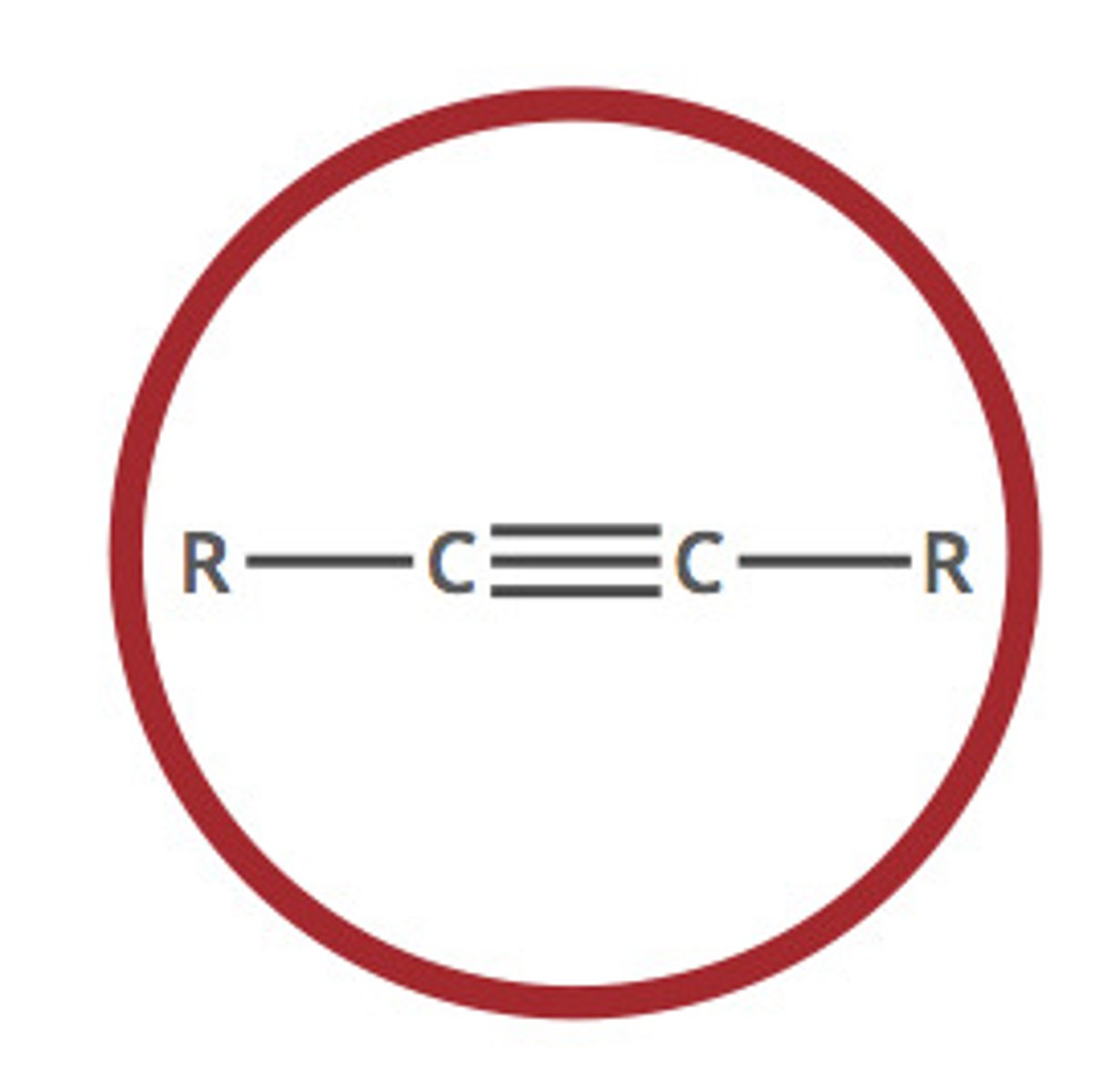
alkyne
hydrocarbon containing a triple bond between carbons. suffix -yne, with general formula CnH2n-2
functional group
group of atoms within a molecule that interacts in predictable ways with other molecules, typically hydrocarbons
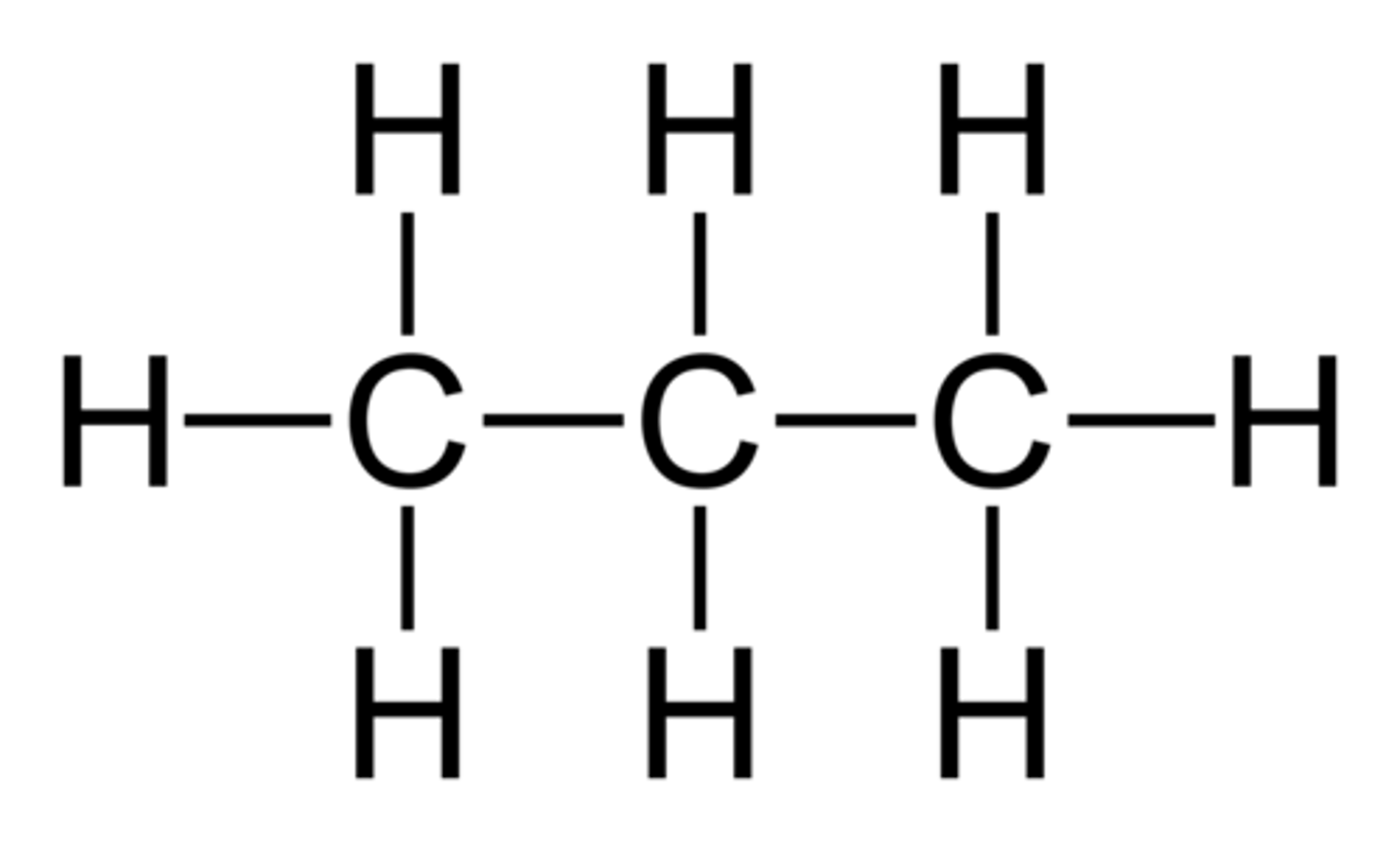
structural formula
a formula that shows the arrangement of atoms in the molecule of a compound.
condensed structural formula
a structural formula that leaves out some bonds and/or atoms; the presence of these atoms or bonds is understood
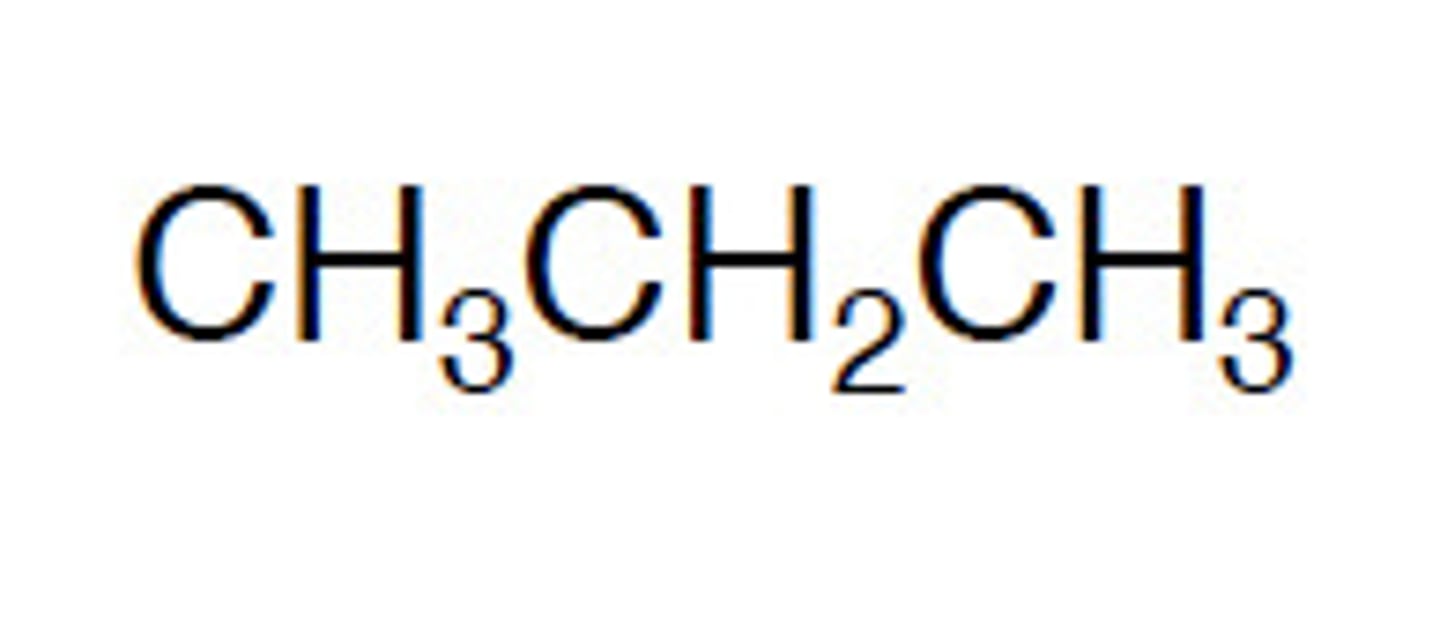
skeletal formula
A simplified organic formula, with hydrogen atoms removed from alkyl chains, leaving just a carbon skeleton and associated functional groups. Remember that carbons are always at the ends and bends

branched alkenes
Alkenes with side chains off the main chain. Typically have lower boiling points. Named in a series of -yne- (e.g. methylheptane)
alcohol
has a suffix -ol, containing an -OH group at the end. if there is a more prestigious suffix, it contains an infix of n-hydroxy-n
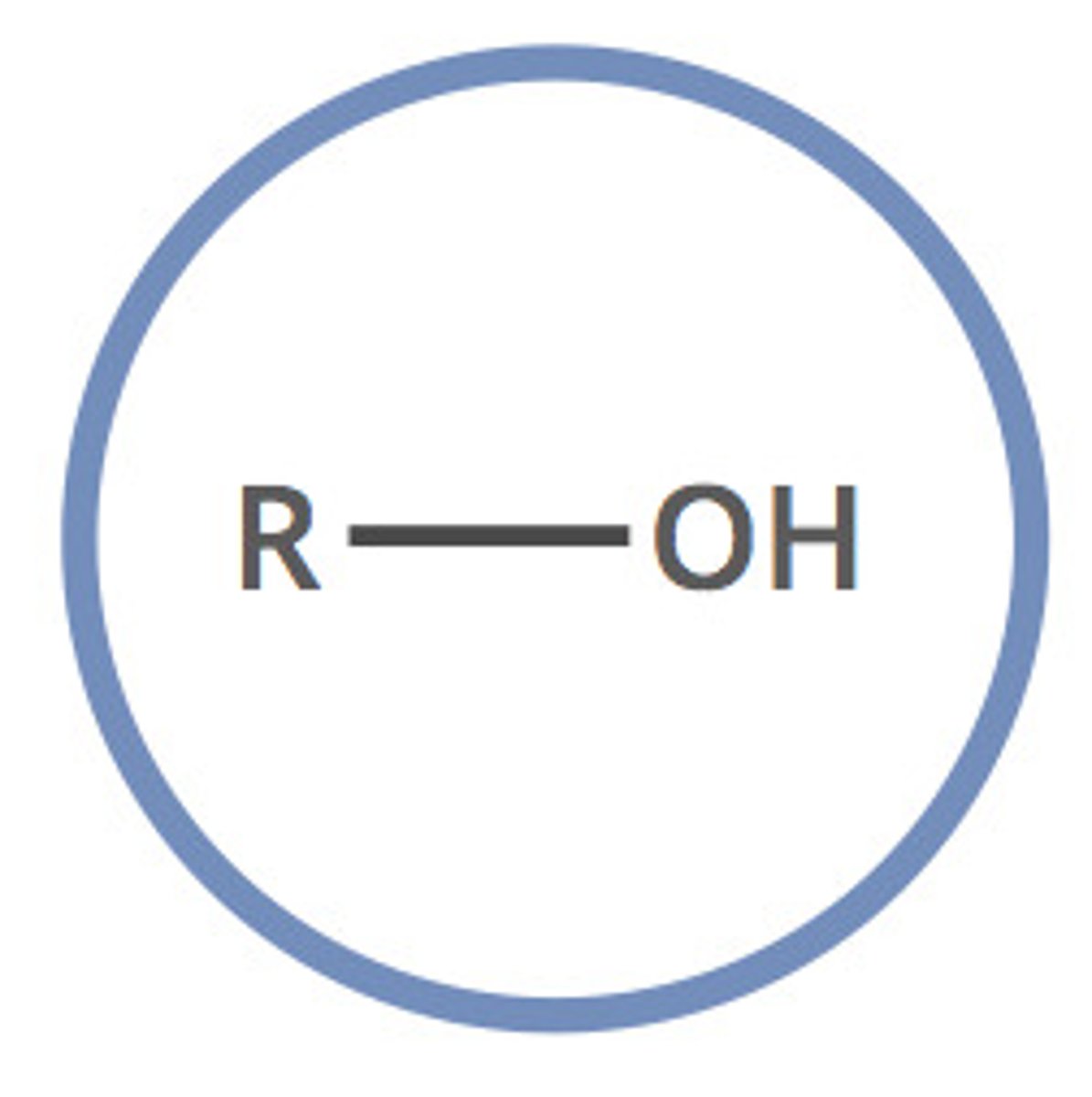
primary, secondary, tertiary and quaternary structures of alcohol
determines where the -ol group is attached
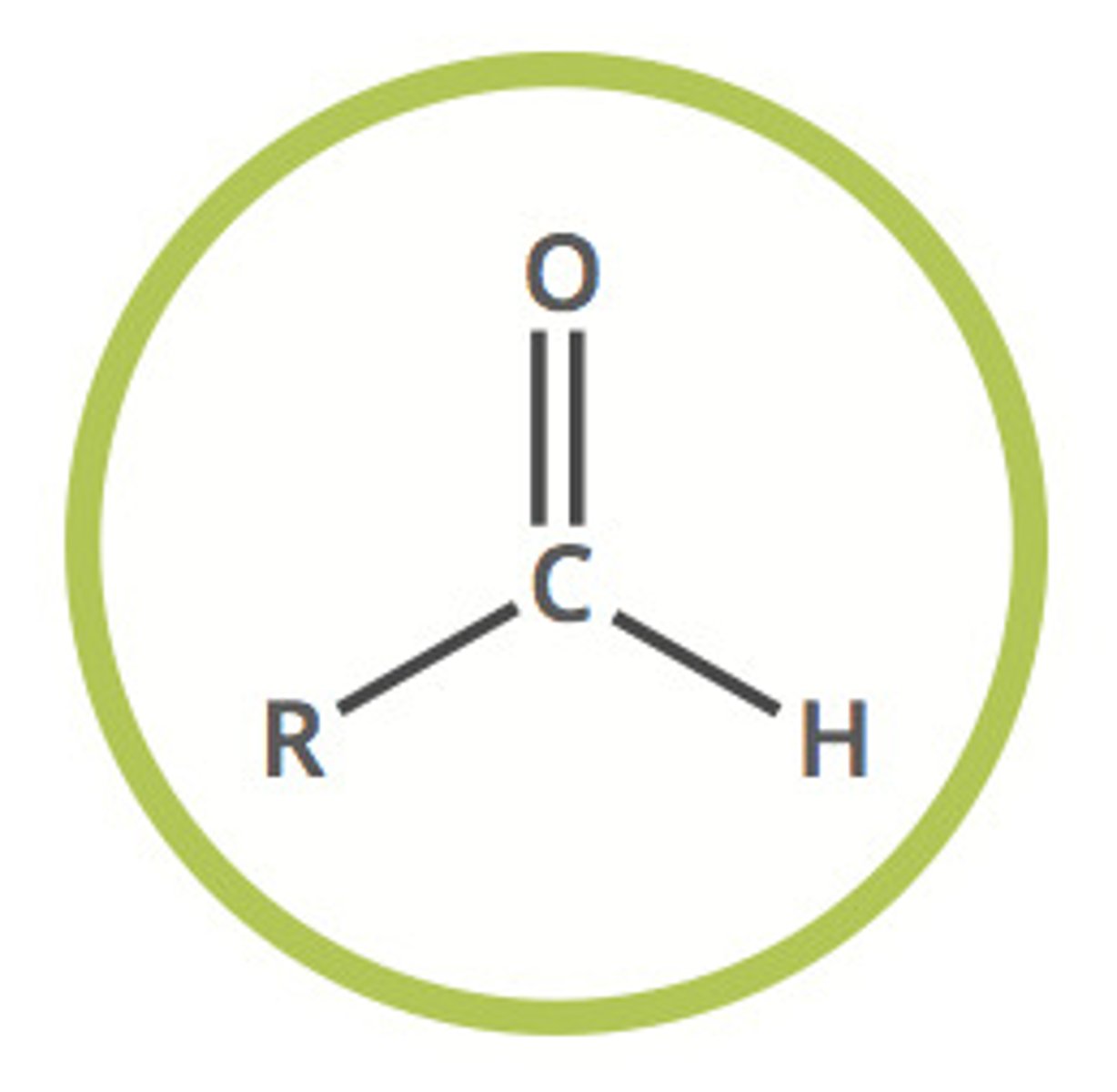
aldehydes
terminal ending with double bond =O and H. Has an ending of -al
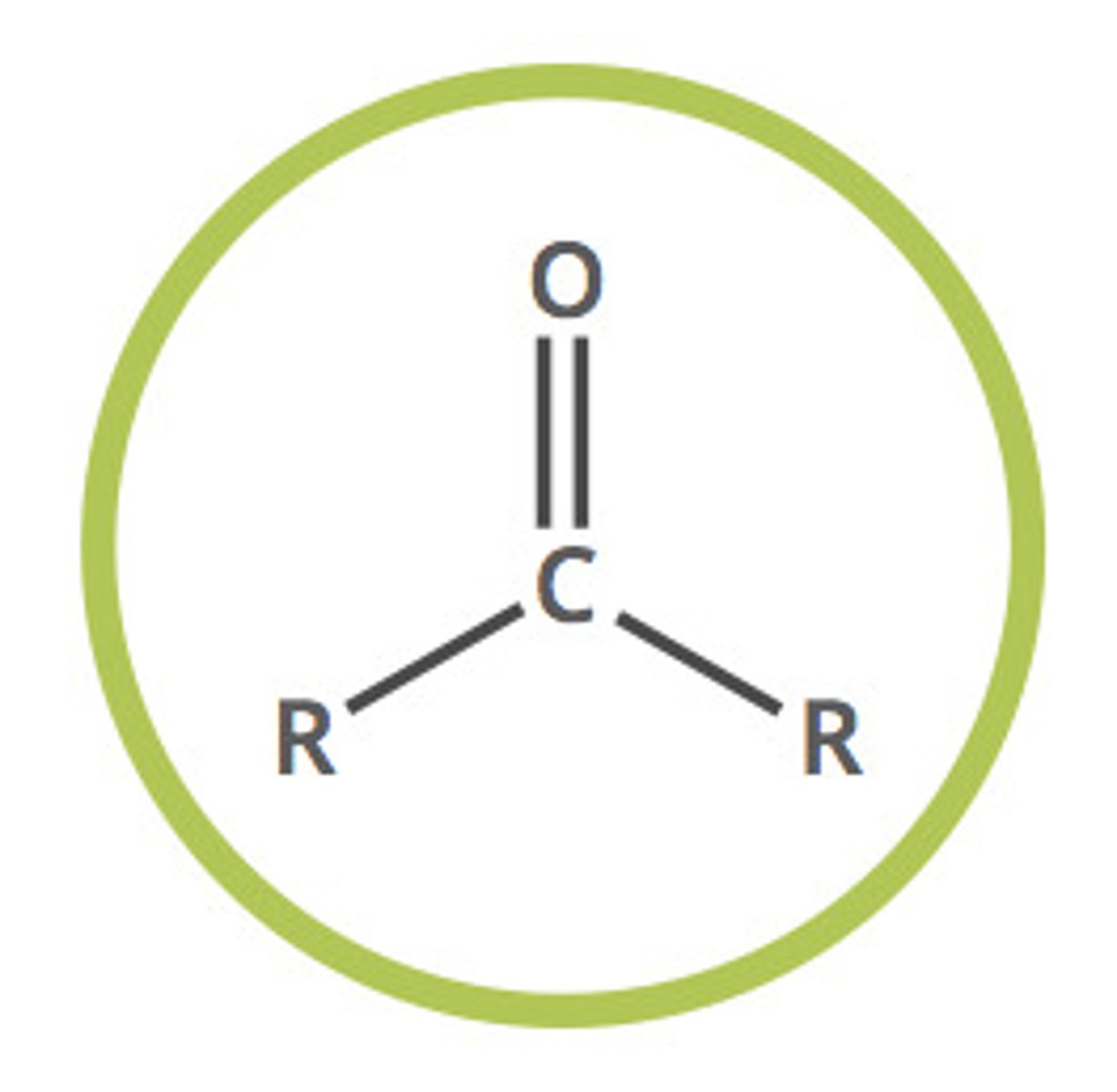
ketones
internal functional groups containing a carbonyl bonded to two alkyl chains. In nomenclature, they use the suffix -one
carboxylic acid
always has an ending of __anoic acid. Contains a double bond =O and -OH functional groups (COOH)
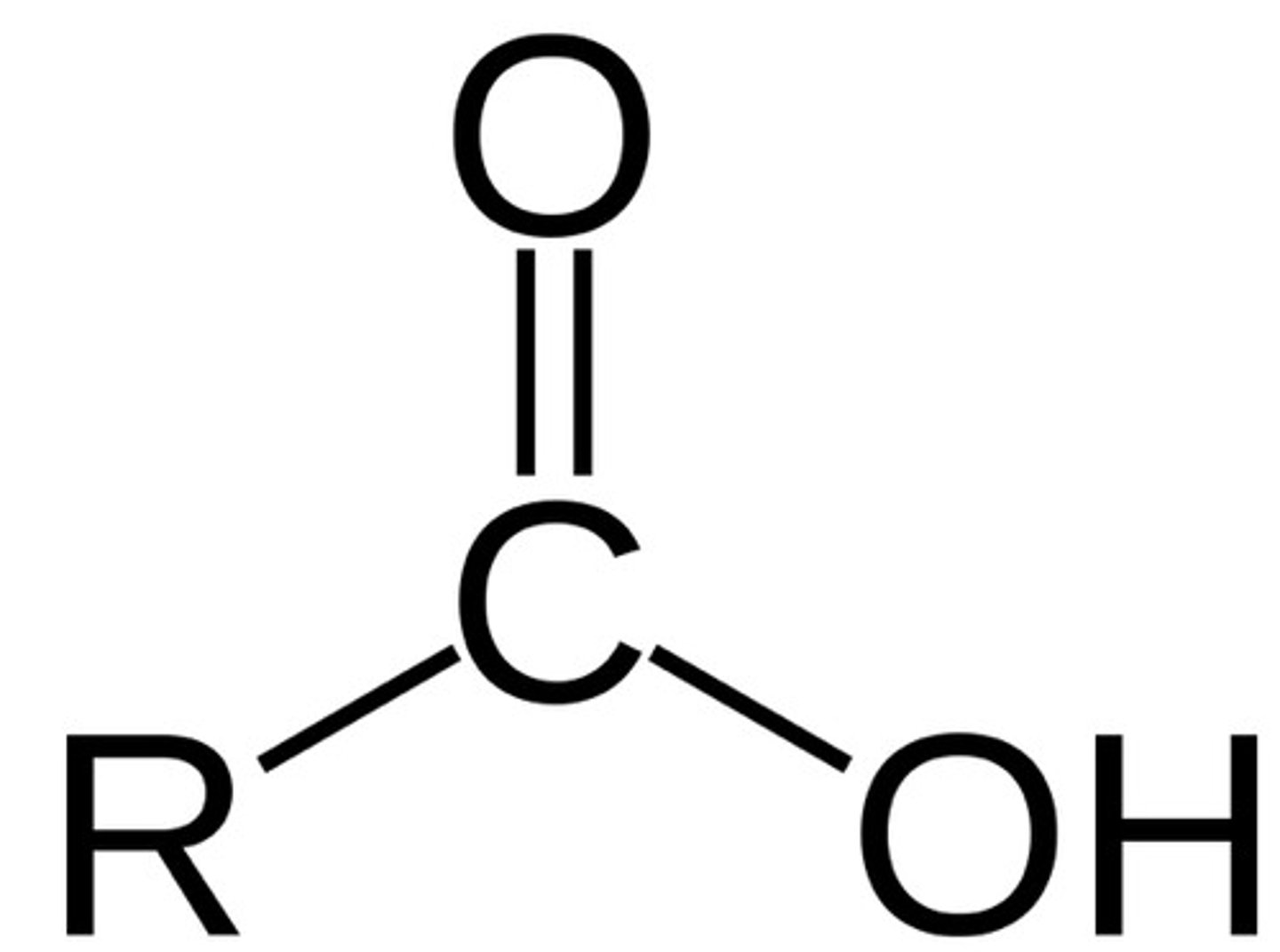
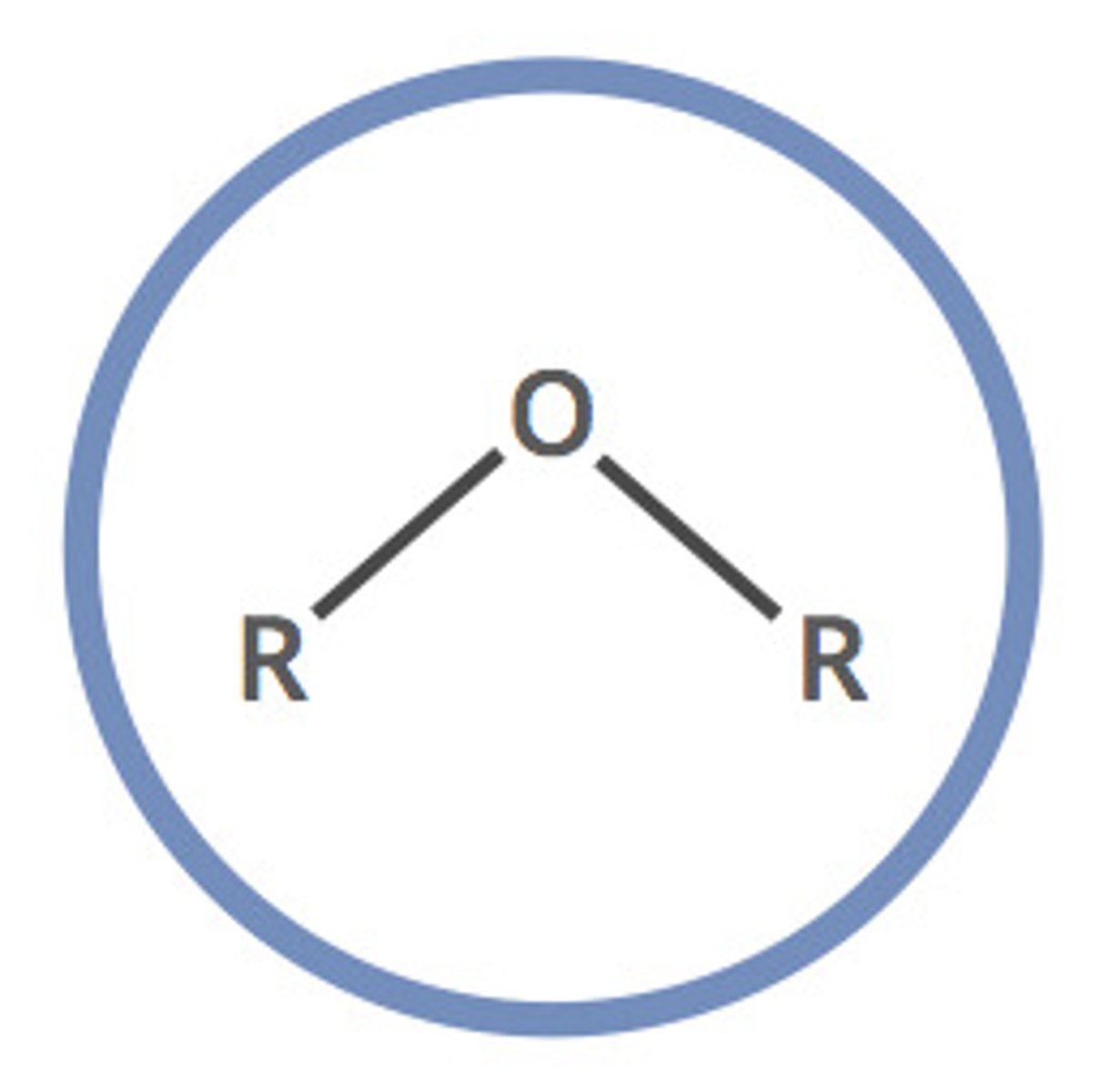
ether
R-O-R. contains a single oxygen which joins two structures together. First chain is called -oxy, second chain is called -ane
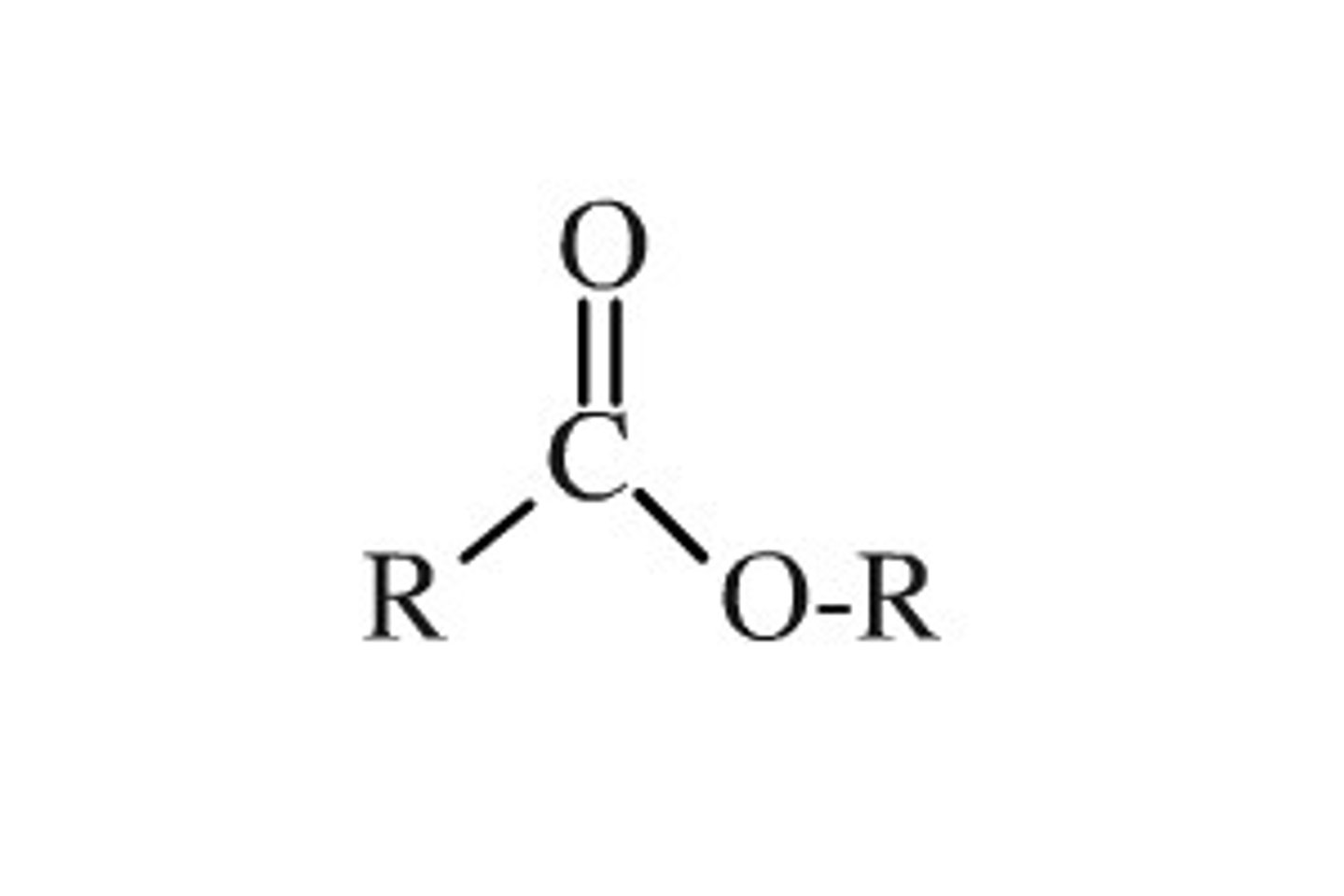
ester
R-C-O-O-R. contains an additional oxygen bonded to a carbon and a =O bond. First chain is called -yl, second chain is called -oate
a smelly, aromatic molecule.
esterification
The process of joining molecules together to form ester bonds
amine
contains a nitrogen group attached to 2 hydrogens.
am-, az-, amino-, -amine
benzene
Consists of a ring of six carbon atoms with alternating single and double carbon-carbon bonds.
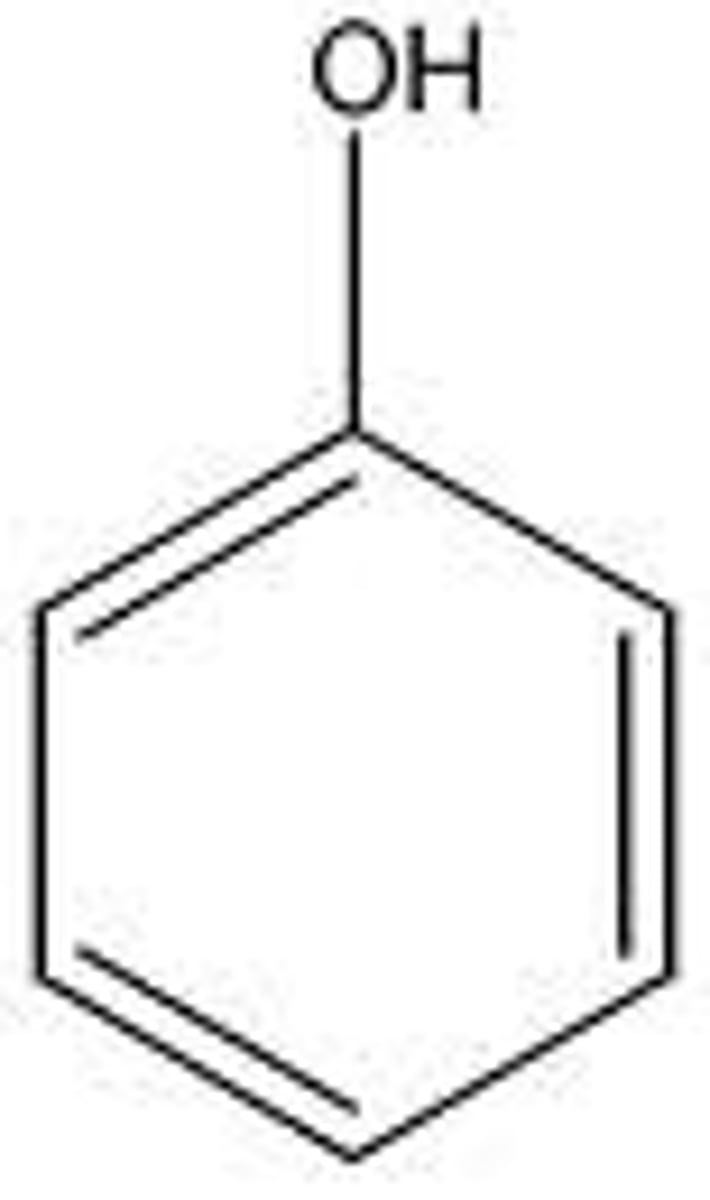
phenol
Benzene ring with an OH group directly attached to it
halogenoalkanes
fluoro, chloro, bromo, iodo added to alkanes.
Term: Homologous series – melting point & boiling point
each successive compound differs by a –CH₂– group. As more - CH₂– units are added, mass and surface area increase, strengthening London dispersion forces.
causes the boiling point to increase steadily, while the melting point generally increases
Term: Homologous series (identification)
Alkanes: C–C single bonds only
Alkenes: C=C double bond
Alkynes: C≡C triple bond
Halogenoalkanes: –X (F, Cl, Br, I) attached to carbon
Alcohols: –OH
Aldehydes: –CHO (terminal carbonyl)
Ketones: C=O within carbon chain
Carboxylic acids: –COOH
Ethers: –O– between two carbon chains
Amines: –NH₂ (or –NHR / –NR₂)
Amides: –CONH₂
Esters: –COO–
Term: Structural isomers
Definition: Structural (constitutional) isomers are molecules that have the same molecular formula but different connectivities of atoms, resulting in different structural arrangements.
Term: Types of structural isomers
Definition:
• Straight-chain vs branched isomers: differ in the arrangement of the carbon chain
• Positional isomers: same functional group, but in different positions on the carbon chain
• Functional group isomers: same molecular formula, but different functional group